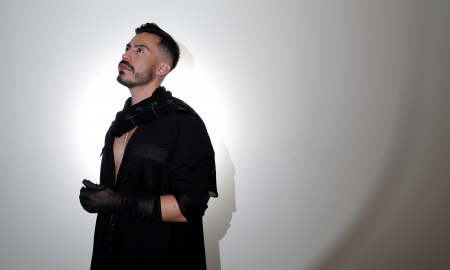


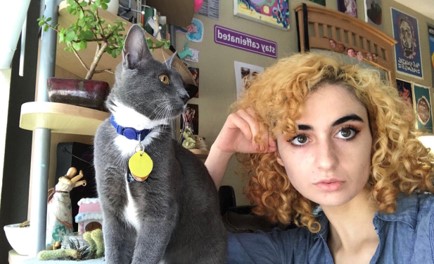
Today we’d like to introduce you to Mär Martinez.
Thanks for sharing your story with us Mär. So, let’s start at the beginning and we can move on from there.
I had a fantastic mentor in senior year of high school that encouraged me to pursue art because of my avid interest in art history. I had not previously envisioned myself pursuing art, but for some reason, he saw my unrealized artistic potential. He orchestrated trips to Art Basel, Wynnwood Walls, the Dali Museum, etc., and I caught the bug! Since then, I’ve become very involved in the arts through institutional practice, and have created my own body of work. I’ve worked for the Dali Museum as a docent, Dunedin Fine Art Center, Flying Horse Editions, and as an assistant to Barbara Sorensen, a nationally recognized artist that specializes in ceramics and large-scale sculpture.
I received sponsorship through local private art donors and used those scholarships and funding to take art classes art classes and to pursue my double major as a BFA painter and art historian. Currently, I am finishing my degrees and creating a body of sculptural paintings focusing on how the confines of inherited femininity affect fem-identifying individuals of Middle Eastern descent. I’ve also discovered my voracious appetite for ceramics — I’m addicted to throwing on the wheel!
Great, so let’s dig a little deeper into the story – has it been an easy path overall and if not, what were the challenges you’ve had to overcome?
Everyone’s path is different. I’ve been incredibly lucky to have a family that is supportive; they may not ‘get’ what I’m doing, but have actively encouraged me to invest in myself and create instead of following a more secure path. I’m very thankful to have a strong support group who have helped me maintained my mental health, to be surrounded by other creative people that are understanding, and have finally reached a point where I can use art as a transmitter for lived experience.
Some people find art-making cathartic, but I don’t. It’s painful. As a perfectionist, it’s been very difficult to learn that flaws are ok and that even the biggest mistakes in a painting allow you to learn and improve in the next piece. I’ve learned painting is full of growing pains. It’s about making a mistake, and subsequently fixing that mistake over and over again until you have a finished piece. The eye learns faster than the hand, so my brain will start realizing issues before my muscles can catch up. Sometimes, I just want to throw a painting out the window like a frisbee because all I see are its flaws, but that means that my artistic eye is improving and recognizing good vs. ok vs. bad technique. It just takes a minute for the hand to catch up.
Please tell us more about your work, what you are currently focused on and most proud of.
The Middle Eastern femme is faced with pressures from both their own culture as well as from the West. There are erroneous assumptions made about Arab femme-hood and rigid expectations are forced upon Americans of Middle Eastern descent from both sides. The feminine body — and the inherent rights associated with it–from reproductive to aesthetic presentation, is a topic often discussed by mouths that are not entitled to opinions on it, and there are added pressures and constraints for children from Arab households. This is even more difficult for LGBT+ people who struggle with validating their identity with backgrounds in a largely anti-queer culture.
Habibti is the possessive, feminine and diminutive form of Habibi, meaning ‘my beloved.’ It subtly implies ownership through the guise of affection. Accessing individual identity, self-expression, and sexuality within the societal constraints of how a good Middle Eastern ‘woman’ should exist can be stiflingly public because everyone becomes a voyeur and commentator on personal identity. I focus on emphasizing the hands and face, two of the most expressive parts of the body, and used vulnerable yet subtly strong body posture in the face of the voyeuristic culture. My sculptural paintings mimic the reduction of the figures to objects; they are removed from the confines and protection of canvas, leaving the figures more exposed to the outside world. Underwear calls attention to how naked and vulnerable the femmes actually are. The queer femme bodies interact within the space that they are allowed to between the pressures from both modern cultures’ expectations. Connecting with true identity is a quiet, often lonely process, but I aim to build an army of defiantly strong, queer, femme Arabs becoming themselves despite the constraints placed upon them.
What have been some of the most important lessons you’ve learned over the course of your career?
I wish I had started creating at a much younger age. I’m jealous of the people that had been seriously making art as soon as they came out of the womb. In a perfect world, everyone wants to be a child prodigy like Picasso, but I simultaneously must focus on my path and look forward.
Realistically, I wish someone had told me to make a bad painting. I had been so worried about making bad art for so long it became disabling. I used to simply not draw or paint some days because I was more concerned with the outcome rather than the overall process. But bad paintings are just as important as the good ones! What matters is that you’re working every day and at your own pace. Some pieces will be successful and others will be complete and utter failures. But stopping yourself from trying new things out of fear hinders your artistic confidence and kills your momentum. Not being afraid to fail allowed me to take risks in my art that I would have never approached before. I’ve had some things go disastrously wrong (painting on a canvas made of pop-tarts? not a good idea) but you never know what failed experiment is going to lead to a great idea. I took a risk in removing the figures from canvas and painting them on cut wood to decontextualize them, and that one experiment lead me to create my current body of work. Don’t let yourself be confined by what is tried and true.
Contact Info:
- Email: [email protected]
- Instagram: @meatvoid


Getting in touch: VoyageMIA is built on recommendations from the community; it’s how we uncover hidden gems, so if you know someone who deserves recognition please let us know here.