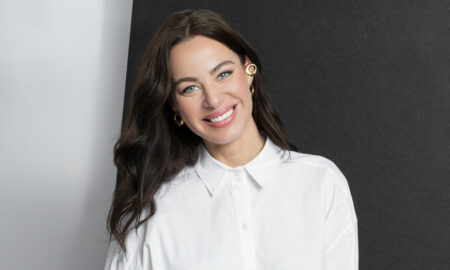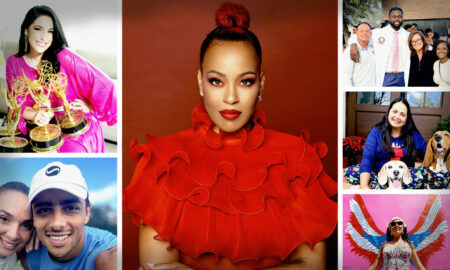



 Today we’d like to introduce you to Ivania Guerrero.
So, before we jump into specific questions about what you do, why don’t you give us some details about you and your story.
Growing up in a noisy household with four siblings in an apartment complex in Little Havana full of large immigrant families like mine with incredibly resilient and rowdy personalities, it was very easy to get lost in the noise and blend in with all the other kids. The only difference was that I had this thing called dyslexia that made me feel different from the kids around me—something I didn’t want others to know because I was too ashamed. Being the middle child meant that it was easier to hide my dyslexia because I just needed to be quiet and invisible.
Then, around fourth grade, I saw one of my friends, Carolina, from the apartment upstairs drawing for fun. It was the kind of drawing that I had not seen someone around my age do before. It required talent, skill, and creativity and she was actually serious about art. Once I started drawing with my friend, I was captivated. I wasn’t serious about art until middle school, though. That’s when art took all the space in my life because I discovered my voice. Most importantly, I discovered that I did not need words to use my voice to express myself.
From there, I went to high school in New World and studied visual arts. Even when my family moved to Kendall while I was in high school, I made sure to wake up early (not easy for a night owl like me) and use public transportation to make it. Afterwards, I was lucky to be the first of my siblings to continue my education and graduated from Florida International University with a bachelors and masters in fine arts. During those years, my interest evolved from drawing with charcoal and painting with acrylic to mixed media, especially art installations and ceramics. As part of completing my MFA, I had the chance to showcase my work at FIU’s Frost Art Museum and received the Patricia & Phillip Frost Art Museum’s Betty Laird Perry Purchase Award. After finishing grad school, I taught drawing and ceramics at FIU for a few years. Since then, I’ve focused on challenging myself and working on new pieces that I can showcase.
Has it been a smooth road?
I am a Latina woman born during wartime in Nicaragua, so immigration is part of my story and one of the subjects of my recent projects.
My mom and two aunts crossed the Mexican/U.S. border with my two brothers (the youngest being about nine months old), two sisters, cousin and me to join my dad. My dad was targeted by the new regime and incarcerated for more than a year before he left Nicaragua. Though I do not remember everything, I know that it was not an easy experience for three women to make the dangerous trip with six kids. Then, when we crossed the border, we were apprehended by immigration. I do remember spending my birthday in prison, though. I guess that experience gives me a little bit of street cred.
And there’s the internal struggle that I’ve been fighting since I was a kid no matter the awards I’ve received, exhibits in art galleries I’ve had or the prizes I won.
Growing up with dyslexia, it was very difficult for me to have a voice. I deliberately went out of my way to be invisible and hide this secret that I thought people would judge me for because I grossly judged myself through it every day. It was my artwork that opened up a safe space where I could allow myself to be vulnerable. Simply put: art saved me. And similar to Maya Angelou who stopped speaking for five years after a traumatic experience, I discovered that I left my voice, but my voice hadn’t left me. It’s this voice that I want to share with others who may not have the rights or tools to defend themselves. It is important for me to immerse myself in their experiences and bear witness, allowing me to show their humanity to all who have the courage to see it.
So, it’s taken most of my adult life to recognize that my dyslexia—labeled a learning disability—is not my weakness, but my strength. It’s forced me to think differently, work harder, and push myself creatively to express myself when words fail me.
Please tell us more about your artwork, what you are currently focused on and most proud of.
Over the past few years, I’ve concentrated on ceramic figures and painting.
My recent projects are influenced by the immigrant experience and my connection to Miami as a basketball fan.
“Made in the USA” is about the effects of immigration and exile on identity. My work explores the displacement that I experienced as immigrant wrestling between the imaginary borderlines of my native country and the country that I now call home. It highlights how displacement blurs the lines between countries and cultures and leads to a fragmentation of identity. This fragmentation creates feelings of never being at home and never belonging because once you leave your native country, you are a displaced subject who cannot return home. At the same time, you are foreign and different in the new home you inhabit. For that reason, the faceless and plain figures in my work have a “Made in the USA” branding and are whitewashed with their real color showing underneath their translucence. These figures stand on a conveyor belt, alluding to generations of immigrants in the USA that struggle with the fragmentation of identity as they try to assimilate.
Then, the love and pride that I have as a Miami Heat fan led to my exploration of basketball as a form of art. Just as art requires great skill, style, and variation, basketball is a form of art through which we can see a means of similar artistic expression. My paintings are also influenced by the relationship between the Miami Heat and the city of Miami. The Heat family reaches out to the diverse Miami community and touches their lives in the simplest of ways—through the love of Miami and basketball. The Heat family transcends beyond the court and makes its way into communities and people’s living rooms every season united by a sense of pride, loyalty, and togetherness. This relationship is best exemplified when Miamians of all generations and cultures—influenced by Latin-American roots—celebrate Heat championships in the Miami streets through the tradition of the percussion of pots, pans, and wooden spoons, adding another layer of artistic expression to the basketball art form. As if that was not enough, the Miami Heat and basketball became a part of my family when my brother, Michael Guerrero, founded the LYFE Brand with his friends and created a fashion line tailored to Miamians and Heat fans.
One of the things that sets me apart is how I examine and reflect on the immigrant experience because it is deeply personal for me. While it may be an abstract concept for people that didn’t have to make the dangerous trip across the border, I can empathize with anyone who made or are still making the trip because I walked in their shoes. I can relate when they talk about the fear and the overwhelming sense of vulnerability you feel when you have to put your life in the hands of a coyote. Or the hunger you feel after missing meals and not knowing when you would eat again. Or walking with your whole family alongside endless railroad tracks all the while you are afraid someone would get hurt or caught.
Combine these experiences with the ways that dyslexia forces me to process the world around me also means that I can see things from a different perspective and channel that in my creativity. Reflecting on all the sacrifices my family made to make things better for the next generation fuels my drive and work ethic. Similar to people who overcome all odds to achieve their definition of success, I can relate to their struggle, sacrifices, hard work, and their unbending faith in their dreams. In the end, I want my body of work to bear witness and spark conversations about different issues, both, past, and present. I want to advocate for the difference that we can all make, despite obstacles, disabilities, gender, nationality, race or religion. I want to be another example that can inspire others to think that because of me, they can, too.
We always love to ask about the support network – have there been people, perhaps mentors or advisors, who have played a big role in your success?
My husband is at the top of the list for encouraging me to follow my dreams and putting my dream first. My family and friends are also my supporters and cheerleaders (muchas gracias a toda mi familia). They’ve been to every show. Along with my husband, people like my sister and cousin volunteer their time when I’ve needed help setting up my artwork in galleries. My cousin, Marilyn, has also been a huge help by being my translator and helping me get my ideas in writing.
My brother, Michael, is also my biggest advocate for sharing my work. Although it can be terrifying, he challenges me to take risks and step out of my comfort zone. Thanks to him, I even designed a pair of shoes for Dwyane Wade.
I am also grateful for Charo Oquet who is a Miami-based artist. She showcased my work at Edge Zones many years ago when I was in grad school. Often times, you just need one person to believe in you. That’s who Charo is for me. From there, other galleries used Edge Zones as a reference and I had the chance to show my work in places like New York, Italy, and Paris. It also led to The Miami Herald publishing an article about my ceramics work, “Un Llanto,” and an art installation about Anne Frank.
Contact Info:
- Website: https://www.ivaniaguerrero.com/
- Phone: 786-286-9302
- Email: [email protected]
- Instagram: https://www.instagram.com/ivaniaguerrero/


 Image Credit:
“Babies” photograph by Ana Garcia
Suggest a story: VoyageMIA is built on recommendations from the community; it’s how we uncover hidden gems, so if you or someone you know deserves recognition please let us know here.