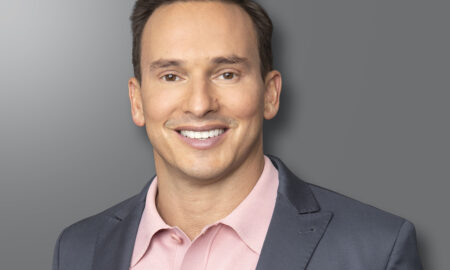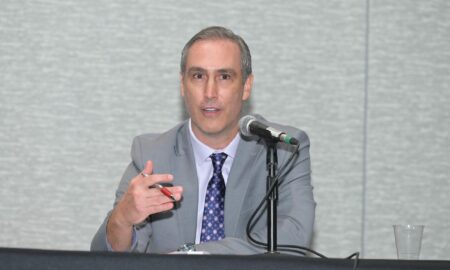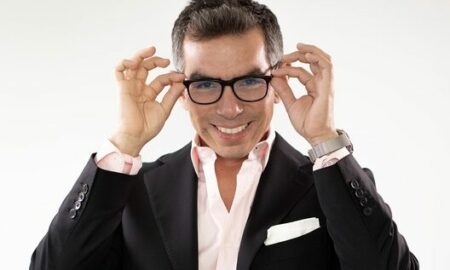





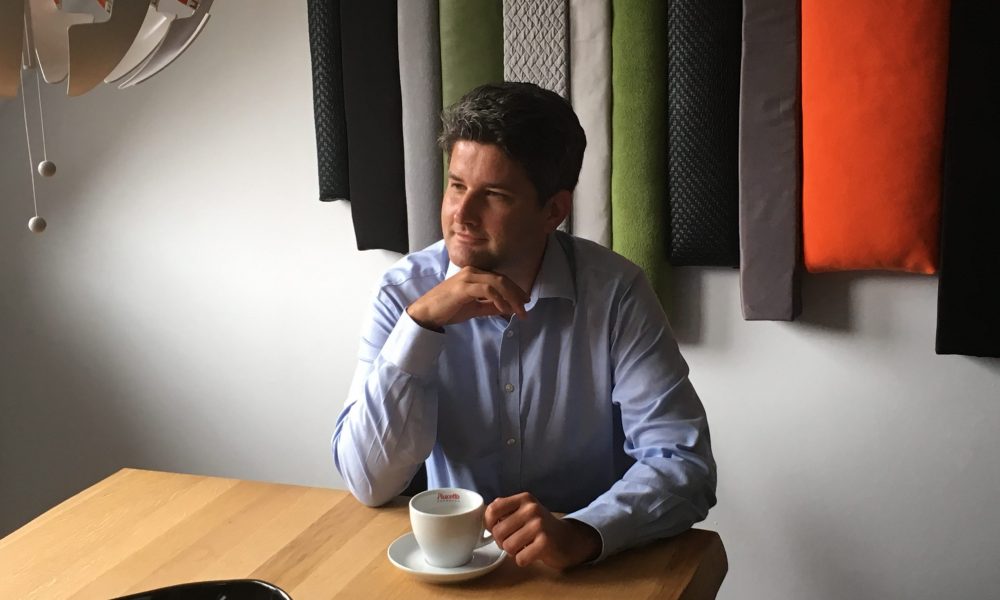
Today we’d like to introduce you to Gregor Karosi.
Gregor, please share your story with us. How did you get to where you are today?
Although I have always been fascinated by US business culture and the way in which US companies contribute significantly to making our everyday lives easier, the decision to open a business here was the result of several random events. After leaving Hungary, I started my business in 2007 in Southern Germany, in the Stuttgart area. This is the origin of the name “Teck Language Solutions” for the US company. It refers to a hill named “Teck” in Baden-Wuerttemberg. After all, there is a Silicon Valley tech giant that also names the new versions of their software after random mountains (after running out of big cats’ names), so why not stick with that system!
Having achieved initial successes in this area, we connected increasingly with US companies that were either owners, clients or partners of German companies in the Stuttgart-Esslingen area. We soon had direct contacts from the USA as well.
I remember, there was a well-known national television network that contacted us first, directly from New York City. They were making a documentary series about how modern day Germany copes with its dark history from the mid-20th century. The film crew needed interpreters to be able to conduct the interviews. I remember distinctly that we faced a lot of challenges with that project, as the filming locations were changed on very short notice. This demanded a lot of organizational skills and a good amount of flexibility from our translators as well.
A few months later, the management of a basketball team contacted us from California to help them with the translations of the contracts for a foreign athlete who had joined their team back then.
As these kinds of contacts became more and more frequent, we realized that unnecessary bureaucratic burdens existed for our clients when they wanted to pay us from the States – burdens which ultimately might keep them from choosing us for their translation projects. To overcome these difficulties and to enhance the geographic proximity to these prospective clients, we decided to open an office in the US. This took place in 2014.
Why Florida?
There are many reasons for choosing Florida. First, Florida has a very business-friendly environment with regards to founding businesses. This meant the founding process itself was fast and easy.
Also, geographic reasons played an important role. As we operate both in Europe and in the US, the minimal possible time shift between these two locations was important for us. A very positive side effect of this arrangement was further improvements in our availability, especially for clients in Europe, who need overnight translations. They can now be served from the Florida office in the afternoon hours while is it late evening / night time for clients overseas. So when they wake up in the morning, the translations are already delivered and they can contact the German representatives with any further queries in the early hours. This arrangement enabled us to raise our availability to almost 24 hours a day. This means you can be in contact with a competent project manager for almost the whole day. This reduces reaction and delivery times significantly.
Florida is also a cluster for smaller and mid-sized international businesses so we can serve many international clients directly from the central area of their operations. This geographic proximity creates a sense of greater trust, enhances availability and contributes to fast and easy communication.
Overall, has it been relatively smooth? If not, what were some of the struggles along the way?
Entering a market as huge and competitive as the US market or even the global market, is always a challenging task and the path is never smooth. But first, let me tell you about some experiences in the States that surprised me in a positive way.
Having background experiences in Europe; mostly in Germany and Hungary, it was really refreshing for me to see how business-friendly the US economic environment is, especially with regards to founding businesses. Sure, there are exceptional cases in which complex licenses or approvals have to be requested. But in terms of solely the bureaucratic process of founding a business in Florida, I was very positively surprised at how fast and easy the whole procedure was.
Let me give you just one example from Germany so you can see what we were used to. This is how you can open a corporate bank account there: if you establish a corporation of any kind in Germany, you go to the notary public to do the paperwork then you open a company bank account for your “company in the founding process”. This is indicated by a compulsory “i.G.”, short for “in Grounding” (meaning: in the founding process) in the name of the company form (e.g. GmbH i.G.). After you have your account and the notary documents, you have the company entered in the commercial register. A few weeks (!) later, the notary public gets the official confirmation that the company has been approved and entered into the commercial register. With this confirmation, you visit your bank again and change the name of the owner of your bank account to the name without “i.G.” at the end, as you are not in the founding process any more. And this bureaucratic maze for founding a German corporation is just the tip of the iceberg. This is why, every time we now have contact with US authorities, I am always positively surprised at how fast and business-friendly their processes are. But this is of course, only because I am comparing this with the bureaucratic processes in the “Old continent” and with my earlier experiences.
And now to the question of what challenges we encountered. One issue was streamlining our ordering and payment processes. In these areas, there are also huge differences between the countries of the “Old Continent” and the “New World”. In Europe, people like to pay with cash or with bank transfers. For example in Germany, only a few banks charge fees for simple transfers from a privately-owned bank account. Even in the case of business bank accounts owned by corporations, the fees are very low – if they are even charged at all. That is why people in continental Europe prefer bank transfers for their purchases. In the US on the other hand, clients prefer credit cards, PayPal or check payments. So on the one hand, this was a psychological change I personally had to cope with (check payments are regarded as very unsafe in the continental Europe). From the technical point of view, we had to streamline our payment processes to be able to serve our US clients’ needs and provide payment options which were new for us but completely natural for our clients.
One other thing was the implementation of online estimates/quotes and ordering processes. Again, the cultural differences between Europe and the US were the main challenges. My personal experience was that US customers are much more comfortable with online quoting and ordering, which is of course much faster and more effective than the way it often works in Europe – namely with faxes, phone calls and often even with hard copies sent via post. While this was a challenge that we also had to implement on the technical level, this approach is way faster and much more effective than the ordering and quoting processes I had to use in Europe which are often too bureaucratic.
So to sum up, of course there have been a lot of challenges. However, they all turned out to be simple and easily manageable tasks. We ended up with a better understanding of the market, optimized processes and having learned from our mistakes! It required a good amount of thinking “outside the box”, which all helped us keep an open mind.
Alright – so let’s talk business. Tell us about Teck Language Solutions – what should we know?
Teck Language Solutions provide professional document and business translation services in numerous language combinations including all EU language pairs and all world languages. Although the Asian markets play a very important role in today’s world economy, we chose to specialize in the European language pairs many of which are, of course, official languages in the US and spoken as a native language by hundreds of thousands first or second-generation immigrants from Europe. Our focus is therefore on the economic connections between the countries along the North Atlantic shoreline.
The strong economic bonds between Europe and the US make it inevitable that language barriers are eliminated from the communication process. Whether it is legal texts, marketing topics, technical or complex financial documentation, we regard our work as a very sophisticated process, requiring a lot of precision, which conveys messages between languages and cultures. This involves much more than translating them mechanically from one language to the other. Differences between legal systems, cultural differences and lay outing issues influence these processes. For these reasons, cultural localization, technical alignments and know-how, optimization and consultation regarding legal differences are always an integral part of our translations processes.
We regard our work as complete when the translated texts are perceived by the target audience as culturally and linguistically correct and comprehensible. Understanding technical and legal standards in the target countries is also an important part of our work especially in terms of US-German and US-Hungarian business relationships.
Our main clients are engineering companies which require technical translations, law firms in need of legal translations as well as private individuals for whom we supply certified translations.
Any shoutouts? Who else deserves credit in this story – who has played a meaningful role?
Elaine E. Alford, who helped me with good advice on understanding the US culture and business environment better.
Maximilian Karagöz of Alton North America Inc., who assisted us during the founding process and did a really great job.
Mitch Helfer, CPA in Miami, who always has an open ear (and expert answers) for tax-related questions.
All our translators who are really enthusiastic and do a great job.
Contact Info:
- Address: 444 Brickell Avenue, Ste# 51132
Miami, FL 33131 - Website: www.teck-translations.com
- Phone: 786 408-5672
- Email: info@teck-translations.com
- Facebook: https://www.facebook.com/tecktranslations/
- Twitter: https://twitter.com/TeckTranslation
- Yelp: https://www.yelp.com/biz/teck-language-solutions-miami
- Other: https://www.youtube.com/user/TeckTranslations


Getting in touch: VoyageMIA is built on recommendations from the community; it’s how we uncover hidden gems, so if you know someone who deserves recognition please let us know here.