




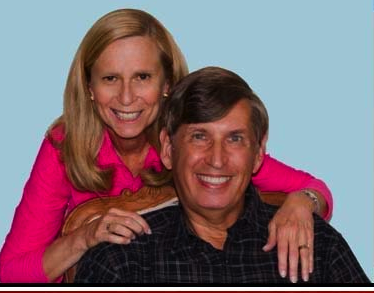
Today we’d like to introduce you to Dr. Deborah Shlian.
What is your background i.e. where are you originally from and what are your degrees?
I was born and raised in Baltimore, Maryland but moved to Los Angeles, California after finishing medical school and marrying my husband, Joel – also a physician. We completed our medical residencies in LA where we remained for the next 25 years, practicing medicine, teaching at the UCLA School of Medicine and actively participating in professional medical organizations. After I became the Director of Primary Care for the UCLA Student Health Service, my boss persuaded me to expand my administrative skills with a Master’s in Business Administration. I convinced Joel to enroll in the program with me and we were graduated from UCLA’s Anderson School of Management in 1988 – the first couple to complete the program together. Because of our unique credentials (at the time there were few MD/MBAs), we were asked to consult for virtually all of the major healthcare organizations- first in California and then nationally. We formed Shlian and Associates, Inc. and focused on executive search, helping to place talented physicians in senior management positions.
What motivated your move from Los Angeles to South Florida?
In 1998, we moved to Florida to help care for our parents. We weren’t sure at the time that the move would be permanent, but after 20 years in Boca Raton, I can finally say that Florida is home. In fact, after featuring Los Angeles in most of my previous novels, Silent Survivor takes in place in Delray Beach.
How did you begin your writing career?
I was always interested in fiction writing – even as a youngster. I wrote plays and poetry from grade school through high school including several musicals produced at summer camp. However, my interest in science won out when it came to choosing a career. Joel was an editor on the high school newspaper and generally preferred nonfiction. Early in our medical careers we teamed up on several clinical research projects which were published in scientific journals like JAMA, the New England Journal of Medicine and the Family Practice Research Journal. We also wrote a health column in a local magazine, some of the copy for Dr. Art Ulene’s Today Show health spots, several chapters in medical texts, a few nonfiction books including a self-help handbook for National Blue Cross/Blue Shield, a mentoring guide for women in medicine and management and another for non-clinical people interested in healthcare management careers.
How did you get started writing novels?
It was only after more than a decade working as a physician that I actually decided to write a novel. I wanted to write a nonfiction book about the rise of managed care (Joel and I had practiced in one of the oldest HMOs in the US and had a unique perspective on what we saw as a revolutionary change in medicine). Unfortunately, publishers in New York in the 1980’s had barely heard the word HMO and told us that the concept would never fly east of the Rockies! A friend suggested writing a novel and weaving my concerns within a story. Unfortunately, my first attempt was too didactic; I didn’t even try to have it published. However, it inspired me to study the craft of novel writing. Robin Cook, a physician and best-selling author, was just getting popular at the time and it was clear that in the context of fiction, he could tell a story that also dealt with some difficult life issue.
Why medical mystery/thrillers?
To me, a good doctor is really a detective. He or she must take various clues (patients’ symptoms, their physical signs and their story or history) and figure out what’s really going on – that is, make a diagnosis. So the choice of writing a mystery versus any other genre seemed natural. Since the 1980’s I have co-written three medical mystery/thrillers with my husband (Double Illusion, Wednesday’s Child and Rabbit in the Moon) co-written two in an ongoing series with a physician colleague from California (Dead Air and Devil Wind which feature radio talk show host Sammy Greene). My newest thriller, Silent Survivor, will be released at the end of July. It’s the first novel I have written on my own. All of my novels so far have been published by major publishers and all have won several literary awards including four Royal Palm Literary awards from the Florida Writers Association. Rabbit in the Moon won the Gold Medal for the Florida Book Award. Two of my novels have been optioned for screenplays.
How has medicine influenced your writing?
I think the fact that I am a physician has had an enormous influence on my fiction writing. Certainly I have selected medically related themes in all of my novels so far. Also, because I have had an opportunity to get to know so many different individuals over the years, to learn about their lives from a kind of intimate perspective that is quite unique, I have a breath of experiences from which to draw my characters and situations. Even though some people call my books medical mystery/ thrillers, I have tried very hard not to write the same book each time out.
What is unique about your main character, or setting in Silent Survivor?
Mackenzie (Mac) Dodd is a 30 year old, ex-Army nurse who has returned to Florida from Iraq to care for her dying mother. She’s a war veteran with the horrors of both what she witnessed and what she endured through deployment as a woman in the military haunting every waking moment and taunting her when she dreams. Unable to stop a young Marine’s suicide, Mackenzie blames herself. As she attempts to come to terms with the guilt she harbors, Mackenzie reaches out of fellow vets with PTSD, encouraging them to share their experiences on her blog Silent Survivor. It soon becomes apparent that camouflage extends beyond the bodies of fallen American soldiers and Mackenzie finds herself ensnared in a web of conspiracy, deceit and a sense of duty and honor that could ultimately cost her life.
How long did it take you to write Silent Survivor?
Silent Survivor took almost two years to write – primarily because this was the first novel I’ve written without an outline. I had a major premise for the story (a covert government experiment with serious unintended consequences), but the subplots only emerged as the story unfolded. It gave me a unique perspective – almost as though I was as much an observer as a reader. For example, one of the characters, Viv Wallach, a young ethical hacker, suddenly emerged and became a major actor in the plot. She helped take the story in a direction I hadn’t originally considered.
What do you like most about being a writer?
I get great joy when someone who has read one of my books tells me how much they enjoyed the story and/or the characters. To know that I can take a blank page and create something that people appreciate is a wonderful feeling.
How do you discipline yourself to do your writing?
The hardest part is to get started on a project. I seem to find all kinds of ways to procrastinate. But once I have outlined a story or as in the case of Silent Survivor, settled on the main premise, then I am very focused. I just finished the third in my Sammy Greene series which should be released sometime next year, so I am in between novels at the moment, currently in the musing stage.
When will Silent Survivor be available and where can people but the book?
Silent Survivor will be released on July 31st as an eBook and paperback. Hopefully, an audiobook will be available sometime in the fall.
Here is the link for the preorder: Here’s the link to Amazon: https://www.amazon.com/dp/B07D7JD1QF?ref_=pe_2427780_160035660
Here’s the link to the trailer:
Contact Info:
- Email: [email protected]


Getting in touch: VoyageMIA is built on recommendations from the community; it’s how we uncover hidden gems, so if you know someone who deserves recognition please let us know here.