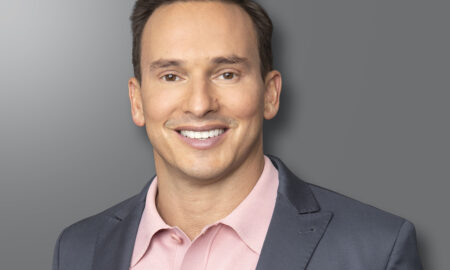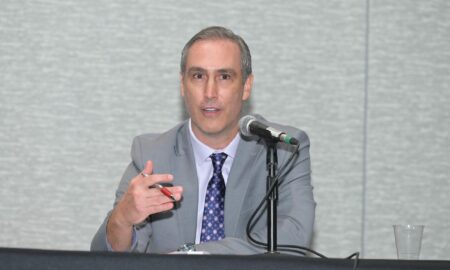






Today we’d like to introduce you to David Young.
David, let’s start with your story. We’d love to hear how you got started and how the journey has been so far.
I worked for the FBI for eight years as an accountant. But before I started working for the FBI, had a brief stint at flight school where I got my private pilot’s license (my whole life I had wanted to be a commercial pilot). Then, I decided after my first year of college to change direction and majored in finance and accounting—that’s how I ended up at the FBI. Fast forward after about five years into the FBI, I was talking to a coworker about drones and became more interested in them.
At the time (late 2015), I realized that in order to fly a drone commercially, you had to have a full pilot’s license to fly a regular manned aircraft. I had a pilot’s license at the time, so I thought this might be a good opportunity to make some side cash since obviously not everyone had a pilot’s license. I also found out that in order to fly with a pilot’s license, you needed something else called a 333 exemption (a big paperwork process with the FAA where you have to apply for all these exemptions from all these different rules). After several days and weeks of figuring that out, I thought, “There’s probably other people that need help with this paperwork process as well.” I then set up a small website and started advertising my services to help other people with the 333 exemption process.
I quickly found a lot of demand from people wanting to fly drones commercially. I thought, wow, this seems like a quickly growing market. I helped people for about three months and then the government changed the laws to where now you needed to take a written exam, and if you did that, you got something called a remote pilot certificate which allows you to fly drones commercially—without a full pilot’s license and within certain parameters. Essentially, I saw this legislation coming and started working to develop a prep course. I met two other people at a conference, Andrew Zimmitti—an attorney, and Colonel Don Berkhoff—a meteorologist who used to be in charge of all-weather programs for the United States Air Force at the Pentagon. Don is a pretty big deal in the weather world. Andrew and Don partnered with me and helped me to create a prep course for the exam you have to take to become a licensed pilot, which is often referred to as the Part 107 exam.
Over the past two years, I’ve scaled my business and grew my staff to take over the customer service aspects and different day to day operations. I eventually outsourced all the paid advertising to someone who did that for a living. That’s when things really scaled larger. We now have five regular staff members and a slew of other contractors that we use on an ad hoc basis. We are closing in on $1 million a year in sales and still growing.
Overall, has it been relatively smooth? If not, what were some of the struggles along the way?
I would say yes, definitely. Whenever you’re first starting something, you put a lot of work in upfront without any real promise of the payoff per se. This is especially true with something that’s more of a business rather than something like consulting—where you’re trading time for money. Consulting work is a bit more clear of a payoff because someone’s hired you to do a job and they pay you by the hour to do that job. When you’re building a business that sells products or memberships—anything like that—that’s not necessarily a time for money trade so you usually do a lot of work upfront without any type of guaranteed pay-off a result. You do all this work and put what you have out there for sale.
In my case, I sell online courses and you don’t know if anybody’s going to actually buy it. So, when I first started, I spent several months putting together a course for the Part 107 exam and then I launched it out. As I’ve mentioned, I was able to put together 5,000 people on an email list and only two of those people ended up purchasing anything. That was about $20,000 of spending and I only had $200 in revenue to show for it—which was obviously not ideal. In summary, trying to figure out how to get more sales was the biggest obstacle. Then, I tried paid advertising and that didn’t seem to be working in any type of profitable way.
So, I turned away from paid advertising because it got expensive pretty fast. At that point, I turned to look for affiliates—other people to promote my products. If someone from their audience ended up purchasing, they got a percentage of that sale, which allowed me to grow the business without having to spend a lot of upfront money on marketing and without having to build a large audience on my own first. Once I was able to bring in revenue with affiliate marketing, I was able to expand into other avenues like trying paid to advertise again. Later on, we got a little bit better at optimizing our website for search engine traffic.
The second thing that was an obstacle was managing people. I was good at doing the work, but then once it came to assembling a team—freelancers and others—it became uncharted waters to manage all those people and projects. It’s a little more trial and error and asking other people who have been there before you. I had to get good business mentors; I ended up doing that a lot.
Please tell us about Drone Launch Academy.
Drone Launch Academy creates online courses and resources for people who want to fly drones commercially. The main thing we are known for is a prep course that you have to take to fly drones in the US (Part 107). That is the main area of expertise. We are continuing to partner with other industry experts to help drone pilots continue their education after getting their remote pilot certificate. We want them to be a better, safer pilot and to have more opportunities.
What sets up apart is that we have a staff of the most experienced people in the drone industry—i.e., the weather section is taught by a man who used to be in charge of all-weather operations for the Air Force. Another staff member who teaches about regulations is a lawyer in DC who used to be a naval JAG attorney and handles drone law in his practice. I teach the rest. I’m a private pilot and I also have my advanced ground instructor from FAA. That means I am certified by FAA to prepare students for their knowledge exams. I can sign off on a students’ preparedness for the exam.
Also, we are the only company that, if you complete prep course and fail, we not only refund your money but give you $150 to re-take the exam.
What are you striving for, what criteria or markers have you set as indicators of success?
Personally, I really like—and look for—things that are scalable. It’s not about time for money, I want to control my own time and I’d like work that is relatively low stress.
Business-wise, it’s all about customer results. If people are passing exams and we are getting good feedback, then they see that the value is more than what they are paying. If people are doing well in their grade and telling us about it, we feel good.
Contact Info:
- Website: www.dronelaunchacademy.com
- Phone: 888-820-7205
- Email: david@dronelaunchacademy.com
- Facebook: www.facebook.com/dronelaunchacademy.com


Submit a story: VoyageMIA is built on recommendations from the community; it’s how we uncover hidden gems, so if you know someone who deserves recognition please let us know here.