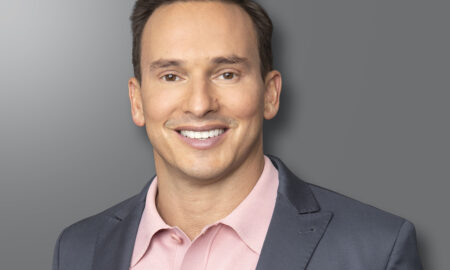






Dr. Luis Javier Peña-Hernández, MD, FCCP, a lung health specialist at PCSI, received his Doctor of Medicine degree from Pontificia Universidad Javeriana Bogota Facultad De Medicina in Colombia in 1999. He completed his residency in Internal Medicine and sub-specialty training with a fellowship in Pulmonary and Critical Care medicine at the Henry Ford Hospital in Detroit Michigan. He also served as a pulmonologist and intensivist at MidMichigan Physicians Group and as an assistant professor of medicine at Michigan State College of Human Medicine before relocating to Palm Beach County, Florida. I sat down to talk with Dr. Pena and discovered what a fascinating life he has led.
What brought you to Florida, Dr. Pena?
Florida was strategically close to my home country of Colombia. I can travel back and forth easily while living in the United States.
Did you always want to be a doctor?
No, not always. When I was in high school my grandfather fell ill, with congestive heart failure. During the process of his medical treatment, I made a connection with his physicians. That’s when I became interested in taking caring of people and decided to go to medical school.

Do you have anyone you consider as a role model?
While I was an intern, in Colombia, I worked with a nephrologist in his mid-eighties. One night, I had to call him around two o’clock in the morning. I was embarrassed to be calling him so late and apologized to him. He told me not to worry about it, that’s what we had signed up for. I was impressed that a man in his eighties would be so willing to help me, in the middle of the night. When I learned more about him, I discovered not only was he an excellent physician, an editor for nephrology books, a diver, and a runner. He was my role model.
Have you had any profound moments or experiences, in your medical career, that you could tell us about?
I dealt with war in my home country of Colombia. We took care of injured soldiers and other groups. Even though we kept a little stash of things like gauze and cardiac catheters, sometimes patients and their families would have to find their own medical supplies. That is what made me realize and value how much we have here and how lucky we are to have the resources that we always have. The different reality of another country definitely models the way you see things.


How long ago was that, and how long were you there?
It was in 1999. I was doing my social service in Colombia. A full year of social service is required. I was in a little city hospital that was in a war area. We took care of people injured by gun shots, grenades and explosives. I remember this particular gentleman who lost his jaw and we had to intubate him. He was a young man and after an effort of ICU time, reconstructive surgery, and plastic surgery, that took four to five weeks, he survived. It was amazing.
What are some of your favorite hobbies?
Tennis and running are two activities I love, and I am a wine connoisseur. I enjoy the outdoors. I’m very excited, that the children are growing up, and we’re able to take them camping soon.
If you couldn’t be a doctor, what other profession would you chose?
It would be something in the field of communications. I love public relations and media. You can reach out to communities and connect people with the help they need.
What makes working with patients needing pulmonary and critical care special to you?
I love my specialty. It’s very comprehensive and deals with every stage of a patient’s illness and care. Sometimes I help people with an office visit, but I also care for patients in the hospital, and in critical care settings. Sometimes you can help people handle their chronic illness better, and sometimes you can improve their quality of life by helping them to sleep better. Depending on the patient’s stage of life and how acute their illness is, mine is a service specialty that helps people and makes a difference in their lives.
Image Credits: Lois Spatz Photography