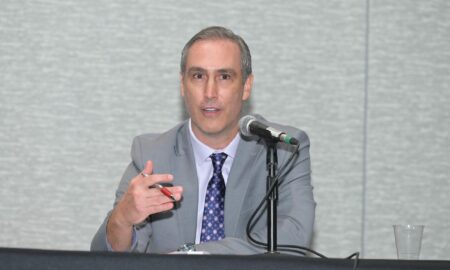





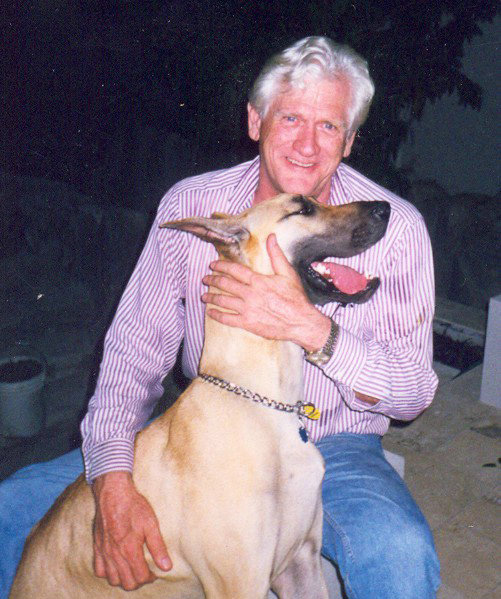
Today we’d like to introduce you to Robin Parker.
Thanks for sharing your story with us Robin. So, let’s start at the beginning and we can move on from there.
My father, Alfred Parker, was a noted Architect, who believed that architecture should “enclose space so that beauty and utility become one”. (You and Architecture, Alfred Browning Parker 1965; The Architecture of Alfred Browning Parker, Miami’s Maverick Modernist, Randolph C Henning 2011)
Dad was also a consummate owner/builder and at 16 I began working for him as a construction laborer. The pay was low and the work grueling under the Florida summer sun. Dad felt that knowing and experiencing how buildings were built was the first lesson toward becoming an architect. Eventually I graduated from the field into his office and after university and apprenticeship by 1976 I was a licensed architect working with him.
Also, like Dad, I became an owner-builder of homes for my growing family and like him, I would get purchase offers that could not be refused. Consequently, while working with dad on office projects, on weekends I was with wife and kids building a home, which inevitably was sold… as they say, “The shoemaker’s children go shoeless”.
My mother’s father, Dr. John C. Gifford, was an ecologist, botanist, forester, University of Miami professor and author. He wrote of sustainability and preserving natural resources in The Tropical Subsistence Homestead (1934) and Living by the Land (1945). Gifford had a huge influence on Alfred; in fact his’ writings prompted a visit where dad and mom first met. As a staunch environmentalist, dad was steadfast in using renewable materials in his buildings and in augmenting their energy requirements with careful siting and exploiting available renewable energy resources.
My architectural career became sidelined when dad and I embarked on exploring renewable energy, which became my responsibility. This was in response to the second Arab oil-embargo of the late ‘70’s when we decided to investigate energy resources that could reduce dependence on Middle East oil. Thus, beginning in 1980 and until his death in 2011, I directed our efforts to develop renewable energy technologies.
Being in the ‘Sunshine State’ we decided to initially explore solar-energy conversion. At the time solar-energy research was focused on photovoltaic (PV) conversion of photons-to-electrons with semiconductors and conversion of photons-to-heat on solid surfaces. Aware of Dr. Gifford’s work with plants and their photochemistry, dad and I decided to learn how plants use sunlight to process carbon dioxide and water into hydrocarbons and oxygen.
We, two environmentally concerned Coconut Grove architects, studied photochemistry, learning about chlorophyll and subsequently that the halogens chlorine, bromine and iodine can photochemically absorb solar energy and release it as chemical energy. We pioneered using halogens to efficiently absorb solar-energy volumetrically in a gas, in contrast to the relatively inefficient adsorption of solar-energy heating-up 2-dimensional solid surfaces, which then must be transferred by conduction to a working fluid. Adsorption of solar energy on solid surfaces results in large radiative losses and receiver failure due to thermal stresses. In contrast, photochemical absorption by gas mixtures that cannot re-radiate or ‘fail’ produces a very high-temperature (2,000o C) gas. We formed Solar Reactor Technologies, (SRT), with Dad as chairman and me as president, which put my architectural career on hold.
In 1984, the Department of Defense learned of our work and began funding SRT under the SDIO (Star Wars) program. With SDIO funding SRT teamed with TRW Space and Technology Group to investigate space-based solar-power generation and with the Rocketdyne Division of Rockwell International to explore solar-augmented rocket propulsion. In 1992 with the collapse of the Soviet Union, SDIO funding was cut and SRT took its research results to the U.S. Department of Energy (DOE). With DOE funding SRT further developed solar energy conversion, renewable hydrogen production, energy storage, multi-emission control and recovering hydrogen from wet-biowaste.
These technologies are now being further developed by Chemergy, Inc., a Florida corporation with me as chairman and my son, Melahn as president. Melahn, with engineering degrees from MIT, Caltech, and Stanford, is well-qualified to carry-on the next generation’s work towards developing sustainable renewable technologies.
In 2015, Chemergy completed a California Energy Commission (CEC) funded program to investigate processing sewage sludge into hydrogen and heat. Based on the results of the CEC program, Chemergy is now preparing a pilot-demonstration that will process sewage and another organic biowaste into low-cost hydrogen and heat while co-providing efficient energy storage.
This augers well with California’s goals to decarbonize chemicals and fuels, reduce greenhouse emissions and achieve zero net energy building standards by 2020 for homes and 2030 for commercial buildings. Chemergy’s five-year plan is to develop and market a small household appliance that will process kitchen, toilet, yard, postal and wastewater into hydrogen, heat and potable water. The goal is to make the home 100% energy self-sufficient.
When I was managing SRT, practicing architecture was a fond memory. However, with Melahn now leading Chemergy, I will return to being an architect-owner-builder. My new objectives are two-fold, first to build and secondly to incorporate the renewable and sustainable technologies that my grandfather and father pioneered in their writings and buildings. This would allow the buildings to produce and store net-energy from renewable resources, be disconnected from the electric-grid and with hydrogen fuel-cell powered vehicles independent of gas-stations…Realization of goals pursued by John Gifford and Al Parker decades earlier; linking utility, beauty and now sustainability in architecture.
Great, so let’s dig a little deeper into the story – has it been an easy path overall and if not, what were the challenges you’ve had to overcome?
Chemergy’s primary problem is lack of funding to pilot demonstrate its technologies; next, being in high-tech “challenged” South Florida with a ‘silicone beach’ mentality instead of a ‘silicone valley’; followed by being disruptive to established stakeholders:
1) HyBrTec eliminates the public’s economic and environmental cost of biowaste processing and disposal by being profitable, which will promote the privatization of small, low-cost distributed systems instead of large, expensive centralized plants,
2) HyBrTec recovers renewable hydrogen from wet-biowaste for 60% less energy that what it will produce when combined with oxygen,
3) HyBrTec produces hydrogen for $2 kg, which in a 50% efficient hydrogen fuel cell vehicle is equivalent to gasoline at $1/gallon without health or environmental issues,
4) HyBrTec co-provides an efficient energy storage capability, which promotes the development of intermittent renewable energy resources and the storage of low-cost off-peak power for discharge during high-value peak-periods.
We could disrupt revenue from: municipality’s wastewater treatment & biowaste collection, transportation, processing & disposal, the oil companies’ oil-wells, pipe-lines, refineries, distribution & sales network and the electric utilities’ power plants, transmission & distribution systems.
Alright – so let’s talk business. Tell us about Chemergy – what should we know?
Chemergy was incorporated in Florida to develop its patented HyBrTec processes that recover hydrogen from bio- and sulfurous-waste. Both feedstocks have negative-value, are highly-controlled, burdensome and regulated environmental pollutants. Biowaste feedstocks include any wet-cellulosic organic material. Sulfurous-wastes include gaseous streams found at oil refineries, oil & gas wells, landfills, power-plants and sewage treatment plants.
Most non-renewable hydrogen is produced by steam methane reforming (SMR) and renewable hydrogen from water electrolysis. Without considering efficiency, capital or operating costs, hydrogen from SMR has a minimum value of 1.45 times the cost of methane. In addition, for every ton of hydrogen produced by SMR, 10 tons of green house gas carbon dioxide is co-produced and released from the feedstock and processing. The electrolysis of water requires more electrical energy than what the hydrogen will produce when reacted with oxygen.
Processing Biowaste: All organic carbonaceous biowaste contains an unused remnant of stored solar energy that HyBrTec processes into hydrogen, non-anthropogenic carbon dioxide, thermal energy and inorganic residuals suitable as a micro-nutrient fertilizer. Feedstocks include: sewage, manure, wood & agricultural residuals, paper, plastics and municipal solid waste, Unique to HyBrTec is that 175-200 C heat is released in processing, which can be used to reduce the feedstock water content to 50%. Also, 4-6 gallons of potable water is co-produced per kilo of hydrogen.
In the U.S., waste-water treatment plants (WWTP), municipal solid waste, confined area feeding operations, and agriculture produce over 1 billion tons of biowaste annually that require costly treatment before use or disposal. Significant amounts of this material costs from $40-$200 per ton to process and dispose of. In addition, the amount of biowaste produced and its treatment and disposal cost are increasing annually.
Roughly 3-4% of total U.S. electricity consumption is used for the collection and treatment of water and wastewater, corresponding to more than 45 million tons of greenhouse gas (GHG) emissions annually. WWTP in the U.S. produced 7.9 million tons of biowaste in 2014. The latent energy in this biowaste could meet 12% of the nation’s electricity demand. Fuel and electricity represent a substantial cost to WWTP; one is required for nearly all stages in the treatment process, from the collection of raw sewage to the discharge of treated effluent.
In contrast to being a public economic, energy and environmental burden, HyBrTec technology will allow WWTP to be energy independent and profitable producers of energy and renewable fuel. Due to water shortages, higher energy & capital costs and a changing climate, water-energy issues are of growing importance in wastewater management.
In addition, if the residual energy content of the biowaste is omitted, the process offers a biowaste-to-hydrogen-to-energy efficiency greater than 100%. Byproduct carbon dioxide, which is organic in origin and not considered a GHG, is vented or used to synthesize other commodities including conventional liquid fuels, i.e. ethanol, methanol, ‘green’ diesel, etc..
Processing Sulfurous Waste: Hydrogen sulfide contaminates oil and gas wells, corrodes pipelines and equipment, is a poisonous byproduct waste from oil refineries and is often flared to reduce its environmental impact. Sulfur dioxide is a regulated emission from coal- and high-sulfur oil-fired power plants.
Petrochemical processing requires hydrogen to remove sulfur as hydrogen sulfide from gasoline, diesel, jet fuel and fuel oils through hydrodesulphurization. The U.S. has 150 refineries capable of processing over 18 million barrels of crude oil daily, which must be sulfur-free. The amount of hydrogen consumed depends on the sulfur content of the crude oil. Desulphurization requires 1 lb. of hydrogen for every 16 lbs. of sulfur removed, producing 17 lbs. of deadly hydrogen sulfide that refineries must further process into elemental sulfur, water or sulfuric acid. The sulfur content of crude oil has been increasing, a trend likely to continue for the foreseeable future.
Chemergy’s HyBrTec technology removes hydrogen sulfide and sulfur dioxide from gas-streams, including sour- and flue-gas effluent as recovered hydrogen, sulfur or sulfuric acid without consuming reagents in a regenerative process.
HyBrTec’s advantages over conventional hydrogen production processes Include:
Feedstocks are abundant, ubiquitous and are an environmental and economic burden to process and dispose of.
HyBrTec exploits two advantages that reduce capital and energy: At moderate temperature & pressure, processing is fast and yields are high, minimizing footprint and capital cost. The chemical bonds to release hydrogen are weak, requiring less than half the energy (40%) then what hydrogen will produce reacted with oxygen.
HyBrTec is a highly scalable technology able to process lb/day or tons/minute with commercially available components wherever feedstocks are available.
With electricity from renewable resources, HyBrTec is GHG neutral.
HyBrTec offers an economic triad: 1) eliminates waste on-site 2) produces $2/kg hydrogen and 3) co-provides energy storage, which makes intermittent energy resources dispatchable and more valuable promoting distributed micro-grids.
Accrues State and Federal renewable-energy tax incentives, loan guarantees, GHG cap & trade programs and electrical energy storage subsidies.
Chemergy is forever indebted to the early technical leadership and unwavering support to SRT from Professor Robert Hanrahan (Radiation Chemistry) at the University of Florida and Professors Peter Langhoff (Photochemistry) and Edward Bair (Halogen Chemistry) at Indiana University and their teams of dedicated post-docs willing work long hours for little pay. Their expertise and dedication have provided Chemergy with a sound foundation to go forward.
Chemergy is grateful and proud of its accomplishments; however, they would not have been without federal, state and industrial support. Beginning in 2010 the U.S. Department of Energy (DOE), and the Florida Hydrogen Initiative funded laboratory bench-top R&D of HyBrTec. Based on the success of this research and at the recommendation of Lawrence Livermore National Laboratory (LLNL), the California Energy Commission (CEC) in 2013 funded Chemergy to experimentally determine suitability of biosolids from the Delta Diablo WWTP, prepare a detailed system design & cost estimate of a demonstration and an economic analysis of a commercial system. Chemergy assembled a development team including LLNL, Albemarle, Harris Group, O’Brian & Gere, EnStorage, Taiji-USA, which with Delta Diablo engineered and spec-out an integrated system.
Is there a characteristic or quality that you feel is essential to success?
Perseverance…”Can’t never, could do anything”.
Contact Info:
- Address: 2523 Lincoln Ave.
Miami, FL 33133 - Website: www.chemergy.org
- Phone: 305-321-3677
- Email: [email protected]


 Image Credit:
Chemergy
Getting in touch: VoyageMIA is built on recommendations from the community; it’s how we uncover hidden gems, so if you know someone who deserves recognition please let us know here.