




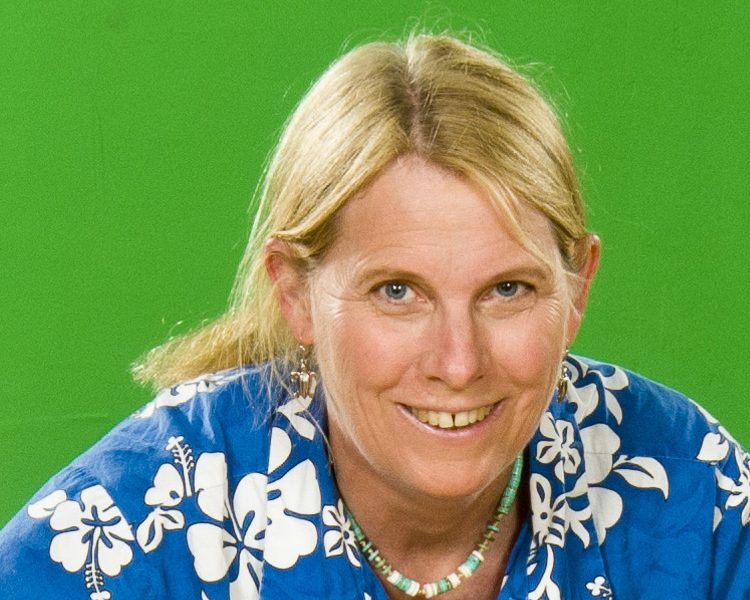
Today we’d like to introduce you to Jeanette Wyneken.
So, before we jump into specific questions about the business, why don’t you give us some details about you and your story.
I am a biologist, first and foremost. My areas of expertise span development (eggs and embryos) to adults, I rely on techniques from morphology, ecology, behavior and physiology.
I have spent much of my career studying various aspects of sea turtle biology that are important to conservation. I was challenged by colleagues in ecology and conservation management to identify the sex of neonate turtles in a systematic and non-harmful way. This information and need for an approach is important because sea turtles have environmentally determined sex (no sex chromosomes), they are not sexually dimorphic for about 15-30 years (depending on species), and knowing that enough males and females are produced is a key component of recovering species from risk of extinction.
I started measuring sea turtle nest environments in 2002 and developed a non-harmful way to identify neonate sea turtle sexes. My lab identified that sex ratios vary greatly across seasons and among years. Consequently, we have been measuring sex ratios across time to establish a baseline.
Recently, the sex ratios, which were female-biased, have become extremely female biased such that in a number of years, our samples have found no male neonates in South Florida. South Florida is an important nesting region for loggerheads, green turtles and leatherback turtles to nest.
Has it been a smooth road?
Once the technique was developed in year one, the measurements have gotten better. Sea turtles take about 15-3o years to mature. Collecting data to explain adult sex ratios takes a lot of work and a lot of fundraising. We are measuring the sex ratios that will be nesting in the nest 10-20 years. Yet, tracking how sex ratios change over time is important. A few bad years may be a blip or may be a problem. It is only in the context of a generation or so of results that we will be able to explain the changes.
Each year is a challenge to raise enough money to have keep the long term data collection going.
So let’s switch gears a bit and go into the Florida Atlantic University story. Tell us more about the business.
I direct the FAU Marine Lab at Florida Atlantic University (FAU). I am known as the sea turtle specialist at FAU.
I am proud of the students who have been trained in my lab who have gone one to become good scientists and conservation managers in their own right. I am proud that our data are of value beyond our sea turtle question to understand implications to biodiversity. I am also proud of the collaborations and partnerships we have forged.
We are located in the heart of very important sea turtle nesting beaches and important waters used by marine turtles, has migratory routes or feeding grounds. We can study aspects of biology that are difficult for others.
How do you think the industry will change over the next decade?
It is hard for me to describe this as an industry. It is a multifaceted research program. I see the future as bringing in more molecular techniques to understand whole organisms, I also see new engineering tools becoming available to help us understand the the environment.
Contact Info:
- Address: FAU Marine Lab
1801 N. Ocean Blvd.
Gumbo Limbo Environmental Complex
Boca Raton, FL 33432 - Website: http://www.fau.edu/newsdesk/articles/gumbo-limbo-turtles.php
- Phone: 561 297 0146
- Email: [email protected]

Image Credit:
Shawn Heinrichs
Getting in touch: VoyageMIA is built on recommendations from the community; it’s how we uncover hidden gems, so if you know someone who deserves recognition please let us know here.