



Today we’d like to introduce you to Luma Guarçoni.
Thanks for sharing your story with us Luma. So, let’s start at the beginning and we can move on from there.
Hi! Great! So my name is Luma Guarçoni; I was born in the island of Vitória, Espirito Santo in Brasil, grew up in São Paulo and later moved to Miami, where I started my education in fashion design over a decade ago at DASH (Design and Architecture Senior High) in the Design District.
In 2014 I went to Central Saint Martins in London to continue my education in fashion and since then, I’ve taken advantage of many opportunities that life has brought me. I’ve lived between London, NYC, Paris and Milan for the past six years and worked in very different positions throughout the fashion industry, I’ve worked as a design assistant for Hood by Air, as a pattern maker for large companies in the Garment District in New York and as a design intern for Marni in Italy and Acne Studios in France.
After more than ten years working and studying fashion, I believe we are past the point of creating and producing for the sake of beauty. I think fashion and its extensive chain of production can be used as a tool for social progress if we reimagine the purpose of our industry and find an ethos bigger than our desire to innovate, we need to take responsibility not only for the world we live in but for the world we are creating.
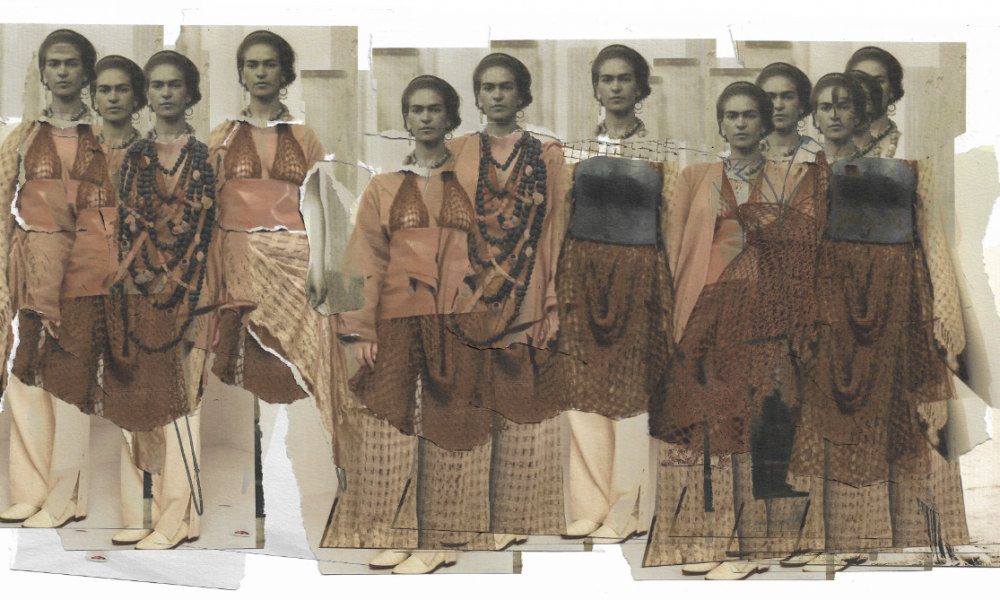
So now I am starting on the final stage of my education and developing my graduate collection, which will be a case study of the inclusion of traditional Brasilian artisanal techniques in high fashion, the result of a project I’ve been developing for over two years. This way, I hope to present artisanal techniques as the high luxury items that they are while incorporating them in the fashion context and therefore promoting a truly ethical, sustainable and responsible production chain.
We’re always bombarded by how great it is to pursue your passion, etc – but we’ve spoken with enough people to know that it’s not always easy. Overall, would you say things have been easy for you?
Definitely not a smooth road but every challenge was also a great opportunity for growth. Higher education can be very expensive so after my first two years in London due to financial troubles I decided to take a year out to work in the industry to make some money and get some experience, that’s when I worked as a design assistant for Hood by Air, as a pattern maker in the garment district in New York for big corporations and as a sort of do-all freelancer and I could never imagine how fundamental that experience would’ve been to shape no only my career and but also my character. It helped me focus more on what I did and did not want for my future; when I went back to school, I had a completely different posture, it gave me hands-on experience that influenced my work, it toughened me up in a good way and gave me a devotion to my practice; I had a newfound ownership of my craft and of my path.
Moving around so often definitely presents challenges with assimilation, reconciling identities, carving out your own space, traveling between different classes and social perceptions, language barriers, cultural translation, the list goes on! But the upside of that is so much bigger; you become adaptable, you strengthen your sense of self, you become more self-reliant and independent! The most challenging out of all of them was London; going to school and creating in a culture so different than mine, where I felt like my work and I were lost, was extremely frustrating; I feel that my tutors and peers sometimes didn’t have the tools to properly asses and process my work so it felt very discouraging to be in an environment like that. It took some time for me to rebuild my self-confidence and creative self-esteem after that experience but I know that in the long run it was a turning point for me to start seeking my own validation instead of the institutions I am in or from the people around me.
So, as you know, we’re impressed with the project you’re currently developing in Brasil – tell our readers more, for example what you’re most proud of and what sets you apart from others.
The project I’m currently working on is my graduate collection at Central Saint Martins and the central purpose of it t is to function as a case study for the inclusion of traditional Brazilian artisanal techniques within the context of high fashion and how that could be used as a tool for social progress. I’ve been researching and developing this project for over two years, speaking to national organizations, renowned scholars in the field and pioneers of this work to fully think through all the implications and better plan for such a complex experience. The project will be speaking to a multi-pronged approach to sustainability, one that respects and honors the four pillars of it and is therefore promoting a truly ethical and responsible production chain within the fashion industry.
In the environmental front the traditional techniques I’ve been working with use ancestral knowledge of local nature to sustainably harvest and preserve the natural fibers they work with such as banana tree fiber (which is a byproduct of local banana plantations), organic cotton naturally dyed with local plants, and clay responsibly harvested from the mangrove in my hometown and tinted black with the extract from the bark of the red mangrove tree. There are also techniques that use upcycle materials such as a fisherman community in the south that uses discarded shrimp fishing nets and turns them into yarn to later be woven into fabric, and an artisan in the north that works with discarded wood to make delicate and colorful marquetry.
Economically the cooperatives and artisans are usually from a more vulnerable socioeconomic background and their work can very often be exploited by third parties and middlemen while also being undervalued because of the context in which they are being presented. In this instance the project proposes to collaborate directly with the artisans to produce the materials and the pieces and this way maximize their earnings and simultaneously give exposure to their work in a more affluent market that can value their craft and financially incentivize it.
The social sustainability aspect is probably the most fundamental part to me, and it varies between each group, but generally speaking artisanal techniques are a significant form of financial emancipation for women. In Brazil approximately 80% of artisans are female and through their craft they find an empowerment and autonomy that is seldomly available for women in rural parts of the country. The act of working in cooperatives and associations gives them a place and time to come together as a community; the flexible work schedule and rhythm allows them to incorporate it into their routine of caring for their children, husbands, and elders; the valorization of traditionally “feminine” crafts uplifts their self-esteem; the increased demand attracts the youth to the technique and this way preserves ancestral knowledge; the financial independence they can achieve gives them social freedom and the power to self-determination, the list goes on! This way the inclusion of artisanal techniques in the fashion industry would directly impact the quality of life of these women by providing a steady and continuous demand of their work in a manner that fits their reality, and it is a proven fact that when women are empowered and uplifted they uplift their community alongside them.
And lastly, cultural sustainability, which is a fundamental part of strengthening a country that is still reckoning with its colonial past. In this case the valorization of traditional techniques and the process of reimagining ways for it to exist and interact with a modern world are essential for long term preservation of ancestral knowledge. In a globalized industry such as fashion it is extremely important for countries to have a strong sense of self and an informed cultural identity so that they can provide a counterpoint to the hegemonic narrative that has been the driving force in shaping ideas of beauty worldwide while simultaneously exporting neocolonial practices that perpetuate oppression through its production chain.
After more than ten years working and studying fashion, I believe we are past the point of creating and producing for the sake of beauty. I think fashion and its extensive chain of production can be used as a tool for social progress if we reimagine the purpose of our industry, if we find an ethos bigger than our desire to innovate, and if we take responsibility not only for the world we live in but for the world we are creating.
So, what’s next? Any big plans?
Closing this chapter in my life means a lot more to me than just graduating, it will have taken me seven years to get my BA but I wouldn’t have done it in any other way. This past decade of learning, working and meeting people has been so rich and inspiring that I am just really looking forward to ending it in a high note that celebrates all the experiences I’ve had and can showcase the person and creative I’ve become. And once this is done a whole new chapter starts, saturated with possibilities, some that I probably can’t even think of yet so I like to leave it open for whatever comes!
Contact Info:
- Website: www.lumaguarconi.com
- Email: lumaguarconi@hotmail.com
- Instagram: https://www.instagram.com/lumaguarconi/


Suggest a story: VoyageMIA is built on recommendations from the community; it’s how we uncover hidden gems, so if you or someone you know deserves recognition please let us know here.