




 Today we’d like to introduce you to Justin Alexander Hill.
Justin Alexander, please share your story with us. How did you get to where you are today?
Being raised in Miami, my experiences have been different than many individuals whom I’ve formed relationships with. Born in a single parent household, I was taught the majority of my habits from my mother. Growing up, I realized how much of a hard worker my mother was. She worked day in and day out, sometimes she would work on off days just to make sure we both had food on the table. My childhood experiences were similar to every child born in the ’90s. We watched Nickelodeon in the mornings and played outside in the evening after the conclusion of school.
I was always one to stood out – I was taller than my peers, and I was always the leader of a given activity. Whether I was the class president or the caption of a sports teams; I was always referred to as the leader. Looking back, I realized this is where I get the leadership qualities I have today.
During the early stages of my teen years, I started to learn about the world around me. I would ask questions, sometimes I would annoying myself on how inquisitive was for such a young age. I wanted to know what made people cry, laugh or what brings them joy. I gathered information on their experiences and learned from what they’ve been through. In high school, I was never the student with the best grades and the and student who sat top of their class — but I was bright. However, my credentials never reflected my true potential. Sometimes, I’m still surprised at how I graduated high school — this fact still remains a mystery.
Basketball was my first love. I would play day in and day out. I had dreams of going professional (I think every black boy had these sorts of dreams) I realized I had no shot at making this a reality. I took it seriously, but not as serious compared to others around me. I knew I had to do something with my life if basketball wasn’t going to work out. My parents were at the point where they’re beginning to ask questions, “Hey Justin, what exactly do you want to do with your life?:” of course, I had no clue. I would ponder amongst this question countless hours throughout the day, realizing the answer won’t come overnight – the Bible does say God only helps those who help themselves.
I remember this day vividly, on the way to a friends house, my 1994 mercury broke down in front of Miami-Dade college. I knew it was going to break down due to the fact I had very little money to maintain its lifespan. The day was abnormally hot and humid and I needed some fresh air. I walked out of my car and sat at Miami Dade’s North Campus. I saw friends from high school who were enrolled in classes and from what it seemed they were enjoying themselves. I wasn’t one of them – heck, I just wanted some AC. Not knowing this will be the day that would change my life. After three hours of waiting and signing enrollment forms, I finally became a college student. Having to catch the bus home, hot and sweaty I told my mother the good news and her excited can be felt a mile away.
College was the turning point in my life. I began to read, write and study more. I had to teach myself how to ultimately be a student. I never had this foundation, and public schools accessible to us lack these sorts of resources. There were times when I wanted to give up and quit. I would ask myself “why are you doing this Justin?” I knew the greater goal was to become the first college graduate in my family. My goal was to make not only my parents proud, but I wanted to make myself proud.
When I graduated Miami-Dade, the next steps were to enroll at a four-year university. I never thought I would become a student enrolled at a four-year university. The majority of young Black men in my city never saw this reality. Some are blue collar works, others are locked away in the modern day slavery of the prison system and some are unfortunately no longer with us. I wanted to take a different route. I wanted to be an example – a good example for those around me.
Majoring in the field of Political Science, I began to see the world from a different angle. I began to recognize society and life for what it was and what it has always been. Remember when I told you how I began to read more? The first book I read on my own was “The Autobiography of Malcolm X.” All of the work and goals I have for my life and the community I attribute to this book. The writings in this book ultimately changed my life’s perspective, it gave me a reason to fight. As black men, we are not born with a silver spoon in our mouth. We are born with the odds stacked against us. We’re born into the American system with a half deck. Let’s make it easier for the readers to understand. Have you ever watched the NBA playoffs? The winner is determined by a best of seven series, the first team to four wins is the winner, and continues to the next round. Black men and women are born being down 3-0 in the series, and as a result, we must do every and anything possible to stay alive and keep fighting.
I never wanted to become another statistic. I always saw myself as one to help those in need. My people – my Black people are in need and we need help. I wanted to be that person to project hope and aspirations in my communities.
Overall, has it been relatively smooth? If not, what were some of the struggles along the way?
The road has not been easy. I believe life gives us certain obstacles in our life to put us where we are, and where exactly we’re supposed to be. I love how my story aligns with many other black men and women in Miami. My story is one that is easily relatable. Coming from a single parent household is a reality that many of my friends face. As a black male who is looking to be successful, I know the road will continue to give me obstacles and roadblocks. I’ve fought my entire life. Staring at death in the face at the birth my mother always knew I was going to be a fighter. I’ve fought for what I believe in, and I will continue to fight for what is right and for what is wrong — even if it may cost me my life. Anything I’ve gotten has been done through dedication.
During my time in the movement and organizing, I’ve faced many episodes of depression. As a result, I’ve used my experiences with mental illness and wanted to be the beacon of hope for those in my communities who are facing these sorts of challenges.
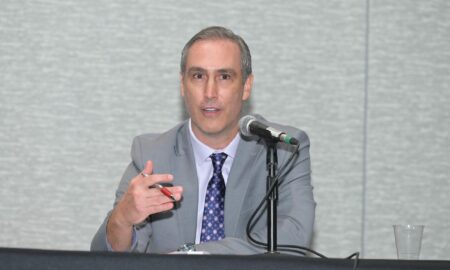
The movement opened doors for myself that allowed me to gain knowledge on topics, which have bettered my influence in the community. In 2018, I became the Brand Ambassador for African-Americans through the NAMI Foundation (National Alliance for Mental Illness). I use my platform from the brand to speak at public events about the lack of attention to mental health within the black communities.
The Become a Threat Movement – what should we know? What do you do best?
The word Threat is defined as a danger to society, a nuisance, a problematic group that needs to be dealt with.
In a recent interview for Mieux Magazine, I stated, “We started the Become A Threat movement because I noticed that members of our black and brown communities were being labeled as threats. It wasn’t because of what they believed in or the education they had or the art they created; but, it was because that’s how the media portrayed us. We were labeled as threats because of our physical statures instead of our mental structures.”
In 2017, a childhood friend and I founded the Become a Threat Movement. The Become A Threat movement promotes liberation, passion and social involvement in the community. Minorities are often time seen as threats in the eyes of the system. We’re not seen as individuals who can shape a system, educate young minds and heal those who are in need. We want to change the connotation of the word threat and establish a positive idea of individuals who feel they aren’t on a leveled playing field. Of course, this is seen through the eyes of blacks and other minorities; however, this is not a movement based on Black, White, Hispanic and Asian—this is a movement based on the positive aspects of what it means to be a threat in the eyes of society. We celebrate those who are doing good in the community. Anyone from teachers, rappers, activist, and artist. Those who believe in the message have purchased shirts and other merchandise that helps spread and promote the message.
Become A Threat explores different stories and experiences that embrace what Become A Threat means. Former Felons changing their lives and the community in the process. A young gardener teaching neighbors how to grow their own foods properly. We want to acknowledge incredible people while we still can.
We want to hold more community events for job searches, education drives, and transition courses for those who recently exited the jail systems. We know that more apparel will come; but he wants to ensure that every shirt is worn with a purpose, even if that purpose comes from others.
We believe once Blacks and other minority figures alike begin to organize and work as a collective that’s when things will begin to change. We want to see change and we believe we can be the change makers in our communities. The most satisfying response we have gotten from the movement are those to align with our goals and mission. It has gotten too much of a response where we have seen members abroad in places like Africa join and want to work with members in the states to organize and work with us. We are creating change and we can’t wait to see the results.
Do you feel like there are certain traits that increase the likelihood of success?
I am a struggler and a striver.
I’ve realized that in the world of activism you won’t always see the results you want to see right when you want them. But I believe that’s what makes the work so beautiful. You have to keep fighting and keep pushing for what you believe in. The quality of wanting to strive has kept me balanced and has made my work in the community prosper. There are times where I want to stop the work I’m doing, but I remember I have children at my former grade schools looking at to me. I realize I have students who I taught in Thailand who are looking at me as a leader. I remember a good friend of mine doing time in federal prison telling me to keep going — so I have no choice but to keep pushing. I will continue to fight the fight and continue to fight with my head held high, and my feet on the ground.
There will come a time when the black man in American will be recognized as victorious and I want to contribute to the work towards that overall goal.
Contact Info:
- Website: www.justinhillonline.com — personal website
- Phone: 3054581729
- Email: info@JustinHillonline.com
- Instagram: @Jahblvk
- Twitter: @Jahblvk


 Image Credit:
@FiendBlvck — Twitter/Instagram, @GoldenSogno_ — Twitter, @NamiFIU — Instagram
Getting in touch: VoyageMIA is built on recommendations from the community; it’s how we uncover hidden gems, so if you know someone who deserves recognition please let us know here.