



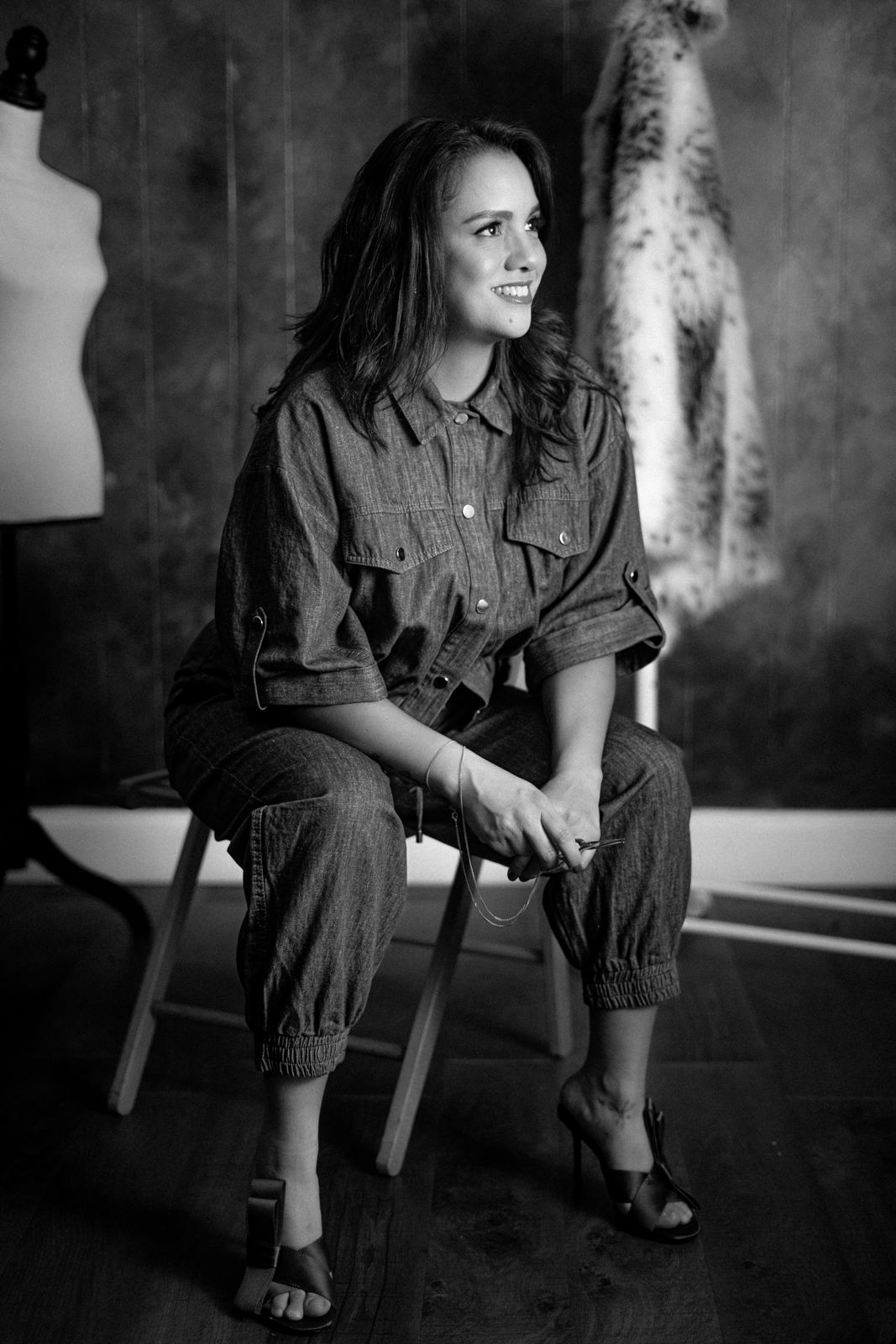
Today we’d like to introduce you to Marisela Rondon.
Hi Marisela , can you start by introducing yourself? We’d love to learn more about how you got to where you are today?
I started my career in Venezuela more than 20 years ago. My background is in Communications, with a focus on Public Relations and Advertising, and I began my professional career working in advertising productions. Very early on, I found my way into wardrobe and discovered that it was where I really wanted to be.
I started working on commercials and different advertising projects, and over the years I developed my career as a Wardrobe Stylist and Wardrobe Designer, eventually expanding into television, music videos, film, and other audiovisual productions.
What I love about this work is that wardrobe is not just about putting clothes on someone. It is about understanding the story, the character, the environment, and what the director wants to communicate visually. At the same time, there is a very practical side to it. You have to know how to make that vision work within the reality of each production.
My career has also been shaped by working in different countries. After many years in Venezuela, I moved to Ecuador, where I continued working in advertising and production. Later, I moved to the United States and had to establish myself again, this time in Miami.
Starting over in a new country was challenging, especially in an industry where relationships, reputation, and trust are so important. I had already built a career, but I was entering a new market where people didn’t know my work yet. With time, I began building new relationships with production companies, directors, producers, and other professionals, and one project led to another.
Today, I work primarily in commercials, music videos, film, and audiovisual productions. Throughout my career, I’ve had the opportunity to work with many different brands, artists, directors, production companies, and creative teams across Latin America and the United States.
Looking back, I think one of the most important parts of my story has been the ability to adapt without losing who I am professionally. I’ve worked in different countries, different markets, and through many changes in the industry. Each stage has brought new challenges, but also new opportunities to grow, continue learning, and keep doing the work I chose more than two decades ago.
Would you say it’s been a smooth road, and if not what are some of the biggest challenges you’ve faced along the way?
It definitely hasn’t been a completely smooth road. I think one of the biggest challenges in my career has been having to rebuild professionally in different countries.
When you have already established yourself in one market, you build relationships, people know your work, and there is a certain level of trust that comes with that. Moving to another country means proving yourself again. I experienced that first when I moved from Venezuela to Ecuador, and later when I moved to the United States. Each market has its own way of working, its own network, and even its own expectations.
The industry itself can also be unpredictable. As a freelancer, there are very busy periods and there are slower ones, so part of building a long-term career is learning how to navigate those changes without losing focus. Production has changed a lot over the years as well, from the way projects are created and produced to how we communicate, research, source wardrobe, and present our work.
Another challenge is that wardrobe is a very creative job, but it also requires a lot of problem-solving. Things can change very quickly on a production. A concept changes, a location changes, an actor changes, something doesn’t fit, or you have very little time to find exactly what the project needs. You learn to stay calm, find solutions, and keep moving.
I think those experiences have made me more adaptable and more confident in my work. After more than two decades in this industry, I know that challenges are part of the process. You learn from them, adjust, and continue.
Alright, so let’s switch gears a bit and talk business. What should we know about your work?
I’m a Wardrobe Stylist and Wardrobe Designer, working mainly in commercials, music videos, film, and audiovisual productions. My work starts with understanding the idea behind each project and then finding the best way to translate that visually through wardrobe.
I love the creative part of the process — the research, the references, the colors, the textures, finding the right pieces, and seeing everything come together. But for me, wardrobe is never only about making someone look good. It has to make sense for the project, for the character, for the artist, or for the story we are trying to tell.
I think one of the things I’m known for is being very professional, creative, and someone who really knows how to work as part of a team. At the same time, I’m very comfortable taking responsibility and leading my department. I take a lot of pride in being someone people can trust with their eyes closed. If I commit to a project, I give it everything I have. I will keep looking, researching, calling, changing things, or finding another way until I know we have everything the project needs — and always a little more.
Experience has also taught me to anticipate problems before they become problems. Production can change very quickly, and I like my department to be prepared for that. One thing I’m very proud of is knowing that when I arrive on set, wardrobe is ready. Of course unexpected things can always happen, but I try to think ahead, have options, and make sure my department is never the reason a production has to stop or struggle. After so many years doing this, that preparation has become almost instinctive for me.
I also think the human side of the work is very important. We work long hours, under pressure, with many different personalities and constant changes, so respect, communication, and professional integrity matter a lot to me. I believe you can lead, make decisions, and have high standards while still being human and treating people well. That is very important to the way I work.
What I’m most proud of is my career as a whole. I’m proud of every project because each one has been part of my story and has taught me something. I’m proud of having built and sustained a career for more than two decades, across different countries and different markets, and I’m especially proud that after all these years I still love my profession the way I did from day one.
If I had to say what sets me apart, I think it is that I will always find a solution. Things change, something doesn’t arrive, something doesn’t fit, a concept changes at the last minute — and my instinct is never to stay focused on the problem. My instinct is: okay, what can we do now? There is always another option, another idea, another way to make it work.
And even after all these years, I still get excited when a new project comes in. I still enjoy opening a treatment, starting the research, imagining the possibilities, and seeing an idea become real. I feel very fortunate that after more than two decades, that feeling is still there.
Do you have any advice for those looking to network or find a mentor?
If you are just starting out and you are interested in the audiovisual industry, I think the best thing you can do is look for opportunities where you can learn while also showing what you are capable of. In the beginning, some of those jobs may not pay much, or may simply be opportunities to learn and gain experience, but being on set is where you really begin to understand how the industry works.
I think the new generation has a huge advantage because of social media. If you have talent, you now have this incredible window where you can show your work, your ideas, and your point of view. But in this industry, being creative is not enough. You also have to show that you are responsible, respectful, fast, efficient, and that you understand your role and your responsibilities. You have to know your limits, be willing to learn, and always give your best.
For me, the set is where you really show what kind of professional you are. That is also where many connections begin. Someone sees how you work, how you solve a problem, how you treat people, and later they may recommend you for another project. That is how a lot of opportunities happen in this business. A set is, in many ways, a networking room.
You can also find mentors in those same spaces. Follow stylists, agencies, production companies, creatives, and media you admire. Pay attention to their work, go to industry events, introduce yourself, offer your help, and show genuine interest in learning. Sometimes mentorship starts very naturally, simply because someone sees your attitude and is willing to give you an opportunity or share what they know.
And I think this applies even when you have been in the industry for many years. You should never stop learning. Keep educating yourself, stay curious, be responsible, and protect your professional ethics. People are always paying attention to how you work, and your reputation is something you build every day.
Contact Info:
- Website: https://www.mariselarondonstylist.com
- Instagram: @mariselarmstylist