


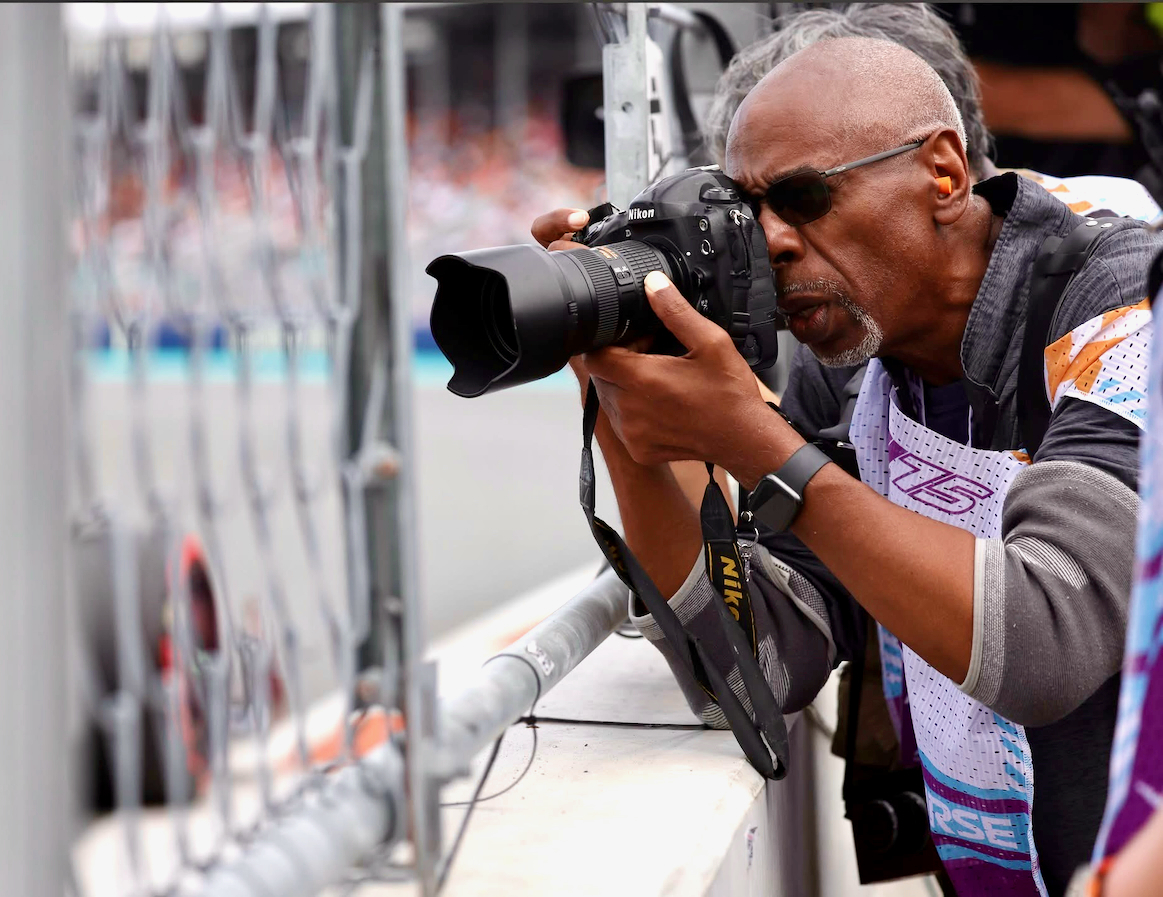
Today we’d like to introduce you to Gregory F. Reed, MFA.
Hi Gregory F., we’re thrilled to have a chance to learn your story today. So, before we get into specifics, maybe you can briefly walk us through how you got to where you are today?
Throughout my life, no matter where I was, there was service, there was music, and there was education.
My journey didn’t begin with a camera. It began on a train.
In the 1970s, every summer my parents—both educators and musicians—packed fried chicken and white bread sandwiches for the nearly two-day train ride from Miami back to Jackson, Tennessee. Long before it was common, my sister and I traveled by ourselves. We watched the South roll by through the train windows. Without realizing it, those journeys became my first lessons in observation.
When we arrived in Tennessee, our worlds separated. My sister went into town with my maternal aunts—three retired schoolteachers who filled their home with books, church, and discipline. I climbed into my grandfather’s well-worn, dented, paint-faded Chevy pickup truck.
For the rest of the summer, my grandfather and I were inseparable. We gathered eggs, slopped hogs, fished for catfish, harvested corn, collards, and watermelons, delivered groceries, visited the sick and shut-in, and cared for disabled veterans who lived on my grandparents’ property.
My grandparents never lectured about compassion or service. They simply lived it every day and expected me to help.
On weekends, I returned to my aunts’ house. Sunday meant church, singing in the youth choir, fellowship in the church banquet hall, reading books on the front porch, and watching crowds gather across the street at the Jackson Coliseum. They told me I was too young to attend the events by myself, and they would never take me.
Sunday night meant gathering around the television to watch The Ed Sullivan Show, where we celebrated seeing Black artists perform. We were allowed to dance and sing along as wildly as we wanted.
Looking back, I realize I was receiving multiple educations. My grandfather taught me the dignity of work and the value of serving others. My grandmother taught me compassion. My aunts taught me faith, discipline, and a lifelong love of reading.
Together, they taught me to pay attention.
Years later, when I picked up a camera, I realized photography wasn’t where my journey began. It was simply the language I found to express what my family had already taught me—that every person has a story, every relationship matters, and ordinary moments often become life’s most extraordinary memories.
That philosophy has guided my work for more than four decades as an editorial, documentary, and fine art photographer. Whether I’m photographing world leaders, artists, athletes, or neighbors in my own community, my goal remains the same.
I call it The Art of Witness.
I’m sure it wasn’t obstacle-free, but would you say the journey has been fairly smooth so far?
Starting out, the biggest obstacles were always in my head. I had one camera, two lenses, and no measurable experience. At credentialed events, most photographers carried massive amounts of camera gear. I had to learn to stay in my lane and focus on telling the story the way I saw it with the tools at my disposal.
I had to learn to control the space I was in—to hold my ground in the concert pit, move when I saw the opportunity, and make those decisions in the moment. Most of all, I had to do it with integrity and respect for others in the profession. Sometimes that meant something as simple as looking behind me before moving so I didn’t step into another photographer’s line of sight.
The credentialing process forced me to identify my strengths and weaknesses every time I applied.
Clients and editors either see the shot that tells the story or they don’t. If they do, they call you back for the next assignment or event. If they don’t, they might give you a second chance—or not.
Either way, you learn that preparation, professionalism, and consistency matter every time you walk into an assignment.
Alright, so let’s switch gears a bit and talk business. What should we know about your work?
I specialize in editorial storytelling through photography that reveals the relationships, emotions, and moments that make us human.
I am an editorial photographer. I observe. I look for the story. I communicate. I look for the path of least resistance that will reveal the story. Then I disappear into the environment and watch the story unfold.
Click.
That’s the moment when the story reveals itself.
No matter the subject, every person has a story worth telling. Presidents at a podium, athletes on the field, mourners at a funeral, proud schoolgirls in their one and only uniform—every assignment holds a truth worthy of being revealed.
When I’m on assignment, I arrive as early as possible. I introduce myself to my on-site contact, then begin observing the people whose stories I’m there to tell.
I work with available light whenever possible. An on-camera flash interrupts the quiet interaction between people and shifts the focus of the environment to me. My goal is to seamlessly blend into the background, allowing life to unfold naturally.
I patiently watch for the emotions, relationships, and subtle details that tell me when the story is happening.
Click.
Editors and clients often tell me my photographs are beautiful. My wife, Tammy, of 33 years has taught me to proudly and graciously accept the compliment. What I’m most proud of, however, is being known for capturing images that place the viewer emotionally in that moment, allowing them to experience not only what happened, but what it felt like to be there.
If you had to, what characteristic of yours would you give the most credit to?
Patience. Consistency. Reliability.
Patience means arriving on location prepared for the inevitable “hurry up and wait.” Stories take time. Political speeches take time. The game-winning touchdown often comes in the final minute of the fourth quarter. Hair, wardrobe, and makeup don’t always finish on time. The best images can’t be rushed—they reveal themselves to those who are paying attention.
Consistency earns the trust of editors and clients who know they’ll receive the same level of professionalism and storytelling on every assignment. They know the images will be publication-ready and perform consistently across multiple platforms.
Reliability means showing up prepared, respecting the people I’m photographing, meeting deadlines, and delivering work my clients can depend on. They know I’ll arrive early, stay focused, and be fully present to capture the moments that matter most.
Those qualities may not be the most glamorous, but over the years, they have become the foundation of my career.
In editorial photography, trust is earned one assignment at a time.
Pricing:
- All assignments are custom quoted based on scope, licensing, location, and production requirements..
Contact Info:
- Website: https://www.gfrphotography.com
- Instagram: IG: greed2014
- LinkedIn: https://www.linkedin.com/in/gregory-reed-mfa-ab05866


Image Credits
Personal Photo by: Daniel Varela
All other photos by: Gregory F. Reed, MFA