


Today we’d like to introduce you to Ekaterina Khromin.
Hi Ekaterina, can you start by introducing yourself? We’d love to learn more about how you got to where you are today?
I remember myself sitting at my uncle’s enormous writing desk. Its surface was covered with soft leather, warm to the touch, and somehow it gave me a feeling of protection and possibility. I was only nine years old, but in that moment, I already felt the mysterious comfort of creating.
Around that time, my mother moved my little brother and me into my aunt’s apartment. The atmosphere there was difficult for me—unwelcoming and emotionally uncomfortable. As a child, I felt displaced and uncertain, searching for a place where I could feel secure.
That was the moment when I discovered something that would remain with me throughout my life: art could save me.
Drawing and creating became my shelter. Through imagination, I could enter another world—one shaped by color, stories, and forms instead of fear and discomfort. In that world, I was free. I could transform emotions into images and create places where I felt safe.
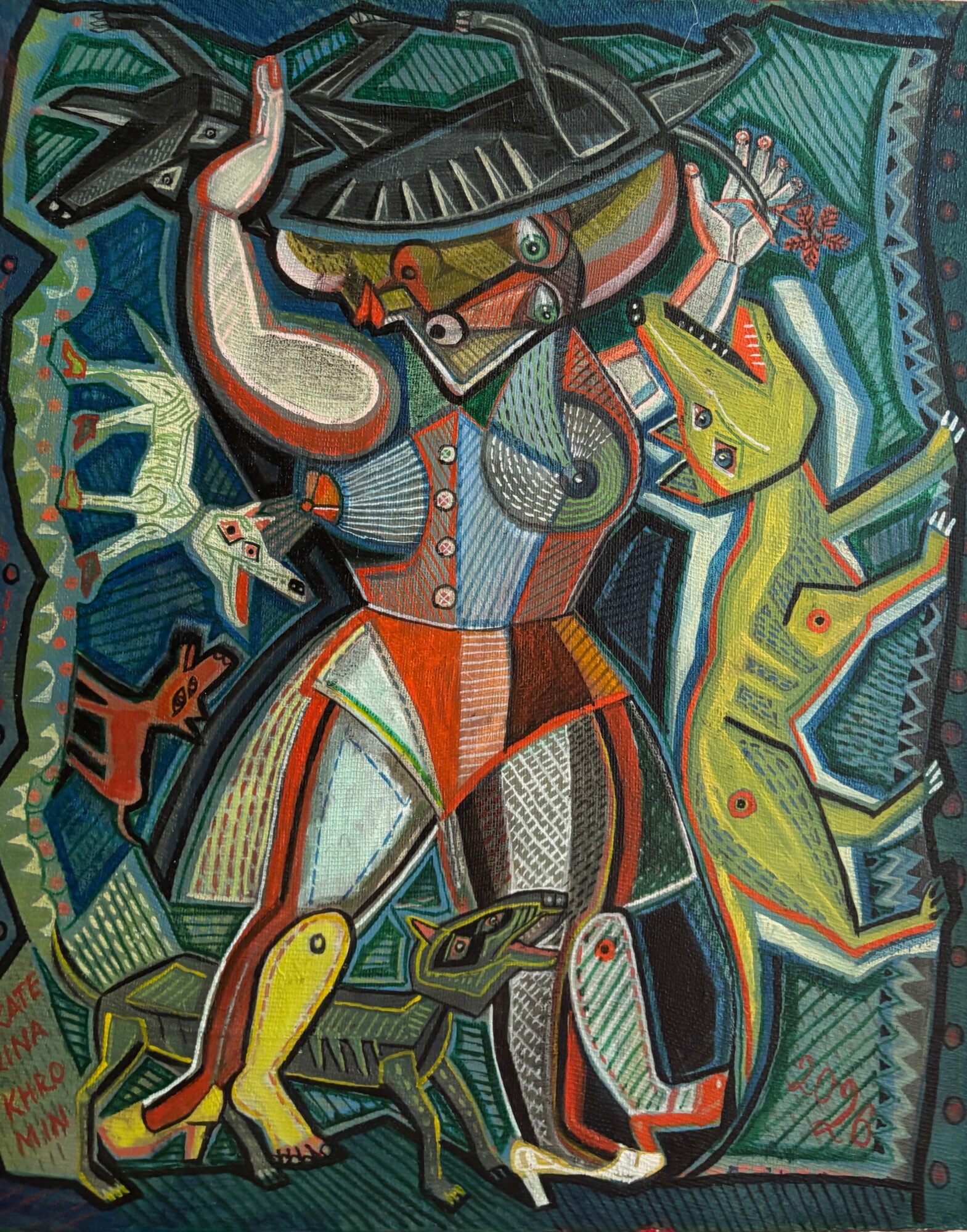
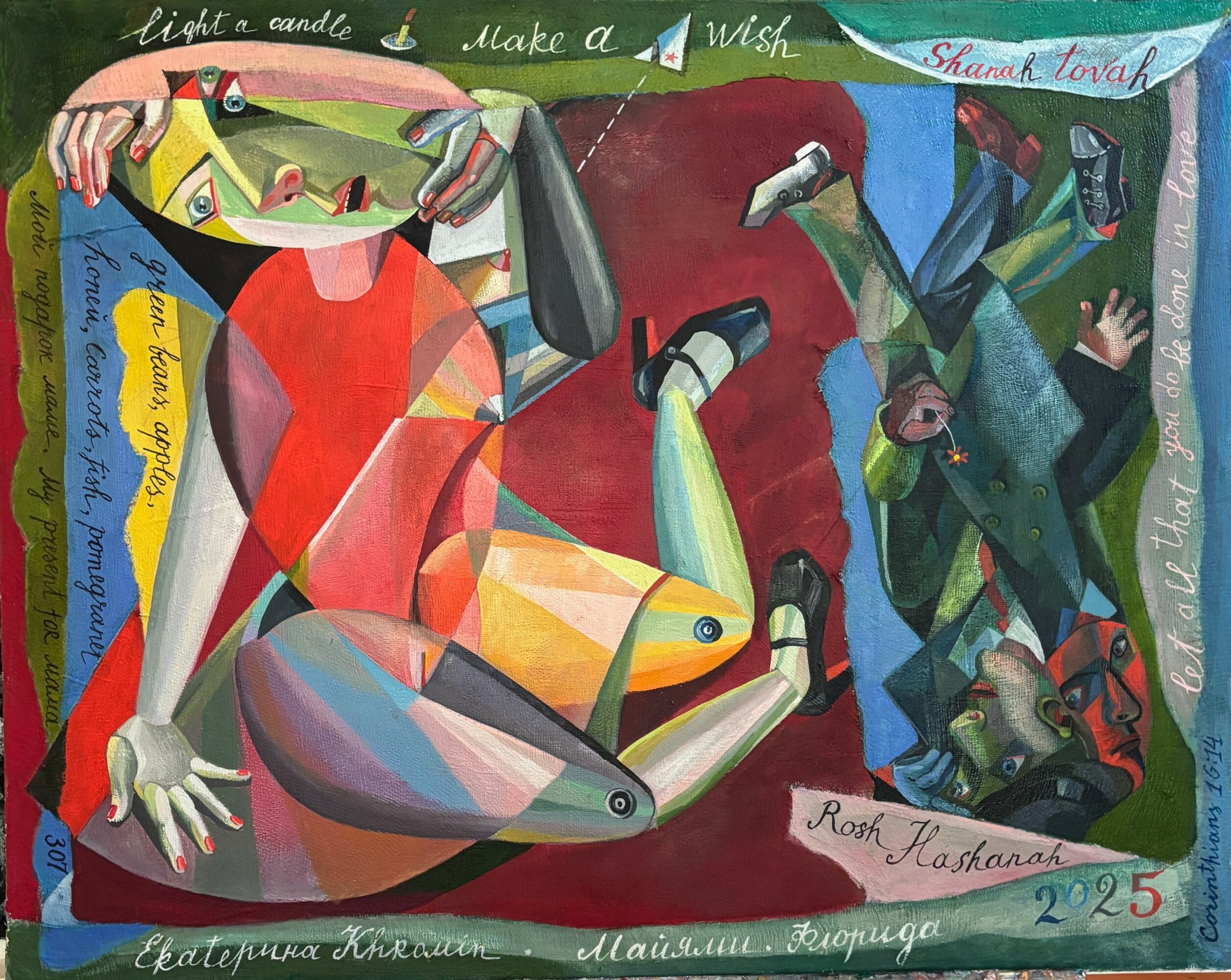
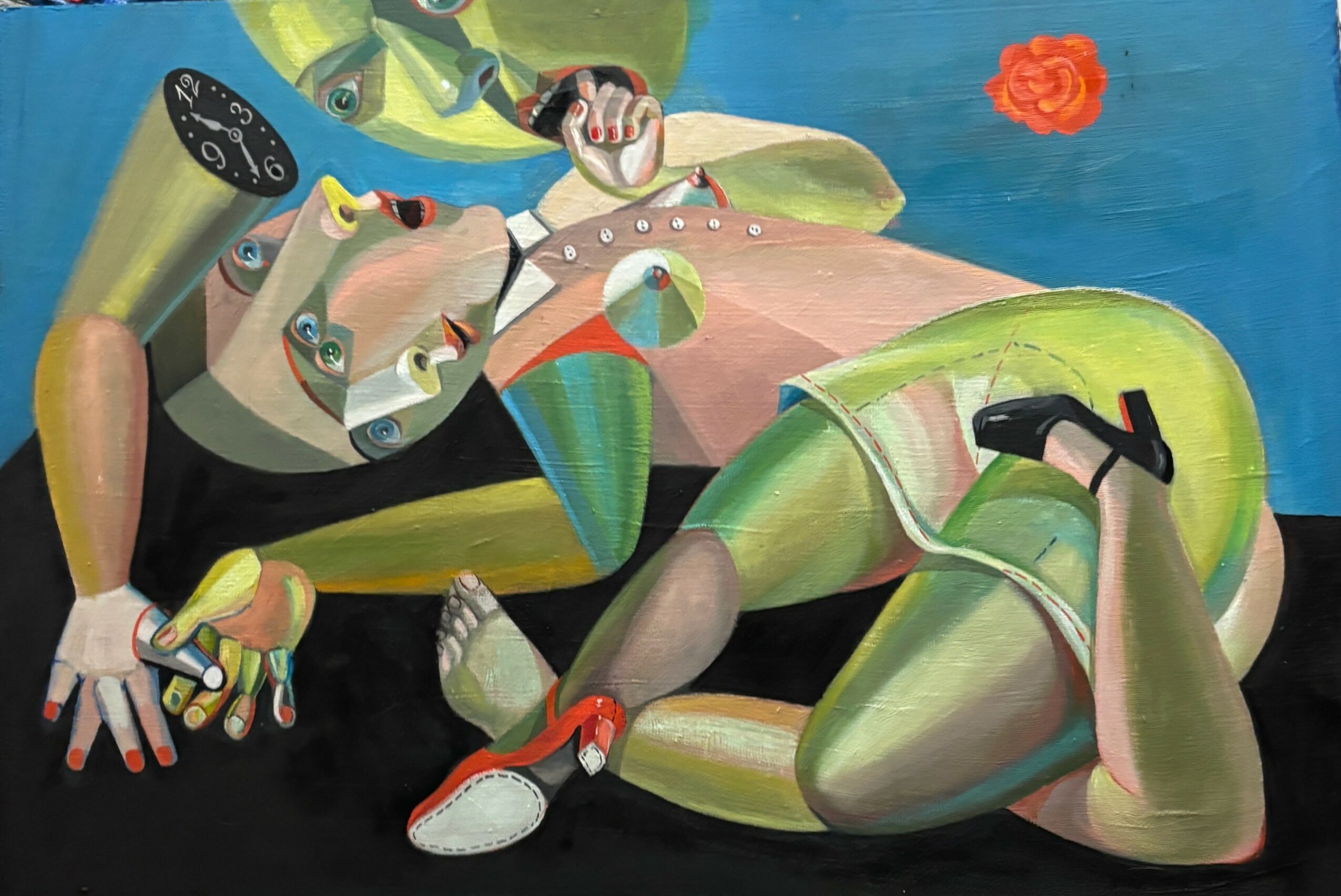
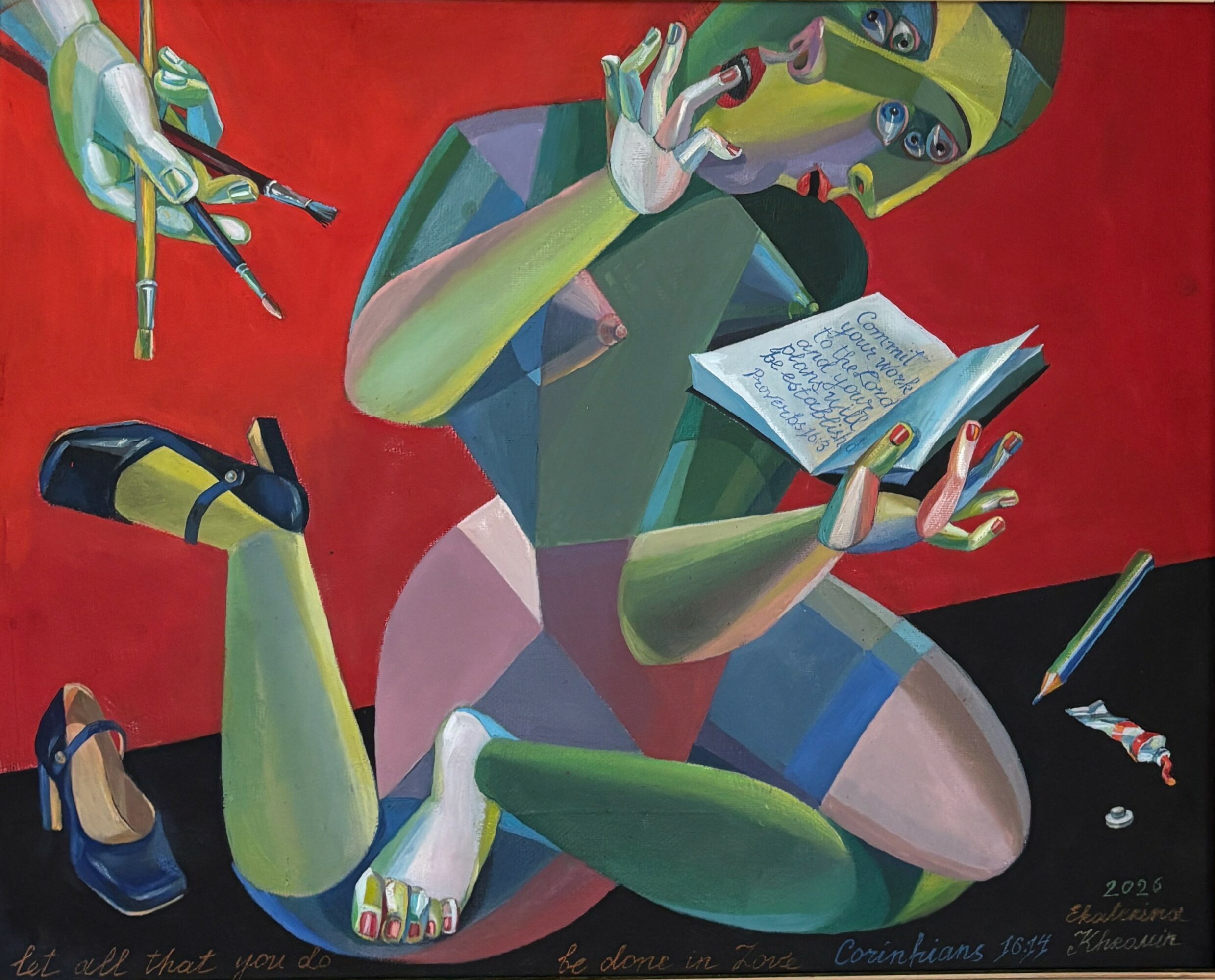
Without fully realizing it, I began to understand that I could see the world from a different angle—through my own personal point of view. At first, this appeared in my drawings of Andersen’s fairytale characters. Later, especially at art school, those images evolved into drawings of the false builders of a bright communist future. Yet somewhere beneath the surface, unconsciously, I kept painting the same ladies in petticoat dresses.
In my first year at art school, I was twelve years old and came for a consultation before the entrance exam. My future teacher asked me, “What color is the roof of the building across the window?” The roof was a traditional aluminum roof, and I answered, “It is grey.”
He looked at me and said, “A girl with such green eyes should definitely see the reflection of the green leaves of the trees above the roof, and the raindrops, which make the color of the roof different.”
“Green!” I shouted. The roof is green—with reflections and watercolor brushes of rain.
Can you talk to us a bit about the challenges and lessons you’ve learned along the way. Looking back would you say it’s been easy or smooth in retrospect?
After I graduated from the Imperial Academy of Art, my future husband introduced me to the world of nonconformist artists. We attended unofficial exhibitions, where Victor was an active participant. Those years opened a new perspective for me, but they also brought uncertainty and risk.
Non-conformist art existed on the margins, without institutional support and often under pressure.
Victor never expressed political views directly in his paintings, even though we discussed politics intensely in private conversations around the kitchen table with friends. His works were still lifes, landscapes, and compositions, and I felt they portrayed the reality around us far more truthfully than openly political images did.
Being surrounded by artists who chose indirect expression taught me another difficult lesson: not every form of resistance is loud. Sometimes the obstacle is finding a way to remain honest in your work without losing yourself.
Learning to trust my own way of seeing—and continuing despite uncertainty, expectations, and limitations—became one of the most important and difficult parts of my artistic journey.
The biggest challenge came when we arrived in New York City in 1990.
It was a profound cultural shock. To absorb the unknown evolution of art—which had been impossible to experience behind the Iron Curtain—left me feeling as if I had completely lost my footing. Everything seemed unfamiliar, and I had to rethink my place as an artist.
And yet, unexpectedly, my paintings began to find their way. They were sold by a street art vendor on 57th Street in Manhattan and even appeared decorating the windows of a fashionable clothing store.
These moments gave me encouragement and reminded me that art could still connect across worlds.
However, it was art conservation that helped us survive financially. We placed an advertisement in The New York Times and paid what seemed at the time an enormous fee. Through that advertisement, we found clients who recognized and valued the strengths of the Russian school of restoration.
Looking back, I understand that this period taught me another difficult lesson: sometimes survival and artistic identity must coexist.
Learning to adapt without losing myself became one of the most important and difficult parts of my artistic journey.
Can you tell our readers more about what you do and what you think sets you apart from others?
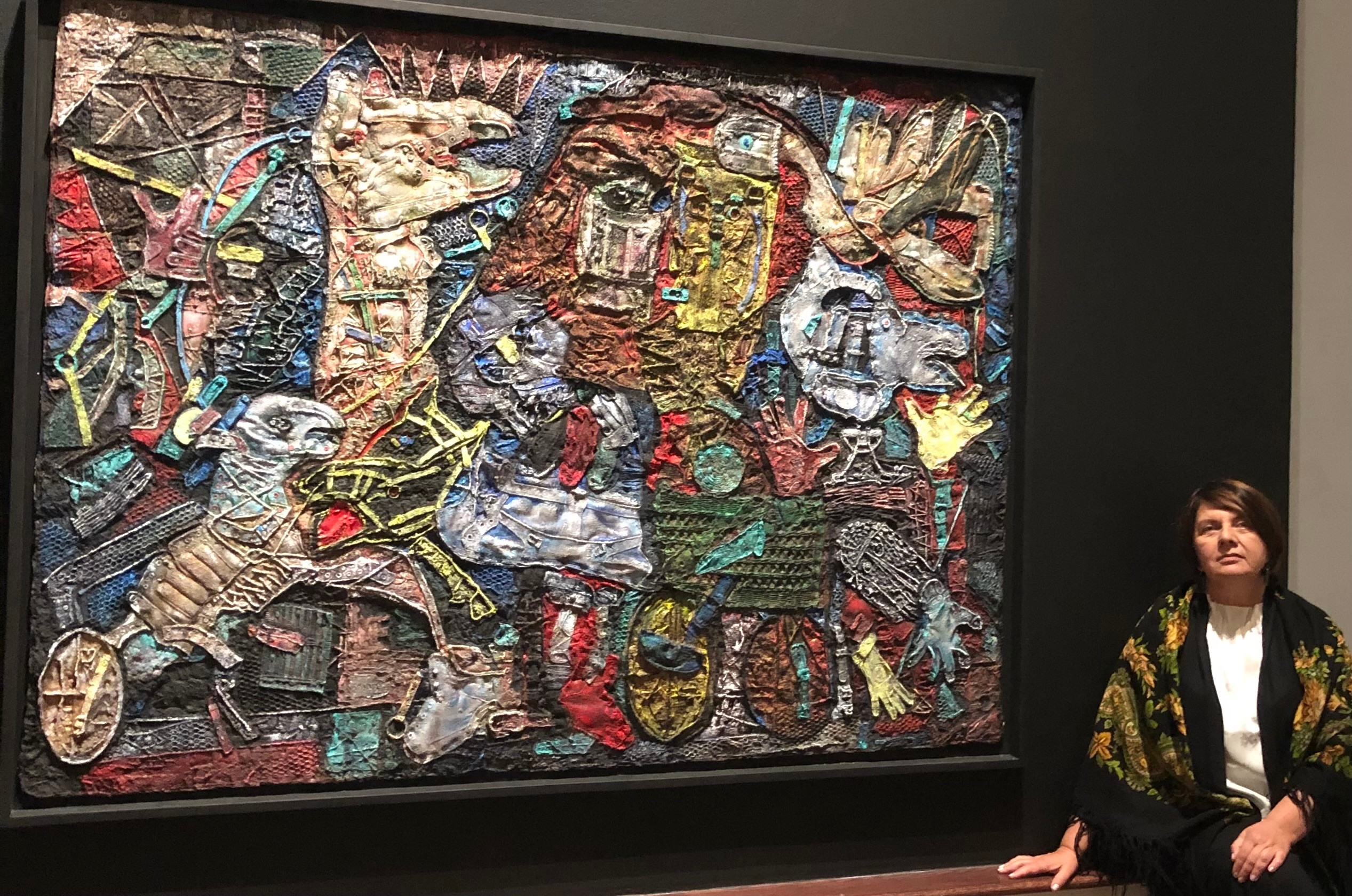
The Synergism method was born unexpectedly—out of reflection, observation, and a moment of emotional clarity.
It was my birthday. I was sitting on the bank of the Hudson River, mentally revisiting the difficulties of the previous year. Around me, the landscape held a strange contradiction: the riverbanks were covered with delicate yellow May flowers, yet scattered among them were fragments of garbage. Under the George Washington Bridge, the visible traces of human habitation made the scene feel melancholic and unsettling.
As I looked more carefully, my attention shifted from the broader landscape to the details—the intricate surfaces of stones, weathered driftwood, worn fragments shaped by water, time, and human presence. I became fascinated by their textures and began to think about them not as discarded objects, but as carriers of memory.
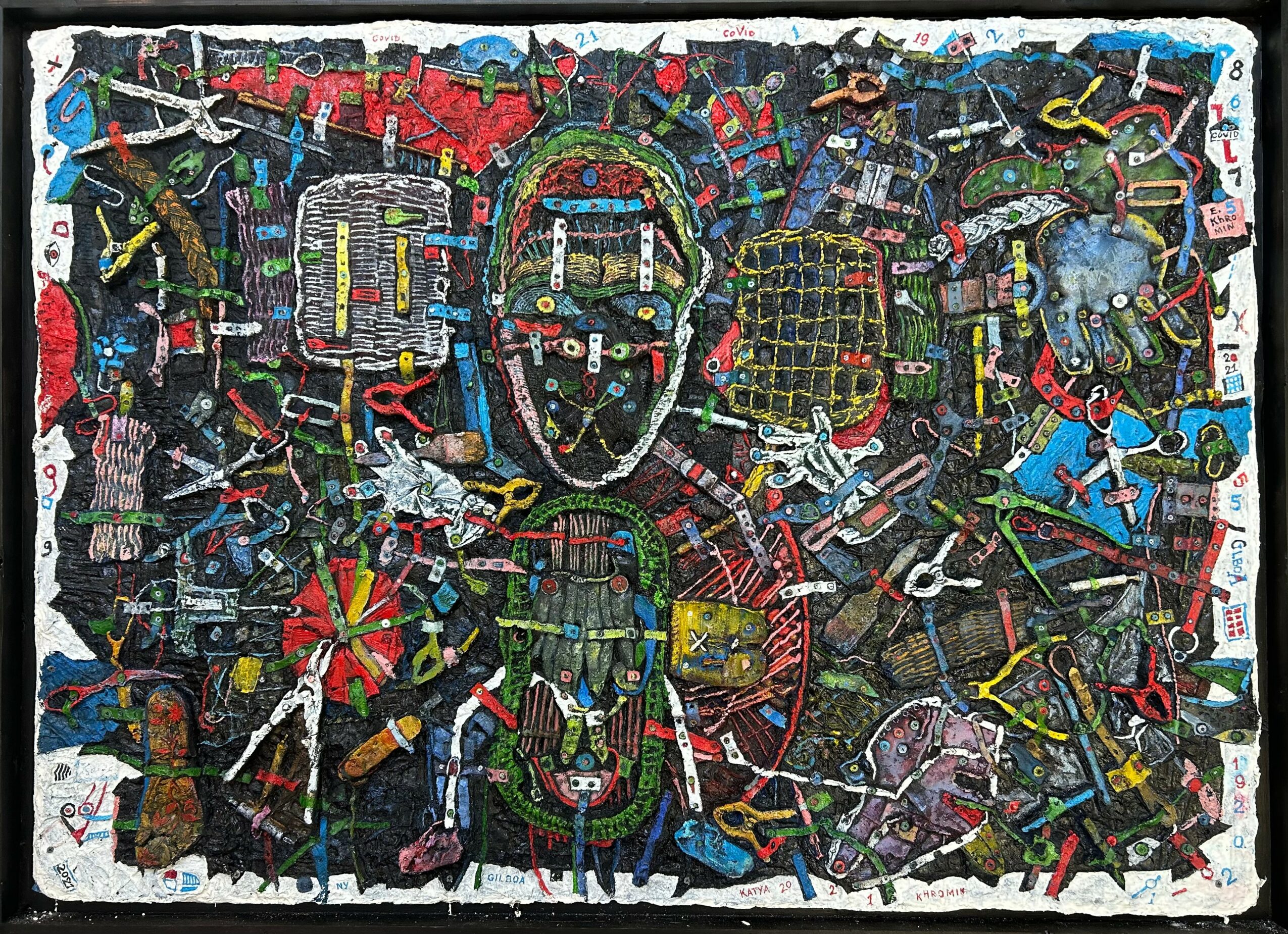
At that moment, the idea emerged: to preserve the imprint of objects—discarded, unwanted objects or their fragments—as a way of recording traces of experience and history.
Thus, the Synergism method was born.
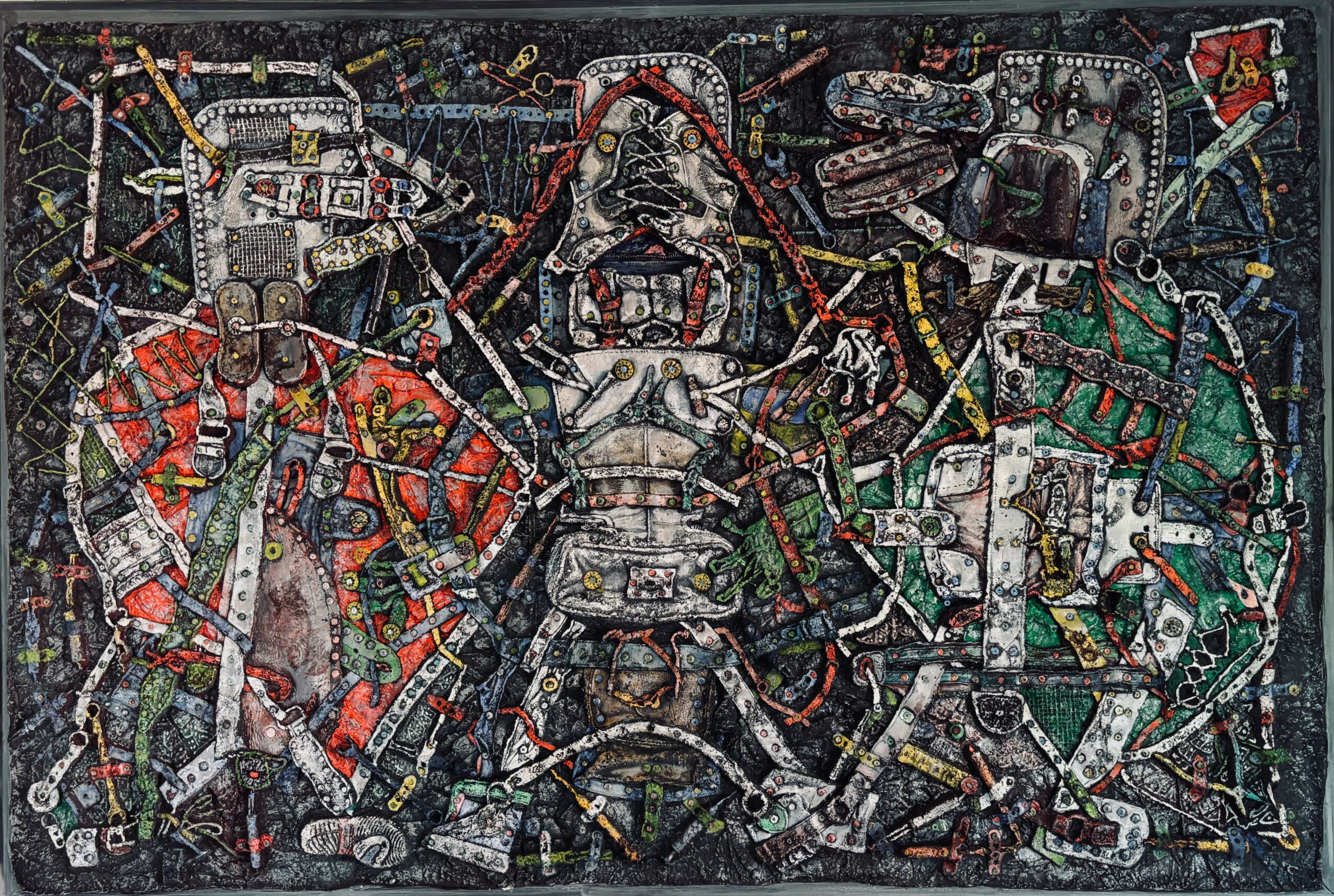
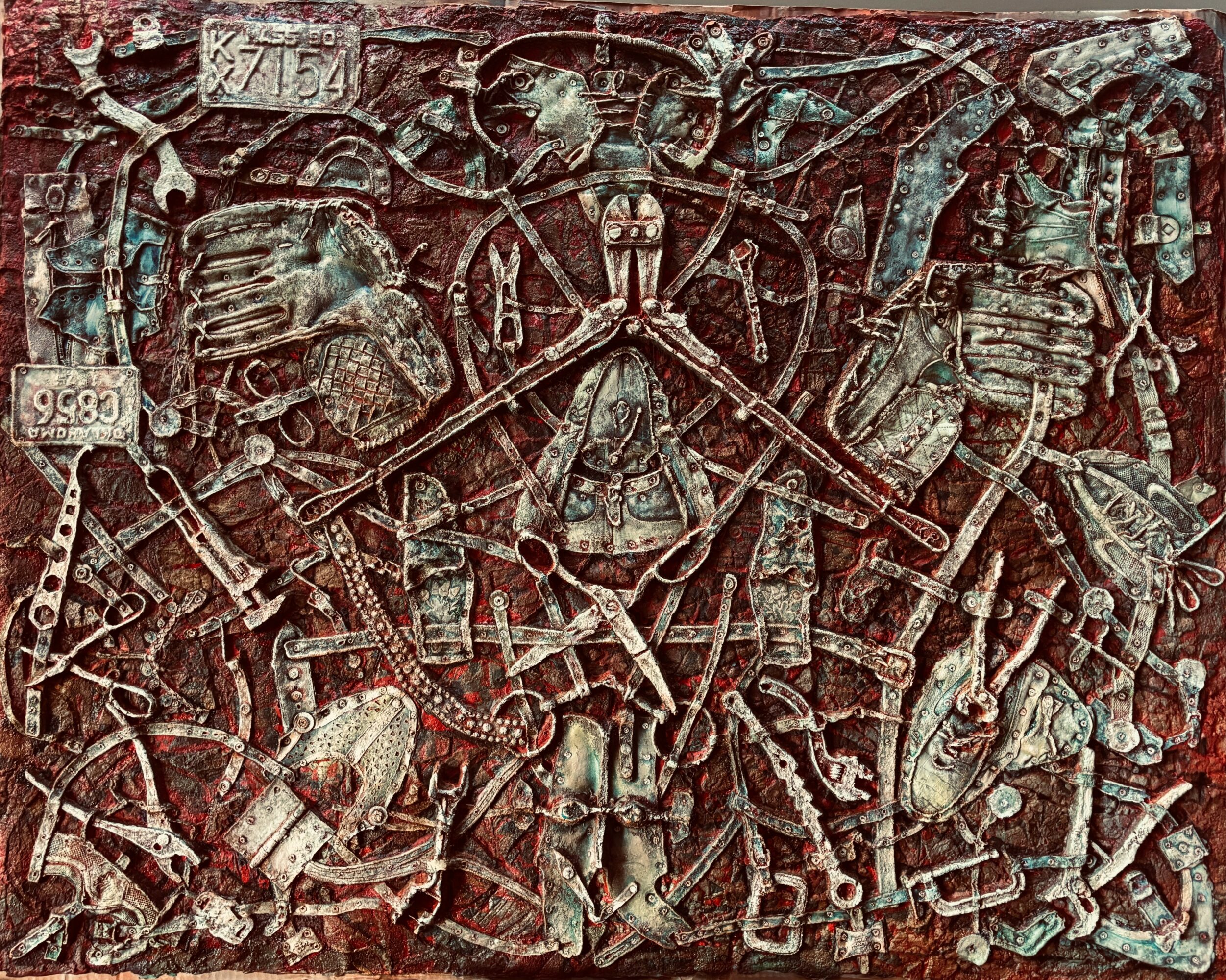
Through this process, I dissolve the boundaries between painting and sculpture. Using impressions, relief surfaces, assemblage, and painterly intervention, I translate fragments of objects, history, and personal experience into a visual narrative.
Synergism became more than a technique—it became a philosophy. It allows me to transform what is abandoned, forgotten, or broken into something capable of carrying emotion and meaning. The sum of these fragments creates something greater than their individual parts: a new image, a new memory, a new reality.
One of the achievements I am most proud of is the development and recognition of my original artistic method, Synergism—a process that dissolves the boundaries between painting, sculpture, and conservation practices. Through this method, I transform fragments of found objects, personal memories, and historical references into layered visual narratives.
Seeing this body of work recognized and exhibited at the Museum of Contemporary Art North Miami was especially meaningful to me, as it affirmed years of experimentation and commitment to creating a unique artistic language. I am also deeply honored that my work became part of the collections of Mead Art Museum at Amherst College and The Museum of Russian Art in Minneapolis—an acknowledgment that my artistic vision and research continue to resonate within institutional collections.
I was also honored to receive recognition through the Miami Individual Artist Grant Program for 2023–2024 and 2024–2025 from the Miami-Dade County Department of Cultural Affairs. These acknowledgments strengthened my belief that innovation can emerge from combining disciplines and from giving new life to materials that carry traces of history and human experience.
What sets me apart is that my work is rooted not only in artistic practice but also in my background as a conservator and restorer. I approach each artwork as both an act of creation and preservation—building bridges between memory, material, and imagination.
Do you have recommendations for books, apps, blogs, etc?
People often ask whether I am inspired by specific books, apps, or artists, but my relationship with inspiration is less direct.
I feel like litmus paper—I absorb the world around me. I never fully know what will trigger my imagination or become the beginning of a new work.
Inspiration can come from unexpected places: the texture of a stone on the bank of the Hudson River, fragments of discarded objects, memories from childhood, conversations, museum visits, conservation projects, historical artifacts, or simply the changing color of light after rain.
Of course, books and art history have influenced me deeply, but I rarely begin with an idea borrowed from a single source. Instead, I collect impressions. They remain somewhere inside me until, unexpectedly, they connect and transform into an image.
My background in conservation also shaped this way of seeing. Working closely with artworks from different centuries taught me to notice surfaces, traces of time, and hidden stories. I became interested not only in what we preserve, but in what we leave behind.
That is how my Synergism method developed as well—not from a single moment of inspiration, but by absorbing experiences and translating fragments of life into a visual language.
For me, inspiration is less about searching and more about remaining open.
Contact Info:
- Website: https://www.ekaterinakhromin.com
- Instagram: Katerina Khromin (@katerinakhromin)
- Facebook: https://www.facebook.com/katerina.khromin/
- LinkedIn: https://www.linkedin.com/in/ekaterina-khromin-95977476/