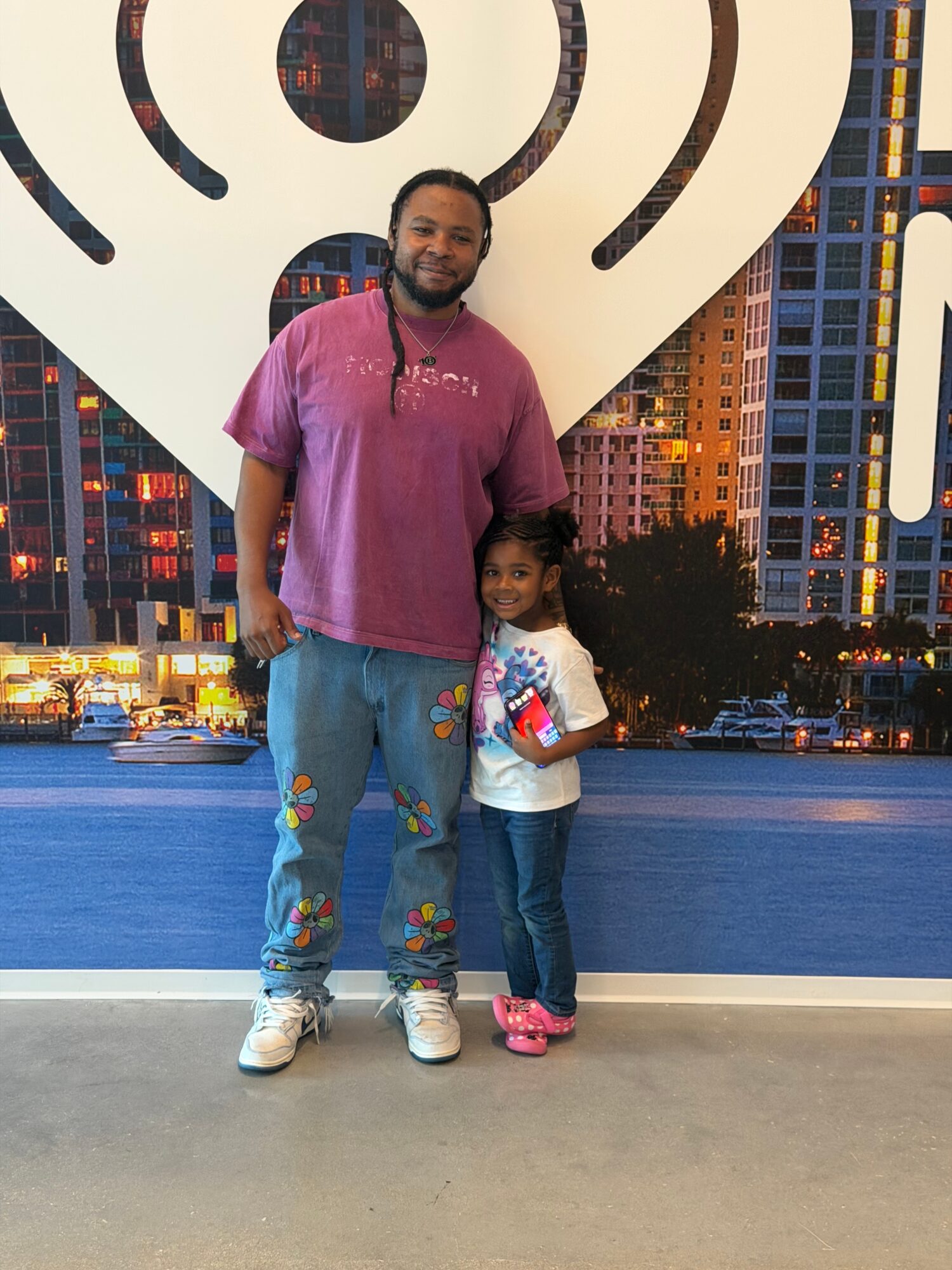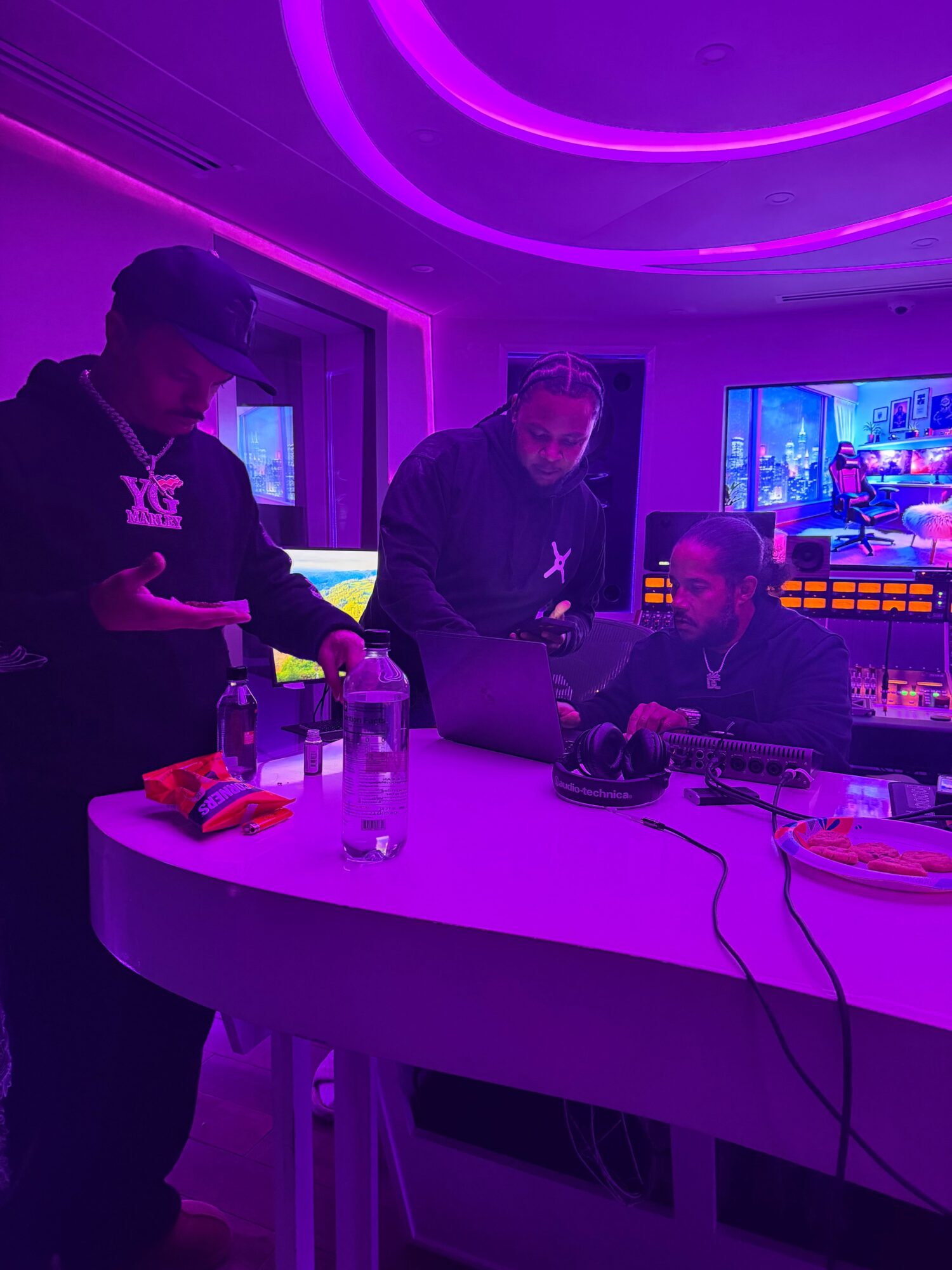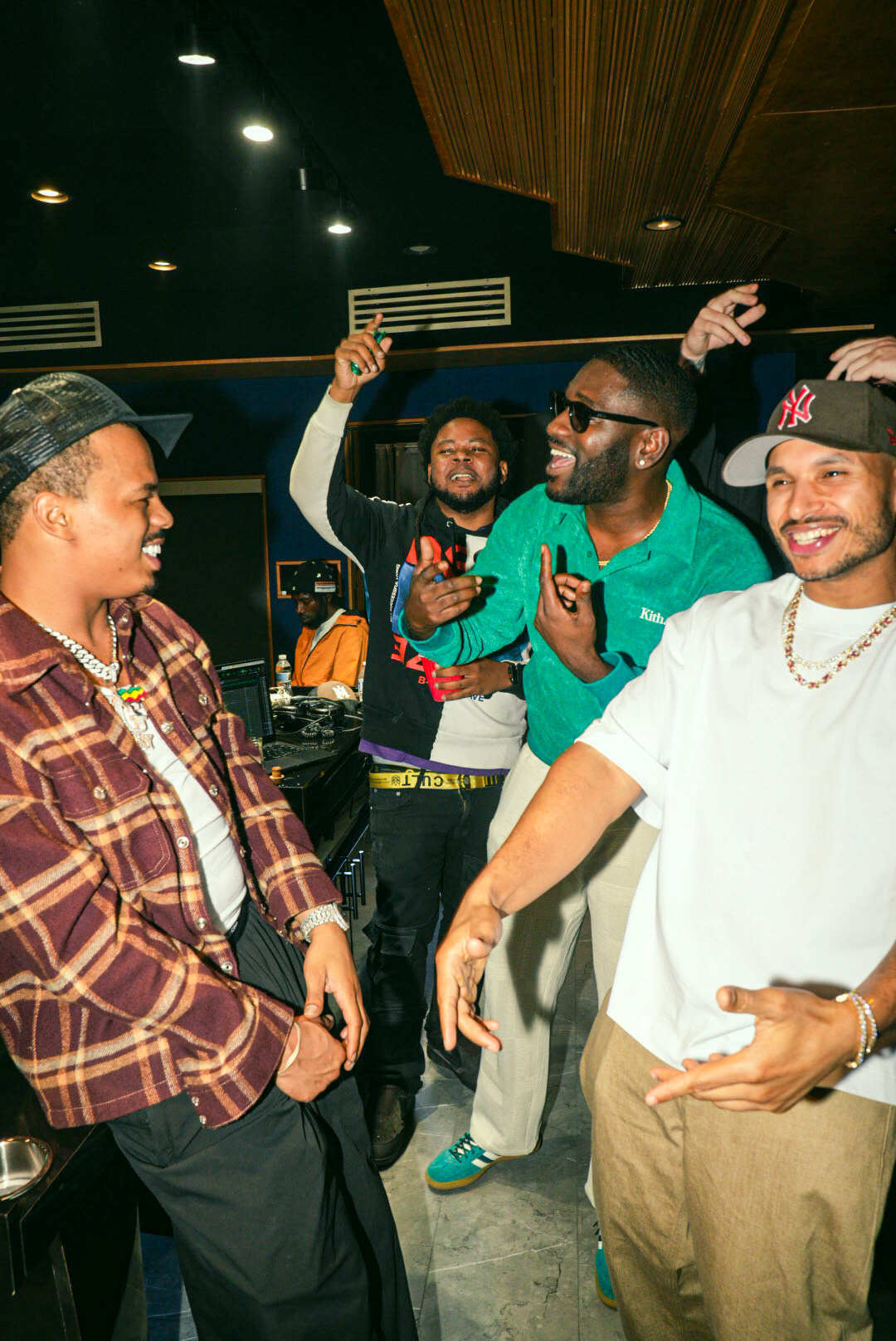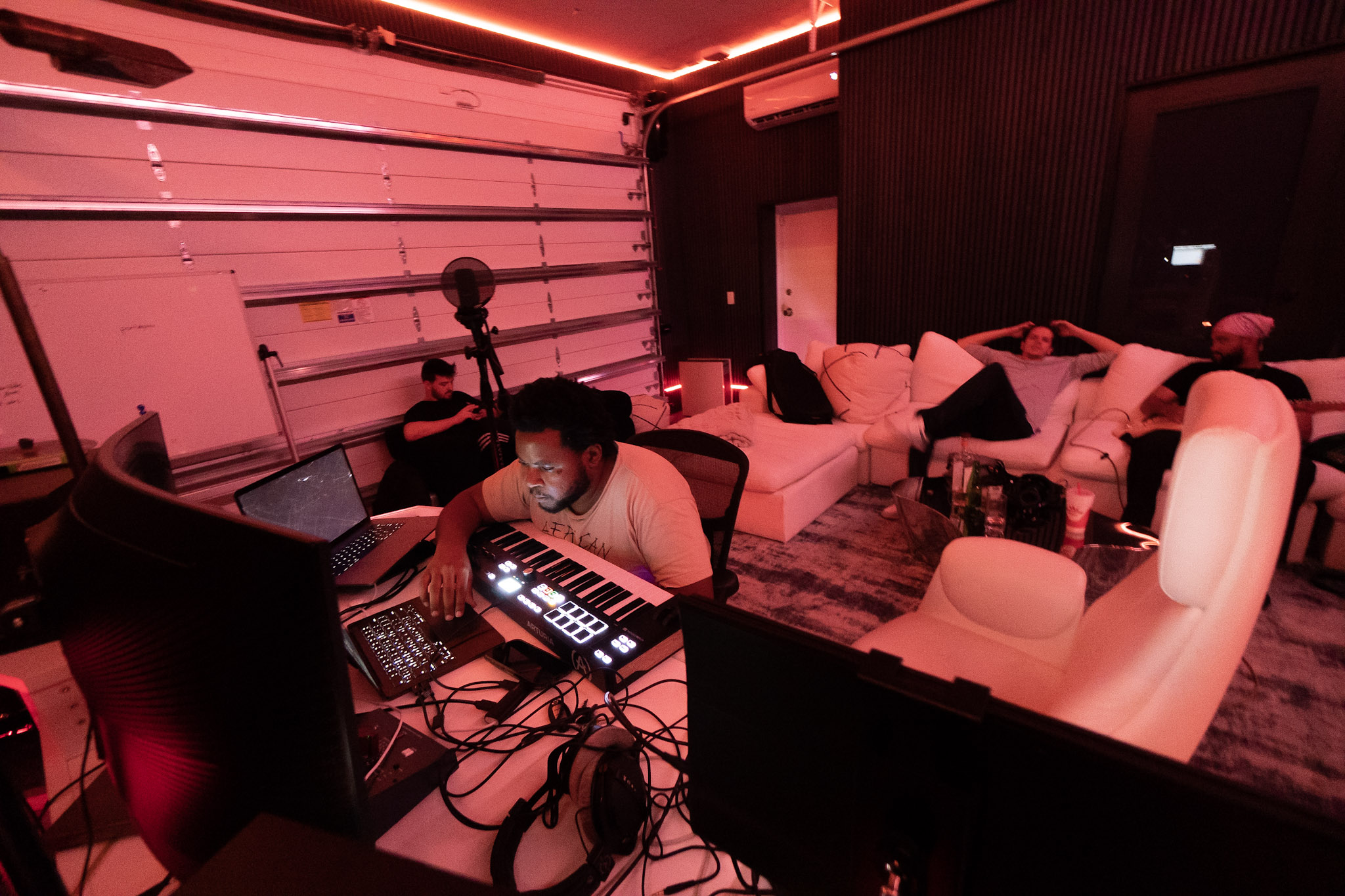




Today we’d like to introduce you to Jonathan Gomez.
Jonathan, we appreciate you taking the time to share your story with us today. Where does your story begin?
I’m JohhnyG — an artist, producer and engineer out of Broward County, Florida.
My dad from Nicaragua and my mom from Jamaica. My story starts before I was a born and my parents moved out of Miami Gardens into a small town called Southwest Ranches a year to two before I was born, when it was mostly dirt roads. Years later it turned into a high-end area, but back then only somebody looking at the future could have seen it. Visionary that what they were.
That one decision changed the trajectory of my life.
There was always a piano in the house. My dad worked a lot, but on Saturday nights we’d sit at that piano and play all night. Those were the only times we really bonded. He never told me he wanted to be an artist and I’ve never asked him straight up, but he kept that piano around and eventually bought speakers and a mixer that contributed to me having necessary equipment to even start music. Part of me has always believed he wanted to be a musician but his circumstances never let him. I still use that as motivation.
2006 is also the year I started middle school. I was in band through the first quarter of 6th grade — I’d learned drums, tenor saxophone, trombone and baritone in one summer, all of it that fast — and then I dropped it, because my friends were in PE. My mom was trying to get me into piano lessons and I didn’t take it as serious as I could. I was a rebel.
That school is also where I met Nico Marley and Tyshane, both of them in 6th grade. Remember both of those names — almost everything that happened to me later came through one or the other of them, and I only met them because of where my parents decided to live.
So in the same few months my house came apart, I walked away from what my mother wanted for me. That’s the hinge of my whole life and it took me twenty years to find it. If I’m honest about the root: I spent my childhood trying to earn my father’s attention, and then I ran that same move on everybody after him — giving the least to whoever gave me the most. That’s mine to fix, and I’m done handing it to anybody else.
I put music on the back burner when choosing it cost me nothing, then ran to it years later when choosing it cost me everything. I wish I had the mindset of Foundation over friends. Can you really be a good friend without some sort of foundation? Being a good friend requires some sort of stability but also knowledge and Patience.
School and I never got along. I was smart with no discipline and I used my brain to get out of work. At the end of 8th grade Nico got me into football, but I ended up switchings schools and I played 9th and 10th grade — terrible at first, then I worked and got decent — and right when it was finally my time to start playing, I couldn’t play because of my grades. I earned that spot on the field and It didn’t even matter because of what I neglected to get there. Nobody took it from me. I’d been giving it away all year, one assignment at a time. I went to boarding school 11th and my senior year, I finally made the basketball team (which was actually one of my favorite sports to play) and the vice principal walked into practice and escorted me out. Grades and behavior, It kept happening because I kept leaving the door open for it. That trauma followed me up until now. It also does follow you until you face it. Make sure to handle everything you can while you can first. Dont wait.
The real point of school was never the subjects. It was the discipline to do things that you dont want to do to get where you want to go. I rebelled against the one thing I actually needed, and the later you learn discipline the harder it is to learn. I’m still paying for that, and it’s exactly why I don’t miss anymore.
Now here’s the part nobody sees, and it’s the part that actually explains how any of this happened.
I made my first beat at 15, and that was over 16 years ago. I have made officially been music got more than Half my life. The thing I was most consistent with in my life – almost daily, for fifteen years, through every job, every move, and every long stretch where nothing was working and nobody was watching. There are thousands of finished and unfinished songs / beats /ideas sitting on my hard drives. People see a placement and assume somebody got lucky. What they’re actually looking at is fifteen years of reps they weren’t around for.
And I’ve been on both sides of the talent argument, which is why I don’t romanticize either one. I’ve been the talented one who didn’t work hard. I’ve been the untalented one who outworked everybody in the room. I know exactly what each of those feels like and exactly what each one gets you. Consistency beats talent when talent isn’t focused — I didn’t get that from a book, I got it from being both.
It’s also why I can talk to anybody in the building. I’ve been the janitor — I worked a custodial job and put it toward my own tuition. I’ve been the fan outside the room. And I’ve been the one in the room cultivating the record. There isn’t a seat in that arena I haven’t sat in, and that’s most of why artists trust me when they walk in.
And I started with nothing to start with. I couldn’t afford a studio, so I recorded with a headphone mic plugged into my moms old Windows computer. I learned to engineer because I couldn’t pay an engineer. I learned to produce because I couldn’t pay a producer. Every skill I have, I have because I couldn’t afford the alternative.
Then I reached out to Tyshane — the same friend from 6th grade. He goes by Beam now, and he’d already won a Grammy while we were still in high school . He gave me my first real drum kits, and my first condenser mic and interface. I appreciate those who helped me along the way, but if I did put in some work, That gear came to me because I’d already put in years with worse.
I dropped out of college three times, at three different schools. The honest version is that I stopped going to class and made beats instead, every single time, and I never once said it out loud. I kept enrolling because I didn’t want to let my mom down. My mouth said yes and my hours said no. That’s where I learned honesty and boundaries — keeping everybody comfortable and trying to make everyone happy, is how you end up lying to the people you love most.
In Jamaica I took that mic and snuck out of school to a place called Cedar Grove. The bottom of the hill had issues with the top of the hill, and I was walking in from outside with no idea what I was walking into. With that one mic I recorded people who had never heard their own voice played back to them, and I ended up putting people in the same room who wouldnt have choose to be there together.
That’s when I found out what music is for me. It’s not the product. It’s the thing that brings people together. I was the kid who didn’t get let in, so now I’m the one who opens the door.
Before music paid me anything, I worked a lot of jobs — Sports Authority, knocking doors, then insurance. That’s where I learned the difference between hourly and commission, and I liked getting reciprocated for the energy I put in. But the bigger thing I learned in sales is the thing I still run on: I had to put real time in before I got good at any of it, and almost everybody around me quit right before they would have gotten good.
That’s why a 9-to-5 is the most comfortable thing there is. Bare minimum, you know exactly what you’re getting every week, and everyone gets paid the same way. It’s the same design as public school — one curriculum, everybody learns the same thing, everybody is being prepared for the same life. Nothing wrong with the people in it. But if you want a different result you have to accept a different arrangement, and the arrangement is that you work for a long time before anybody pays you for it.
So I took the same energy I was putting into those jobs and pointed it at music, and I went all the way in. Wyatt and Feek were a duo called 3fortiori, and I started developing them in Florida in 2017, when they were still early in their artistry and nobody was paying attention. They moved to Texas to live with Young Don the Sauce God, and in 2018 they brought me out there too. I lived with Don and produced for him until 2020, and that’s where I got my first million streams. We moved to LA together in 2020, I worked two jobs, a market in the morning and petitioning in the afternoon, and made music every night after both. That isn’t a hardship story. That’s the price, and I paid it without complaining because I’d already decided.
There was a TikTok event I was scheduled to work. King Vader had liked a beat of mine a year earlier, so I skipped the shift and went. I couldn’t get in on my own, and when Don who got me in wanted to leave, I stayed — because I was going to make sure King Vader got that beat. I found him and AirDropped him the song. He made the video right away, and that was my first viral moment, the “Over It” Chinese New Year remix.
I’ve thought about that night a lot. I skipped work, I stayed when it got awkward to stay, and I walked up to somebody I didn’t know. Nobody handed me that.
That’s also where I made the mistake I still think about. Everybody told me I had to choose — producer or artist. I already had a version of that song recorded. Instead I got in my head and recorded eight different versions over the same beat, and the first one I ever recorded was the best one. It still got millions of plays, but the hate comments discouraged me for a while.
This is how I actually work, and it’s the part I’d want a client to know. I build records from scratch — feeling first, then melody, and everything else follows from that. How I work with an artist depends on how they walk in. Some come with an idea. Some come with an experience. Some come with nothing but a feeling and no words for it. Either way we find it, in the room, that day.
Then the circle closed. Nico Marley — the same Nico from 6th grade, the one who got me into football — is YG Marley’s older brother, and he went to Tyshane about working with YG. Tyshane was deep in his own artist album at the time, so he put my name up instead.
That’s how I got in that room. Two kids I met in a middle school I only attended because of where my parents chose to move.
We spent three years recording. Working with Yg definitely helped me work faster, he was someone that wanted something right then and there. So I had to evolve and adapt fast, I didn’t have time to play around I had to make a decision fast and continue fast. But through the process I kept telling everybody around me we were going to get a hit.
And a lot of that came from being afraid of failure. I’d say it out loud and use it to fight the battle happening in the present. I knew the power of words and combined with the work and never backing down from a moment, even when feeling disqualified in it — and that word means something to me, because people had been disqualifying me my whole life, pulling me off teams, walking me out of practice. At some point I decided I wasn’t going to do it to myself.
“Praise Jah” wasn’t everyone’s top song in the beginning — but we knew it was something great because we never stopped working on it. Sometimes we would come back to it and change a single Line or a ad-lib, it was a definitely a process. it wasn’t even on the setlist at first for the tour with his mom, Ms. Lauryn Hill — and then he decided to start performing it toward the end of that tour and everything changed. When it went viral, Ms.Hill and the team went into overdrive working on the record and now that record has sold over 8 million units worldwide and it’s on its way to diamond.
That was a team and a lot of people put into it. I was on the team that won the championship.
All we did in there was work and set an intention. Think about what “a hit” meant to us at the time — a million streams would have been a hit. What actually happened was bigger than anything either of us was capable of planning, and that’s when I understood that my plan and God’s plan are two different sizes, and my own plan is usually the thing standing in the way of the bigger one.
Being around Ms. Hill taught me something about what separates the greats. The attention to detail and pushing the line of creativity and trying new things is very important to the process. When you’re that creative, the choices never stop — there’s always another idea, always one more pass. Art doesn’t become an art piece until decisions are made. You need a finish line. I wish I’d understood that the day I recorded eight versions of the same song.
Developing artists is the longest-running thing I do. 3fortiori were the first, back in 2017 before anybody was listening. Today it’s the artists on Cracking Codez. And the work doesn’t stop when the song does — Varie, Oya and Nephew since 2021, Cliff since 2022, who I met in the YG sessions — and I’m still making records with all of them. That’s what I’d point at if you asked me what I actually do all day. I put the work in to be in whatever rooms I get in.
I recently had the chance to work with Flo Rida, and he’d been showing me love and giving me advice long before that session came.
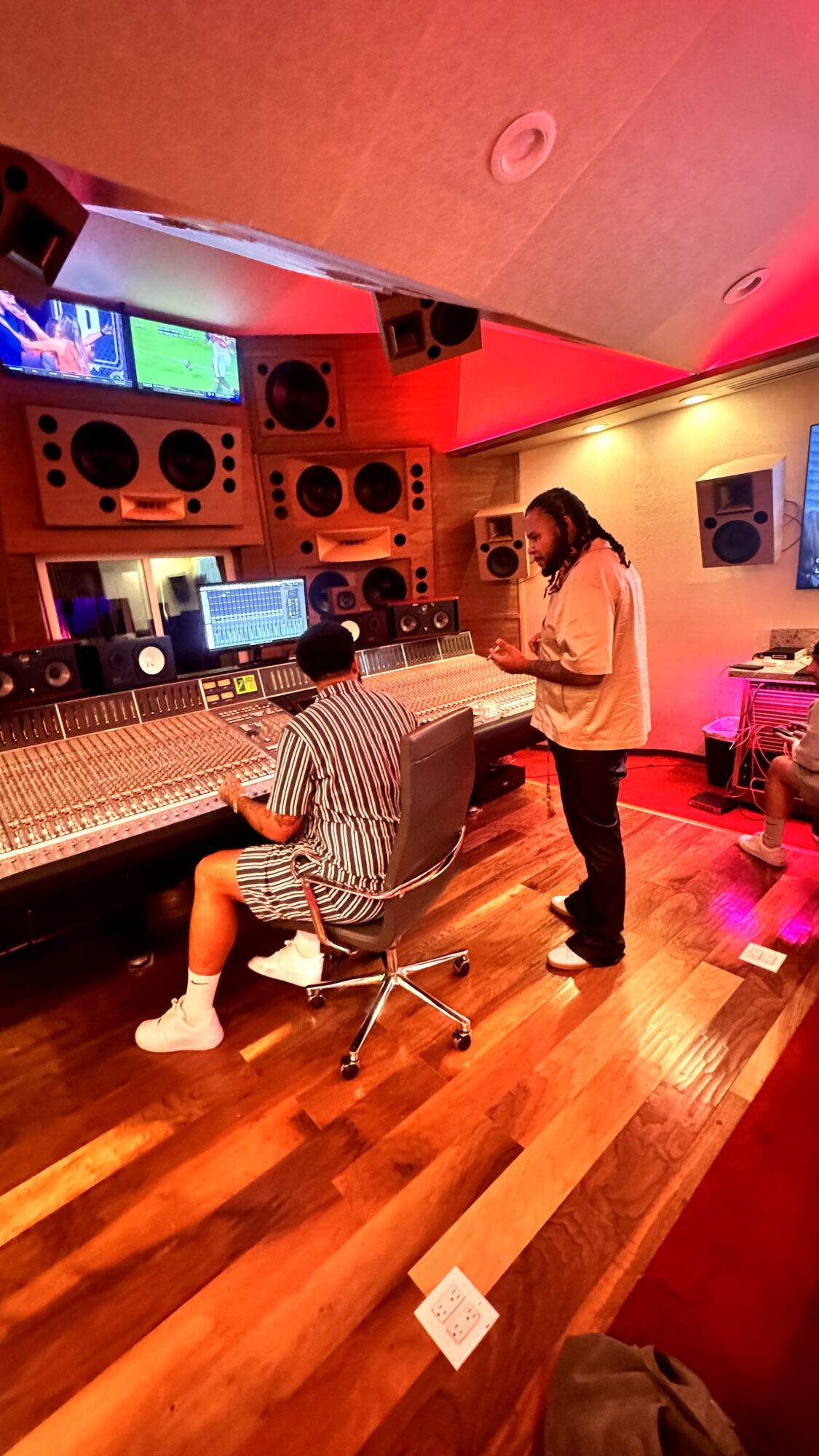
When it did, I got to work with him one on one. I made the beat from scratch right in front of him and we built the song together, start to finish — my normal process, and he went through all of it with me. That mattered to me more than the song did. It told me the way I work holds up at that level.
He raised my standard too. He makes sure everything is clear and performed right. He’ll redo a line until it’s exactly what he heard in his head. He’s listening for how a song could be better at all hours, and we worked all night. I went to Europe with him and we spent most of that trip recording and creating in the hotel room. That’s the actual life of a music superstar. I guess that’s what it takes to get on that level. Hours in the studio. Focus. And I don’t think it’s any different for people operating at the top of anything — even after they get there, the greats are still working harder than most people who never get close.
Nothing that worked for me happened fast. Three years for YG. Months of sneaking out of school in Jamaica. It happened because I kept showing up, and because I stayed ready for the day the room mattered.
And some of what I kept showing up through would have been a reasonable excuse to stop. I lost people I love. I found out some people never loved me for real — they loved what I could do for them, and finding that out takes something from you that you don’t get back. None of it stopped me from doing what I needed to do. I didn’t always handle it well; I went quiet, I handled things alone, I came back when I looked fine again. But I never stopped working, and the work is still here.
After “Praise Jah” I went out to LA to figure out what was next, because the biggest record of my life didn’t come with instructions. Dirty Bird gave me a place to stay out there and looked out for me the whole time I was working it out, and Rauni was staying there too. I had a platinum record and no idea what I was doing next, and they gave me the room to not know.
Dirty Bird told me to wait and be patient. I didn’t understand it and I didn’t listen. I understand it now. That’s the pattern I keep finding in my own story — I rebelled against school when discipline was the exact thing I needed, I put music down when choosing it was free, and I got handed patience in LA and couldn’t hear it. The advice was never missing. I just wasn’t ready for it yet. Learning to listen is most of what’s changed about me.
After all of that I was still broke while sitting on thousands of finished songs. Not because I wasn’t working — because I never built the thing that turns the work into money. And let me be clear what I mean by broke, because it isn’t an amount. People have made hundreds of millions and still been broke; they lost it, because broke is what lost it. Broke is a mindset. Being broke before doesn’t mean I’m broke now.
My mom says it better than I do. Life isn’t always a straight line. Life has detours, distractions, and decisions. Who you are depends on how you treat your failures.
So I went and built the thing that turns the work into money. Here’s what I finally understood: I could hyper-focus and get great at something, but what does being great at 2K mean in real life? The focus was never the problem. I just wasn’t pointing it at anything that paid me back.
So I took the two things I’ve loved since I was a kid, music and games, and turned my real life into the game instead. That’s Life OS — your actual life run like a game: health, money, work, relationships, discipline, all tracked and leveled. I built it because that’s the only way my brain has ever worked, and because what I needed didn’t exist: something that’s there for you in the alone times, when you’re building something and nobody sees the vision yet.
There’s a practical reason too. I journal, and I lose the journal, every single time. I have never finished one. Every time I lose a journal is the exact moment the fall-off starts — I lose the thread, I forget what I already learned, and I pay the same tuition twice. So I built a journal I can’t lose.
That eight-year-old building websites and the man building software now turned out to be the same person. It just took me thirty years to notice.
Here’s what I’ve come around to, and I only got here a few days ago. My mom said something I couldn’t argue my way out of. If I wasn’t talented, YG Marley wouldn’t have worked with me. Flo Rida wouldn’t have worked with me. My girlfriend wouldn’t be with me. None of those are favors — nobody operating at that level hands you three years of their time to be nice.
So I belong, and I’ve belonged for a while. I spent thirty years feeling like I didn’t, partly because I was carrying a reality that was never mine, and partly because I kept trying to fit into rooms that were never mine either. My grandma told me I was special and that I was going to do great things in this world. I held onto that through everything — she’s my first tattoo, across my heart. I put it there so I couldn’t lose it, which tells you how much I needed it.
She was right the whole time. I just heard one part of it wrong. She said I was meant to stand out, and I turned that into not belonging, because exclusion was the only version of standing out I’d ever seen up close. Those are not the same thing. You can stand all the way out and still be exactly where you are supposed to be.
The truth is I had people who believed in me the whole time. I just chose to focus on the ones who didn’t. And maybe I needed that for a while — doubt is real fuel and it got me off the bottom.
But it’s the same lesson I learned with money. You’re aggressive at the bottom because you have to be, and then the exact energy that got you there is what takes you back down if you keep running it. Every level asks you to sacrifice the version of you that got you to it. You have to be willing to let go of what worked if it doesn’t serve the next leg of the trip.
Proving people wrong got me here. It can’t be the reason I keep going.
So this next chapter isn’t an underdog story. I’m done running as the underdog and I’m done running as a victim, because both of those put you underneath the thing you’re trying to do. I’m not underneath it anymore.
I’ll say this plainly too. You don’t have to be a victim to get through terrible circumstances. The reality is I had privilege, and I walked a road of adversity instead. I chose it, and I’m proud of what it built. Every hard part of that road taught me something I use now, and I wouldn’t give a single one of them back. It’s where I’ve been. It isn’t who I am, and it isn’t something that happened to me — it’s something I came through.
And I’ve learned what helping people costs when you do it wrong. I used to help from my perspective instead of theirs, and it brought me down every time — not because helping is bad, but because I had no boundaries. Boundaries protect your energy, so the people you’re helping can’t take you down with them.
I appreciate people and I’ll always give them their credit. What I’m learning now is to give myself some. I chose a harder life than the one my mother laid out for me — those were my decisions, and I’d make most of them again, because the hard road is where I learned everything I actually know. I’m also the one who made the beats, put in the fifteen years, and finished the record. All of it is mine, and I’m proud of the whole thing.
I deserve to be here. Not because anybody confirmed it — because I know what it cost and I’m the one who paid it. I know who I am now, and I’m done needing somebody else to agree.
Now I’m doing it for me. And let me say what that means, so it’s on the record.
I’m going to finish what I start, and I’m going to own my moments instead of handing them to somebody else. I know I can do it — I’ve got fifteen years that say so — and I know exactly what it costs.
And I know how I’m going to hold it, because the way I used to lose it was always the same. Underneath everything was the battle between what I wanted to do and what I needed to do — and because I’m smart, I could always build myself a case. That’s the trap right there. I gave myself a choice. There’s only one decision to make, and the smartest thing I ever did was stop putting it to a vote.
To get to the next level I have to be the person who operates at that level. That’s not a thing I get to negotiate with myself on a Tuesday. The option is the lie. There’s no compromise in it.
My dream was always to be an artist. That’s the only reason I learned to make beats — I needed something to sing over. I learned to engineer and produce to serve that, and then those skills became the thing that paid my bills, and you don’t walk away from the thing that’s feeding you.
So I didn’t pick wrong. I picked what survival required, and I’d pick it again. What I got wrong was the boundary. I let the work that paid crowd out the work that was the whole point, year after year, and I always had a good reason. That’s not producing’s fault and it’s not anybody else’s. It’s mine — and I need it to be mine, because I can only change something if it’s my fault.
But let me name what that really was: survival mode. Survival mode is putting survival over the dream and the purpose of your life, and the part nobody tells you is that it’s a mindset before it’s a situation. You can get out of it physically. You can get out of it financially. If you don’t upgrade your mind, it puts you right back — I’ve got the receipts on that one. I’ve been broke with six figures in the bank, because I was out of it on paper and still running the program in my head.
So heal your bank account. Heal your heart. But don’t forget to heal your nervous system too, because that’s the part still sounding the alarm after the danger is gone, and it’s the part nobody works on.
So my next step is to do it as an artist. I’m saying that out loud on purpose, because I told everybody around me I’d get YG Marley a hit, and it happened.
I have a single out called “Human” on all platforms. I’m working with an artist named Chioma Inat on an EP called Roots — she’s new, and she has a voice I know can change the world. I’m opening my catalog for the first time — thousands of beats and records that have sat on hard drives, now somewhere people can get to them. And I’ve started taking remote sessions, so I can work with artists anywhere, which is me fixing the exact thing I admitted to.
Beyond all that I’ve got records with Flo Rida, Cliff Khawly, Varie, Oya, Nephew, Real Rare, Coebe the Universe, Skippa Mak, Mike Ashabi, Sweet Face, K Charles and Collab Lab, and Trina, just to name a few.
And I didn’t get here by myself. Most of the people who were in it with me are building their own things now, and they deserve to be named for that and not just for what they did for me. Dirty Bird runs his studio Birdland, and Rauni ended up making an album with him. Ray has Sophisticated Degenerates. Billy and Chowder put out Flawge Magazine. JD shoots. Wyatt and Feek make content now — Wyatt streams and runs a YouTube channel. Don is a YouTuber. Tyshane is deep in his own artist album. Between them they gave me gear, a place to stay, a door, and lessons I couldn’t have paid for, and every one of them is still working. That’s the part I’m proudest to be from.
Today I run Cracking Codez, my label, where I produce, develop artists and work with clients in the studio. I’m building Cracked Code Solutions on top of it, because I’m not only a producer — I love to build, and the formula I use to build a record is the same one I use to build everything else.
What drives me is my family. I’m a father now, and that hits different when I think about those Saturday nights at the piano. I never became the college graduate my mom wanted. I’m a platinum producer instead, and I taught myself every single thing I do. I ended up taking both of them with me — the music from my father, the learning from my mother. I just did the learning outside the classroom.
I think of myself as a hitmaker, a healer and a protector, and as a vessel for something larger than me. The music is how I do all three.
Here’s the last thing, and it’s the only actual advice in any of this.
What you focus on determines your perspective, and your perspective becomes your life. What’s going to happen is going to happen — life is life. The part you get to control is where you point your attention.
Everything I just told you is the same life I’ve had the whole time. Same father. Same three dropouts. Same eight versions of one song. Not one fact in it changed. What changed is where I was looking — I stopped looking at what got taken from me and started looking at what I spent, and it turned out I’d been telling myself the wrong story about my own life for thirty years.
So be intentional about what you focus on. That’s not a small thing. That’s the whole thing.
And when I look at it that way, I’m proud of all of it — not just the record and the credits, but the detours, the three dropouts, the years I spent broke and building. Every one of them taught me something I’m using right now. I didn’t survive my story. I earned it.
And here’s the one claim in all of this that I can’t back up yet. The artist thing. I’ve got receipts for everything else I just told you — the record, the credits, the fifteen years. I don’t have that one. That’s exactly why I put it in writing here, where everybody can see it. You’re reading the claim before the proof, which means you get to find out the same way I will. A leader who kept choosing to follow — who came all the way back to the beginning and decided that this time, he’s following God instead of everything else.
So come with me. “Human” is out now and there’s more coming. Life OS is in beta at lifeos.crackingcodez.com/beta, and I want people like me in it — the ones who hyper-focus on the wrong things, who have a hundred ideas and three finished, who disappear when they’re down instead of asking for help. If you’re building something nobody sees yet, that’s the exact reason I made it. And I know what it took to type that, because I just told you I have a problem asking for help.
I spent thirty years getting to the starting line. Now watch what I do with it.
I’m sure it wasn’t obstacle-free, but would you say the journey has been fairly smooth so far?
No. Not even close to smooth.
The hardest part was starting over so many times. Broward to Alabama, back to Broward, to Jamaica, back home, to Texas, to LA, back to Miami. Every one of those was a reset — new city, new room, new people who didn’t know what I could do yet. People see the credits and think it was one line going up. It was six or seven restarts from zero, and each one cost me momentum I had to rebuild from scratch.
And here’s what makes that one sting now. My mother built a career out of nothing in Jamaica — became a nurse, then taught nursing — came to America, and never went back to zero. Not one single time. I’ve done it six or seven times and I used to tell myself that’s just how a life like mine goes. She was standing right there the whole time proving it isn’t.
Money was never one dramatic loss. It was years of being good at something and broke at the same time. In LA I was working at a market in the morning and petitioning in the afternoon, making beats at night, and my beat money was covering rent because that was the deal. I’ve been in rooms with people whose records I produced and then gone home, checked my account, and felt sick. That gap between what people think your life is and what it actually is — that’s the part nobody talks about.
It’s also the battle of what to chase in the moment. You take the job to get stable, you use that stability to build, the stability runs out, and now you’re back to chasing money so you can build again. That cycle will run your whole life if you let it.
And then you finally get the money — and you forget every lesson that got you there. You stop being intentional, and you lose it. That’s the hardest thing I’ve had to accept: I worked that hard in music, I finally got the money that could have set me free, and I didn’t do the right thing with it. I went back broke.
But the truth is I was broke the whole time. I was broke with six figures in the bank, because broke was never about the money — broke is a mindset, and it doesn’t care what your balance says.
Waiting on other people cost me years. I’ve been in situations where I poured in everything and the timeline was never mine. Years in a studio before a record came out. Years in another situation that produced almost nothing. I don’t like to lose, and the way I see it you only lose when you quit — which sounds like a strength until you realize it means you’d better be very careful what you say yes to at the start. You’ll find yourself submerged in other people’s issues and other people’s karma. When you say yes to somebody, know what that yes comes with.
And paperwork matters. Know what you’re signing — especially when you don’t have anything yet and you’re excited about the opportunity, because that’s exactly when you don’t read it. Take the risk, but get it looked at first. Ask what the timeline actually is and when it’s happening, or you’ll spend years waiting on somebody else’s clock.
And people will use you. Not even maliciously — they’re just locked in on their own goals, and if you keep showing up with everything you have, they’ll keep taking it. So know what you want, and have a finish line. I was the guy who’d do it for free because I loved it and I wanted to help everybody. I wrote myself a note last year that just said “I’m done being a favor.” That’s how long it took me to see it. Being stuck between the love of it and standing on business. Being used, and using.
But if I had to name the one thing underneath all of it: survival mode. Survival mode is putting survival over the dream and the purpose of your life, and the part nobody tells you is that it’s a mindset before it’s a situation. You can get out of it physically. You can get out of it financially. If you don’t upgrade your mind, it puts you right back — I’ve been broke with six figures in the bank, out of it on paper and still running the program in my head. So heal your bank account, heal your heart, but don’t forget to heal your nervous system too. That’s the part still sounding the alarm after the danger is gone, and it’s the part nobody works on.
It also taught me when to let go. The energy that gets you off the bottom is not the energy that keeps you up, and every level asks you to give up the version of yourself that got you to it. You have to be willing to put down what worked if it doesn’t serve where you’re going.
But the biggest obstacle has always been me — and I need it to be me, because I can only change something if it’s my fault.
I disappear when things get hard. Pride and ego — I never wanted anybody to see me down, so I’d go quiet, handle it alone, and come back when I looked fine again. And underneath all of it was the battle between what I wanted to do and what I needed to do. Because I’m smart, I could always build myself a case — that’s the trap. I gave myself a choice. There’s only one decision to make, and the smartest thing I ever did was stop putting it to a vote. The option is the lie. I’ve got a version of myself that shows up quietly when things are going well and knocks it over. I spent a lot of years not understanding that it was a pattern and not a curse.
I also forget things. That’s just true. And when you forget what you’ve already learned, you end up learning it again — and again, paying the same tuition twice. Part of why I write everything down now, and part of why I built what I built, is so the lessons actually stay bought.
And I could never hold health and wealth at the same time. When work was slow I’d be in the gym eating right. The second it picked up I’d drop all of it and chase money until I crashed.
I know exactly where I got that one. My mom worked overnight shifts for years and didn’t take care of her own health the way she should have, and in 2006 she got sick — and that’s when our whole household started coming apart. I watched that happen up close as a kid, and then went and did the same thing to my own body every time the money got good. Some things you don’t learn. You just repeat. I didn’t start to find balance until 2023 — and that’s the exact stretch that produced Praise Jah, which has done over 8 million units and is on its way to diamond. That wasn’t a coincidence. The moment I stopped running myself into the ground is the moment the biggest thing of my life landed.
Honestly, this year has been one of the hardest. I couldn’t afford the subscription to a piece of software I built myself, and when it lapsed, the whole structure I’d built around my life collapsed with it.
Then I got in a car accident I’m lucky to be here after. I could have died, and that would have been it. Unfinished dreams. A list of great ideas that never got made. That’s what kept hitting me afterward — not that I almost died, but what I would have left behind if I had.
And I know that’s not me. My grandma always told me I was a special child and that I’d do great things. I still hold onto that today. She didn’t say it so I could sit on a hard drive full of songs nobody’s ever heard.
That accident rearranged some things. Mostly it showed me how much I’d been putting up with that I’d already decided I didn’t want — and that it took something that close for me to actually move.
What held through all of it was faith. I’ve walked into places I had no business walking into and come out fine. I believe there’s something working for you when you’re genuinely working toward something, and that what you put out comes back.
Don’t wait until death comes knocking on your door to get up and open your eyes.
So no, it hasn’t been smooth. But I’d tell anybody coming up the same thing: the obstacles that almost stopped me weren’t the industry or the money. They were the ones I brought with me — the pride, the avoidance, the saying yes when I meant no. You can out-work a hard road. You can’t out-work yourself. You have to actually deal with that part.
And you don’t get forever to do it.
Thanks for sharing that. So, maybe next you can tell us a bit more about your work?
I’m an artist, producer, and engineer. I make records from scratch, I mix and engineer them, and I develop artists — and increasingly I build software and systems outside of music.
The thing I actually specialize in is building a record from nothing, in the room, with the artist in front of me. Most producers send a pack and wait. I start from feeling first, then melody, and let everything else follow from there. How I work depends entirely on how somebody walks in. Some artists come with an idea. Some come with an experience they need to get out. Some just come with a feeling and nothing else yet. All three are workable — they just need different things from me, and knowing which one I’m looking at is most of the job.
What I’m known for is being able to create on the spot. That’s the reason Flo Rida and I ended up making a song one on one with me building the beat right in front of him, and it’s a big part of why YG Marley decided to work with me in the first place. I put together the original versions of “Praise Jah” — additional production came on after — and that record has done over 8 million units and is on its way to diamond.
Beyond that I’ve got records with Flo Rida, Cliff Khawly, Varie, Oya, Nephew, Real Rare, Coebe the Universe, Chioma Inat, Skippa Mak, Mike Ashabi, Sweet Face, K Charles and Collab Lab, and Trina.
None of that came quickly, and I think that’s the part worth saying out loud. I made my first beat at 15, over 15 years ago, and I’ve made music almost every single day since — through every job, every move, and every long stretch where nothing was landing and nobody was paying attention. There are thousands of finished records on my hard drives. When somebody sees a credit they tend to assume a lucky break. What they’re looking at is fifteen years of reps they weren’t around for.
I learned that part in sales, before music paid me anything. Knocking doors, then insurance — and the thing I noticed is that almost everybody around me quit right before they would have gotten good. I had to put real time in to get decent at any of it, and most people won’t. That’s the whole advantage, and it’s available to anybody willing to be bad at something for longer than is comfortable.
My work goes deeper than producing, though. When I lock in with an artist I actually care about the music — and the way my brain works, I’d rather go the extra mile and give somebody more value than they paid for. So I end up observing. I ask a lot of questions. Half the time I’m consulting without anybody calling it that, because I can’t help looking at the whole picture: where they’re trying to go, what’s actually in the way, what they’re not seeing yet.
And that goes all the way back. From the time I was little, my family knew me as the one who fixed things and figured things out. That was just who I was in the house before it was ever a job.
So Cracking Codez isn’t a brand I came up with. It’s literal. I crack codes — I figure things out, for myself and for the people around me. The name is just the truth about how I operate.
What sets me apart is that I’m not only a producer. I’m an engineer and an artist too, so I can take a record the whole way instead of handing it off three times. And I build things outside of music — tools, systems, software. I built an entire life-management app called Life OS from scratch, having taught myself to code. I’ve also built automated trading software — real systems wired into live brokerages that make their own decisions and manage their own risk while I’m asleep. That’s a whole other conversation, but it came from the same place: I wanted to understand how the machine actually works. Most people in my lane do one thing well. I’d rather understand the whole machine.
The thing I’m most proud of isn’t a plaque. When I was in Jamaica I used to take a mic out to Cedar Grove and record people who had never been recorded in their life — people who had never heard their own voice played back to them. I ended up putting people in the same room who weren’t supposed to be in a room together. That’s when I understood what I actually do. The record is the product, but the real thing is getting people somewhere they had no other reason to be. I bring that to every session I run. Music can tear people apart or bring them together, and I’d rather bring people together with love than separate them. That doesn’t mean everything I make is about love and unity — I’ve got music about being hurt, about relationships, all of it. That’s all part of the human experience too.
Right now I’m opening my catalog to the public for the first time, taking remote sessions so I can work with artists anywhere, and putting out my own music as an artist — I have a single called “Human” out now, and an EP called Roots with an artist named Chioma Inat on the way. Life OS is in beta at lifeos.crackingcodez.com/beta.
.
Can you talk to us a bit about the role of luck?
I don’t think luck is random. I think there’s always an intention behind it — something deliberate — even when the intention isn’t yours.
The first luck I ever had was my parents’. They moved out of Miami Gardens to a small town with dirt roads before I was born, because they were looking at a future nobody else could see yet. Everything people would call lucky about where I grew up, the schools I went to, the people I ended up around — none of that was chance. That was two people with an intention. The luck was theirs. What I did with it was on me.
Here’s what that one decision actually bought me. I started 6th grade in that town and met Nico Marley and Tyshane. Nico got me into football. Tyshane — he goes by Beam now — gave me my first real drum kits, and my first condenser mic and interface. That’s the mic I took to Jamaica. Years later Nico, who turned out to be YG Marley’s older brother, went to Tyshane about working with YG. Tyshane was deep in his own artist album at the time, so he put my name up instead. That’s how I got in the room that made “Praise Jah.”
People would call that lucky. Somebody else’s intention put me in that school. Somebody else’s generosity put the first mic in my hands. Somebody else’s phone call put my name in that room. I didn’t arrange any of it, and I wasn’t in the conversation for most of it. The only part that was ever mine was being good enough by the time it got to me.
Once I understood that, I started setting my own intentions out loud. I’m going to make it in music. I’m going to get YG Marley a hit. I’m going to get Cliff Khawly a hit. I’m going to get Chioma Inat a hit. I’m going to get hits as an artist myself. I say it before there’s any evidence for it — my intention is that everybody I work with gets one.
And when that intention meets real work and real consistency, that’s the moment people start calling it luck.
Take “Praise Jah.” We spent months in that studio, over a long stretch of time, and we never stopped working on it. It wasn’t anybody’s favorite song. It wasn’t even on the setlist when he went on tour with his mother, Ms. Lauryn Hill. But none of us stopped — not YG, not Ms. Hill, not me. That says something. There was something all three of us knew that nobody outside that room could see.
Then it hits, and people call it lucky. They never saw the months. They just saw the result. That’s most of what luck is — the part of the work nobody was around for.
So let me be direct about one thing, because people hear “producer with a diamond record” and fill in a lucky break. There wasn’t one.
Fifteen years of making music almost every single day. Three years in a studio with YG Marley before anybody knew the name of that song. Months of sneaking out of school in Jamaica to record people with one mic. Thousands of finished songs sitting on hard drives nobody has heard yet.
Luck is an event. It happens once. It cannot show up every day for fifteen years. Whatever you want to call what happened to me, it had to keep happening — and the only thing that keeps happening is work. Me being here is not a break I caught. It’s a bill I paid, in installments, for a long time, mostly in private.
But if I’m going to call anything luck, let me say what mine actually was. My luck was being prepared when an opportunity finally showed up. And I’ll be honest about the part people leave out — I was prepared and full of doubt about myself at the same time. Those two lived together. I walked into rooms feeling like I had no business being in them and did the work anyway.
Here’s the proof I keep coming back to. If I wasn’t ready, I wouldn’t be in those rooms with the people I’m in them with. Nobody at that level keeps you around to be polite. I took the chance and it worked — and I’d never have found out either way if I hadn’t taken it.
Bad luck I look at differently now, and I’ve stopped calling most of it bad luck at all. I earned a starting spot in football and lost it to my grades — and nobody took that from me, I’d been giving it away all year, one assignment at a time. I made the basketball team senior year and the vice principal walked into practice and escorted me out. Those were the worst things that had happened to me at the time, and most of it was a bill I ran up myself. They also pushed me into the one thing nobody in a school building could take from me, and I’m not sitting here without them.
The one thing I won’t blame on luck is the money. I made real money in this and lost it, and that wasn’t timing or the market. That was me. If it’s luck there’s nothing to fix. If it’s me, there’s everything to fix, and I’d rather have something to fix.
Here’s the other half of it, and it took me until this year to see. I had people believing in me the whole time — I just chose to focus on the ones who didn’t. I called that motivation. What it actually was is a filter, and it made my own life look worse than it was. Two people can live the same day and come out of it with completely different lives depending on what they decided to look at. That’s not luck either. That’s attention.
So I don’t call luck, luck. I call it God. My intention plus my work plus somebody else’s intention I’ll never fully see — and a plan bigger than anything I could have drawn up on my own.
But God doesn’t hand it to somebody who isn’t ready. Being ready was my part, and that part took fifteen years.
Pricing:
- Pre-Made Beat licenses — MP3 lease $100 · WAV lease $200 · Trackout (full stems) $1,000
- Exclusive rights — by inquiry only
- Mixing & engineering — from $1,000 per song
- Full production, single — from $5,000
- Full project / album — from $14,000
Contact Info:
- Website: https://lifeos.crackingcodez.com/castle/johhnyg
- Instagram: https://www.instagram.com/Johhnygmedia
- Youtube: https://www.youtube.com/@JohhnyGezus
- Soundcloud: https://soundcloud.com/realifegomez
- Other: https://lifeos.crackingcodez.com/beta