
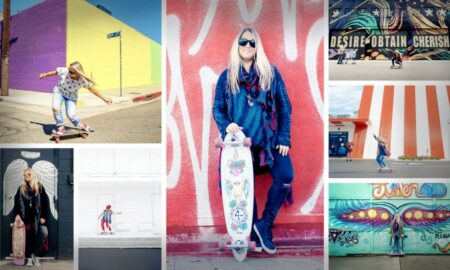




Today we’d like to introduce you to Janet Mueller
Janet, we appreciate you taking the time to share your story with us today. Where does your story begin?
When I was in college in the early 1970s, I bought a poster with the caption, Pablo Picasso (1881- ). The great artist was still alive. I marveled at how Picasso could paint a single portrait from various perspectives and let the viewer mentally piece together the actual face. I grew up in Champaign-Urbana, Illinois, home of the University of Illinois and one of the largest libraries in the world. There, in the architecture building, books of Picasso paintings stretched wall to wall. I wanted to pursue becoming an artist myself, but didn’t believe that it was practical. Eventually, my inner child escaped.
For a small city in the Midwest, we had a lot of opportunities for growth and entertainment. The Times were exciting, too, the 1960s, with 50-plus kids in Baby Boomer classrooms in my Catholic grade school. In my public high school, the entire student body marched down the street, chanting, “We shall overcome” in honor of Martin Luther King Jr.’s dream.
I am sandwiched between my sister and brother, she, 11 months older and he, 11.5 months younger. Our parents were Americans of German heritage. My father loved working on art projects but became a chemist. My mother was an accountant before becoming a stay-at-home mom. They gave us a fantastic childhood and wonderful memories. I took piano lessons from age 6 to 14 and got my Social Security card at age 10. My sister and I played the organ and sang Mass before school every day for pay. We created many art projects as kids. My seventh-grade teacher saved a pastel I had created in her class which she would give me 13 years later. I was 12 in seventh grade, the year my mom died from cancer.
During the day, our house was unsupervised. Dad came home from work at 5:30 and we had dinner ready. We kept up with laundry and housework. Unlike Mom, Dad was not adventurous. My sister and I secretly worked jobs then took the train to Chicago to buy trendy fashions. We learned to sew, and I created original designs. I worked in a fabric store during my junior year in high school. Graduating a semester early, I started college as a math major in February of 1970. In May, protests over the war in Vietnam burst across campus. The word “STRIKE” was written in huge chalk letters across the blackboard of my calculus class. Army tanks drove down city streets. Guys with buzz cuts from the National Guard beat long-haired male students with clubs for the “crime” of loitering. The men on both sides wanted deferments from being drafted to Vietnam. I wrote a paper about the irony for my Rhetoric class for which I was given an A+. I also wrote a satire about vacationing in Vietnam for my German class, for which the professor was not amused. He had escaped Nazi Germany and and trusted the Nixon Administration. He gave me an E. Both papers made an impact on the teachers, and they read them aloud in my classes.
After a brief hiatus from college, I returned to the University of Illinois as a Marketing major and took courses in Advertising. I loved drawing ideas for billboards and creating TV commercials. I received a Bachelor of Science degree in 1975.
In January 1977 I started working for a local television station. I became an apprentice to the head copywriter who was a quadriplegic. From his wheelchair, he typed scripts for commercials by hitting typewriter keys with a stick he held in his mouth. I loved working for Sam as he had a great sense of humor. I got to go on location to produce his scripts. Sam died in 1978, and I became the head of the department. I was paid $1.10/hour until I discovered the new hires were being paid more. The station used 16 mm film which the photographers edited into 30 second commercials. In 1979 we changed to videotape, where we copywriters created our own A-rolls and B-rolls. The 2 cassettes were given to the director who mixed the clips with the audio. For more complex productions, we added footage from live cameras.
I took watercolor classes from a community college and from night class at the U of I. I created the first of many paintings, a woman looking at the window in winter, dreaming about being in Florida.
The TV station added “Art Director” to my position and gave me my own office/studio. I created graphics for nightly news casts and on occasion, I was sent to the courthouse to create courtroom drawings.
The TV commercials we produced were works of art. I found a company in Ohio that sold footage of wildlife; I hired models and voice over artists, and I commissioned musicians—whose songs are played internationally today—to compose lyrics and melodies. The pool of talent in the ads we created won many awards for the station, and in later years for my business. In 1984 I left the station to freelance as a writer/producer of TV commercials. I worked with the same gifted and skilled guys from the TV station, who had formed their own businesses as well.
My freelance services included graphic design. I was a regular customer at a company that produced artwork and type for textbooks, including medical books. In the mid-eighties, the artists created illustrations by hand. They showed me how to work with Rapidograph pens and to use gouache with an airbrush. I created full campaigns for companies, from print to broadcast. The University of Illinois hired me to create posters, graphics for merchandise and direct mail pieces.
I had a large, beautiful apartment, which was the entire first floor of a renovated schoolhouse built in 1860. It had 25 ft. high ceilings and a fireplace. My drafting table was set up in the living room and I worked day and night.
I made paintings with an airbrush, works on paper with gouache and fashion illustrations with black ink and a round brush and tinted tissue paper. During this time, I painted on fabric. I bought unusual white garments from a store in Water Tower Place in Chicago, dyed them in a wheel barrel outside my apartment and painted them. They featured a figurative style which had evolved from realism to characters with exaggerations. The garments were sold in high-end stores and displayed in shows at the Contemporary Art Museum in Chicago.
In 1987 I got hepatitis. I managed to survive without work for 6 months, laying on the couch reading, “The Road Less Traveled” by M. Scott Peck. Then I got a call to create a campaign for home builders. It included designing and producing a book with architectural drawings, a TV commercial and direct mail pieces, plus ads for companies that sold products and services for homes: carpeting, tile, plumbing fixtures, roofing, landscaping, wall paint, on and on and on. I went from sleeping all day, to never sleeping, but I was back in business.
In 1989 I pounded the pavement in Chicago looking for work as a freelance illustrator and ended up with a surprise. Spiegel Catalog ordered 400 hand-painted caftans and connected me with a garment company in New York City. A semi-truck with numbered dress fronts pulled up on my quiet street. A dress front would be matched with a back with the same number so when sewn together, the black fabrics would match. The design on the caftan was an Egyptian scene with hieroglyphs which I made up by studying Egyptian books at the library in the architecture building. The symbols created a spiritual message. I hired an artist to print the hieroglyphs in gold ink on each caftan front. He and his partner lived in the country and used the barn as a studio. He made a screen the size of a twin-size bed and the two men spread the ink on each dress front with a squeegee. They printed 80 a day. I placed the fabric with wet ink on cardboard with rounded corners and an artist who lived next door to me, and I drove them back to my apartment in her truck. My place looked like a cemetery with dress fronts drying everywhere. My neighbor and I painted the details with red and green fabric paint overnight. We completed this in 6 days to keep the production on schedule. Spiegel ordered 500 more caftans. With the help of my dad and stepmom, neighbor and another friend, the job was much easier the second time around.
Spiegel also ordered 500 signed prints each of 2 of my fashion illustrations. These were intricately printed serigraphs on rice paper. One image was an ink drawing of a woman wearing the Egyptian caftan; the other was similar, but ancient Greek. The caftan and signed prints were featured on page 5 of their Christmas Gift book. I decided to turn the page in my life and become a full-time creator of fine art.
I had been asked to create an art book of paintings to accompany a disc of instrumental songs. I began by designing the packaging. The lid of the box would be hinged on the back and opened to reveal the book and the disc. For the prototype, I had molded a 3-dimensional sculpture out of paper clay at half the desired size and painted it bronze. The sides of the sculpture were silhouettes of a profile. From the front, the sculpture looked like a rock with wavy lines. When I took a photo of the clay sculpture, I was surprised to see that the shadow created a face, the profile. I was becoming deeply spiritual, and this piece took me closer inside my soul. I decided against making the book for the musicians with the disc, but instead created music-inspired paintings from classical to rap that told a much different story. Through metaphors of birds, fish and other animals, and imagery of musicians, the paintings showed the cycle of life. The body of work was called, “The Rock and The Shadow”.
For 3 years I worked intensely on the collection of 24 paintings, made with gouache on 300# watercolor paper, 30 x 22 in. The images were complex where one image shared a line with another image. My mission was to reduce an image to the fewest number of lines, while retaining the essence. If I made a mistake, I tore up the painting. I painted the same image over and over until the paint could be spontaneously thrown on the paper and land in the right spot. I started taking ballet classes at this time, at age 39. Like ballet, my paintings looked effortless, but they were anything but.
In 1993, the owner of the business that created textbooks gave me my first solo exhibition in his art gallery. The work was impeccably displayed. I could have sold a couple paintings, but I wasn’t ready.
In November of that year, I decided to move from Champaign. My landlord had invited me to stay in a camping trailer outside his and his wife’s marina in the Florida Keys. I was deep in debt, but my car had not been repossessed. In 6 weeks, I sold everything I could and hit the road. Though I speak with my sister every week, I still feel the pain when reflecting on her poking her head back in the doorway to see me “one last time”. She had placed her sewing machine in the back seat of my car, the one I use today. Saying “Goodbye” to my dad was difficult, too. He had a small retirement income but gave me what he could. My brother had moved to the west coast of Florida, so I looked forward to our days in the sun.
In a Honda Civic filled to the ceiling with stuff, I got to the other side of the Smokey Mountains, despite rain, big trucks and bad brakes. On the 2nd day of my journey, I turned onto the gravel drive to the camper and entered a new era in my life. That was December 15, 1993.
By the time I saw my brother and cousin at Christmas, I had two clay sculptures in a contemporary gallery in Key West and was given a wall to show work in a gallery in Big Pine Key. My landlord had arranged for me to move out of the trailer and into the house of an 80-year-old woman who worked outside of her home and needed a live-in nurse for her dying husband. The house was on a lagoon, but my apartment was an enclosed porch, with no windows. I slept on a futon on the floor. My first night’s sleep was interrupted by a rat in the bedroom. The next morning, I told the woman about the rat, and she explained that it was a TREE rat, not a city rat and not to worry. I kept the light on every night, but during the day, things were very dark. I had no money and no control over my situation.
I house-sat for 2 people with pets and six months later I moved into a one-room apartment in Key West. I sold my car to the neighbor upstairs which forgave a bank loan. Working on the floor, I created several paintings on paper. I was employed by a T-shirt factory, touching up screens. The factory helped me create a line of clothing: I ordered fabric from North Carolina which was shipped to two seamstresses in neighboring Stock Island. The garments were dyed in Connecticut and printed at the factory using water-based ink. The clothes were sold in merchandise marts in Florida, Georgia and the Carolinas for one Season. An art gallery had a solo exhibit of my paintings on paper, promoted by the local newspapers. Despite all the great fortune, I needed a job.
I worked at the gallery that showed my clay pieces for a year. It was an incredible store of contemporary, artist-created merchandise: rusty metal lamps, book binders made with rubber, hand-painted tile house numbers and ceramics. The owner bought a few dozen articles of clothing from me, and I made “mannequins” out of reclaimed junk that modeled the fashions in the gallery.
The house with my one-room apartment was sold and I had to move. I saw an ad in the newspaper for an apartment that was inexpensive by 1996 standards. I was working in a juice bar and needed $950 to secure the apartment. I told a regular customer about my living situation and my need for an art sale. Without even looking at my work, he said that he would buy a painting. I gave him a booklet of photos of my available pieces and the next day he came to the juice bar with a check. He bought a gouache on watercolor paper painting of a woman eating salad, which I created in my abstract style. This customer owned a fine restaurant. A few months later he commissioned me to create 5 paintings of still life: fruit, vegetables, lobster, bottles of wine and key lime pie. I also created a cubist-inspired painting of key lime pie for one of his customers. These were my early works in acrylic on canvas and my way out of the juice bar. For most of the 15 years I lived in Key West I did not have a day job. Many times, I’d have only 30 cents to my name, but I survived.
The house in which I lived had an upstairs and downstairs apartment. Electricity did not exist when the house was built. Wires with caked paint drooped from the ceiling and down the outside of the walls; the bathtub had feet. The place was built on a Spanish lime tree with an authentic totem pole from the Seminole Indians on the beam holding up the porch.
I studied oil painting from a renowned German painter and started creating large canvases. The first-floor apartment became my painting studio as I lived upstairs with 16 life-size “mannequins” made from trash. My paintings were contemporary figures with roaming facial features or body parts. They were inspired by my family, relationships, dancers, musicians and spiritual feelings. I painted hundreds of pieces during this time. I traded art for dental work and doctor appointments, for designer eyewear, for hotel rooms, dinners, haircuts, massages and dance classes.
My paintings were sold in a glass art gallery, including “The Rock and the Shadow” collection. An art collector with a small frame and large personality from Lexington, KY bought a few pieces. When the gallery hosted a solo exhibition for me a few months later, this collector invited “all of Lexington”, as he put it: his art-loving friends.
Besides “The Rock and the Shadow” collection, the gallery exhibited a few paintings on canvas. The German tutor had shown me how to make the perfect black oil paint by mixing 2 opposite colors. One black painting called, “NV”, showed a face of a masked man with the circle and crossbars of a sight on a rifle creating his eye. I painted the face emerging from behind a cloud of cigarette smoke. The painting expressed the darkness I experienced while with a spirit-killing lover. The relationship also inspired 12 works on paper called, “Lovers”, which were abstract figurative works. Each painting visualized a healthy characteristic in an ideal relationship. Almost every painting sold in this exhibition, including “NV”, and I received payment for all but two sales. I learned that the gallery owner was not paying me the share of profits on which we had agreed. His gallery was relocating to another city, and I decided to cut my losses and leave.
During the opening, a violinist played. He asked me if I would be interested in showing my work in Rome, Italy at a place that offered a cultural experience, not art sales. His father lived in Rome.
Email was a rather new form of communication in the year 2000, with cyber cafés offering computer time by the hour. I received the invitation from Rome, but couldn’t afford the trip, so I cancelled. A year later, the invitation came again. This time, a friend and art-lover I had met from Lexington, offered to buy enough paintings to get me and my work to Rome. The paintings were crated and shipped.
I arrived at the airport near Rome about the same time as the violinist and his girlfriend arrived from Canada. The violinist’s father picked us up and drove me to the hotel. The following day, Customs would not allow me to accept the paintings without paying $6000 in duty fees, even though the pieces were not for sale. I went back and forth to the Customs warehouse by train, which got me nowhere, so I had the paintings shipped back to the United States.
The cultural center had printed a poster in Italian about my exhibition. I showed it to a clerk at the art supply store, who helped me buy canvases, paint and brushes. I painted an entire show on rather large canvases in the tiny bathroom of Room 216, then went around Rome hanging posters promoting the show.
I had given the violinist enough money to buy his plane ticket, and his girlfriend displayed her work during the first week of my scheduled time slot since she brought her paintings rolled up, avoiding Customs. Perhaps things didn’t go as I had planned, but I had an exhibition just before Easter Sunday, April 15, 2001, sold a piece after the show, toured the Vatican and Rome and had the experience of a lifetime.
In 2003, the totem pole house with the not-up-to-code wiring sold for half a million dollars, and I moved across the street. My attention shifted to politics and how the events of 9/11 excused new rules by the government. I created a collection of 10 paintings called, “Political Views”. They were canvas paintings with oil sticks that were crudely stapled onto reclaimed wood frames that I hammered together. One painting called “The Doghouse”, showed a man with a turban cowering from the teeth of a dog. People arrested for the 9/11 attacks were sent to a prison in Guantanamo Bay, Cuba and tortured. Some were guilty; some were not. None of them were given a fair trial. Another piece called, “Bars and Stripes” demonstrated how the event of 9/11 paved the way for surveillance of the people. I bought 1 yard of fabric printed with the United States flag and hung it vertically, the white stripes creating both the World Trade Center Towers and prison bars. With oil sticks, I drew a man, woman, and 2 kids behind bars on the left and the Statue of Liberty torching the towers on the right. The flag was burned on the bottom. I bought a fake surveillance camera, which was aimed at viewers. “Political Views” was shown in the lobby of a public building, but because it was controversial the collection was soon removed.
In 2004 I had a solo show at the museum in Key West. The paintings were large oil on canvas pieces. A man and his wife who owned hotels and resorts, stepped into the museum and wanted to buy the entire exhibition. We met privately and agreed on a price. I held onto 5 paintings that were of greater value than he was willing to pay. One piece was called “The Family Tree”. My dad died in September 2002, just before my 50th birthday. My sister, brother and I went to see him in the hospital during his final days. We took pictures of ourselves under the big walnut tree in the backyard of the house in which we grew up. Back in my studio in Key West, I began painting an oil on canvas abstract of us under the tree. Then I remembered that as a romantic kid, I believed that the tangled branches in that tree symbolized the union between Mom and Dad. Reflecting on that thought, I smeared the oil paint of the 3 of us until we were a blend of earth tones. Using a round brush and my tutor’s black paint formula, I painted outlines of my parents as the tree. This painting is a treasure and provided me with more money than any other piece.
From June to December 2008, I was living in a very nice house, rent-free, as an artist/art collector and her husband had moved into a different house and offered me this wonderful opportunity. I painted large canvases outside in the drive. Just before the presidential election, I had a solo show at The Studios of Key West with many abstract paintings. The exhibit also included “Political Views”. Throughout the ages, the world has been divided between the haves and have nots. And it has always been difficult to stand up for the rights of the underdog. I created a piece entitled, “Person Sticks Neck Out”. The character had a stretched canvas for a torso, connected to a vertical board (a neck) which was attached to a smaller stretched canvas, the head, above. All pieces were painted to reveal a person. That was the image for the exhibition postcard.
In November 2008, it was time for me to move from the house as my friends had promised someone else the same gift they had given me. I entered a show in Miami for the upcoming World AIDS day and drove two paintings to the city in a rental car. While in Miami Beach, I saw a “For Rent” sign on the front door of a small apartment building.
My brother and I made 2 trips in his van to my new apartment, 1 with the paintings, and another with my bicycle and box of things. I put the artwork in storage, but soon found a place within walking distance of the apartment where artists could show and sell their work. I met many artists there.
In 2012-2017 I was a member of a different art studio, in downtown Miami.
I took a class at Miami Dade Community College in Photoshop so I could enter shows and create art for merchandise. I later learned to make videos in Premiere and created a website.
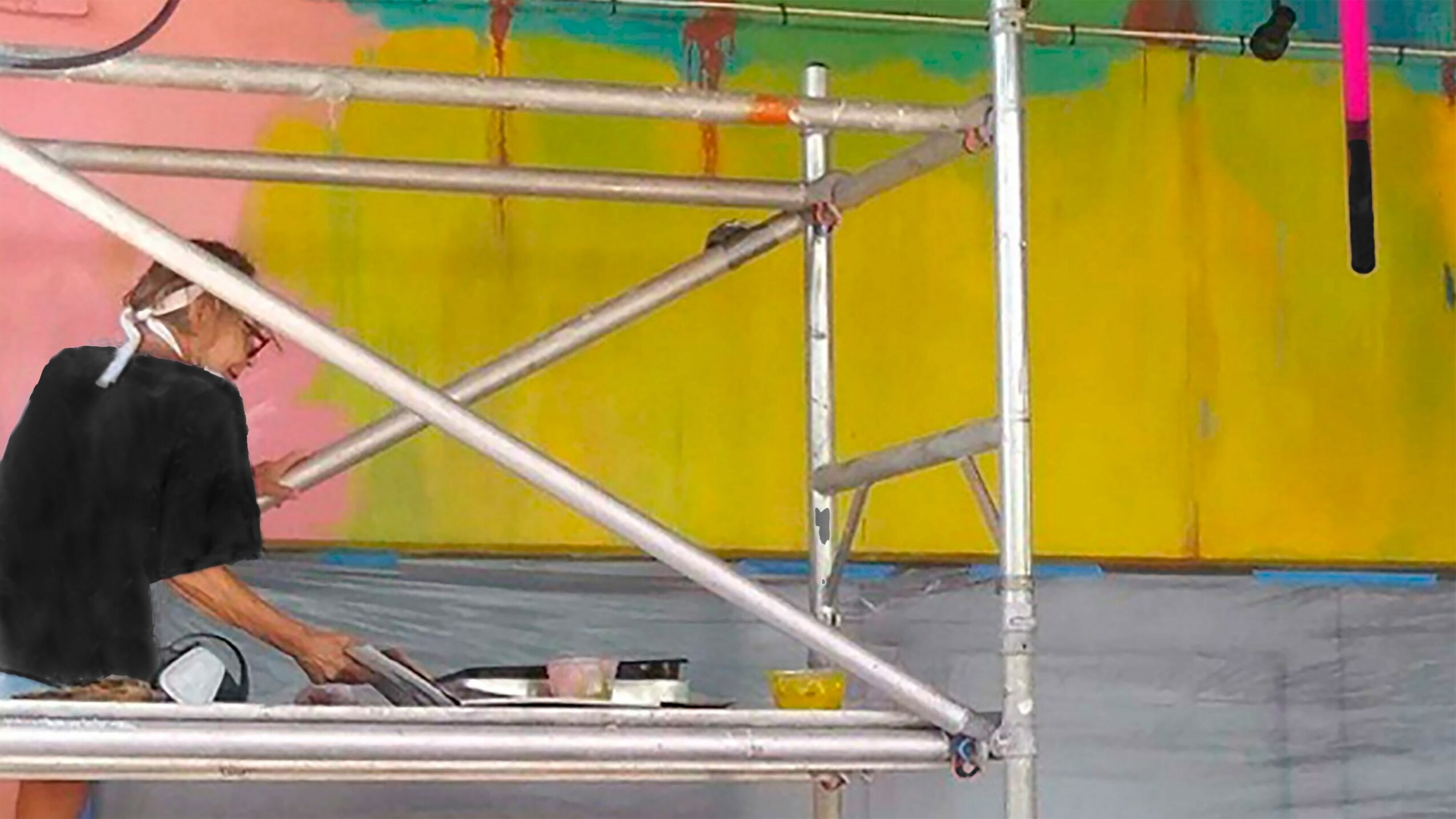
In 2013 I was chosen to paint the side of a building in Wynwood, the arts district at the time.
In 2014, the InterContinental Hotel bought a few dozen items of clothing for their gift shop.
In 2015, I worked with kids in the playroom of Holtz Children’s Hospital, doing art projects. This inspired me to create 3 learning charts: how to mix paint, draw a portrait and read music.
I made sculptures with molded clay, tree debris and found objects. These pieces relayed messages about social issues, like women’s rights and mental health. I followed my nose, as a friend used to say. But it came with consequences. Using bugs as a metaphor for mental demons, I created a piece called, “Pest Control”. A can of bug stray, made from a sawed-off portion of an old wooden street sign with a Photoshopped label, poisons the creeping thoughts of shame, guilt, self-doubt, etc. that crawl in the cardboard head. This piece was accepted in a show in New York City.
I created mobiles, some were colorful abstract images printed on Plexiglas. Others were made from found objects. One mobile balanced a saucepan, door lock, old glass doorknob and other so-called “junk” and was shown at the International Kinetic Art Exhibit and Symposium in 2017. That same year, I had a show in NYC called, “Hope” which focused on poverty. I had been invited by the gallery that had shown “Pest Control”. The show included sculptures that were made from found wood and old bicycle parts as well as beautifully finished abstract, non-representational paintings. People viewing the exhibit were mostly intrigued by a piece called, “What Pushes Your Buttons?” Made with mixed media and cardboard, the 3 x 3-foot piece was a large grid of 16 elevator-type buttons. Each button described an annoyance, that increased with intensity. The last “annoyances” would be experienced by those who live in extremely poor neighborhoods: a button chewed by a rat, a handicap button for a victim of a drive-by shooter, a hand-cuffed button of an innocent person charged with a crime. The final button was off the grid and read: “Pushed too far”. A pistol was placed in the last spot on the grid. (I found a cigarette lighter in a thrift store that resembled a gun). The message is that oppression leads to anger which creates violence. Kill with kindness.
In 2018, I was invited to show work at an exhibit entitled, “Woman” in Key West with the artist/friend who had given me a place to live during my final months in Key West. I constructed a rather crude tabletop sculpture called, “Cleaning House”. I took a brick-like block of wood and added molded clay to turn it into a colorful woman with exposed genitalia. She held a bucket and mop. I added small clay-molded-replicas of cleaning products to the piece. The female sculpture appeared to mop large footprints off the floor, prints made by a disrespecting man with muddy shoes. The words “Sexual” and “Harassment” were woven into the footprints, like a fingerprint.
In 2021, I decided that I would prefer my paintings and sculptures to look like they were made by the same artist, rather than the nonrepresentational abstracts and figurative sculptures I had been creating. I developed a new style of painting that was figurative. The body parts in my newer work have light and dark areas and appear 3 dimensional rather than flat. The distorted facial features have a roaming eyeball or two. Though they appear light-hearted, most of the new paintings relay important messages.
I created paintings that honor various groups of people: the Whistleblower, the investigative reporter, the person who adopts a pet from a shelter, a citizen who seeks the truth and votes for candidates with integrity, someone who cares for the environment, heroes acting as first responders, the selfless who care for others and people who share knowledge. “The Teacher” shows an odd profile with distorted facial features that has a book for a mouth. T-h-e T-e-a-c-h-e-r is written in phonetic spelling.
Currently I am a member of a group called, FAMA “Fiber Artists Miami Association.” I have created sculptures out of fabric, which I paint with liquid dyes and fill with stuffing. The sculptures resemble the figures I paint. Recently I created a sculpture entitled, “Knowledge is Power”. The figure is made with 3-dimensional shapes—cubes for the head and the brain, and book-shapes for the neck. In 2022-23, I created work about relationships. A painting of a face with distorted features that symbolizes vulnerability is called “Heart on Sleeve”. “Head on Shoulder” shows a person with a green head and black shoulder comforting a person with a brown head and floating eyeball.
I also made a mobile that is 90 x 120 in. called, “Three Nudes” that is displayed in the foyer of the Wilzig Museum Building in Miami Beach. It spins freely from one thread of cable and is perfectly balanced. A skilled craftsman drilled the hole in the precise spot on the mobile and into the concrete ceiling as he stood on scaffolding while I measured from the floor.
This past summer, I was commissioned by a friend to paint a realistic portrait of his mother who had recently passed away. He sent me a black and white image of her taken in the 1950s and asked that the portrait be in sepia and flesh tones. It was a heartwarming experience to work on the piece and watch her face come to life. Painting portraits is a learned skill, one that requires a lot of time, love and patience.
I am a minimalist in my art and in my lifestyle. I find that life is easier with fewer possessions, but oddly I still have the Picasso poster that I bought over 50 years ago. It takes a certain type of person, an individual who understands art, to appreciate my non-realistic work. I love the challenge of creating metaphors to relay complex concepts. It is satisfying to reduce images into minimalistic shapes that with bold impact, express feelings or opinions. It has taken me a lifetime to master the art of simplicity. I am grateful that I was able to spend my 70-plus years pushing my creativity to its highest level. The farther out there I go, the greater the thrill and the closer I get to inner peace.
I’m sure it wasn’t obstacle-free, but would you say the journey has been fairly smooth so far?
My life as an artist has been more like a roller coaster than a smooth sailing journey.
The best artwork is created when my mind is free to drift into another dimension.
It is necessary to be able to escape into this zone and stay there until the art is finished.
The biggest challenge is finding a way to make money and make art.
Appreciate you sharing that. What else should we know about what you do?
I relay messages and feelings through art.
The paintings and sculptures I create tell stories.
My figures have evolved from realism to individuals with exaggerated features to characters with distorted and misplaced facial features.
I am known for images of people made from simple shapes and odd-placed eyeballs.
I am proud of the paintings called The Rescue Rescuer and Head on Shoulder. In both pieces, my work traveled a long journey from realism to distortions, as I created many works to get to the final pieces.
My paintings look simplistic, but many of the pieces have complex or hidden messages.
Can you talk to us a bit about the role of luck?
My life as an artist has been possible because of the kindness of friends and supporters. I believe that if a person uses her talents, the Universe will provide a way for her to continue.
Good luck is a result of envisioning the dream.
Pricing:
- The Teacher $4000
- Knowledge is Power $2,300
- The Rescue Rescuer $4000
- Heart on Sleeve $1800
- Three Nudes $10,000
Contact Info:
- Website: https://www.arts-jmm.com/
- Instagram: https://www.instagram.com/arts.jmm/
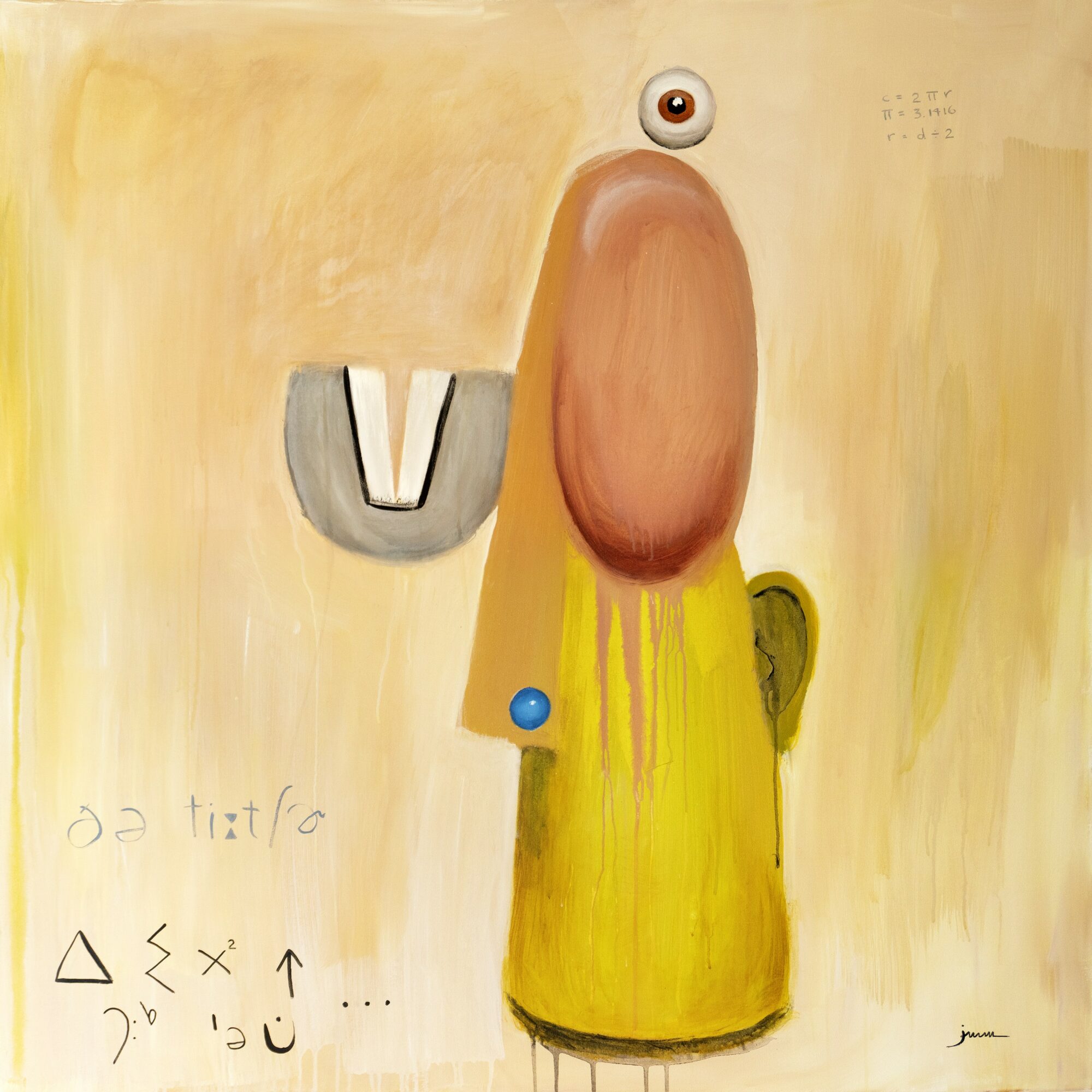
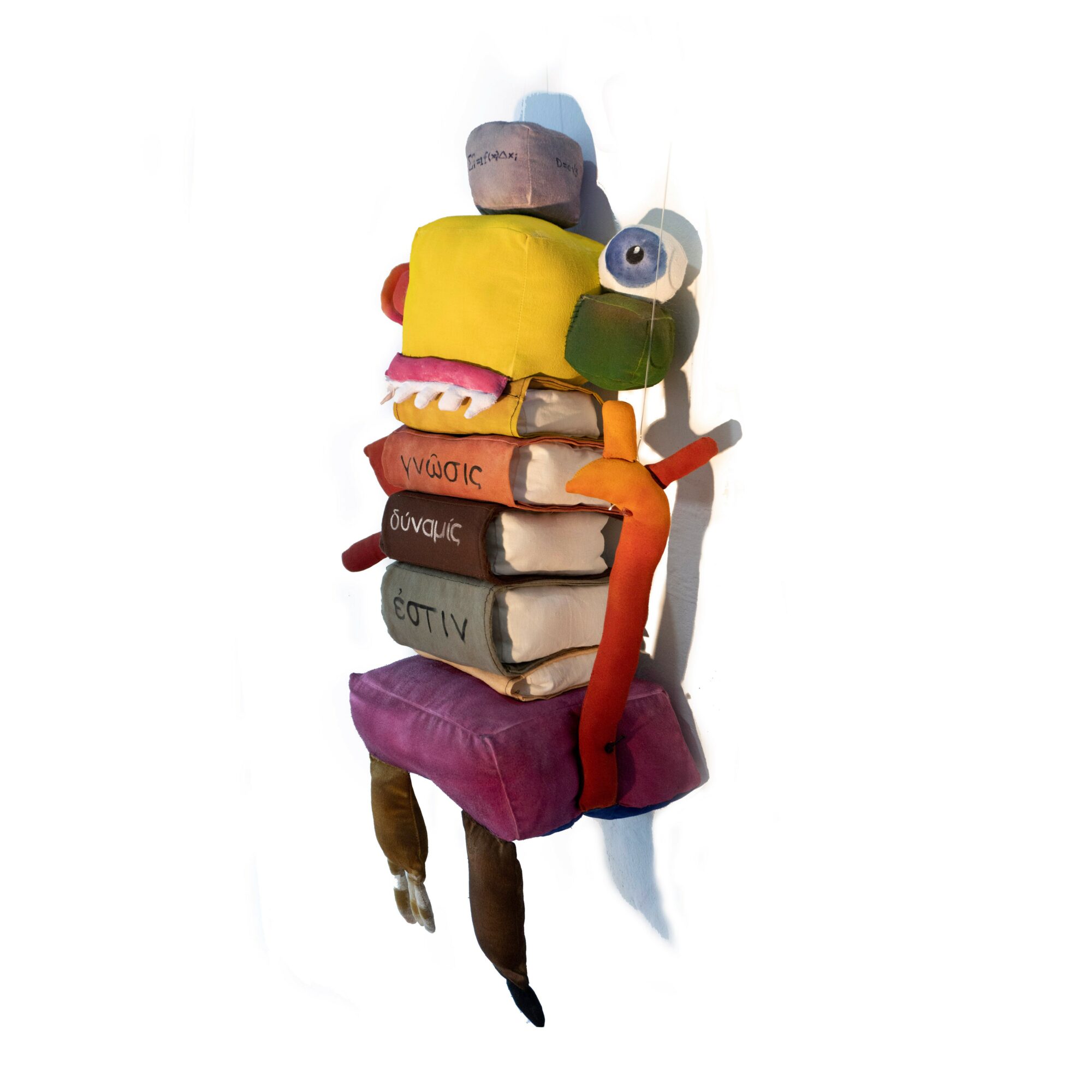
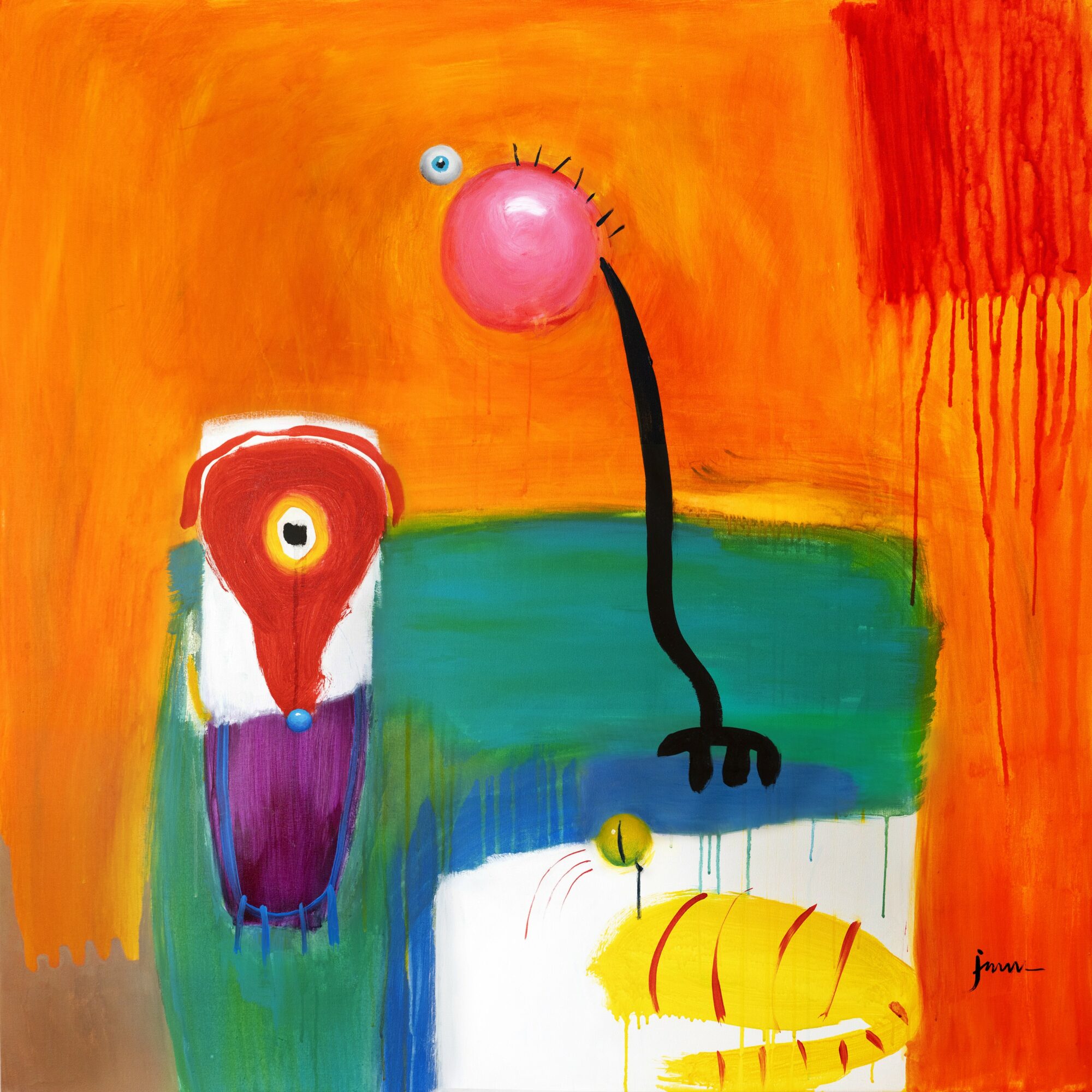
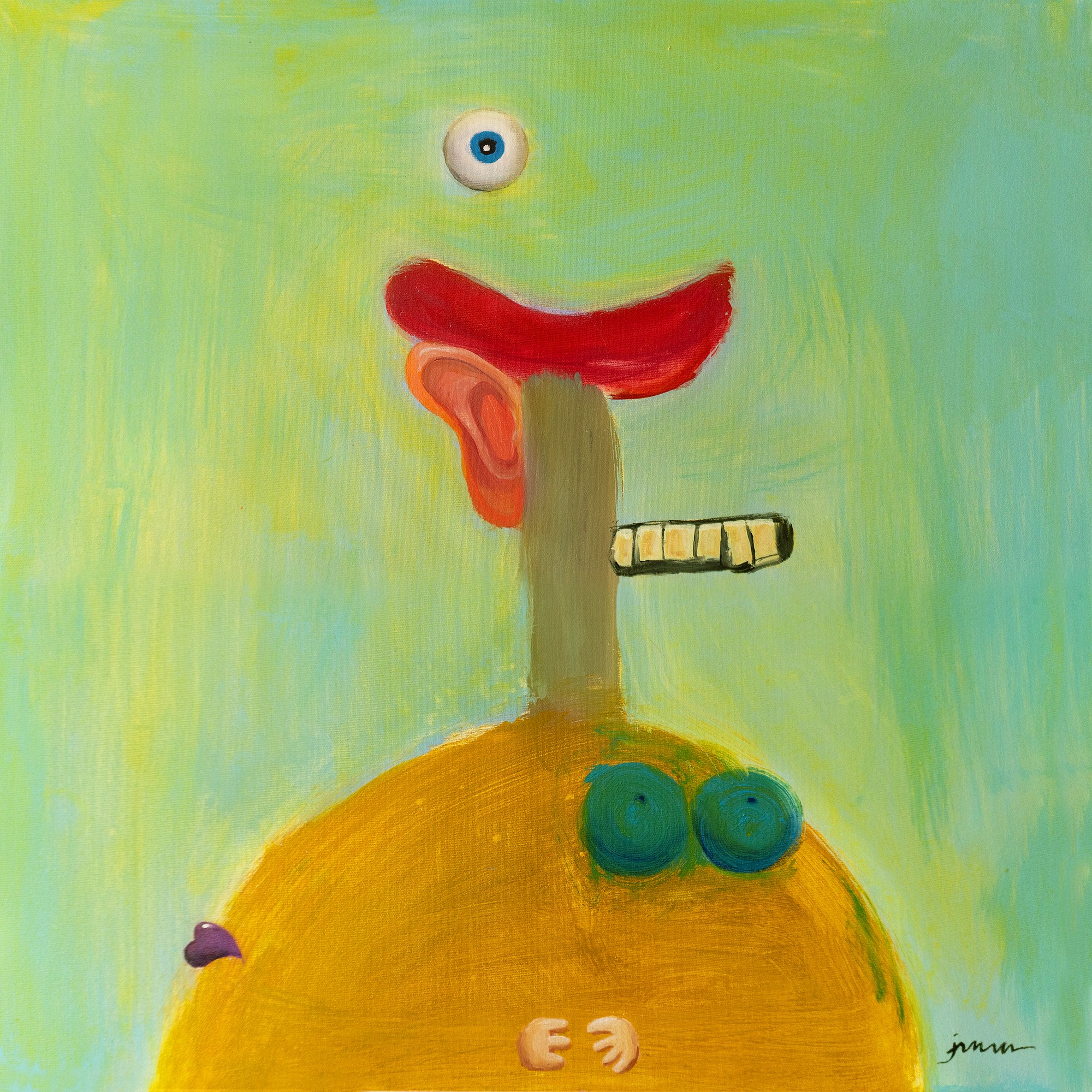
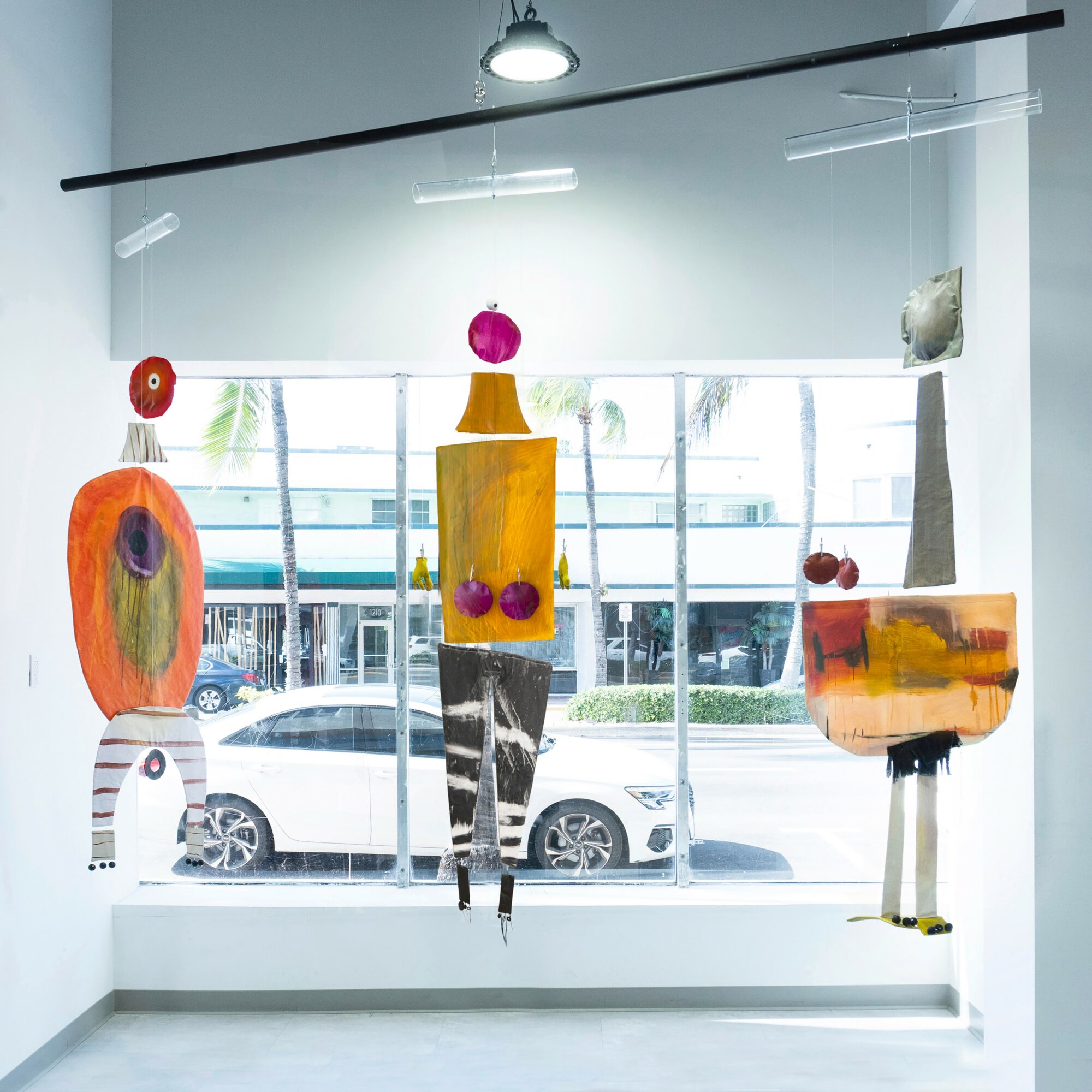
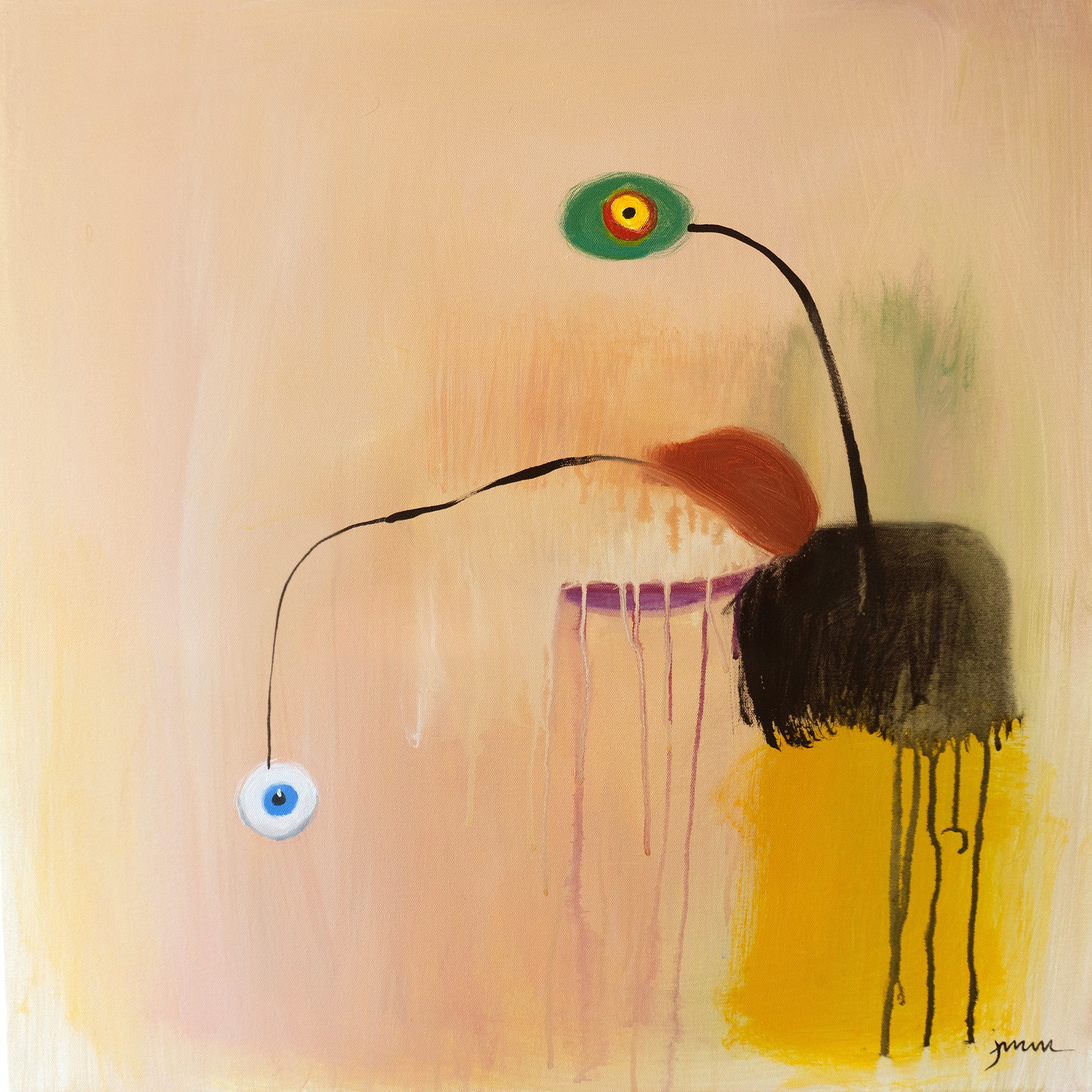
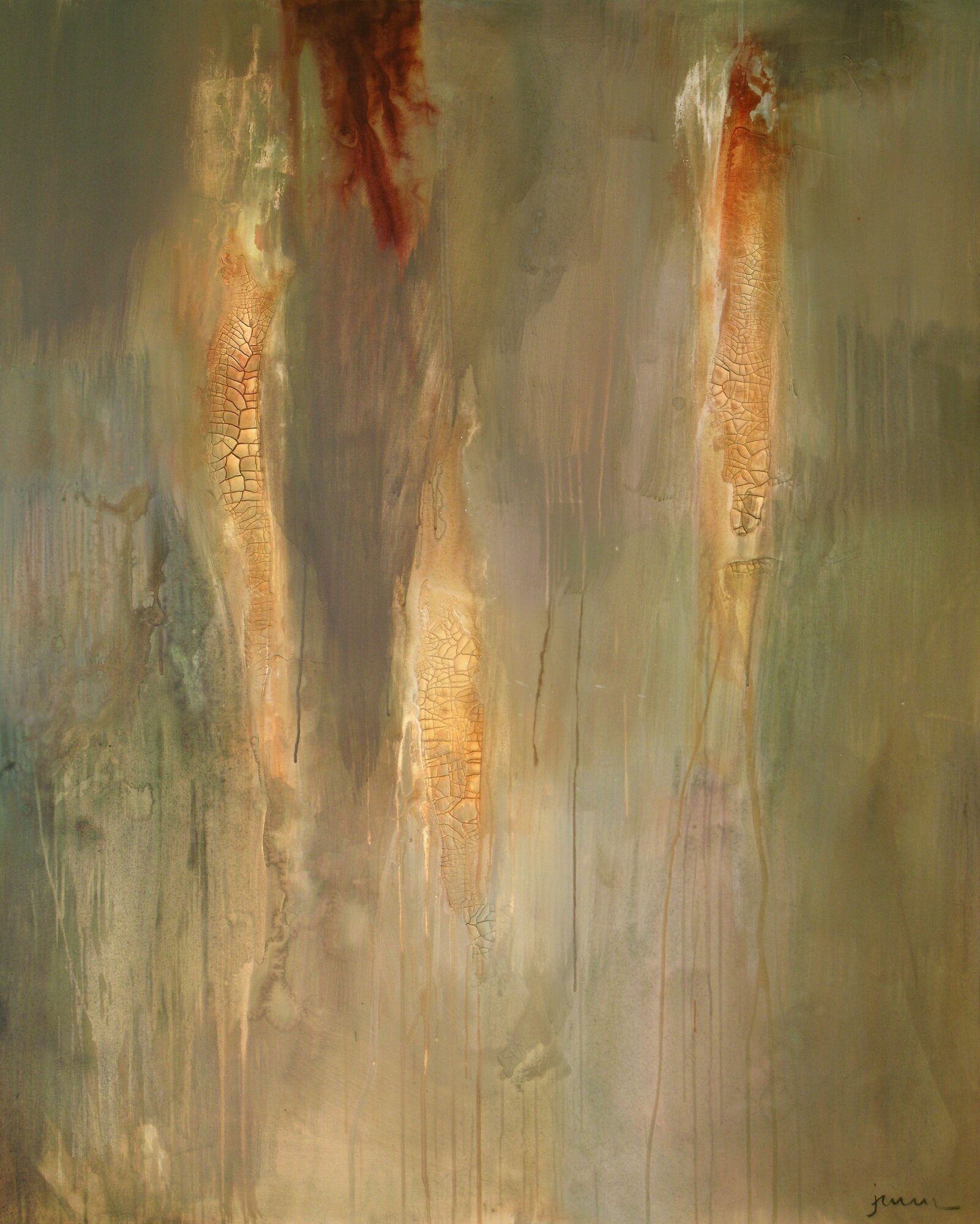
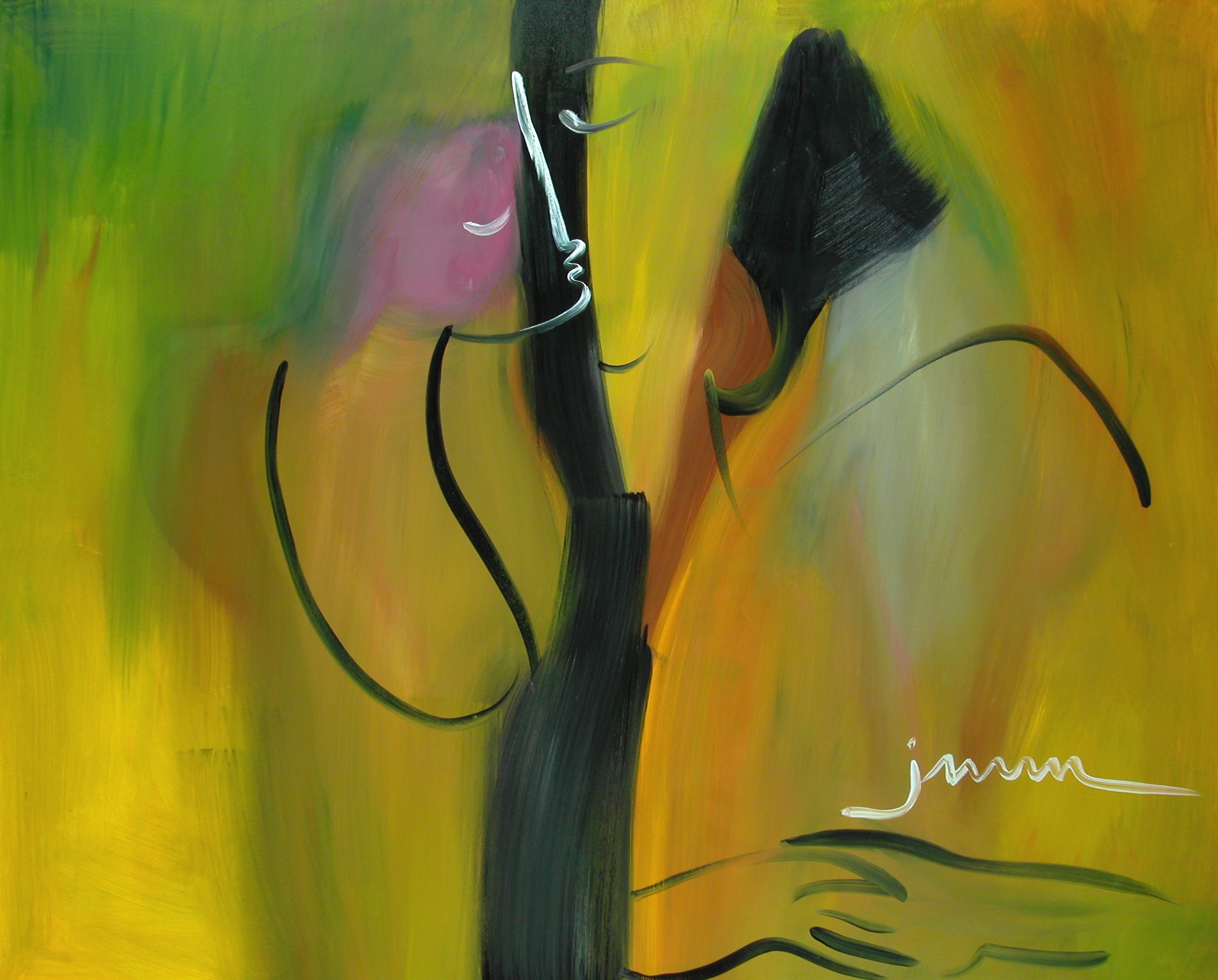
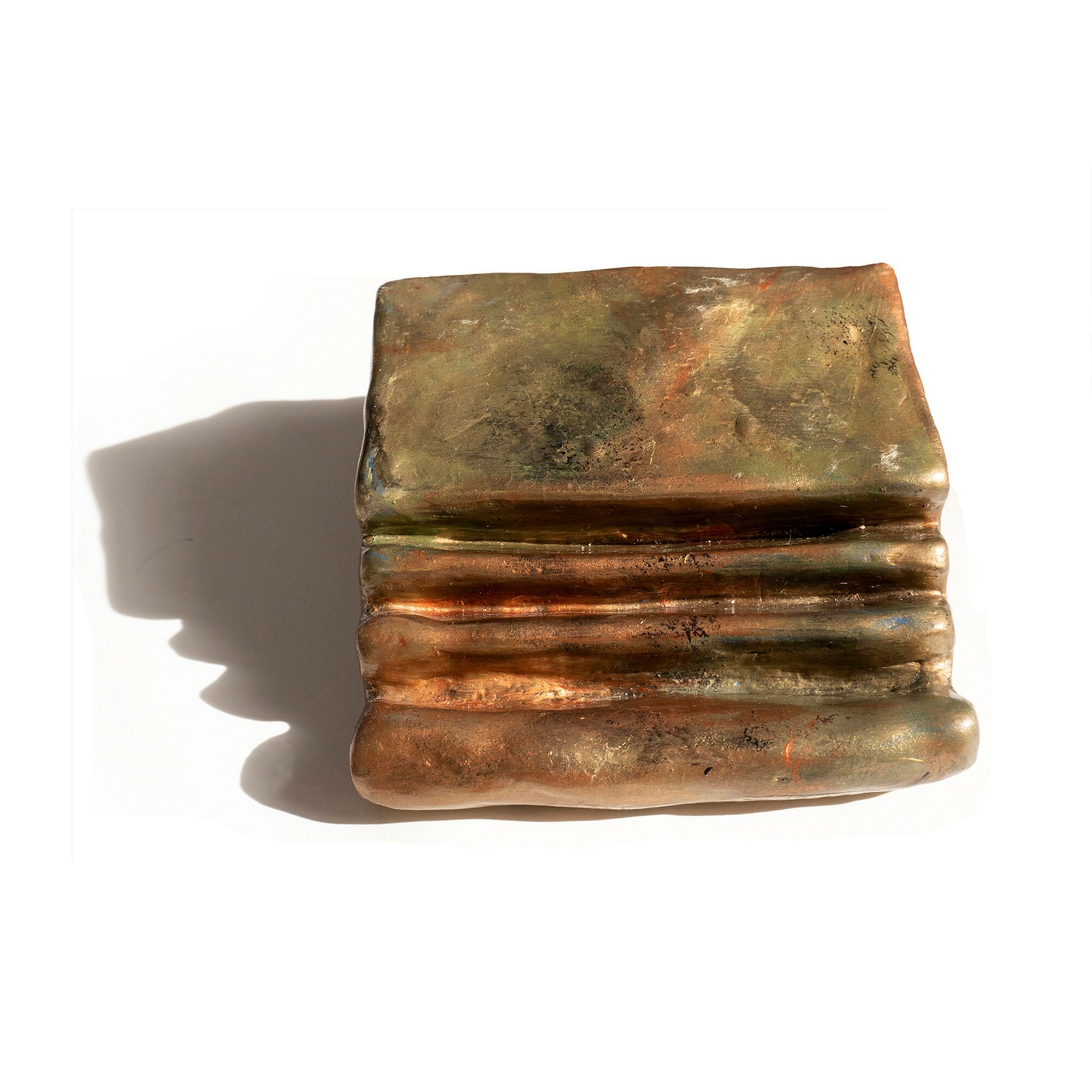
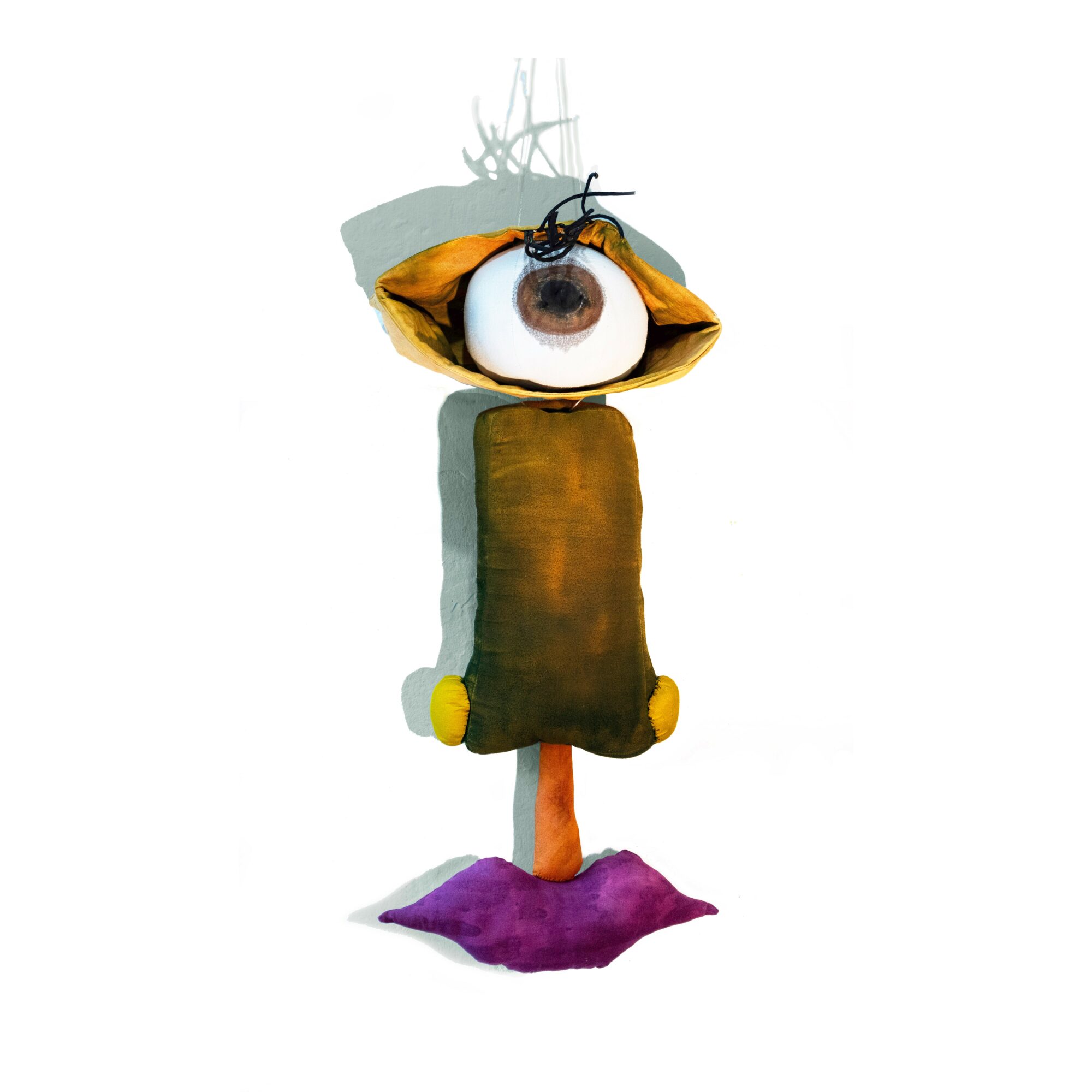
Image Credits
Photo by Derrick Samus
Janet Mueller painting R House, Miami
Hxecute, designers
Photos by Janet Mueller:
The Teacher 48 x 48 in. acrylic on canvas 2021
Knowledge is Power 41 x 15 x 9 in. hand-painted stuffed fabric 2024
The Rescue Rescuer 48 x 48 in. acrylic on canvas 2021
Heart on Sleeve 24 x 24 in. acrylic on canvas 2022
Three Nudes 90 x 120 in. mixed media mobile 2022
Head on Shoulder 26 x 26 in. acrylic on canvas 2022
Steel 60 x 48 in. acrylic with crackle medium on canvas 2018
The Family Tree 48 x 60 in. oil on canvas 2002
The Rock and the Shadow 2.5 x 5.5 x 7 in. painted paper clay 1991
The Observer 30 x 13 x 6 in. hand-painted stuffed fabric 2024
Pest Control 27 x 25.5 x 44 in. 2012