




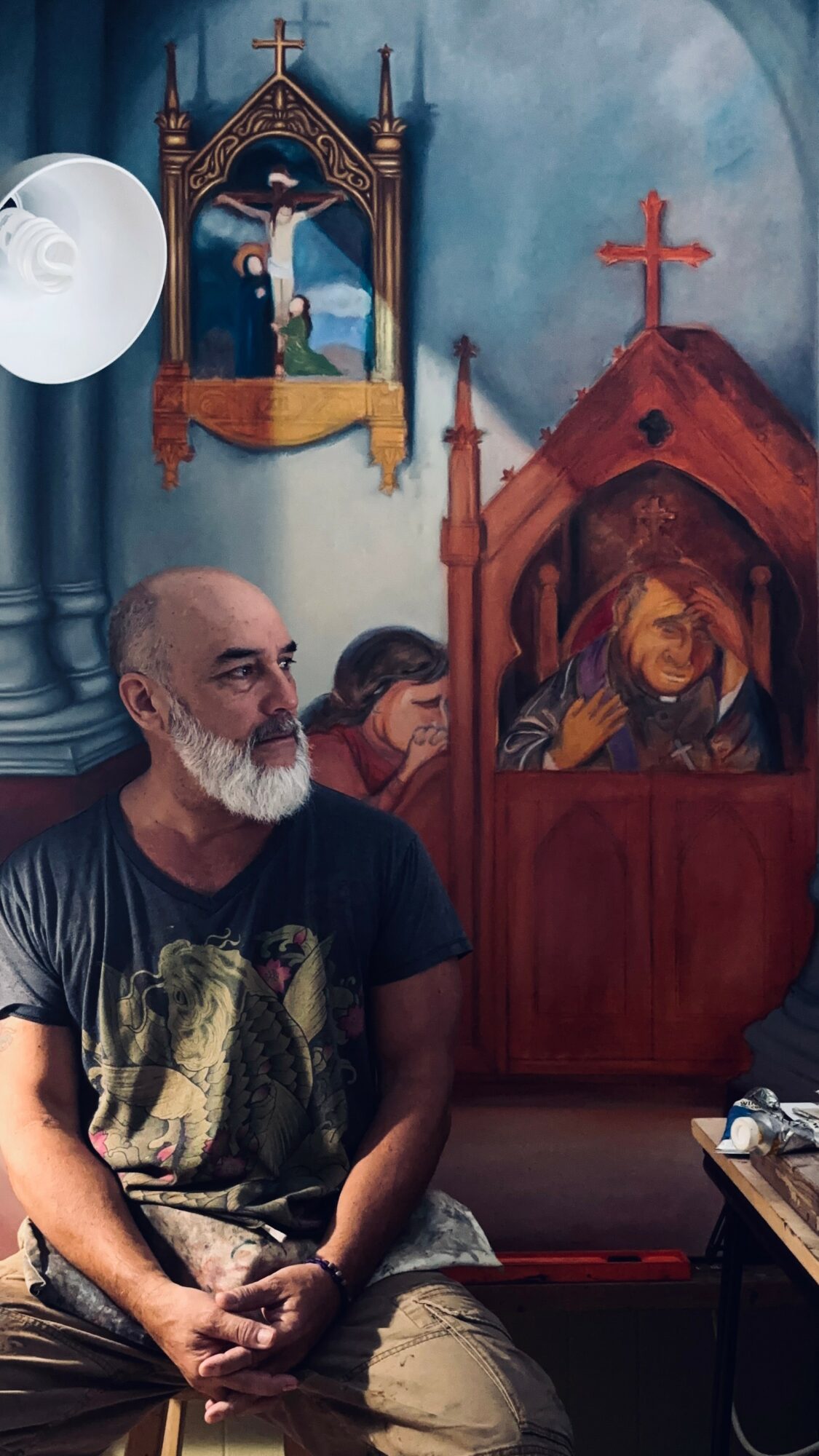
Today we’d like to introduce you to Hugo Orezzoli.
Hi Hugo, can you start by introducing yourself? We’d love to learn more about how you got to where you are today?
My name is Orezzoli, and if you asked me where I’m from, I would pause. The answer feels layered. I was born in the United States in 1964 but Peru raised me. Lima shaped my rhythm, my humor, my perspective. I spent the first nineteen years of my life there, and it left a permanent brushstroke across my identity. I may have returned to the U.S. as a young adult, but I never stopped being Peruvian at heart.
When I came back to the States in 1983, I had no grand plan. Just a hunger to work, to grow, to figure it out. I worked restaurant jobs. I joined the U.S. Army Reserves for six years. I enrolled in college, Southwest Missouri State University, now called Missouri State, and pursued graphic design. But even before that, I had this quiet, constant fascination with advertising. I think it started when I was a kid watching Bewitched. The husband was in advertising, always sketching ideas, always surrounded by a certain kind of magic. That stuck with me.
I didn’t graduate, but I landed my first job at an ad agency in Springfield, Missouri, and that’s when the real education began. I spent five years there, soaking in everything I could. It was English-language work, but I started realizing something: I was bilingual. Why not use that? Why not aim for a market that spoke to both sides of me?
So I moved to Miami, with no job lined up, just a few leads and a lot of instinct. I landed at a small agency in Miami Beach and one of the first things they handed me was a children’s book. It wasn’t just any book. It was the story of Shrek—before Shrek was Shrek. I created the original logo for the movie. At the time, I had no idea what it would become. But that’s the thing about creativity. You never know what seeds you’re planting.
My journey in advertising spanned decades and several agencies. I spent ten years at one, bouncing between campaigns and countries. Around the tail end of that chapter, something else started pulling at me, something older than advertising, something quieter: painting.
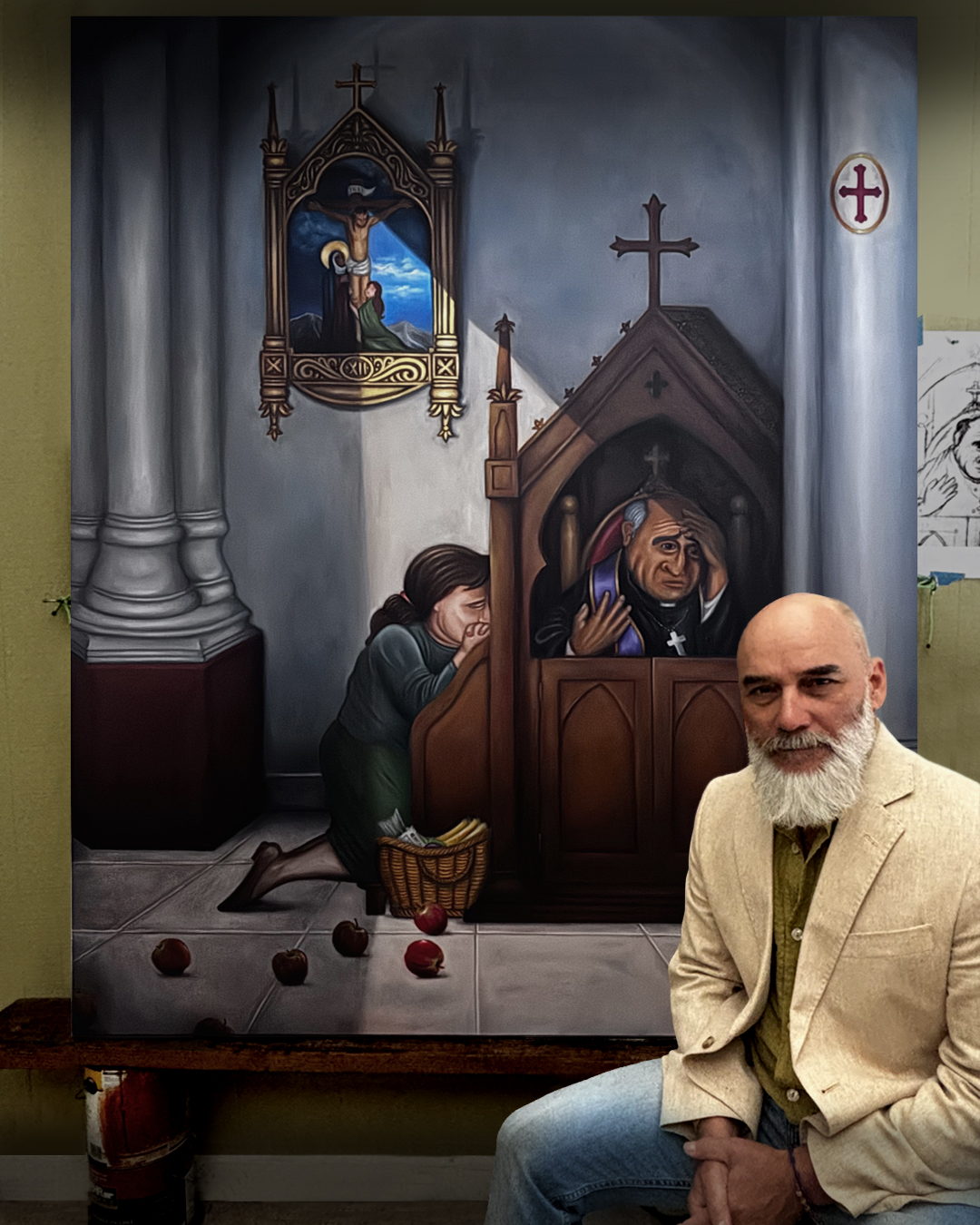
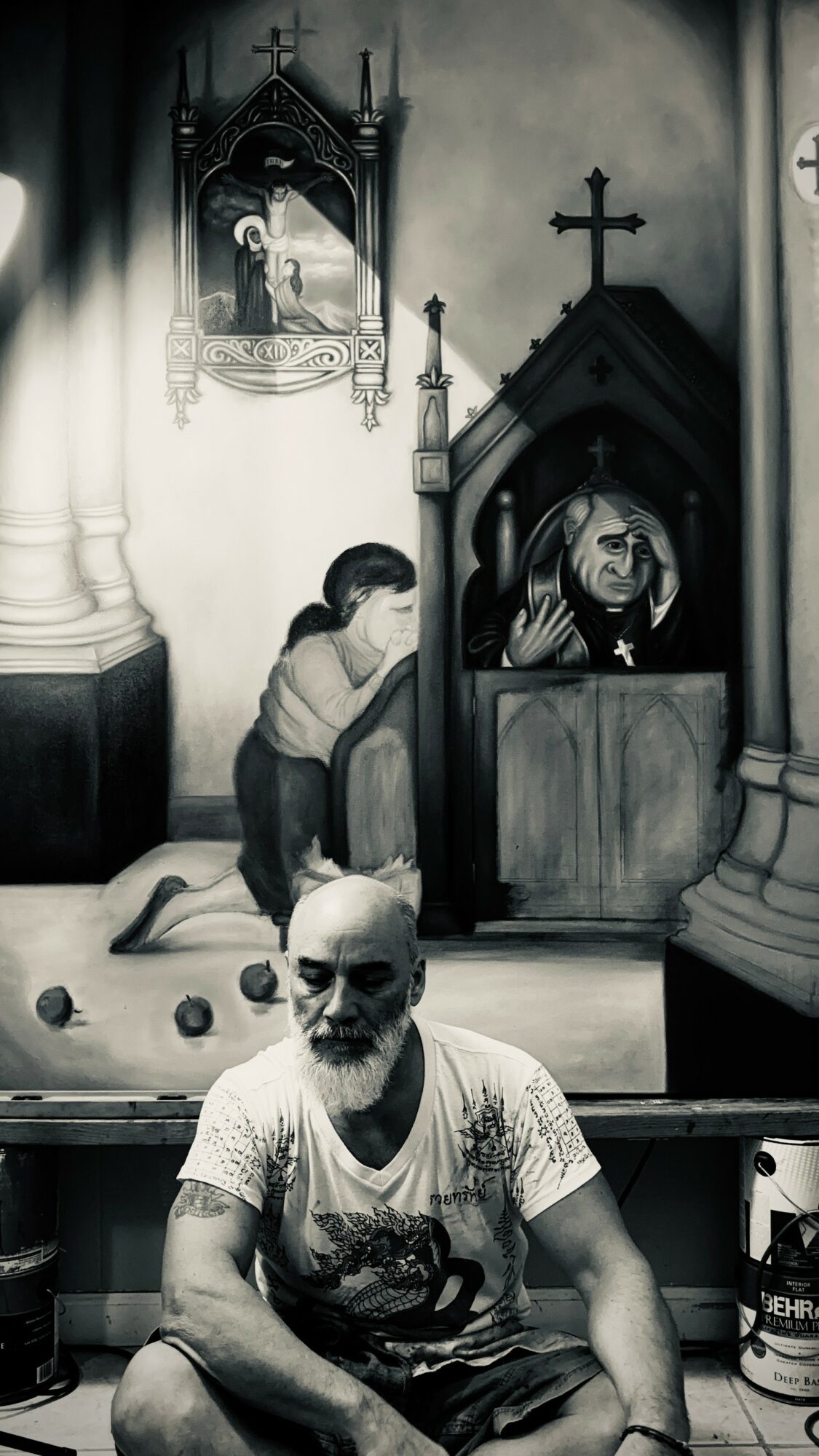
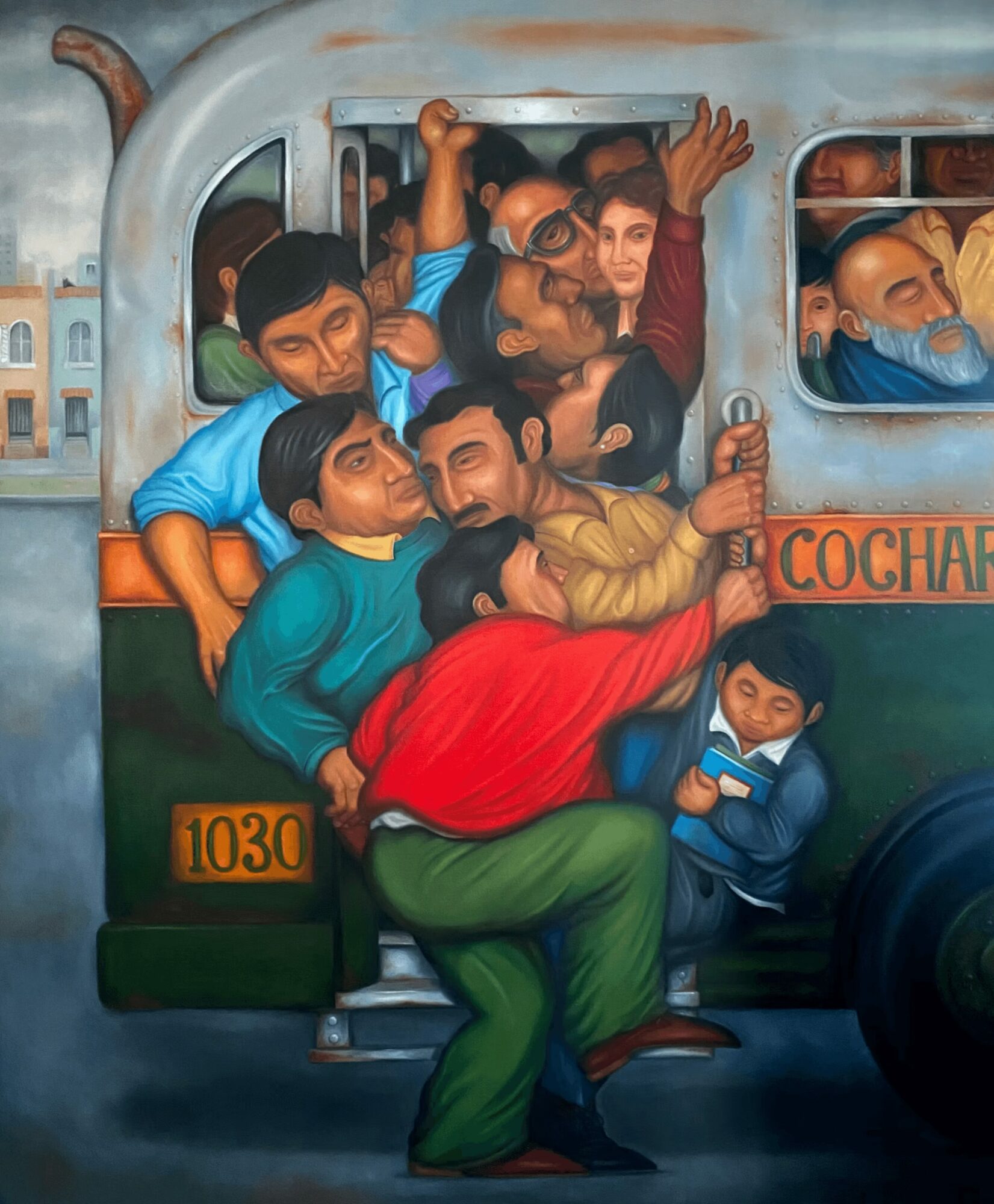
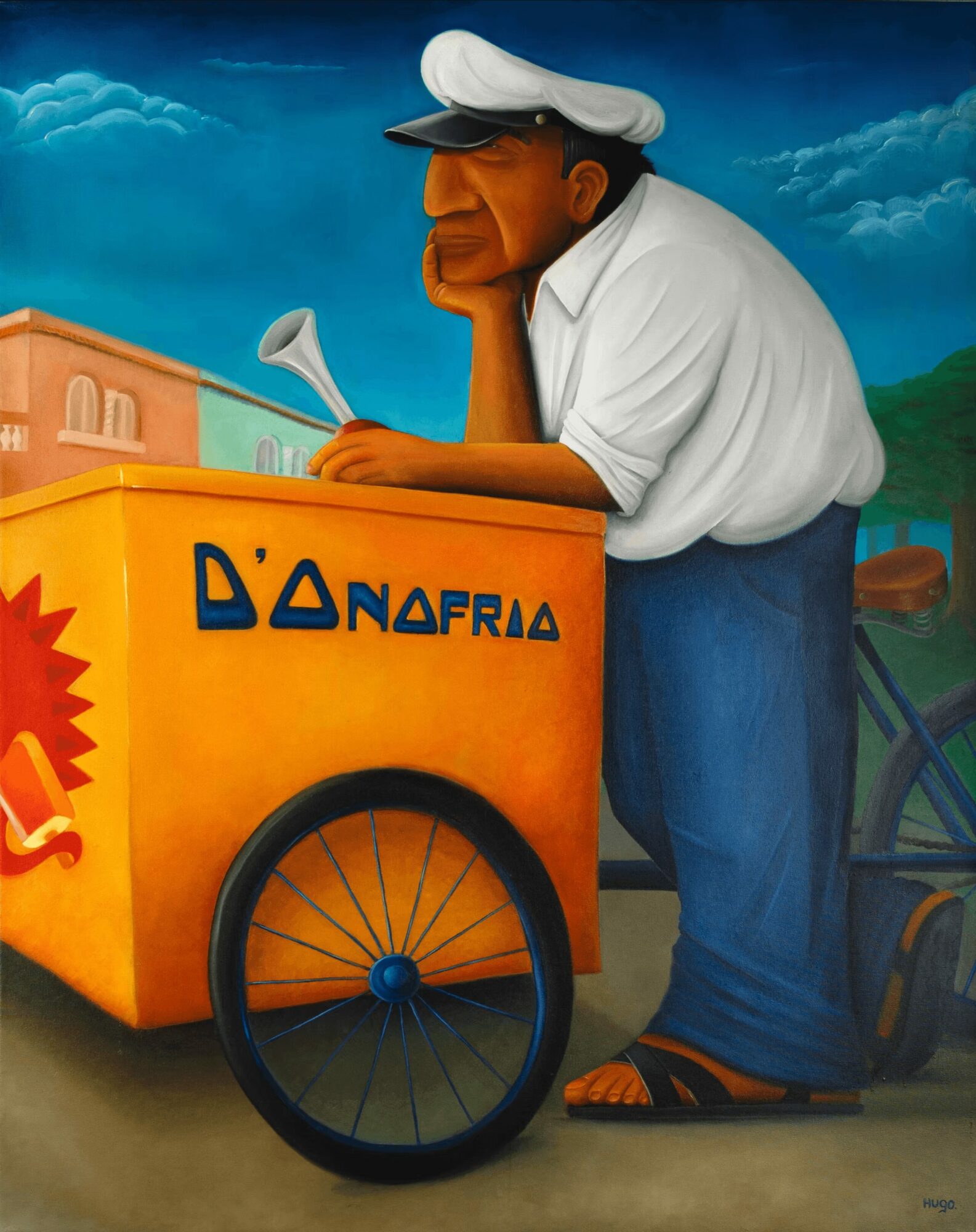
My wife and I were opening a restaurant, and the walls felt bare. So I picked up a brush. I’d drawn all my life, but this was different. This was oil. This was large. This was new. I painted one piece, hung it on the wall, then another. One day, I walked in and saw a family taking a photo in front of one of my paintings. That’s when I realized, this wasn’t just décor. It was connection.
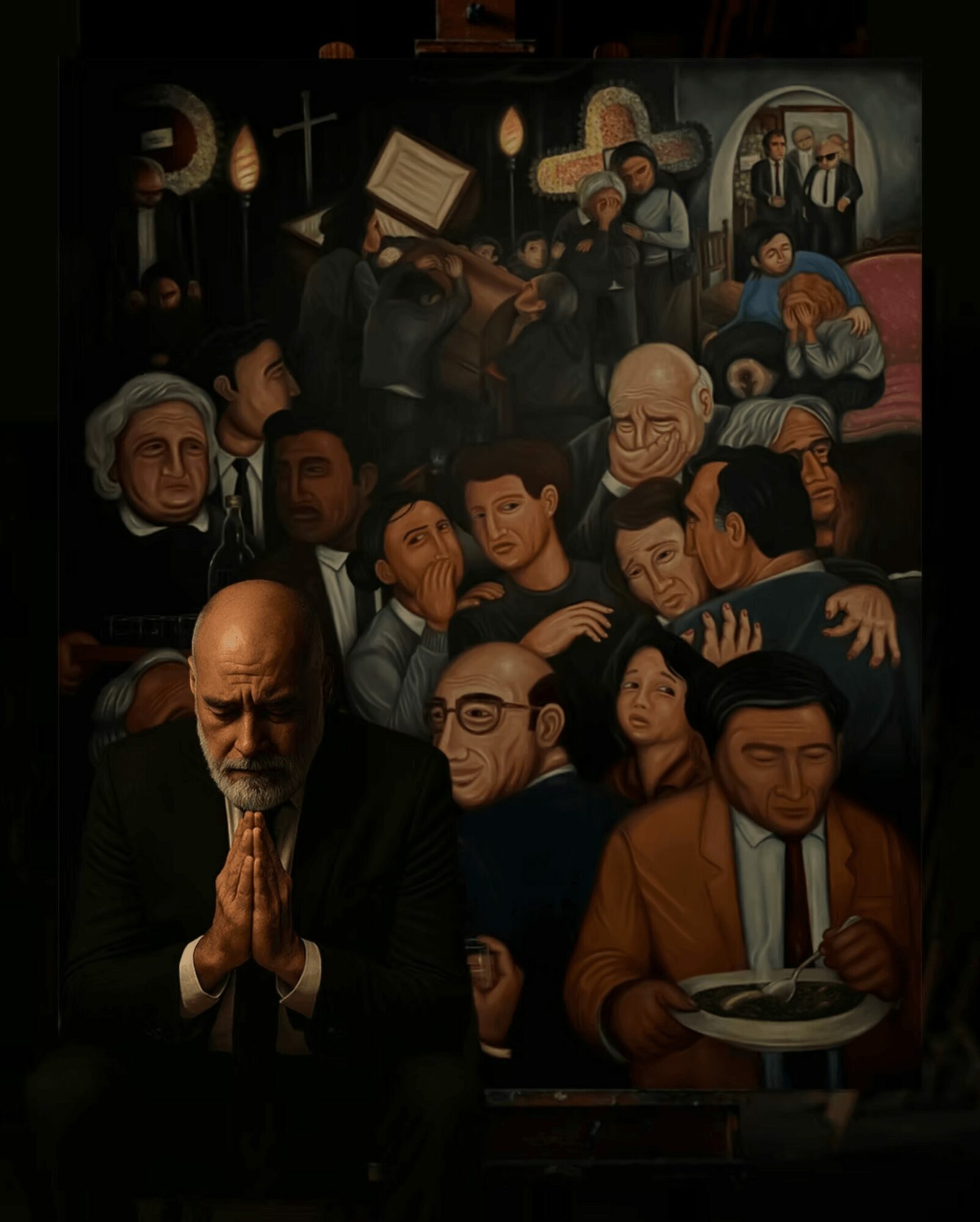
Even after the restaurant closed during the 2008–2011 economic downturn, I kept painting. The work got bigger, deeper. People began to notice. A few exhibitions came and went. But I never chased trends. I only paint what I’ve witnessed, what I’ve lived. If it’s on my canvas, it’s because I’ve felt it. And somewhere in the middle of all that, music came knocking too. I never studied it. Couldn’t read notes. But I’d hear melodies in my head, fully formed. I’d call my own voicemail and sing them before they disappeared. One thing led to another, and by 2005, a veteran salsa singer in France had recorded two of my songs. Later, I even met and collaborated with the same artist who sang the first Latin track I ever loved as a child in 1972. Life has a strange way of circling back. My kids ask me how I did all these things, advertising, painting, songwriting. And I tell them this: creativity isn’t limited. If you’re creative in one area, you can be creative in any area. You just have to trust the instinct, even if you don’t have the formal training. Maybe especially if you don’t. Because when you don’t know the rules, you’re not afraid to break them.
Looking back, sure, I sometimes wish I’d started painting earlier. But then again, maybe I couldn’t have. Maybe I had to live first. Maybe you can’t paint what you haven’t felt. Maybe the richness of the work comes from having watched people, loved people, lost things, rebuilt things.
That’s what I try to teach my children, and what I’d tell the next generation: don’t chase shortcuts. Do the work. Observe the world. The best creative work comes from knowing how people live, how they laugh, how they grieve. It comes from paying attention when no one’s performing. From early-morning coffee in Italy or Spain, just watching strangers be themselves. That’s where the soul of art lives, in quiet observation.
I hope people remember me as a father, a husband, but also as a creator. Someone who made things from scratch. Someone who trusted the instincts more than the titles. My life’s never been a straight line, but it’s always been guided by one thing, creative impulse. And that, I think, is enough.
Alright, so let’s dig a little deeper into the story – has it been an easy path overall and if not, what were the challenges you’ve had to overcome?
t was a rough start.
I returned to the United States when I was 19 years old. As I mentioned before, I was born in the United States but raised in Lima, Peru, from the time I was four months old. Because of that, I had never learned English. Even so, I made the decision to join the Army without speaking the language.
Boot camp is challenging for anyone, but going through it without understanding English made it even more difficult. Still, I never let it intimidate me. If anything, it motivated me to learn the language as quickly as possible. Every day became an opportunity to improve, and little by little, I gained confidence in my ability to communicate.
Another challenge was building a career in a field I loved while barely speaking English. I found myself working alongside talented, creative people who had been born and raised in the United States and spoke flawless English. At first, it was intimidating, but I refused to let the language barrier define my potential.
What made the difference were the people I worked with. They looked beyond my heavy Spanish accent. They listened to my ideas, valued my contributions, and gave me the opportunity to prove myself. Their support, combined with my determination, helped me grow professionally. Over time, I gained experience, confidence, and a deeper appreciation for the work I loved.
Looking back, those early challenges became some of my greatest teachers. They showed me that determination, hard work, and the willingness to keep learning can overcome even the biggest obstacles.
Can you tell our readers more about what you do and what you think sets you apart from others?
I’m a Creative Director at an advertising agency in Miami, Florida, with more than 35 years of experience in the industry.
My journey began with an internship at a small advertising agency in Springfield, Missouri, while I was working in the design department of one of the city’s newspapers. In 1991, I landed a full-time position at one of Springfield’s best-known advertising agencies. From that moment on, I’ve had the privilege of building a career doing what I love, and more than 35 years later, I’m still as passionate about it as ever.
Over the years, I’ve worked on countless advertising campaigns across a wide range of industries. It would be difficult to choose just one project that I’m most proud of. If there’s one thing I value above all, it’s the journey itself.
I came to the United States from a very different culture and a very humble background, not knowing what the future would hold. Living in the Midwest, especially in Springfield, Missouri, shaped me in ways I could never have imagined. I didn’t just learn English, I learned how Americans live, think, and communicate in the heart of the country.
Today, I consider myself not only bilingual, but bicultural. Speaking another language can make you bilingual, but living and fully embracing another culture is what makes you bicultural. That perspective has become one of my greatest strengths, both personally and professionally, and I believe it’s one of the qualities that sets me apart as a creative leader.
I’m also grateful for the gift of creativity. It’s not just my profession, it’s part of who I am. I know creativity won’t end when I retire. I’ll always find new ways to express it. In recent years, I’ve discovered another passion: painting. It has become a new creative outlet and reminds me that creativity has no expiration date.
What do you like best about our city? What do you like least?
I love Miami. It’s a city I chose to call home.
After living in the Midwest for many years, I felt the need to reconnect with my native language and culture. Moving to Miami gave me that opportunity, and I honestly don’t think I could have found a better place for myself.
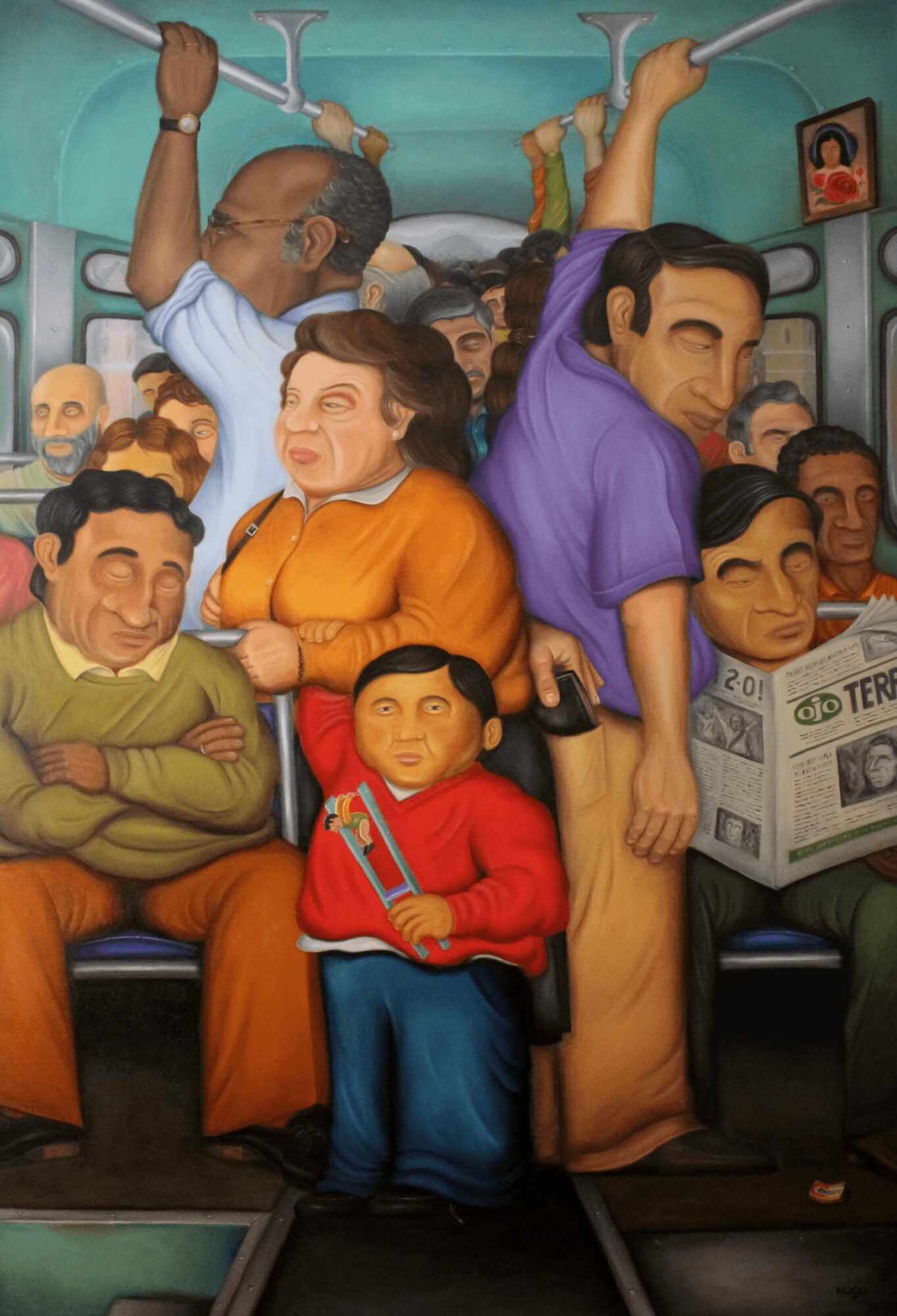
In many ways, Miami reflects who I am. It’s a bilingual and bicultural city, just like me. It’s vibrant, colorful, and constantly reminds me of both, the country where I live and culture where I come from. That blend of cultures is something I deeply relate to, and it’s also a constant source of inspiration for my artwork. I think you can see the energy and colors of Miami reflected in many of my paintings.
As for what I like least about Miami, that’s a harder question to answer. I was born and raised in Lima, Peru, where the skies are cloudy and gray for much of the year. Miami, on the other hand, is sunny almost every day. As much as I appreciate the sunshine, I sometimes miss those gray, rainy, cooler days. A little more variety in the weather would make Miami just about perfect for me.
Contact Info:
- Website: https://hugocolor.com
- Instagram: @real.hugorezzoli
- Facebook: Hugo Orezzoli