



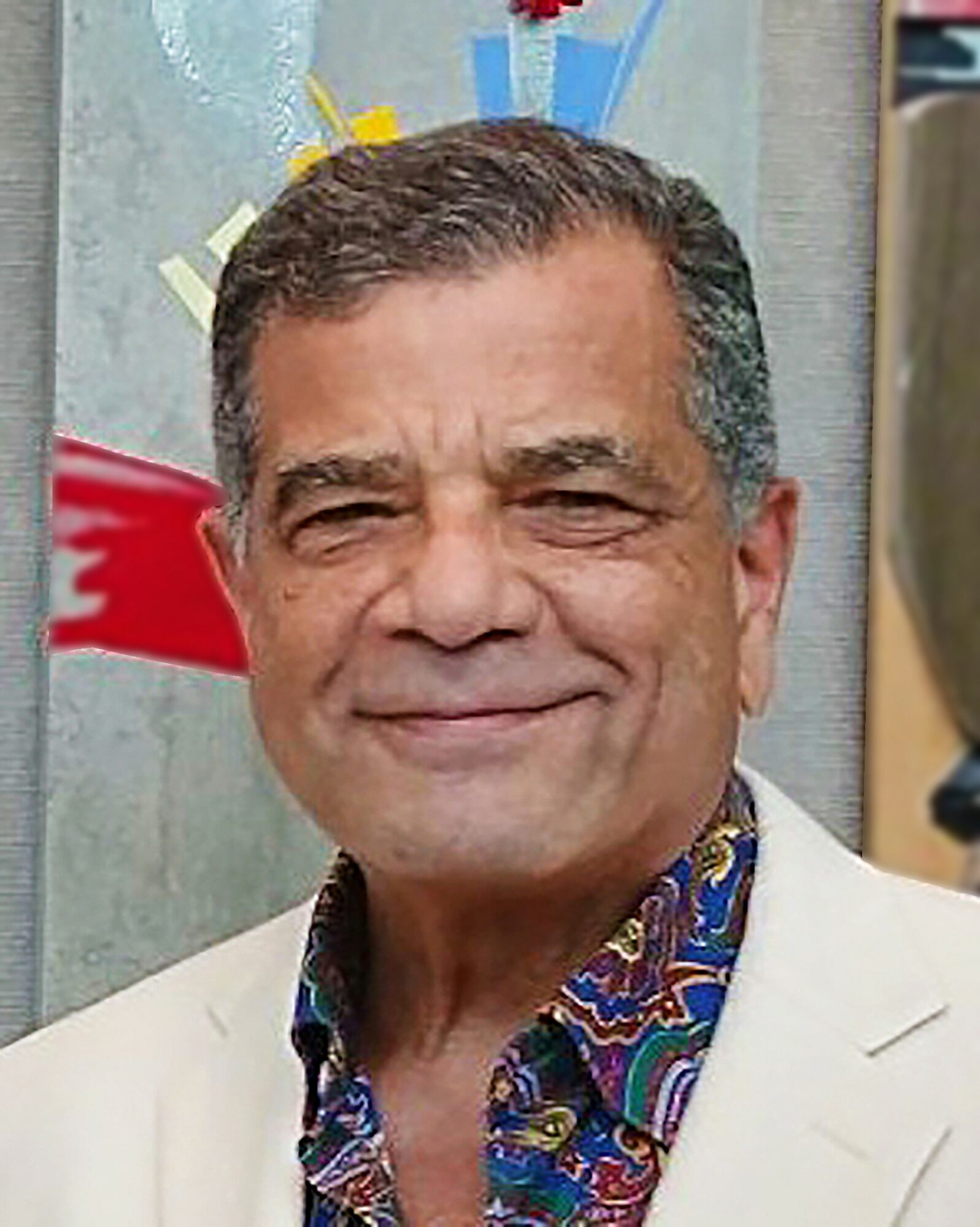
Today we’d like to introduce you to Galal Ramadan.
Hi Galal, it’s an honor to have you on the platform. Thanks for taking the time to share your story with us – to start maybe you can share some of your backstory with our readers?
“I believe the creative adult is the child who survived—and kept dreaming.” These words are more than just a poetic sentiment to me; they are the blueprint of my life. As a self-taught artist living in Fort Lauderdale, Florida, my journey from the bustling streets of Alexandria, Egypt, to international galleries is a testament to the resilience of the artistic spirit.
From Alexandria to the Artist’s Board
I was born the eighth of eleven children in a humble Egyptian home. I grew up in a world where art was an invisible luxury; basic needs always came first, and my schools offered no creative outlets. Despite this, I was always drawn to visual beauty—the colors of the Mediterranean Sea, the textures of weathered walls, and the expressive faces of everyday people. I observed and imagined silently, creating with whatever scraps I could find.
After immigrating to the United States at age 35, I navigated a labyrinth of challenges: a series of odd jobs, the responsibilities of a single parent raising two daughters, and a long struggle with misdiagnosed mental health issues. It wasn’t until 2017, during a profound personal low point, that I picked up a small set of Prismacolor pencils. What began as a desperate search for a hobby became a life-saving intervention. To say that art saved my life is not an overstatement; art truly rescued me from the depths of despair.
The Alchemy of Colored Pencil
Despite having no formal training, I realized that my previous “odd jobs” had actually been an unintended apprenticeship. Working at a silk-screen company taught me the nuances of color layering; graphic design honed my eye for composition; and my time at a newspaper instilled in me a deep reverence for detail.
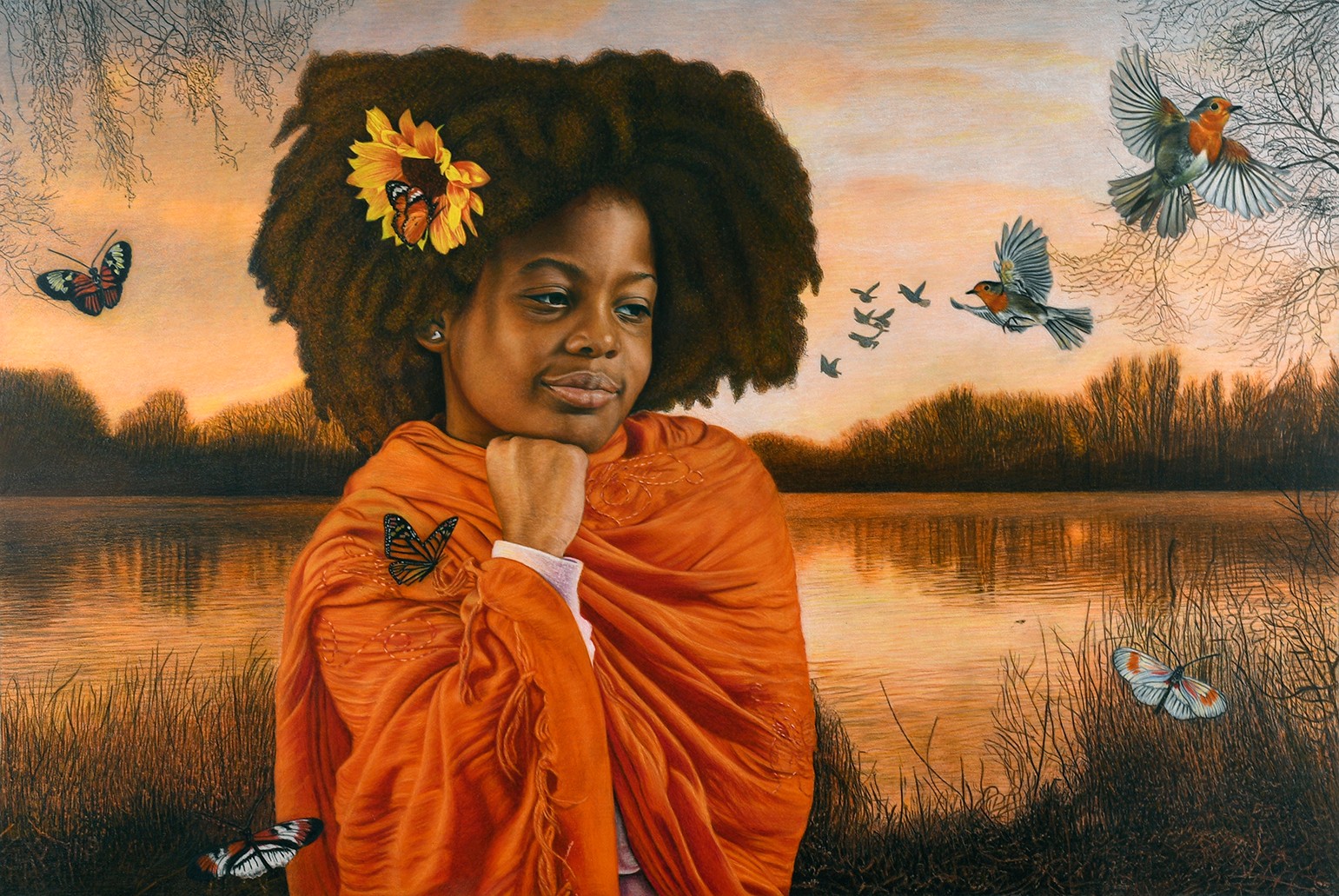
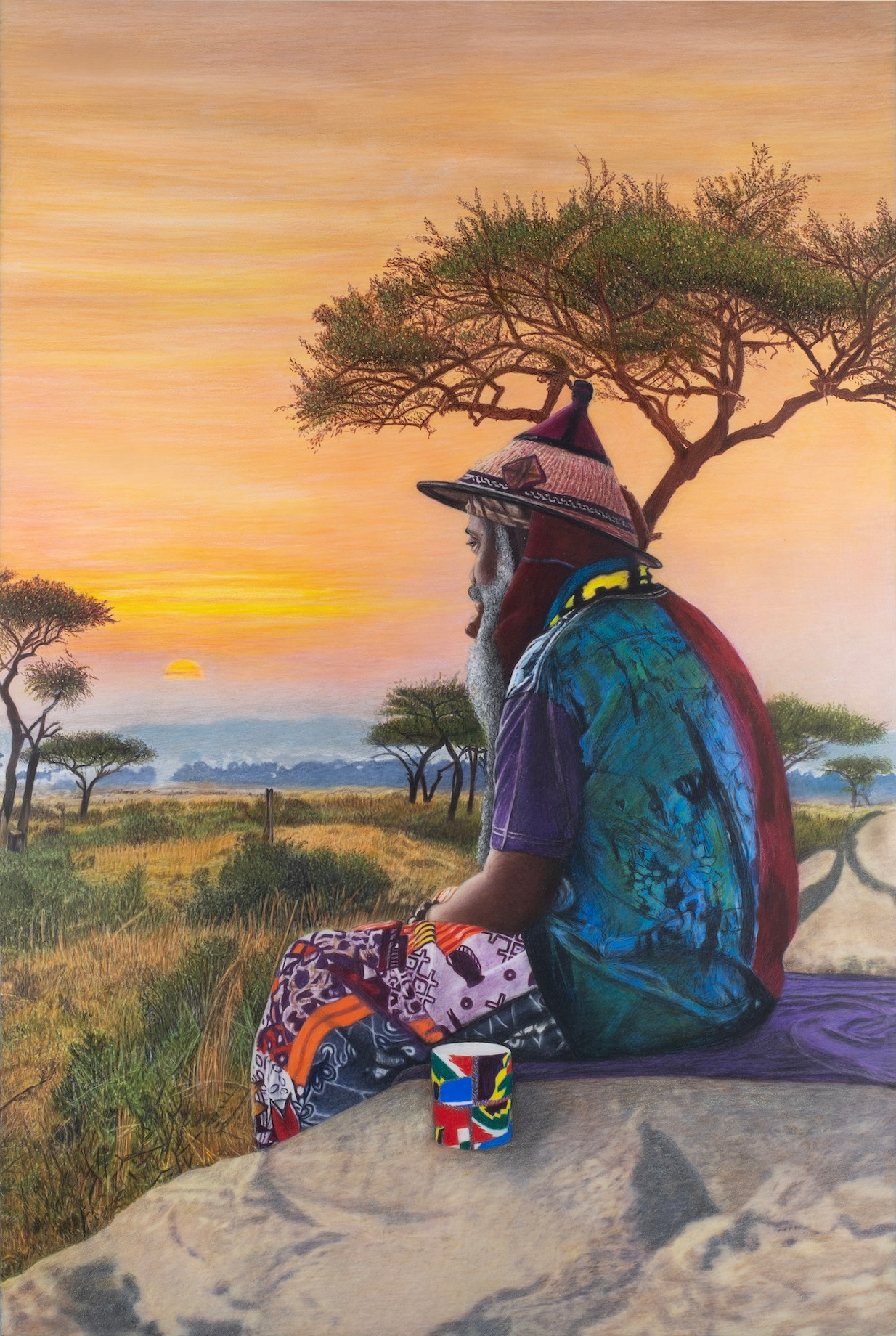
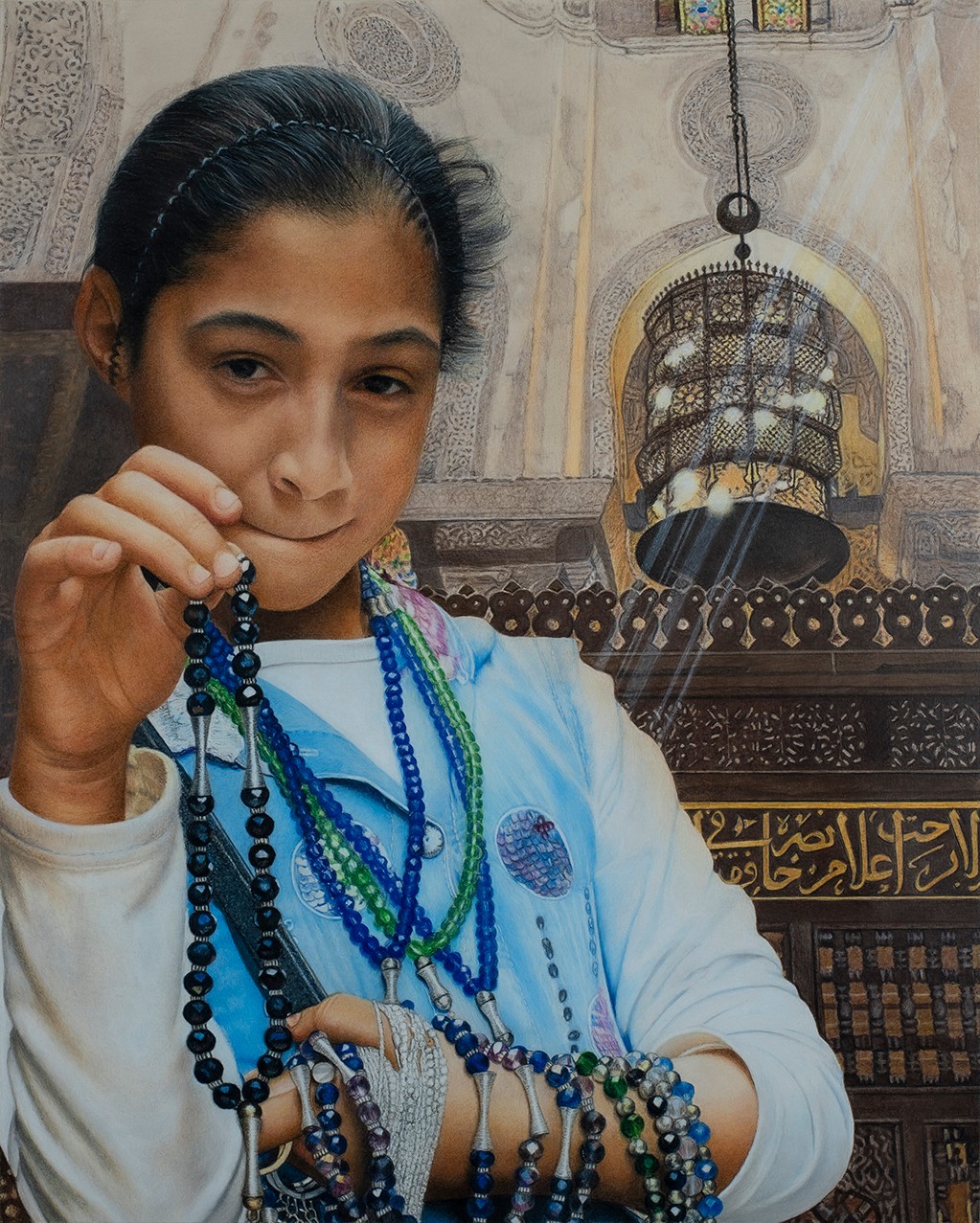
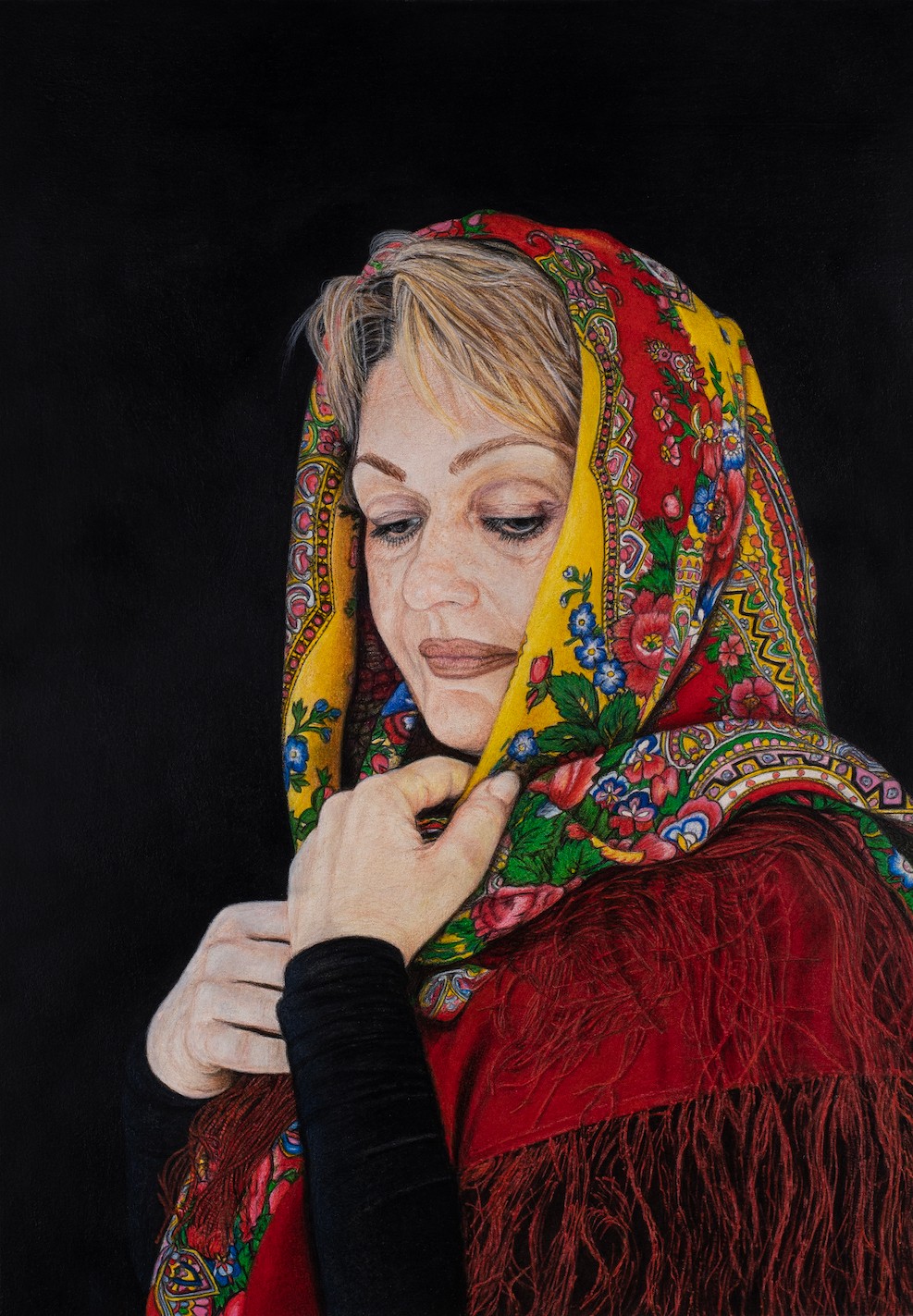
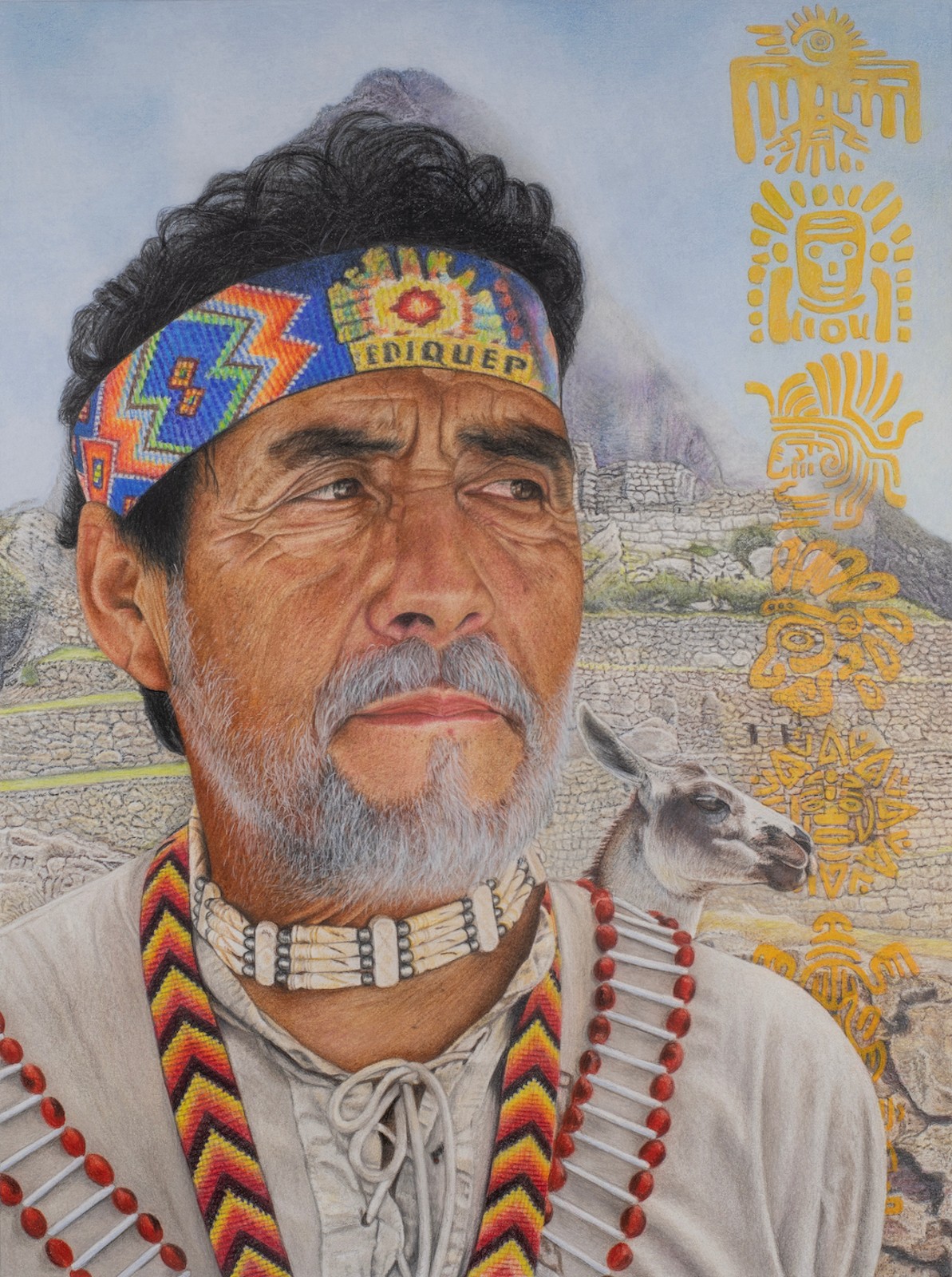
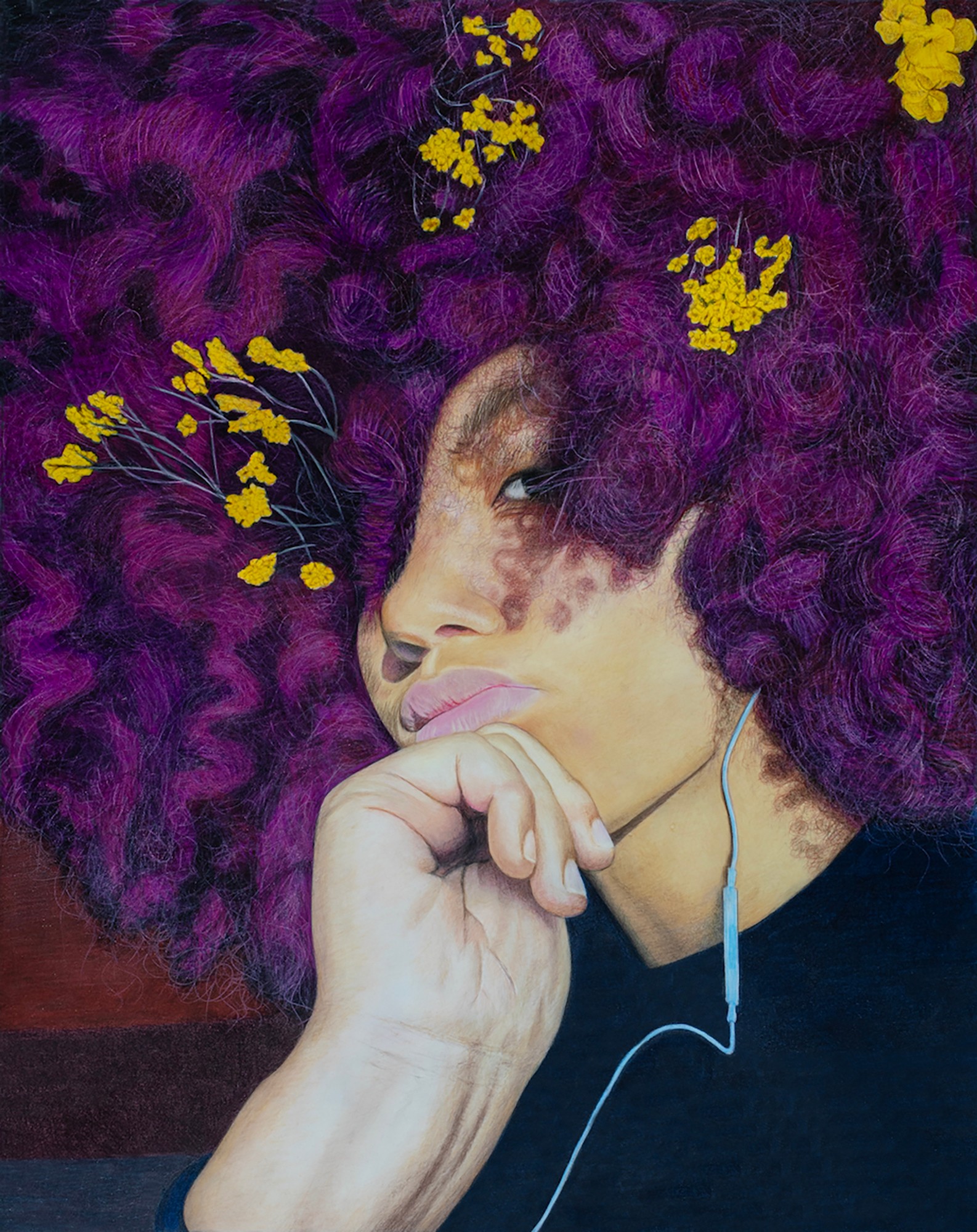
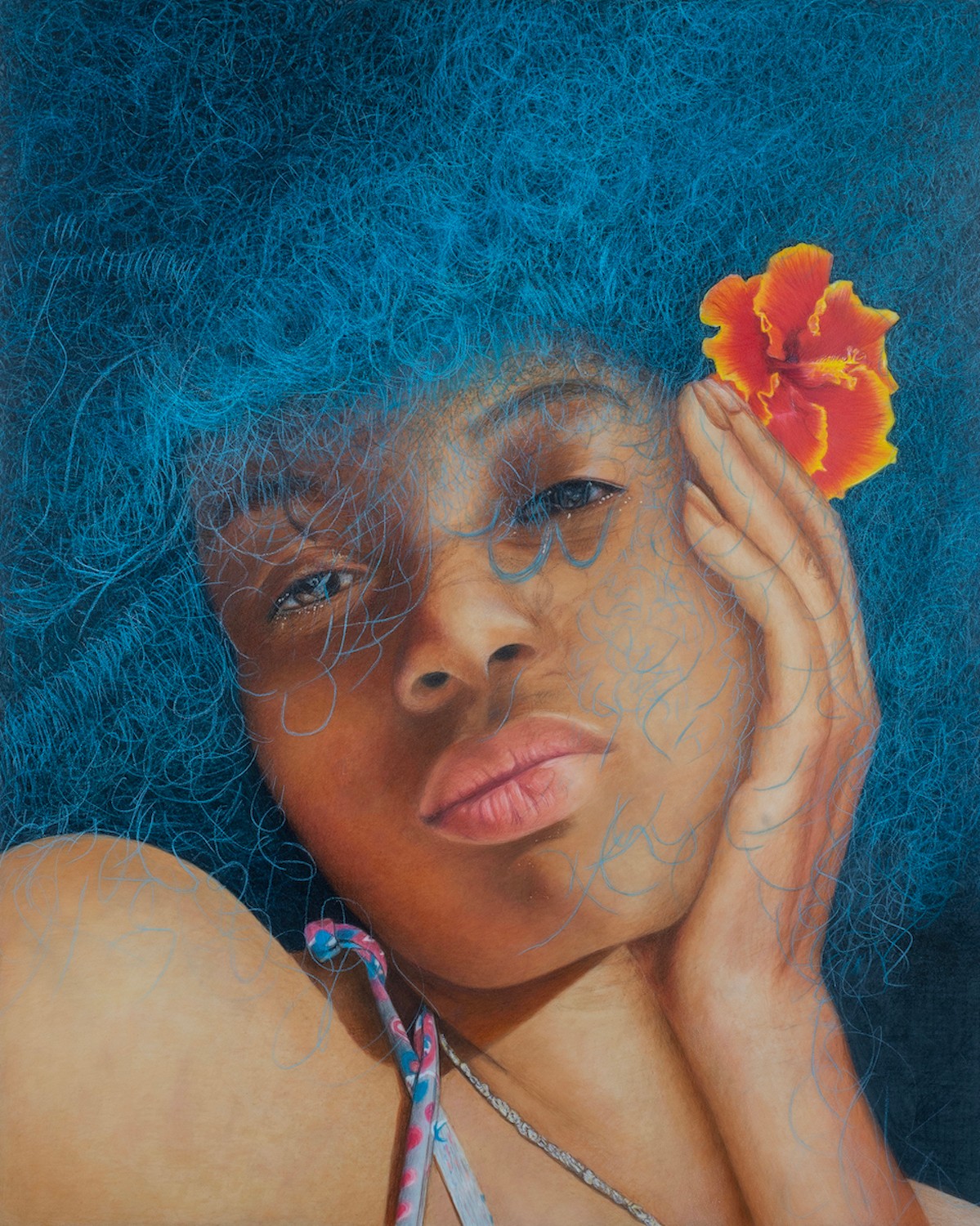
I describe my style as a “painterly” application of colored pencil. By overlapping several light, even layers, I achieve a depth and vibrancy often mistaken for oil paint. Using colored pencils on paper (colored paper can be a powerful tool for enhancing a subject), and double-sided drafting film (to combine the best of both worlds—painting and drawing, perfect for vibrant color and fine detail), I capture the intricate textures of skin and the subtle play of light in nature. I particularly favor Faber-Castell Polychromos pencils for their durability and pigment intensity.
This meticulous process requires an average of 35 hours per piece. This level of focus actually “rewired” my brain; drawing allowed me to concentrate for longer periods—something I had struggled with all my life. This creative time became my meditative state of peace and calm.
Narrative and Cultural Identity
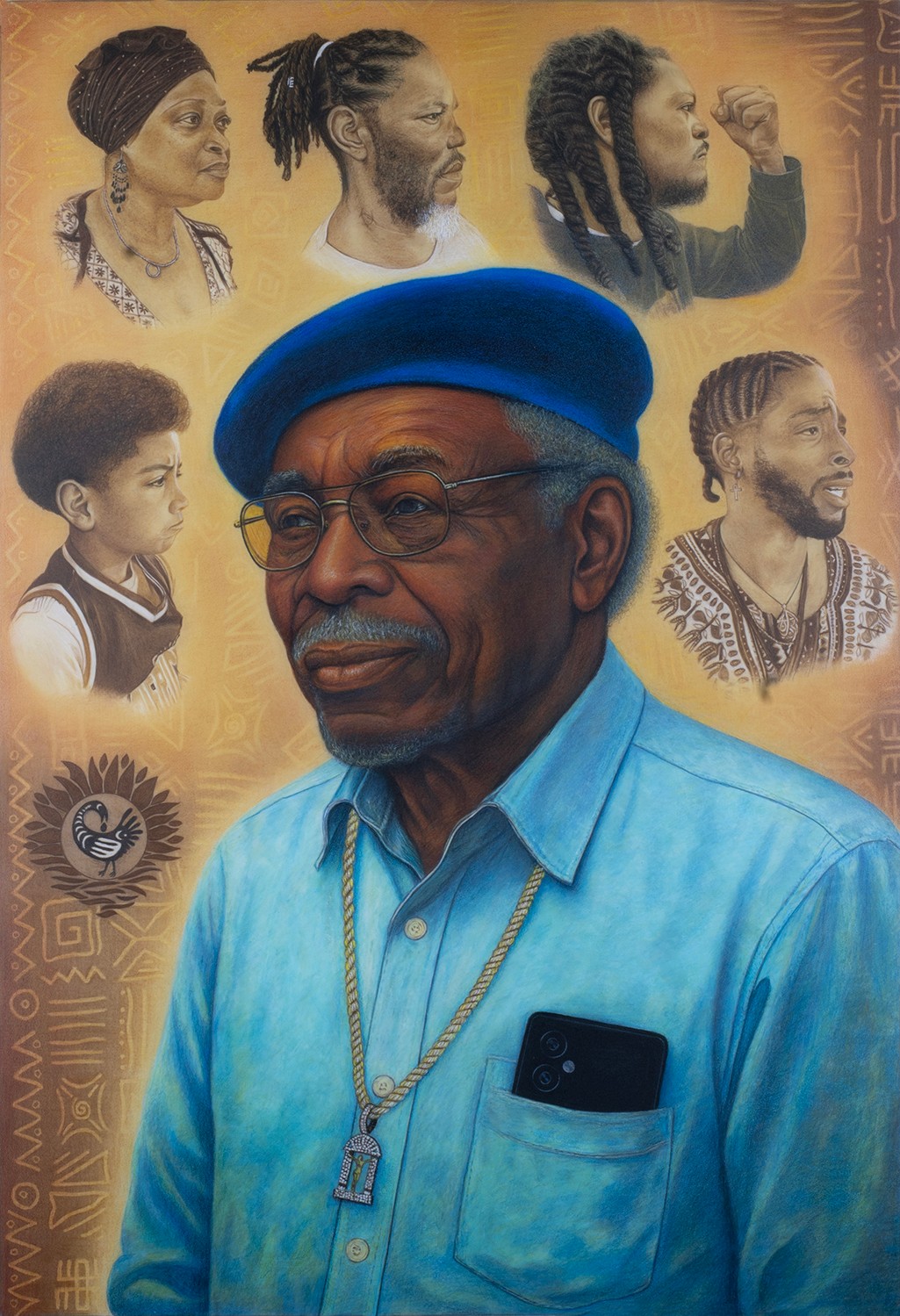
Once I mastered the technical rigors of the medium, I turned my focus toward storytelling. My work bridges my two worlds, featuring Egyptian-themed series inspired by a 2022 return to my homeland. By photographing ordinary people in marketplaces and neighborhoods, then digitally composing them into cohesive narratives, I aim to capture universal truths through my specific cultural lens.
I believe artists are storytellers. Narrative art evokes emotion and reveals the common threads of the human experience. Embracing my heritage helped me capture the attention of juries and grow creatively. This dedication has led to participation in over 75 exhibitions in the last 30 months and more than 20 awards.
A Mission of Healing
Today, I am as much an educator as I am a creator. I teach workshops at museums, cultural centers, and art schools across South Florida, conducting live demonstrations to help others find their own “flow state.” I view art as a powerful tool for addressing the modern mental health crisis, advocating for its ability to foster adaptability and a positive mindset.
I am proud to be a Signature Member of both the Colored Pencil Society of America (CPSA, CPX) and the UK Colored Pencil Society (UKCPS Silver, UKCPSO), an elected member of the American Artists Professional League, and a member of other prestigious art organizations. My work has been featured in Artists Magazine, Colored Pencil Magazine, Ann Kullberg’s COLOR Magazine, Modern Renaissance, and many other local and national publications.
Conclusion
To those looking to follow a similar path, my advice is grounded in both technical mastery and professional discipline: master your materials, train your artistic eye, and never stop learning. But most importantly, build a professional practice that protects your vision. Through every line and layer, I continue to tell my story—the story of a child from Alexandria who refused to stop dreaming, and the man who finally found the language to share those dreams with the world.
We all face challenges, but looking back would you describe it as a relatively smooth road?
The road to becoming a “self-taught master” was anything but smooth; in fact, for most of my life, the road was hidden entirely. Growing up in a humble, three-room apartment in Alexandria, Egypt, as the eighth of eleven children, art was not a path I was allowed to walk. It was a luxury we couldn’t afford and a concept my schools didn’t recognize. My early struggles were rooted in a lack of opportunity and a series of physical and mental health challenges that prevented me from finishing school in my homeland.
When I immigrated to the United States at age 35, the struggle changed shape but didn’t disappear. I faced the weight of:
* Financial and Personal Responsibility: Navigating a new country through a series of “odd jobs” while raising my two daughters as a single parent.
* Health Misdiagnosis: For years, I was misdiagnosed and wrongly treated for bipolar disorder, starting from the age of 16. It wasn’t until much later that I found the clarity and treatment that actually aligned with my reality.
* The “Late” Start: I didn’t truly begin my professional art journey until 2017. Starting a career in your 60s comes with its own set of internal doubts and external pressures.
However, these struggles became the very “layers” that give my work its depth. The precision I learned in a silk screen company and the layout skills from graphic design—jobs I took just to survive—became the technical foundation for my colored pencil mastery.
In 2017, at one of my lowest points, art became my rescue. What was once a “broken” road became a healing journey. Today, I don’t look back at those struggles as lost time; I see them as the grit that allowed me to develop the focus, patience, and “flow state” that defines my life today. My road wasn’t smooth, but the bumps are what eventually taught me how to fly.
Alright, so let’s switch gears a bit and talk business. What should we know about your work?
I am a self-taught master of colored pencil art, a medium I use not just to draw, but to “paint” with precision, patience, and purpose. Based in Fort Lauderdale, my work is a bridge between my roots in Alexandria, Egypt, and my life in the United States. My Specialization & Style
I specialize in hyper-realistic portraiture, narrative still life, and cultural landscapes. While many see colored pencils as a drawing tool, I treat them as a professional painting medium. I am known for:
* Intricate Layering: I apply dozens of translucent layers to create depth, vibrant color, and smooth transitions that often mimic the richness of oil paints.
* Drafting Film Mastery: I frequently work on double-sided drafting film, a translucent surface that allows me to work on both the front and back to achieve a unique luminosity and level of detail.
* Storytelling (Narrative Art): My work isn’t just about technical accuracy; it’s about “the child who survived.” I focus on everyday people and ordinary moments—especially from my Egyptian heritage—to reveal universal cultural truths.
What Sets Me Apart
What truly distinguishes my practice is the intersection of my diverse professional background and my “flow state.” The Technical Edge: My “previous lives” in graphic design, silk screen ink mixing, and marketing gave me a unique understanding of color theory and composition that most fine artists have to learn in school. I don’t just see a color; I see the mixing components behind it.
* The “Healing” Perspective: Because I turned to art in 2017 to rescue myself from a lifetime of health challenges and misdiagnoses, my approach is meditative. I don’t just create art; I “rewire my brain” through it. This intensity and focus are visible in every stroke of my work.
My Greatest Pride
I am most proud of my resilience. Starting a professional art career later in life and achieving Signature Membership in both the Colored Pencil Society of America (CPSA, CPX) and the UK Colored Pencil Society (UKCPS, UKCPSO) is a milestone I once thought impossible.
However, on a personal level, I am proudest of the fact that I transitioned from many years of struggle with psychiatric medications to a life of clarity and peace found through the tip of a pencil. Being able to share this “language of healing” with my students in South Florida is my greatest achievement.
Where we are in life is often partly because of others. Who/what else deserves credit for how your story turned out?
Success in the arts is rarely a solo performance, and my journey is no exception. While the discipline of a self-taught artist requires many hours of solitude, my growth has been fueled by a community of advocates, organizations, and family who recognized the “child who survived” before I even fully realized it myself. Professional Organizations and Peer Mentors
Joining professional societies transformed my “hobby” into a career. The Colored Pencil Society of America (CPSA, CPX)and the UK Colored Pencil Society (UKCPS, UKCPSO) provided the standards of excellence I strove to meet.
* The Power of Signature Status: Achieving Signature Member status in both organizations wasn’t just an accolade; it was a validation from my peers that my self-taught techniques stood up to international scrutiny.
* The American Artists Professional League (Elected Member) and the International Guild of Realism also played critical roles in providing the juried platforms that introduced my work to collectors and galleries.
The South Florida Art Community
My success is deeply intertwined with the cultural fabric of Broward County and the broader South Florida region.
* The Broward County Cultural Division: Receiving an artist grant in 2025 was a pivotal moment of professional advocacy that provided the resources to expand my practice.
* Local Galleries and Schools: Institutions like the Las Olas River House Galleries and the various art schools where I teach have been more than just venues. They are partners in my mission to share the “language of colored pencil art” with others.
The “Silent Mentors”: Educators and Publications
While I am self-taught, I have been mentored by the masters of the medium through their work.
* Publications: Being featured in publications like Ann Kullberg’s COLOR Magazine, Colored Pencil Magazine and Modern Renassance Magazine and several other publications provided the “cheerleading” and visibility necessary to reach a global audience. These publications serve as a vital bridge between the artist’s studio and the public eye.
My Students: The Ultimate Teammates
Finally, I owe a great deal of my current success to my students. Teaching is a reciprocal process. Every time I explain a technique—how to layer on paper or drafting film or how to see the “hidden” colors in a shadow—I refine my own understanding. They are my teammates in the ongoing effort to prove that art is a powerful tool for healing and mental clarity.
The True Value of Awards
In the last two years, which has been a definitive turning point in my professional life. During this period, I have participated in over 65 solo and juried exhibitions, and I am deeply honored to have received more than 20 awards for my work.
Contact Info:
- Website: gramadanart.com
- Instagram: @galalramadan1
- Facebook: https://www.facebook.com/galal.ramadan.900