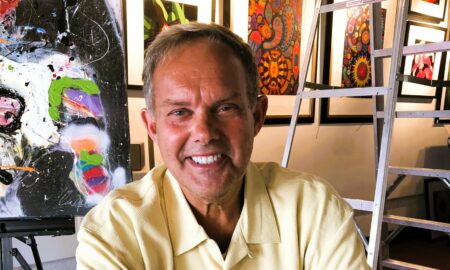




 Today we’d like to introduce you to Domingo Cabrera.
Thanks for sharing your story with us Domingo. So, let’s start at the beginning and we can move on from there.
My story, like the one of many, began by accident. A friend, who at that moment owned a photography company, called me to be his assistance. I was only 15 years old.
I bought my first camera broken because I thought I could repair it. I took it into a specialized store. It turned out that it was very expensive to fixed it. And it was my mom who decided to paid it with her lifetime savings so I could initiated my work as a photographer.
It wasn’t until I met my mentor, Marco Mancera, that my whole vision of what this job was, changed. I understood that this was a profession and if I wanted to survive in this business I had no choice but to strive to always be the best. I worked as his assistant for six years and he will always been a fundamental piece of what I’m today.
I moved to the United States hoping to success here but I ended up washing cars. So I returned back to my country and began to work building my name. Finally, in 2005, I opened my studio in Caracas, Venezuela.
At the beginning, we had a lot of work in here, so I decided to buy an apartment as an investment and to have a place to stay. I’ve never imagined that years after that investment would become my home.
The work in Venezuela wasn’t bad at all. But with all the political and social situation, I forced myself to take the decision to move here.
So in 2013, I applied for the special talent visa. That visa would give me many advantages. I wouldn’t be forced to live here; it would give me freedom to come in and out of the country; and it would gives me legal status not only for me but for my family too. It was something that I considered before, in 2008, but my lawyer at that moment advised me not to do it because for him, being a wedding photographer wasn’t a talent.
So the second time, I went with another lawyer that asked me about awards, interviews and workshops. I have never been very interested in recognitions. I appreciate them but I’m not a person that feeds his own ego. So, it took me months to look for all the paperwork to submit my case. Finally on June 2014, I was granted with the O visa. But I didn’t move here right away. It wasn’t until December 2015 that I moved in for good.
We’re always bombarded by how great it is to pursue your passion, etc – but we’ve spoken with enough people to know that it’s not always easy. Overall, would you say things have been easy for you?
For me, the biggest obstacle has been adapting myself into a different culture, especially if we talk about parties. Americans love documentary work; I rather do portraits. But, at the same time, it’s an advantage too because I can get to know different people and learn from them.
However, it has been more easier to travel from here to other locations around the world. With the situation in my country, it would be more expensive for me and my clients to travel. This year I went to Rome in June and I’m going to Iceland in November.
Another big issue has been the language. For me, it hasn’t been that easy to learn it and for me it is very important to talk with my clients, made them feel comfortable and always made them laugh, so not being able to do in the way I do in my language, it’s definitely a disadvantage.
Tell our readers more, for example what you’re most proud of and what sets you apart from others.
I mostly do social photography like weddings, baptisms, parties, bar mitzvahs, communions, pregnancy, etc. What I like the most is doing weddings.
But my passion are the after wedding sessions, the Trash the Dress. Their people don’t need to worry about their clothes, their makeup or follow a schedule. Couples are usually more relax and that’s why the photos come out more authentics.
What has been the proudest moment of your career so far?
I’m very proud of a lot of my pictures during Trash the Dress sessions. Especially a photo of a bride swimming with a whale shark and several photos of brides on top of a tepuy in Roraima. I’m also proud of a photo of a bride sitting on a swing, built by a friend and me, in the middle of a river in Canaima. With my work, I have shown places in my country that I believe are the best places in the world.
Pricing:
- I do believe my prices are very competitive. For weddings, quinceañeros or parties of less of 10 hours, I charge between $3,500 and $6,500. It will also depend on what type of service the person will want and the type of album. For pregnacy sessions prices start at $850 and it always includes an album. For me, a printed material is something the client will never forget so I’ll always try to include them.
Contact Info:
- Website: www.domingocabrera.net
- Phone: 7864932806
- Email: photo@domingocabrera.net
- Instagram: domingo_cabrera
- Facebook: Domingo Cabrera Photography
- Twitter: @domingo_cabrera
- Other: info@domingocabrera.net


 Image Credit:
Domingo Cabrera
Suggest a story: VoyageMIA is built on recommendations from the community; it’s how we uncover hidden gems, so if you or someone you know deserves recognition please let us know here.