




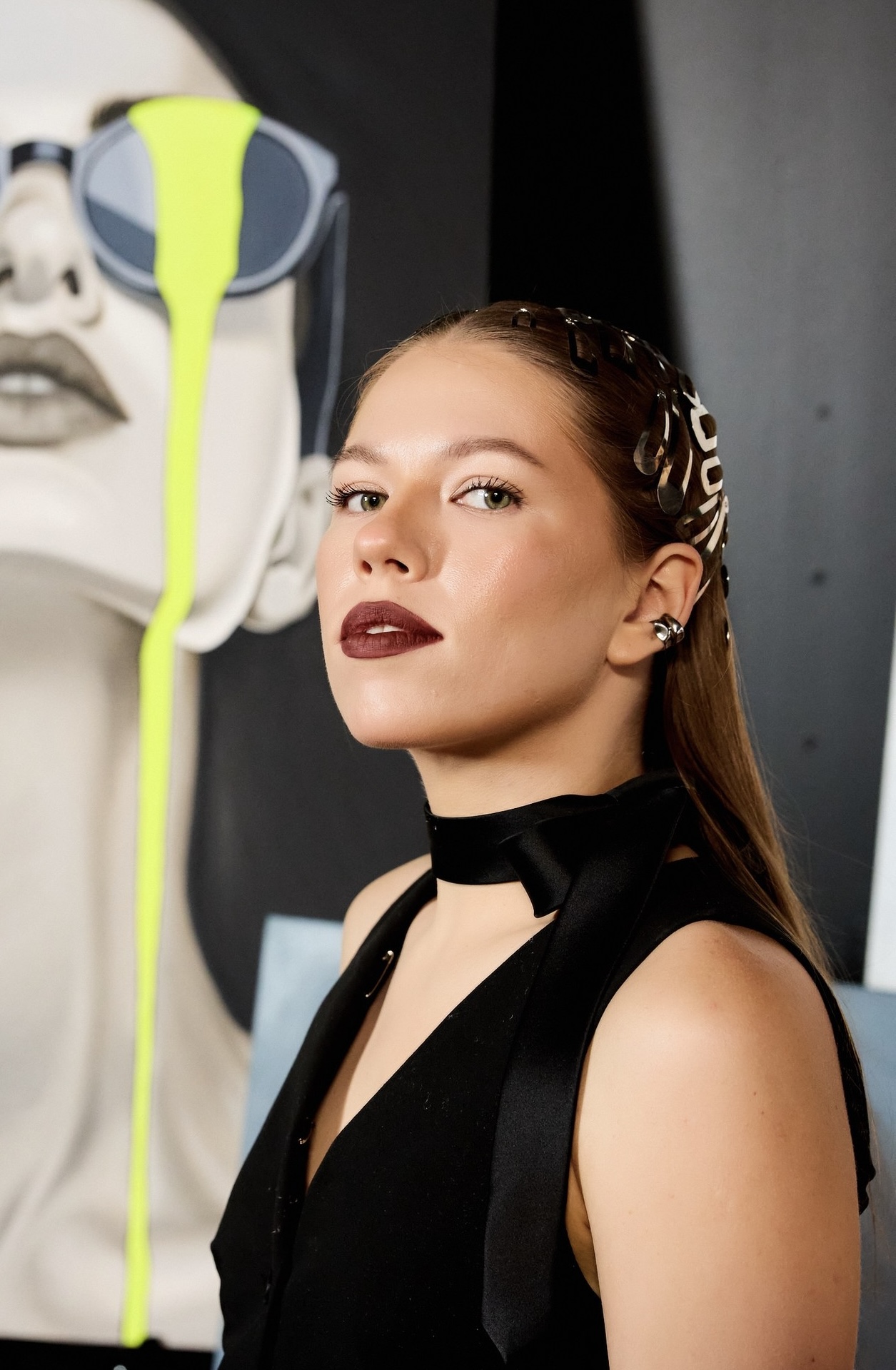
Today we’d like to introduce you to Alina Temirova.
Hi Alina, so excited to have you on the platform. So before we get into questions about your work-life, maybe you can bring our readers up to speed on your story and how you got to where you are today?
My journey as an artist has been anything but traditional.
As a child, I did not enjoy drawing. My mother enrolled me in art school, but I attended for only one year. Although my teachers believed I had talent and encouraged me to continue, I simply wasn’t interested at that time.
My passion for art developed much later during my teenage years. I began studying on my own, and to this day I am a self-taught artist without formal art education. What I have always had, however, is a deep curiosity about people, emotions, and self-expression.
Before becoming a professional artist, I worked as a nail technician for many years. Surprisingly, that profession played a major role in shaping my artistic direction. Every day I met women who shared their personal stories, challenges, dreams, and struggles with me. Through those conversations, I became fascinated by human emotions and the different ways people respond to life’s experiences.
Over time, I realized that I wanted to create more than just paintings. I wanted to create experiences that would help people reconnect with themselves, reduce stress, and express their emotions through creativity. This inspired me to develop creative workshops focused not on strict artistic rules, but on relaxation, self-expression, and emotional well-being.
My work as a nail technician also introduced me to the connection between touch and relaxation. The fingertips contain many nerve endings, and I often noticed how calming repetitive hand movements could be. This observation eventually inspired me to develop my own educational approach, which later became the Teva Sensory Painting Method (TSPM). The method combines painting, sensory experience, and emotional well-being, encouraging people to engage with the creative process in a more intuitive and personal way.
At the same time, years of working closely with people helped me better understand emotions, behavior, and personal experiences. Today, those observations influence both my teaching and my artwork. I use color as an emotional language, expressing feelings and inner states through unexpected color choices. For me, every color carries meaning and helps tell a deeper story about the person in the painting.
Moving to the United States became another important chapter in my life. Starting over in a new country brought many challenges, and painting became a source of emotional support during that transition. Art helped me adapt, restore my energy, and stay connected to myself during uncertain times.
Today, I continue to explore the relationship between color, emotion, and human experience through my paintings and educational work. My goal is not only to create meaningful artwork but also to help people discover creativity as a source of connection, self-expression, and emotional well-being.
Alright, so let’s dig a little deeper into the story – has it been an easy path overall and if not, what were the challenges you’ve had to overcome?
No, the journey has definitely not been smooth.
One of the first challenges I faced was developing as a self-taught artist. Without formal art education, I had to learn through personal study, experimentation, and years of practice. It required a great deal of discipline, persistence, and belief in myself.
However, the biggest challenge came later when I immigrated to the United States.
Before moving, I had already established myself as an artist and educator in Russia. I had developed the Teva Sensory Painting Method (TSPM), built a community around my work, and helped people use creativity as a tool for emotional well-being and stress relief.
Moving to the United States meant leaving behind everything I had built professionally and starting a new chapter in a completely different environment. I had to adapt to a new culture, language, and audience while continuing to grow as an artist.
Rather than giving up, I chose to evolve. In 2023, I translated and adapted the Teva Sensory Painting Method for English-speaking audiences, allowing me to continue sharing my work and ideas with a broader community.
Today, I see those challenges as valuable experiences. They taught me resilience, adaptability, and confidence in the value of my work, while proving that creativity can connect people across different languages and cultures.
Thanks – so what else should our readers know about your work and what you’re currently focused on?
I am a contemporary figurative artist. In my oil paintings, I use color as a way to express human emotion and inner states. Instead of relying only on realistic skin tones, I often use unexpected colors to show the mood, personality, and emotional depth of my characters.
In addition to my personal artwork, I am also the creator of the Teva Sensory Painting Method (TSPM), an original painting method that combines creativity, sensory experience, and emotional well-being. The method became successful in Russia in 2022, and in February 2023 I translated and adapted it for an English-speaking audience.
One of my proudest achievements was receiving the Travel to Art Award 2023 in the category “The Best Artist” as part of Art Basel Miami events.
What makes my work different is that I do not see art only as a visual object. For me, painting is also a way to process emotions, reduce stress, and reconnect with yourself. I am proud that my work exists in two directions: creating expressive figurative paintings and helping people experience art as a source of emotional support and inner balance.
Networking and finding a mentor can have such a positive impact on one’s life and career. Any advice?
As a self-taught artist, I never had one specific mentor who guided my entire journey. Instead, I learned from many different people, experiences, and challenges along the way.
One of the most valuable lessons I have learned is that building genuine relationships is more important than simply collecting contacts. Meaningful connections happen naturally when you show genuine interest in people, support others, and stay open to learning.
I also believe that mentors can appear in unexpected forms. Sometimes they are experienced professionals, but sometimes they are clients, colleagues, friends, or even people who challenge your perspective. Throughout my journey, I have learned something valuable from each of them.
For artists who are looking for mentors or professional connections, my advice would be to stay curious, ask questions, attend events, and not be afraid to introduce yourself. Opportunities often come from conversations that initially seem small or unimportant.
What has helped me most is remaining open to learning and understanding that growth comes from consistent effort, meaningful relationships, and a willingness to step outside of your comfort zone.
Contact Info:
- Instagram: https://www.instagram.com/teva.alina.usa?igsh=bDliNjg4ZjgwMXA0&utm_source=qr
- Other: https://www.saatchiart.com/account/profile/2907755?q=1773945100