


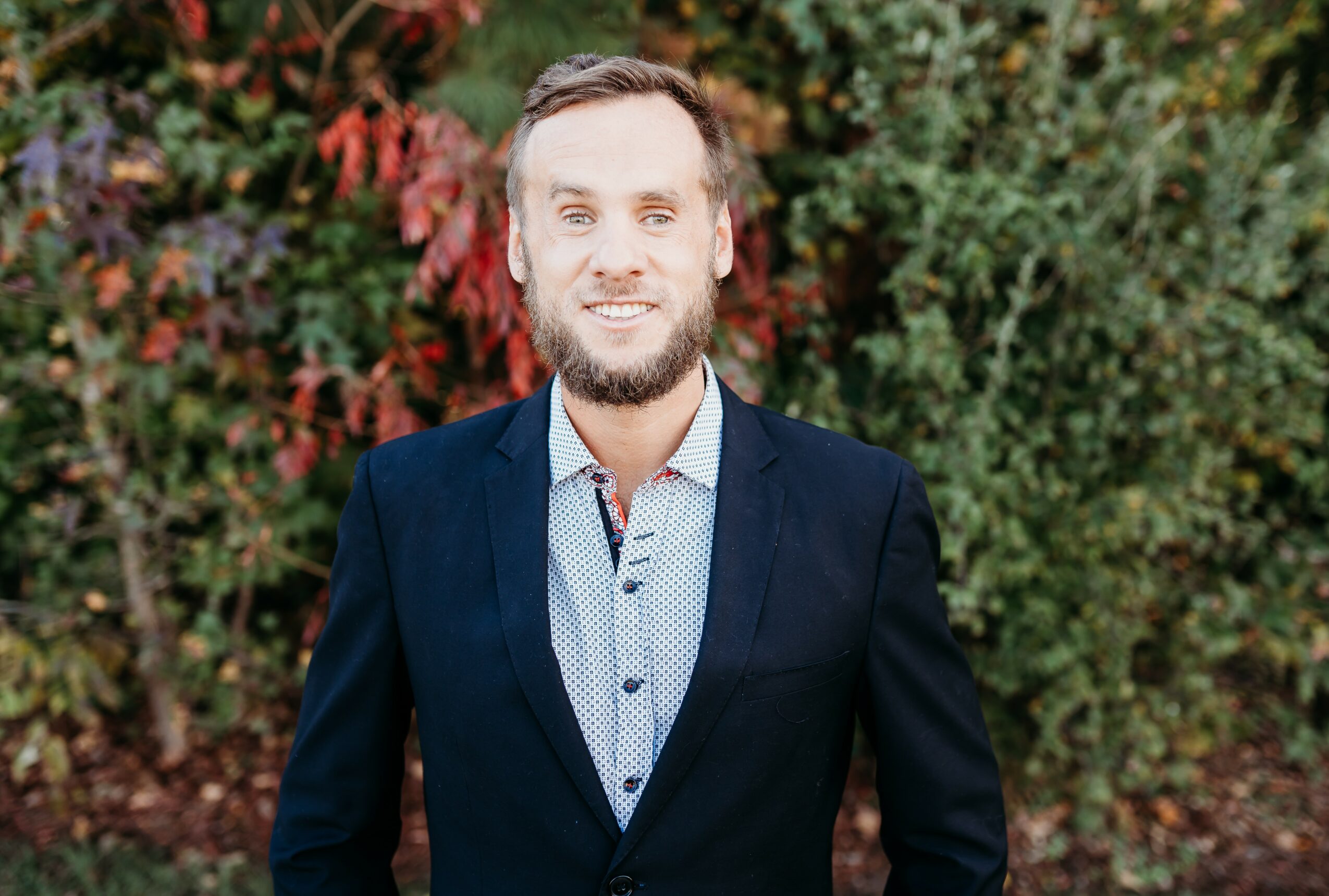
Today we’d like to introduce you to Nathan Siles.
Hi Nathan, please kick things off for us with an introduction to yourself and your story.
My story really begins at eight months old, when I was diagnosed with bilateral retinoblastoma, a rare childhood cancer affecting both eyes. Radiotherapy saved my life, but the disease and treatment left me legally blind, with only a small amount of functional vision. I grew up learning very early that circumstances do not have to define what is possible.
For a long time, however, health was not my career. I studied accounting and finance, completed a Bachelor of Commerce at the University of Melbourne, studied in the United States, and went on to spend five years in international and institutional banking. I loved markets, investing and understanding complex systems.
Then, at 24, cancer entered my life again.
I was diagnosed with testicular cancer and underwent surgery followed by chemotherapy. I was incredibly grateful for the medicine that helped me through that period, but the experience left me with a question that ultimately changed the direction of my life:
Why?
Why had cancer appeared twice in one life? Why does one person thrive while another struggles? Why can two people experience similar circumstances yet have completely different health outcomes? What actually determines the resilience of the human body beneath the symptoms we see on the surface?
I became obsessed with understanding those questions.
What began as a personal search became nearly two decades of study across mitochondrial biology, biophysics, light biology, circadian biology, water, metabolism, environmental health and the emerging science of how our surroundings interact with our biology. I sought out researchers and mentors whose work challenged me to think more deeply, including Dr. Douglas Wallace, Dr. Alexander Wunsch and Dr. Jack Kruse. My finance background had trained me to look for relationships across complex systems, and I began applying that same way of thinking to human biology.
Eventually, people started asking me for help understanding what I was learning. That grew into educating and supporting more than 1,000 people, from individuals navigating significant health challenges to entrepreneurs, practitioners, elite athletes and high performers. My role has never been to replace medicine. I am an educator, and my work is about helping people understand the foundational conditions that influence human biology so they can make more informed decisions about their health. Nathan Siles
Today, I am the Co Founder of BioSpectral Systems, where we are developing technologies designed around the relationship between humans and their light environment, and the Co Founder and Co Author of the BioTra Approach, an educational framework built around foundational health and human performance. I also teach internationally through talks, workshops, retreats, podcasts and educational programs.
The thread connecting everything I do is simple:
I want people to understand their own biology.
We live in an extraordinary era of medicine and technology, yet many people know remarkably little about the body they inhabit every day. My mission is to help change that by taking complex science, connecting ideas that are often studied separately, and translating them into principles people can actually use.
What began as an attempt to understand my own life has become my life’s work: helping people create better conditions for health, extend healthspan and recognize that they have far more agency in shaping their future than they may have been led to believe.
https://nathansiles.com/about
We all face challenges, but looking back would you describe it as a relatively smooth road?
No, it has certainly not been a smooth road. Some of the greatest challenges have been deeply personal ones that forced me to confront questions about identity, independence and what my future could look like.
Growing up legally blind meant living with the possibility that the small amount of vision I had could deteriorate further. There were moments when I wondered whether I might eventually lose my sight completely, whether I would always be defined by disability, and whether the ambitions I had for my life were realistic.
Then, in my early twenties, at a time when I felt I should have been entering the prime of my life, cancer returned in a completely different form. Testicular cancer meant losing a testicle through surgery, followed by chemotherapy and losing my hair. Beyond the physical experience, it challenged my sense of masculinity, confidence and identity. There was also the confronting reality that having survived cancer once did not guarantee I would survive it again.
Perhaps the deeper challenge across all of this was deciding what story I was going to tell myself about my circumstances.
It would have been easy to build an identity around everything I had lost or everything that was statistically less likely for someone with my history. I had to wrestle with whether I would spend my life seeing myself primarily as a disabled person and a cancer survivor, or whether those experiences could become part of the foundation from which I built something meaningful.
I chose the latter.
That did not mean pretending the limitations were not real. I still have very limited vision. There are things other people can do effortlessly that require considerably more effort from me. What changed was my relationship with those realities.
Over time, the obstacles that once made me question what I could become became some of the greatest sources of curiosity, discipline and purpose in my life. They pushed me to study health deeply, to challenge assumptions, to become comfortable thinking differently and ultimately to build businesses, teach internationally and dedicate my work to helping other people better understand their own health and potential.
One lesson has stayed with me through all of it: you may not get to choose every circumstance you are given, but you have enormous influence over what you build from it.
I think that principle has shaped my life far more than any diagnosis ever has.
We’ve been impressed with BioSpectral Systems, but for folks who might not be as familiar, what can you share with them about what you do and what sets you apart from others?
I am the Co-Founder and Chief Science Officer of BioSpectral Systems, a health technology company I created around a simple but profound idea: human biology cannot be separated from the environment in which it operates.
My role sits at the intersection of science, product innovation and education. I lead much of our scientific direction, research and product philosophy, translating nearly two decades of my work across mitochondrial biophysics, photobiology, circadian biology and environmental health into technologies people can use in everyday life.
Light is a major focus of that work.
Most people think about light primarily in terms of vision and illumination. Biologically, it is far more powerful. Different wavelengths of light provide information to the eyes, brain, skin and cellular systems and influence circadian timing, sleep, hormones, metabolism and mitochondrial function.
The challenge is that the modern human light environment has changed dramatically. We spend enormous amounts of time indoors, beneath artificial lighting and in front of screens, while extending our illuminated day long after sunset. Our biology, however, still responds to the timing, spectrum and intensity of the light around us.
BioSpectral Systems exists to build technology with that biology in mind.
We develop products across biologically considered lighting, melanin infused eyewear, red and near infrared technologies and environmental health. Our approach goes considerably deeper than simply making a light warmer or putting a colored coating on a lens. We examine factors including wavelength, spectrum, timing, intensity, flicker and electrical characteristics, then ask how those variables interact with human biology.
One area I am particularly proud of is our melanin infused eyewear. We incorporate melanin directly into the lens material and engineer different lenses around the wavelengths and light environments people encounter throughout the day and after sunset. We are also developing lighting technologies designed to rethink how indoor illumination should change from day to night.
As Chief Science Officer, one of the parts of my work I enjoy most is taking discoveries spread across different scientific disciplines, finding the connections between them, and asking a practical question: how do we turn this knowledge into something that improves the environment people actually live in?
That philosophy extends beyond our products. Education is fundamental to BioSpectral because I want people to understand why their environment matters rather than simply being told to buy another health product.
Ultimately, we are working toward something much larger than a range of products. We want to help reshape the relationship between technology, the built environment and human biology, creating a future where the spaces and technologies surrounding us are designed with human health in mind.
What sort of changes are you expecting over the next 5-10 years?
I believe we are at the very beginning of a major shift in how we understand the relationship between the environment and human health.
For decades, the public conversation around health has been dominated by diet, exercise, pharmaceuticals and supplements. Those things matter, but we are beginning to appreciate another layer: biology is profoundly influenced by environmental information and by when that information reaches us.
Light is one of the clearest examples. Science now recognizes that light does far more than enable vision. Its spectrum, intensity, timing and duration influence circadian physiology, sleep, hormones, alertness and metabolism. Even international lighting bodies are increasingly moving toward the concept of providing the right light at the right time, while acknowledging that major scientific questions remain. CIE
Over the next five to ten years, I think this field will become dramatically more sophisticated.
First, people will better understand natural light and the importance of the daily light and darkness cycle. Then we will become far more discerning about artificial light. Eventually, I believe lighting will be evaluated not simply by how bright a room appears or how little electricity a bulb consumes, but by its spectrum, timing, flicker, biological effects and interaction with the person occupying that environment.
From there, the frontier becomes enormous. We still have much to learn about ultraviolet and infrared wavelengths, polarization, atmospheric scattering, reflection and albedo, optical properties of indoor and outdoor environments, interactions between light and biological tissues, and the increasingly complex electromagnetic environment created by modern communication technologies.
In many respects, we are still amateurs in understanding the full electromagnetic ecology of human biology. That is what makes the next decade so exciting.
I also believe timing will become a much bigger part of health. It is increasingly clear that when we receive light, eat, exercise and sleep can matter alongside what we do. The American Heart Association, for example, now explicitly recognizes light exposure, food intake, exercise and sleep timing as factors capable of synchronizing or disrupting circadian physiology. PubMed
Indoor lighting is an enormous opportunity. Most buildings were designed primarily around visual comfort, architecture, cost and energy efficiency, rather than the full biological effects of light. I believe that will change. Homes, hospitals, schools, offices, hotels and wellness environments will increasingly be designed around human biology as well as human vision.
Pregnancy, childhood development, aging and brain health are areas where I believe this conversation will also expand significantly. We need much better research before making sweeping causal claims, particularly around complex neurological diseases, but understanding how environmental timing and light interact with developing and aging biology is an extraordinary scientific frontier.
That is where I see BioSpectral Systems playing a role. We want to help move lighting and environmental technology toward a future where the built environment works more intelligently with human biology.
The biggest shift, however, may ultimately be educational. I believe future generations will look back and find it remarkable that we understood so much about nutrition and exercise while giving comparatively little consideration to the light environment surrounding us from the moment we wake until the moment we sleep.
We are only beginning to understand that environment. I believe the next decade will change that profoundly.
Pricing:
- We sell melanin-infused blue light blocking glasses for $159-$179 highest quality premium gbrain protection glasses in the industry.
- We sell full spectrum Incandescent/LED hybrid bulbs that dim throughout the day just like the sun for $42
- We sell EMF shielded Items like Beanies, Faraday Pouches, Airtube Earbuds and Dirty Electricity Filters
- We sell a Light, Water and Energy Course for $297 which is 10 years of Foundationl Health into 24 modules https://nathan-s-site-1e36.thinkific.com/products/courses/biophysics-health-course
- My book: BioTra An Approach to Healthy Living in a Modern World $99 – https://biotra.com.au/
Contact Info:
- Website: https://biospectralsystems.com
- Instagram: https://www.instagram.com/nathan.siles/?hl=en
- Facebook: https://www.facebook.com/mrnatejon
- LinkedIn: https://www.linkedin.com/in/nathansiles/
- Twitter: https://x.com/BioSpectralsys
- Youtube: https://www.youtube.com/@SuperHealthHQ
- Other: https://nathansiles.com/