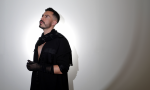


Today we’d like to introduce you to Valencie Exceus.
Hi Valencie, thanks for sharing your story with us. To start, maybe you can tell our readers some of your backstory.
I grew up in Jean-Rabel, Haiti, in the northwest of the country, spending summers at my grandparents’ home in the lush mountains surrounded by medicinal plants, fruit trees, and a quality of stillness I would later understand as a parasympathetic paradise. The land shaped me before any training ever could, and the peace I carry into my clinical work and my community spaces has its roots there, on the mountains of Haiti.
In 1993, I came to the United States at the age of twelve as a permanent resident, and walked from one of the most peaceful places on earth directly into an inner city Miami middle school that had experienced a shooting the year before. It was a time not unlike today, when Haitians faced significant xenophobia and bullying, and I was not spared from that experience. I like to say, somewhat jovially, that I learned English under great duress. What carried me through was the student I had always been: serious, curious, genuinely in love with learning and with understanding the world. I went on to study social sciences in college before eventually changing course toward Oriental Medicine. In 2006, I became a licensed Acupuncture Physician, and I have been in private practice for the past twenty years.
For years I ran a brick and mortar practice that felt to me like a rest area for fellow travelers. Everyone who came through the door was on their own path, and it felt like an honor and a privilege to receive them, even if our time together was just one visit. Around 2019, I began to feel the pull to close the doors and go deeper into my personal healing. When the pandemic arrived, it gave me the opportunity to literally close the doors for several months and do exactly that. In 2022, I enrolled in a two-year intensive trauma healing program focusing on individual, ancestral, and collective trauma. Around the same time, it became clear that the most important thing I could do was close the practice and take care of my mother, who had developed dementia. I eventually returned to private practice at the end of 2023, when it became apparent that my mother’s condition had stabilized. To this day, she remains pretty stable. What made that return possible was not only her stability, but my own hard-won recovery from what happened in the months prior.
In July of 2023, I experienced a medical crisis that quickly turned into a medical trauma. A urinary tract infection traveled to my brain, causing delirium. Instead of the antibiotic I needed, I was prescribed an antipsychotic. What followed were some of the most terrifying weeks of my life. I developed medication-induced Parkinsonism and akathisia, the latter accompanied by a state of internal terror that I do not have adequate words to describe. I was being harmed by the very system designed to heal me, by licensed professionals, with legal medications, and with no accountability. I returned to practice with greater care and compassion for my patients. I returned with the understanding that patients are being harmed every day inside Western medicine, and that the harm is often invisible, normalized, and unchallenged. I returned committed to giving the care I did not receive: to attune, to listen, to be genuinely compassionate, and to be competent. And I returned, after doing the work to heal and forgive, hoping to contribute to something larger than my own practice.
Akathisia remains one of the most underrecognized and devastating consequences of antipsychotic medication. The majority of patients who experience it take their own lives. There is also a silent crisis of physicians across this country taking their own lives. We are losing people on both sides of the examination table, and we cannot afford to keep looking away. There is suffering on both sides. And when I returned to private practice, I came back with a vision of reform that is unifying rather than polarizing, one that includes healthcare providers in the definition of people who need care. If we want better medicine, we need grounded, compassionate providers who are operating from a regulated nervous system, not running on adrenaline and burnout. That is the commitment I returned with, and it shapes everything I do, including having a Burnout Recovery program for healthcare providers. Although the medication-induced Parkinsonism and akathisia eventually resolved, the experience left me committed to raising awareness and speaking for those who never got the chance to tell their story.
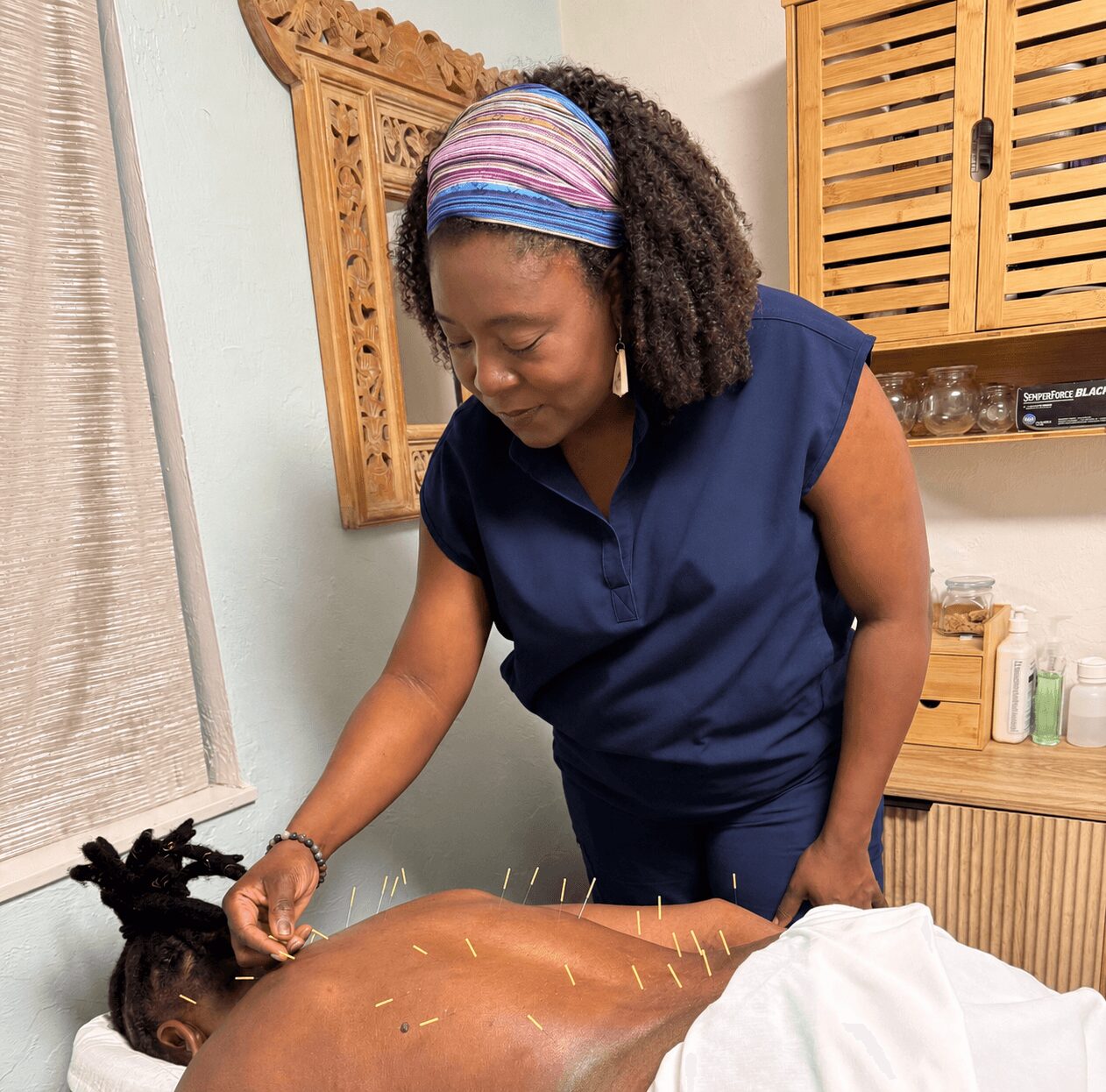
I practice today at All Natural Wellness Center in Fort Lauderdale, where my patients come from every background imaginable: a plumber managing daily physical pain, an administrator navigating perimenopause, a young dancer with a new autoimmune diagnosis, or a newly retired nurse living with diabetes. What they share is not necessarily a specific condition or diagnosis. What they share is a commitment to transformation. I work from the understanding that the body is designed to heal itself, and that when healing stalls, something is causing an obstruction. Remove the root cause, and the body returns to doing what it was always built to do.
Beyond the in-person treatments, I offer one-on-one virtual sessions for people who are ready to go deeper. Through offerings like Tending to the Wounds and Inner Archaeology, I work with clients in a body-centered, trauma-informed space to process what has been carried, uncover the patterns and inherited narratives that quietly shape daily life, and support the kind of integration that brings lasting change. I also offer a group healing practice called Tending to the Inner Garden, which I hold at my office and bring into nonprofits and local organizations throughout South Florida. I hold all of it by staying connected to our shared humanity and maintaining a radical commitment to not dehumanize others, even when they have dehumanized me. My website is ValencieExceus.com, and everything I do rests on a single conviction: that healing is possible, and that every moment presents us with an opportunity to choose the path toward healing, repair, and reconciliation. My motto in life is a toast “To Living Fully”.
I’m sure it wasn’t obstacle-free, but would you say the journey has been fairly smooth so far?
The road has not been smooth, though for many years I would not have been able to tell you why. The biggest struggle was one I could not yet name: a low-grade sadness that lived beneath a smile for a very long time. It was the grief of my parents’ separation, and more specifically, the grief of losing my father because of it. We were very close, and their separation had nothing to do with me. Yet my mother’s decision meant that he was no longer allowed to be in my life, and I carried that loss silently and unconsciously through my teenage years and well into adulthood.
If you had asked me years ago what my greatest struggle was, I would not have known how to answer this honestly. It was not until I committed deeply to trauma healing work that I could see clearly what had always been present. This grief was the undercurrent beneath every other challenge. After doing that work, I now experience real connection and affection with both of my parents. I know in a very embodied sense that deep repair, restoration, and reconciliation is possible.
Alright, so let’s switch gears a bit and talk business. What should we know?
My practice sits at the intersection of Traditional Chinese Medicine, integrative and functional medicine, trauma-informed contemplative practice, retreat facilitation, and community healing. I offer in-person acupuncture treatments at All Natural Wellness Center in Fort Lauderdale, Integrative and Clinical Chinese Medicine telehealth consultations for Florida residents, one-on-one virtual sessions through offerings such as Tending to the Wounds and Inner Archaeology, which are available to clients around the world. I also facilitate a group healing practice called Tending to the Inner Garden that I bring into corporations, churches, nonprofit organizations, and community settings. The work I am most proud of is a private 12-week Burnout Recovery Program that I developed for healthcare providers. Drawing on two decades of experience in the healing arts, the program bridges in-person care with a trauma-informed online healing environment that includes teachings, guided meditations, reflective practices, and educational resources that help caregivers reconnect with themselves, restore their vitality, and return to living fully.
What sets my work apart is not any one technique but the way I understand healing. I approach healing the way a gardener tends a garden: with patience, consistency, and deep respect for natural timing.
The work I am most proud of is creating spaces where people do not have to leave parts of themselves behind in order to heal. Their culture, their ancestry, their grief, their questions, and their strengths all belong. The fullness of their humanity is welcome in any space I hold or facilitate.
What has been the most important lesson you’ve learned along your journey?
The most important lesson I have learned has come from the most unexpected teachers: my own brain injury and its recovery, my parents’ dementia, my patients, and in some ways, the emergence of artificial intelligence itself. The lesson is this: we are not our brain. Our intelligence is vast in ways we have not yet begun to discover, and there is so much about the truth of who we are that we do not remember.
My parents’ condition has also made me reflect on what feels like a collective dementia in our society. We have forgotten who we truly are. We have forgotten that we are family. We have accepted lies and are reacting to them as though they are truths.
The healing I am most committed to is the healing of that forgetting. Returning people to the memory of their own essence, their original blueprint, the vast intelligence that lives within them and cannot be touched by any diagnosis, any loss, or any system that has failed them. That remembering is always possible. That is what I know for certain.
Pricing:
- Integrative Chinese Medicine Telehealth Consultation: $165
- Tending to the Wounds: $225
- Tending to the Wounds: $225
- Acupuncture First Visit $200
- Acupuncture Follow-up $120
Contact Info:
- Website: https://www.regulatemyhealth.com
- Instagram: https://www.instagram.com/valenciee
- Facebook: https://Www.facebook.com/valenciee
- LinkedIn: https://www.linkedin.com/in/valencie-exceus-32624a14
- TikTok: https://www.tiktok.com/@valencieex
- Youtube: https://www.youtube.com/@valenciee
- Substack: https://open.substack.com/pub/valencie