





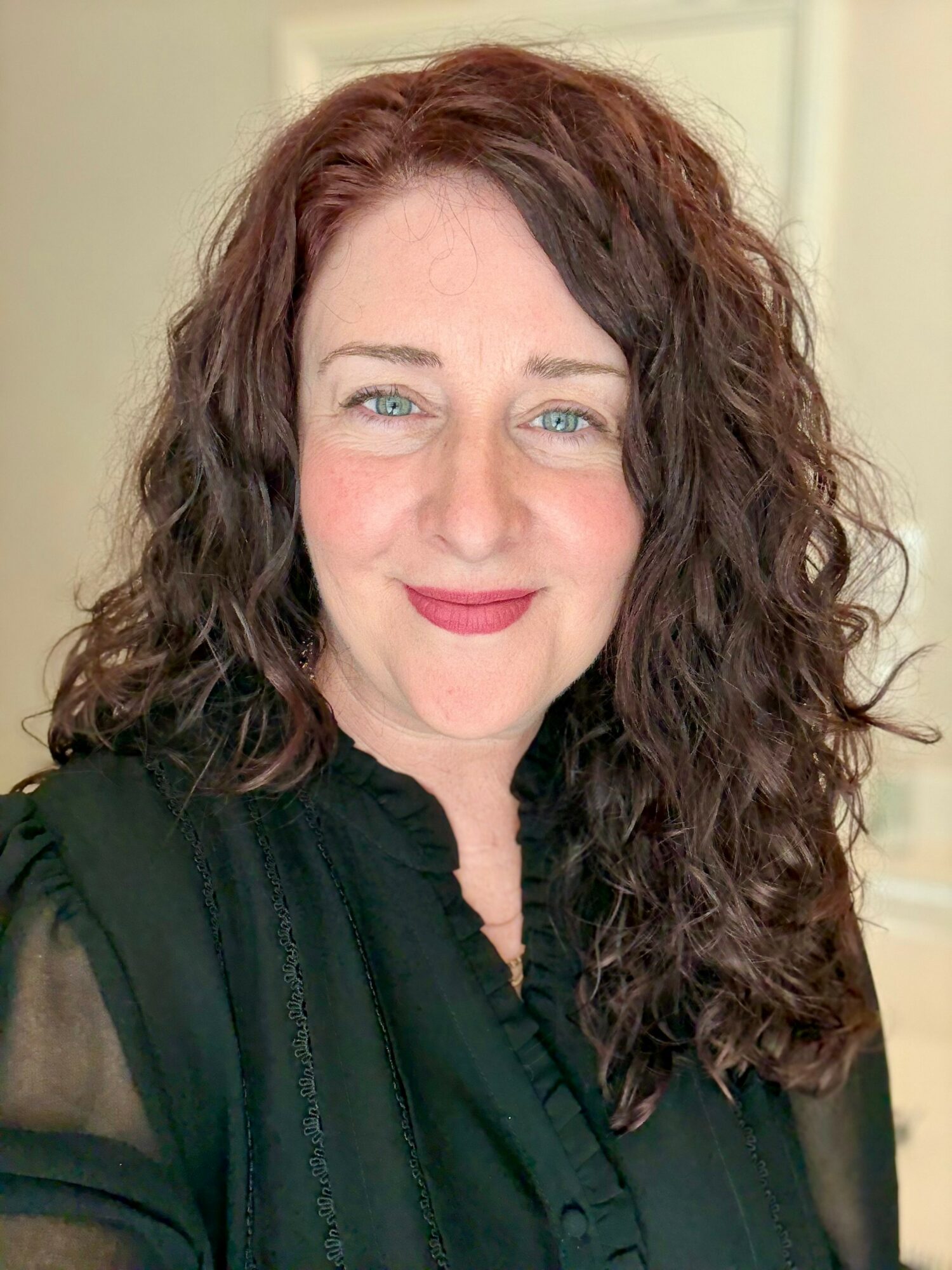
Today we’d like to introduce you to Karin Lawson.
Hi Karin, thanks for joining us today. We’d love for you to start by introducing yourself.
My journey has been wonderfully eclectic, which I believe now forms the bedrock of a truly responsive practice. I began my career working in intensive settings like residential treatment centers, where I gained invaluable, hands-on experience with complex cases. My training during those years was integrative—I became proficient in CBT and DBT, and wove in mindfulness meditation and somatic influences to help patients build essential skills and find stability. It was demanding, crucial work.
Yet, throughout all of that, a psychoanalytic thread was always present. It might have been through a particularly insightful supervisor, a compelling class that stuck with me, or conversations with colleagues fascinated by the “why” beneath the behavior. While the modalities I used were effective, I often found myself thinking about the deeper narratives, the history, and the unconscious patterns that shaped my patients’ lives. I came to realize I was most energized and effective when working in the territory of meaning and depth.
This realization led me to a pivotal decision: to fully commit to and formalize my training in depth-oriented work. I wanted to move beyond symptom management to explore the roots of personality and enduring change. That commitment brought me to the National Training Program in Contemporary Psychoanalysis at NIP in New York, a rigorous four-year program I just completed in June 2025. What I value most about this psychoanalytic lens is the longevity and complexity of the therapeutic relationship it fosters. To really come to know someone’s inner world—its contradictions, its histories, its hidden logic—simply doesn’t happen overnight. It requires a dedicated space, week after week, sometimes multiple times per week, where that complexity can unfold and lead to genuine clarity and transformation.
This evolution in my clinical identity directly shaped the practice I built today. My desire to do this deep work, combined with the practical reality of wanting to connect with people beyond my immediate geography, led me to embrace tele-health. Being licensed in both California and Florida, and now having the ability to see patients across 43 states via PsyPACT, allows me to offer that consistent, depth-oriented relationship to those seeking it, no matter where they are. And because the in-person connection remains so powerful, I maintain that option intermittently in South Florida at Khospace, therapy office. My goal is also to be available in Oklahoma, where I am originally from, in the near future as I complete licensure there. So, in a way, my story is about synthesis—bringing together all my past experiences with my deepest clinical passion to create a practice that is both focused in its approach and expansive in its reach. And please, I should add—while it’s ‘Dr. Lawson’ formally, my patients almost always just call me Karin.
Can you talk to us a bit about the challenges and lessons you’ve learned along the way. Looking back would you say it’s been easy or smooth in retrospect?
I wouldn’t call it smooth, but I would say the challenges have been incredibly formative. My greatest professional struggle, interestingly, has stemmed from one of my core strengths: a deep love of learning and a relentless curiosity.
Early on, that curiosity led me to pursue what I’d call a ‘sampler platter’ of psychological theories and modalities. For a time, breadth felt like the goal. But I began to feel a tension. There are only so many hours in the day for study and integration, and I started to sense that by trying to grasp everything, I might not be going deeply enough with anything in particular. I was collecting tools, but the foundational framework—the why behind which tool, and when, and for whom—felt diffuse.
The struggle was learning to focus that curiosity, to channel it from a wide exploration into a deep dive. Making the conscious choice to commit to the long, intensive training in contemporary psychoanalysis was the resolution of that struggle. It meant setting aside the pursuit of the next new modality in favor of mastering the nuances of one profound, flexible framework. It was about choosing depth over breadth. That shift wasn’t easy—it required a kind of intellectual discipline that was new to me—but it has been profoundly freeing. It allowed me to settle into a theoretical home that can actually hold all of my earlier experiences, giving them a cohesive context and a deeper purpose. So, the road had its bumps, but they were the kind that ultimately steered me toward a much clearer and more fulfilling destination.
Thanks for sharing that. So, maybe next you can tell us a bit more about your business?
At its heart, my practice is dedicated to depth-oriented psychotherapy for adults, offered through both individual sessions and a true passion of mine: interpersonal process groups.
I often describe the work in two interconnected lanes. The first where I find immense fulfillment, is working with high-achieving, outwardly successful professionals. These are individuals who function very well, yet feel a nagging sense that something is unfulfilled or repetitive in their lives. They come to therapy with a deep curiosity about themselves, asking, “Why do I do the things I do?” They’re ready to move beyond quick fixes and explore the underlying patterns that govern their relationships, self-worth, and emotional world.
The second lane is my specialization in supporting individuals with a history of eating disorders. This grew from my time as Clinical Director at Oliver-Pyatt Centers in South Miami. Today, I’m known in the community for helping people who are well into their recovery navigate the “what’s next?”—the complex life stages and challenges that arise after stabilization, whether that’s pregnancy, career transitions, performance anxiety, or building meaningful romantic relationships.
While many therapists provide individual therapy, I am deeply committed to the transformative power of interpersonal process groups. There is something uniquely stirring about the vulnerability and immediacy of a group—hearing your impact on others, being witnessed in your struggles, and practicing new ways of relating in real-time. It’s a profound accelerator for growth. And while group therapy is also a more financially accessible point of entry, the real powerhouse is when someone engages in both individual and group work concurrently. It creates an unparalleled feedback loop for self-discovery—as I like to say, if you choose that path, you better hang on to your hat.
Brand-wise, I am most proud of building a practice that is both highly specialized in its expertise and uniquely flexible in its reach. I maintain the depth and consistency of a traditional analytic relationship, but have evolved it for modern life. My practice stands for rigorous, contemporary psychoanalytic thinking, delivered with practical accessibility and a deep belief in the human capacity for change within a trusted professional relationship.
Are there any books, apps, podcasts or blogs that help you do your best?
I often look for resources that resonate with the core principles of my work—depth, relationship, and the complexity of the human experience—but present them in an accessible, engaging way. Two stand out that I return to often for both personal insight and professional inspiration.
One of my favorite podcasts is Good Inside with Dr. Becky. While it’s framed as parenting advice, it’s really a masterclass in relational psychology and emotional regulation for anyone. Dr. Becky Kennedy speaks from such a kind and normalizing perspective. She brilliantly models how to hold boundaries with warmth, and while she never uses psychoanalytic jargon, her entire approach is built on understanding underlying needs, repairing ruptures, and seeing behavior as communication—cornerstones of contemporary psychoanalytic thinking. It’s a fantastic example of how these deep principles can be applied in everyday, for everyone, in emotionally charged moments.
For a direct window into my love of group work, I am a fan of GROUP the Series on YouTube. It’s a fascinating project where a renowned group psychoanalyst, Dr. Elliot Zeisel, leads a seemingly long-term process group with improv actors. There’s no script; the actors work from character backgrounds, and the dynamics unfold. It’s provocative, sometimes uncomfortable, and incredibly entertaining. More importantly, it’s one of the most authentic representations I’ve seen of what a committed, long-running therapy group is actually like—the alliances, the tensions, the projections, and the profound moments of vulnerability and connection. It captures the stirring, messy, and transformative power of the group format in a way that words alone often can’t.
Pricing:
- $225 – Individual session, 45-minutes
- $65 – group therapy, 90-minutes
Contact Info:
- Website: http://www.drkarinlawson.com
- Instagram: https://www.instagram.com/drkarinlawson/
- Facebook: https://www.facebook.com/drkarinlawson
- LinkedIn: https://www.linkedin.com/in/krlawson/
- Youtube: https://www.youtube.com/@karinlawson3848
- Soundcloud: https://soundcloud.com/user-323768643


Popular
-

Seeing the Quiet: Sam Hewitt on Photography, Depression, and Emotional Presence
-

Strategic, Not Stalled: Del Williams on Navigating Today’s Housing Market with Confidence
-

Care Rooted in Trust: Tanise Bethel‑Guerra on Building Rest Assured Home Care from a Mother’s Prayer
-

Miami’s Most Inspiring Stories