




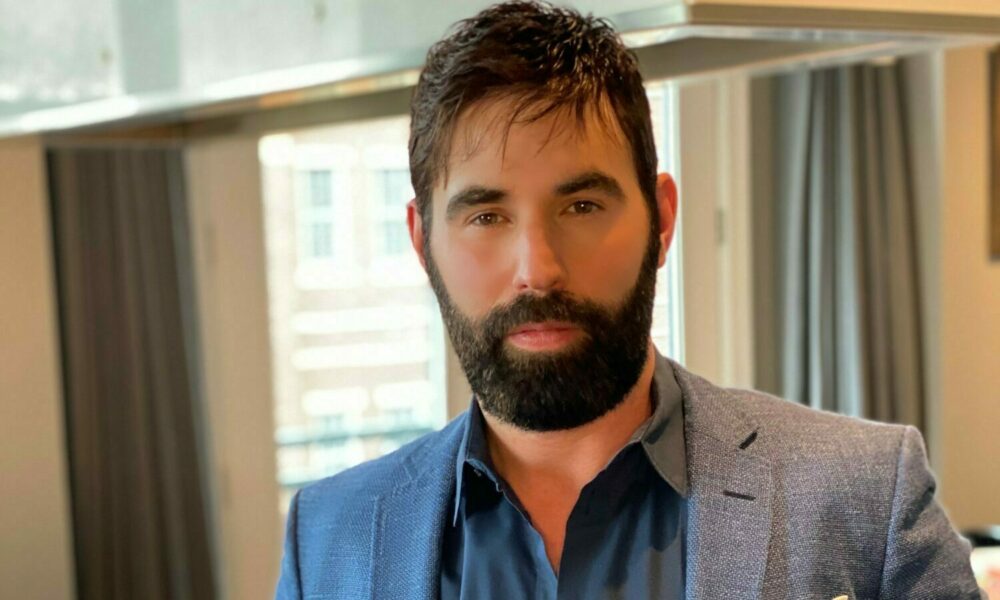
Today we’d like to introduce you to Justin Lehmiller.
Alright, so thank you so much for sharing your story and insight with our readers. To kick things off, can you tell us a bit about how you got started?
I went to graduate school for Social Psychology with the goal of becoming a college professor. My main area of study was romantic relationships and, specifically, what predicts when they work–and when they don’t.
Along the way, I was assigned to be a teaching assistant for a human sexuality course, which opened up my eyes to the world of sex research and education (something I knew very little about at the time!). The more I learned, the more I realized how strange it was that so few relationship researchers were studying sex, let alone talking about it.
After all, sex is a pretty important part of most relationships! This led me down the path of becoming a sex educator and researcher, and I haven’t looked back. I ended up spending the first decade of my career as a university professor and spent my time teaching about and researching sex and relationships.
However, I left the world of full-time academics four years ago to start my own business and take sex education everywhere I can. I do this through my Sex and Psychology blog and podcast, writing books and magazine articles, delivering lectures and workshops, testifying in sex crime cases, and consulting with sexual health and wellness companies.
Every day is a new and exciting challenge!
Can you talk to us a bit about the challenges and lessons you’ve learned along the way? Looking back would you say it’s been easy or smooth in retrospect?
For me, perhaps the biggest struggle has been that there’s this popular idea that “sex sells”–but sex isn’t the easy sell that everyone thinks because there’s so much shame, embarrassment, and anxiety around the topic that can make it hard to break through.
Then there are the people–including some of my own colleagues–who don’t take my work seriously. Sex research is something that is often either trivialized or sensationalized. And then there’s the censorship. I’ve been in places in the US before where I’ve tried to access my own educational website over wi-fi only to find it blocked simply because it talks about sex.
The same goes for social media. Even though I only post educational, science-based, non-explicit content, I’ve had some of my posts removed and every day, I worry that some of my accounts will get suspended or banned because I’ve seen this happen to so many folks in my field.
As you know, we’re big fans of Sex and Psychology. For our readers who might not be as familiar what can you tell them about the brand?
I created Sex and Psychology to share the science of sex and relationships in a way that is informative, engaging, and accessible. What’s different about my approach is that everything I do is rooted in rigorous science and research, not personal opinion.
The goal is to convey responsible and accurate information, correct harmful myths and misconceptions, and equip people with the tools they need to lead happier and healthier sex lives and build stronger relationships. My brand is also different in that it’s not just for one segment of the population–it’s for everyone, no matter your background.
The cornerstone of Sex and Psychology is the blog (which recently celebrated its 10th anniversary) and the podcast (which started about three years ago).
I never had any grand ambitions when I started the blog. What began as simply a fun side project eventually turned into millions of page views, 100K+ followers on social media, book deals, television appearances, speaking invitations, and more.
It’s really what launched my career. But the best part about it is the feedback and comments I get from readers who say that it helped them to better understand themselves, improve their relationships, or feel normal for the first time. Knowing that you’ve made an impact on someone’s life is the best reward of all.
Where do you see things going in the next 5-10 years?
The need for sex education hasn’t changed much in recent years. Few of us learn what we actually need to know in school!
There’s a lot of interest in and demand for high-quality sex ed, but it’s a field that constantly needs to adapt in order to meet the needs of consumers and how they want to get their information.
For me, this has meant paying attention to where and how people are spending their time online and making adjustments to content delivery, hence expanding from just being a blog to starting a podcast and getting the content on every major social media platform.
As technology continues to evolve, sex ed will follow.
Pricing:
- Current pricing info for my book Tell Me What You Want on Amazon: https://amzn.to/3y50ScV
- Current pricing info for my book The Psychology of Human Sexuality on Amazon: https://amzn.to/3A5LVtE
- Apple Podcasts subscription for my show is $3.99/month: https://podcasts.apple.com/us/podcast/sex-and-psychology-podcast/id1505460817
Contact Info:
- Website: https://www.sexandpsychology.com
- Instagram: https://www.instagram.com/justinjlehmiller/
- Facebook: https://www.facebook.com/psychologyofsex
- Twitter: https://twitter.com/JustinLehmiller
- Youtube: https://www.youtube.com/channel/UCm8JQt7it3re8SypKf-mT2Q
- Other: https://www.sexandpsychology.com/podcasts/