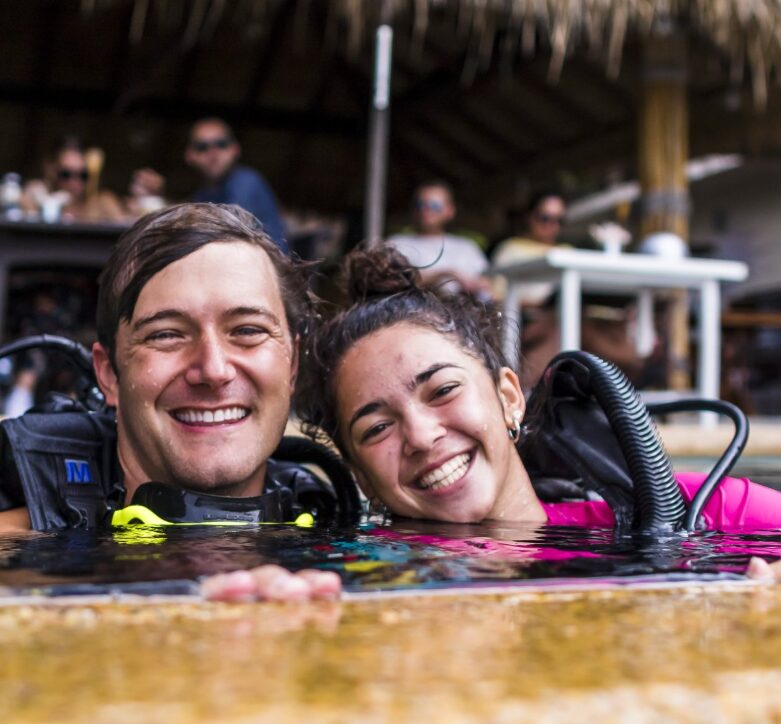




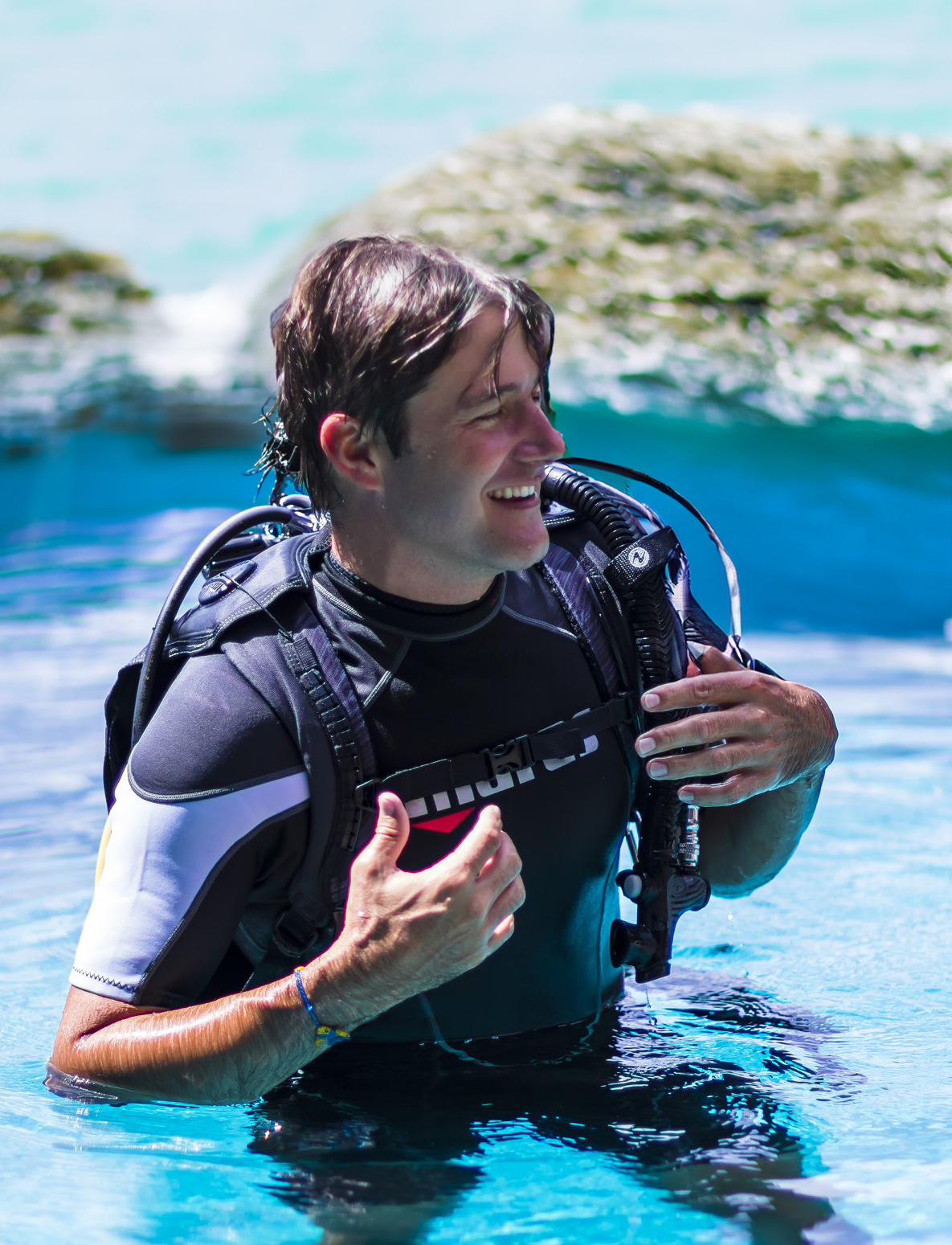
Today we’d like to introduce you to Graham Patterson.
Hi Graham, thanks for sharing your story with us. To start, maybe you can tell our readers some of your backstory.
My professional background is in healthcare, nonprofits, and policy, but I am also a long-time scuba diver. A turning point for me came during a very specific moment underwater. About six years ago, I was diving on a reef where the coral was bleaching and dying in front of my eyes, and I felt an overwhelming sense of helplessness watching an ecosystem collapse in real time.
The devastation of the reef struck me, but so did something else: I was a temporary visitor, yet thousands of divers and dive professionals are in these environments every single day. They witness degradation firsthand, often long before it shows up in datasets or policy debates. And despite being on the front lines, they are still too often disconnected from the systems designed to address the problem.
On one side, scientists generate essential evidence. On the other, policymakers debate regulations, funding, and frameworks. Too often, the people actually in the water, those with deep, place-based knowledge of reefs, are left out of meaningful participation. That disconnect felt like a missed opportunity at a time when we cannot afford to waste capability, time, or trust.
That realization led me to co-found REEF Scuba (Restoration, Ecology, and Environment Focused Scuba), a nonprofit built to bridge that gap. Our work is not about short-term interventions or flying in to plant coral and leave. We focus on equipping local communities and dive professionals with current science, rigorous training, and long-term support so restoration is effective, accountable, and locally owned.
Equally important, we bring the realities faced by these communities directly into global decision-making spaces, including forums such as the UN and IUCN. The goal is to ensure policy is shaped not only by models and theory, but by lived experience in the water.
It has taken years of persistence to earn credibility and a seat at those tables, but the work is paying off. REEF Scuba now holds UN consultative status and is implementing projects internationally, connecting people, science, and policy in ways that give coral reef ecosystems a real chance at survival.
To learn more about our work, from field-based restoration to international advocacy, or to support our efforts, visit www.reef-scuba.org
or follow us on Instagram at @reefscuba_org. We also have a podcast where we host Ocean Champions to learn more about the work they are doing to save the ocean, you can find it wherever you listen by rearching REEF Roundup.
Can you talk to us a bit about the challenges and lessons you’ve learned along the way. Looking back would you say it’s been easy or smooth in retrospect?
It has not always been a smooth road. The biggest challenge has been the very problem we set out to solve: fragmentation. Marine science, public policy, and recreational diving tend to operate in separate silos, with different incentives, different languages, and different measures of success. Building an organization that sits at the overlap of all three, and is taken seriously by all three, was more difficult than we initially anticipated.
Scaling has been another major hurdle. From the beginning, we knew REEF Scuba could not be only a local project. Coral reefs span more than 100 countries, and ocean systems do not recognize borders, so durable solutions need to move across geographies too. But as a relatively young organization, expanding our reach without diluting quality, consistency, or scientific integrity has been complex. To address this, we have leaned into technology and become more focused on developing and sharing digital tools and training programs that can be applied widely across regions while maintaining high standards.
Of course most nonprofits also struggle with funding, and it’s frustrating sometimes to know the amazing work we could be doing, but not have the available budget to tackle it. That being said, we’re doing as much as humanly possible with the amount of funding we receive, and have also put a lot of our own sweat, tears, and resources into building healthier coral reefs.
Thanks – so what else should our readers know about REEF Scuba?
Coral reefs are among the most studied ecosystems on Earth, yet the gap between research, governance, and implementation remains substantial. At the same time, tens of thousands of dive professionals are operating in reef environments every day, witnessing ecological change in real time, often well before it appears in datasets or policy debates. REEF Scuba exists to harness that frontline perspective and equip people working in the recreational dive industry to participate in rigorous research, monitoring, and restoration, while ensuring their insights meaningfully inform both restoration practice and decision-making.
What sets REEF Scuba apart is our focus on the dive industry as a force multiplier for conservation and as a legitimate stakeholder in scientific and policy conversations. Dive professionals occupy a unique position: they have deep site familiarity, spend significant time in the water, and engage people at moments of peak emotional connection to the ocean.
REEF Scuba has earned trust from academic researchers, local dive operators, community leaders, and international institutions. Achieving UN consultative status as a relatively young organization reflects that trust, as does our growing portfolio of international projects and partnerships. We are known for being practical, scientifically grounded, and collaborative, rather than ideological or performative.
What we want readers to understand is that coral reef conservation cannot succeed through science, policy, or tourism alone. It requires integration across all three. Our work is about building those bridges so conservation is not only well-intentioned, but effective and durable. If reefs are going to survive the coming decades, the people closest to them must be equipped, heard, and represented. That is the role REEF Scuba is committed to playing.
Before we go, is there anything else you can share with us?
I think that’s about it – thank you!
Pricing:
- We are a nonprofit, so donations are appreciated.
Contact Info:
- Website: https://www.reef-scuba.org/
- Instagram: https://www.instagram.com/reefscuba_org