

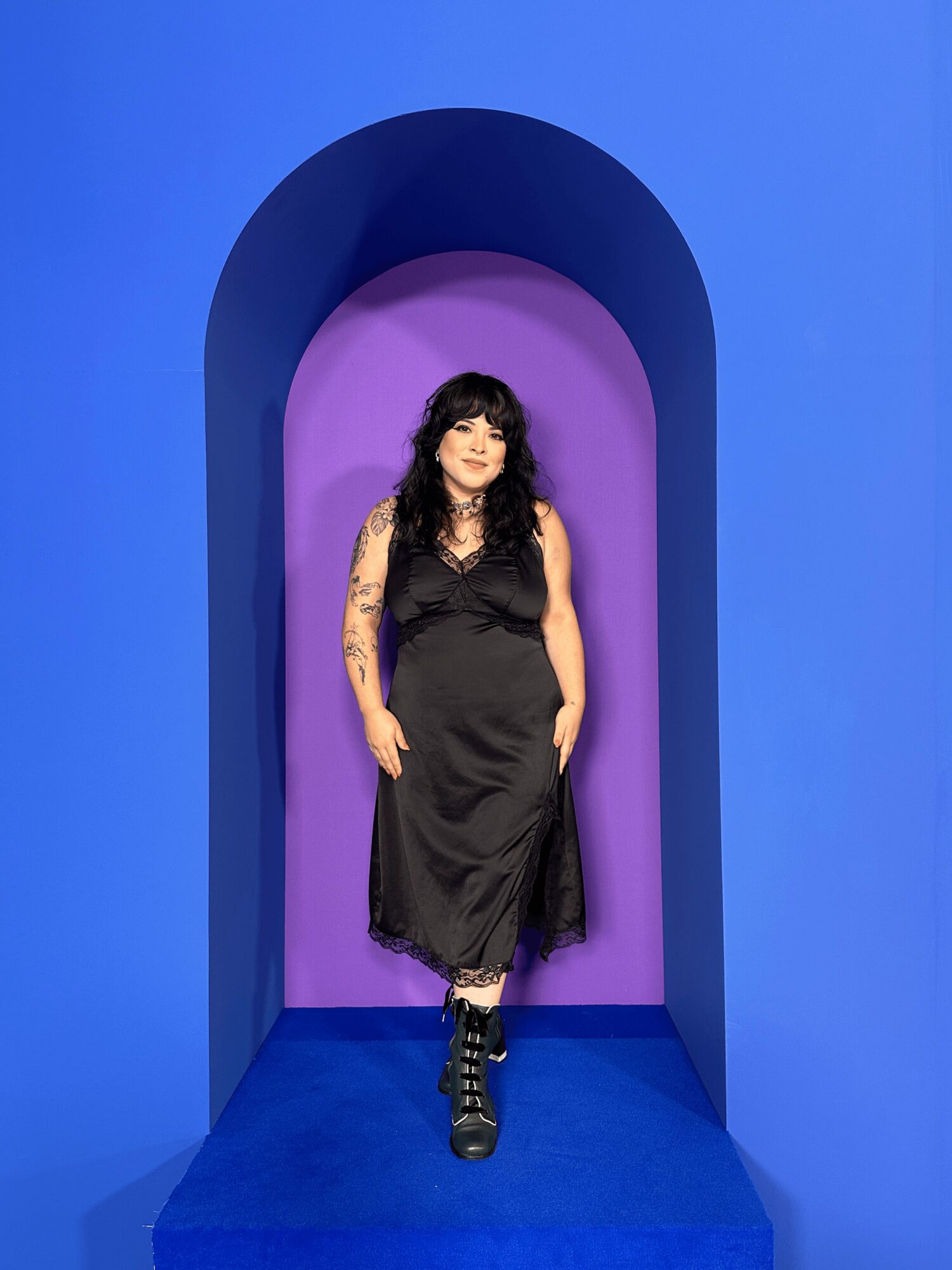
Today we’d like to introduce you to Edda Martinez.
Hi Edda, thanks for joining us today. We’d love for you to start by introducing yourself.
My story begins a little over a year ago. I opened my eyes and stared at a white ceiling. Lying on a yoga mat, I stretch my body, trying to make sense of what I had just experienced in a deep meditative state. I was in a Kundalini activation journey led by a facilitator during a time of major personal life changes. As I lay there, I feel a renewed energy tingling on my skin and recall a vision of a spiritual guide telling me to start an art collective.
The truth is, I had no idea where to begin. I wasn’t even sure if what I experienced was real. I’ve always been creative, but I never really considered myself an artist. I jumped from hobby to hobby while working full-time as a marketing manager, often struggling with routine and sticking with a single project. I had no funding, no connections, and no roadmap for starting a collective. When this vision came to me, it felt overwhelming.
The best way I can describe it is that it felt like being pregnant with an idea. Something was growing inside me that I was suddenly responsible for bringing into the world. Even my facilitator later told me it felt like she had witnessed me giving birth to something. I had no idea how I would do it, but I knew I couldn’t ignore it.
Despite all the doubt, I listened to that inner voice and started small. That vision gradually grew into Cut and Destroy Art Collective, a community space centered on collage art experimentation. Our main focus is hands-on collage workshops, where participants work with images, paper, and other materials to create layered compositions, explore techniques, and express themselves in a welcoming environment.
Now, one year and more than 16 events later, we have built a thriving community across the tri-county area of Miami, Broward, and Palm Beach. People of all ages, backgrounds, and experience levels come to our events to create, connect, and be inspired. I’ve seen networking, collaborations, and ideas blossom from these gatherings, and it has been incredible to watch Cut and Destroy grow into a space where creativity truly belongs to everyone.
Cut and Destroy has truly become like a child to me. Through it, I’ve learned patience, empathy, and how to gently guide participants who might feel disconnected from their art or unsure of their creations. It’s given me the joy of meeting new faces, hearing new stories, and bringing our energy to unexpected venues, from tattoo shops, breweries, and record stores to major art museums. Creativity here isn’t about perfection or expertise; instead, it’s about connection, play, and making space for everyone to belong.
We all face challenges, but looking back would you describe it as a relatively smooth road?
It hasn’t always been a smooth road. Accessibility and inclusivity have been at the heart of Cut and Destroy since its genesis. From the very beginning, I knew I wanted our workshops to be free and accessible to anyone who wanted to create and connect. Providing the materials myself meant that funding and resources were some of the biggest early challenges.
The beginnings of our collective were exciting but also a little scary. I often felt I didn’t have enough materials or funds to host events and wasn’t sure how it would all come together. I wanted my workshops to feel well-resourced, providing a variety of materials rather than something put together on a whim. As they say, take baby steps. Event by event, the collective began to grow. Participants and supporters generously contributed monetary and material donations, which have been essential for keeping the workshops accessible. We are always in need of new image sources like books, magazines, and newspapers, as well as cardstock paper, glue sticks, scissors, and cutting mats. These donations are truly what make the collective possible.
Running the collective is labor-intensive, but every challenge carries its reward. Traveling to different venues, curating a selection of images, loading boxes of books, and setting up events can be exhausting. Yet seeing participants’ faces light up as they glue the last cutout onto their page makes every challenge worthwhile. Volunteers are always welcome to join in.
Appreciate you sharing that. What else should we know about what you do?
I am a collage artist and the founder of Cut and Destroy Art Collective, a community-centered initiative focused on making creative workshops accessible. I also work as a Marketing Manager for a global music organization.
I can vividly recall the first time I was trusted with scissors alone. I had a red piece of paper in my left hand and was cutting a circle with my right. My primary school teacher instructed us, “When you are cutting, do not stop. Keep turning the page as you cut out the shapes to avoid harsh cuts.” That early lesson stuck with me, and I think of it every time I pick up scissors. From then on, I found it soothing to cut images and would personalize all my agendas and folders for school through collage.
After going through a divorce in 2023, returning to that practice felt natural and grounding. While I dabble in painting, chainmail, and photography, it’s the act of picking up scissors, flipping through books, cutting images, and layering them that feels most like home. Every cutout is intentional, and every layer carries an idea, a feeling, or a story I want to share. In my collages, I mainly explore themes of radical social politics, including body image and self-love, war, governance, and relationships.
Collage, to me, is everything. It’s the art of combining elements in unexpected ways, like music, which layers sounds, rhythms, and melodies; movies, which merge images, motion, and scores; or a recipe, which balances ingredients, temperatures, and timing. Working with this medium helps me see connections I might have otherwise missed and notice patterns and relationships in my own life.
Through Cut and Destroy Art Collective, I extend this practice into a shared experience. I carefully select material from books and magazines, cut out images, and place them in individual envelopes. At our workshops, guests choose a random envelope, discovering an image meant to speak to them in a unique way. Many participants compare it to picking a tarot card, where the image called specifically to them. They then use the image as a guide to begin their collage, interpreting what it means to them. There aren’t really any rules when it comes to their creation.
My goal isn’t just to build community—it’s to create a space where people can reconnect with themselves, experiment, and tap into their creativity. Collage doesn’t have to take itself too seriously, and that freedom allows anyone to explore, play, and discover. People come for different reasons: some want to try something new and creative, others want to meet new people, and some are experienced collage artists looking to connect with other artists like them. In many ways, collaging is about bringing pieces together, and I see my role as bringing people together and reconnecting them with themselves. Some would say I’m the glue.
What I’m most proud of is watching people reconnect with their creativity, often picking up scissors and glue for the first time in years. I get to see a community grow from that simple act of making something together.
In addition to the workshops, I like to bridge my love for music and collage by cataloging collage-inspired album art on our social media. I research and share album art that uses collage techniques, giving participants and followers a chance to discover new sounds, connect with creative ideas, and find inspiration for their own collage practice.
Do you have recommendations for books, apps, blogs, etc?
I obviously look through a lot of picture books, mainly vintage art books I find at thrift stores or used bookshops. I rarely go to new bookstores. There’s something about discovering an old book with worn pages and unexpected illustrations that sparks ideas in a way new books never do. I get especially excited when I come across Doré illustration books. I also pick up a lot of art magazines like Artforum, Art in America, Juxtapoz, and Hi-Fructose to stay connected to the contemporary art world and find inspiration for new work.
However, I get most of my ideas from watching movies, and I honestly watch a crazy amount every week. I’m a big fan of Wong Kar Wai and Pedro Almodóvar for their vibrant color, emotional depth, and inventive storytelling. I’ve also recently been diving into Karel Zeman, a Czech director who uses collage elements to build visually stunning, imaginative movie sets. Films are a rich source of composition, mood, and narrative, and they often spark unexpected creative ideas for my art and workshops. I’m also a huge fan of horror films from the 1960s through the 1980s.
Beyond visual inspiration, I read a mix of self-help books and mystery thrillers. Both genres offer insight in different ways. Self-help books encourage reflection and growth, while mysteries keep my mind sharp and curious.
Contact Info:
- Instagram: @cutanddestroy_mia & @edda.mami
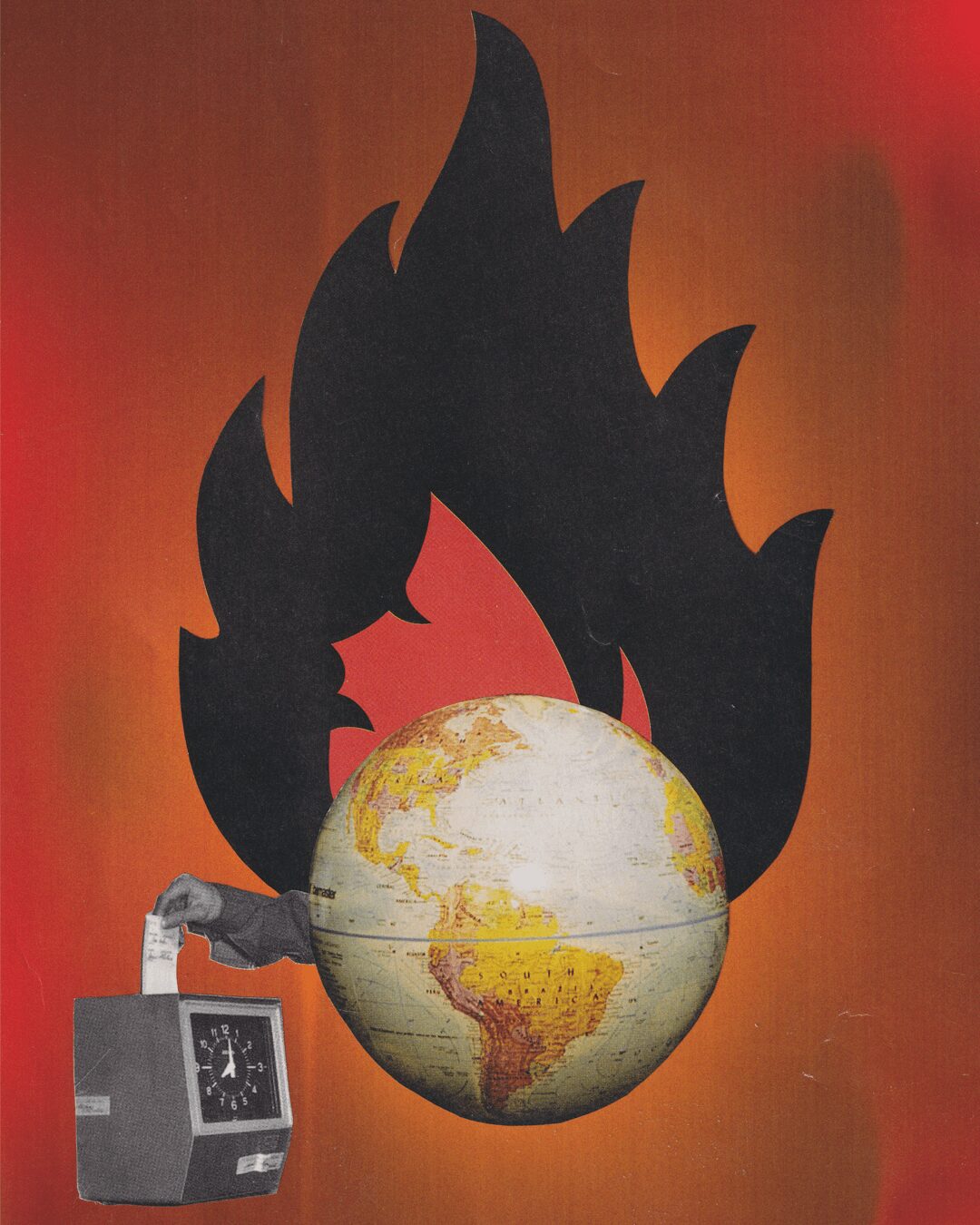
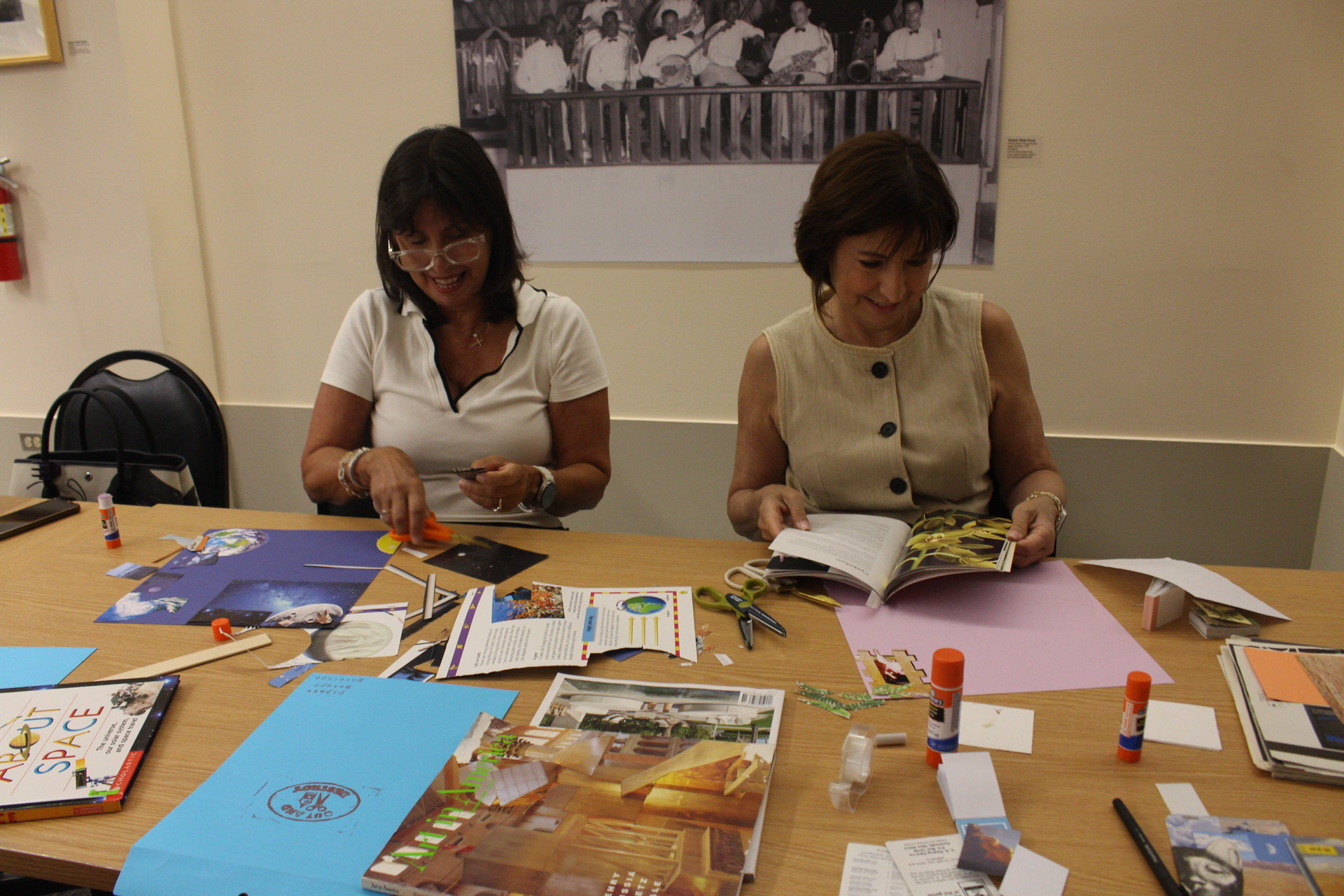
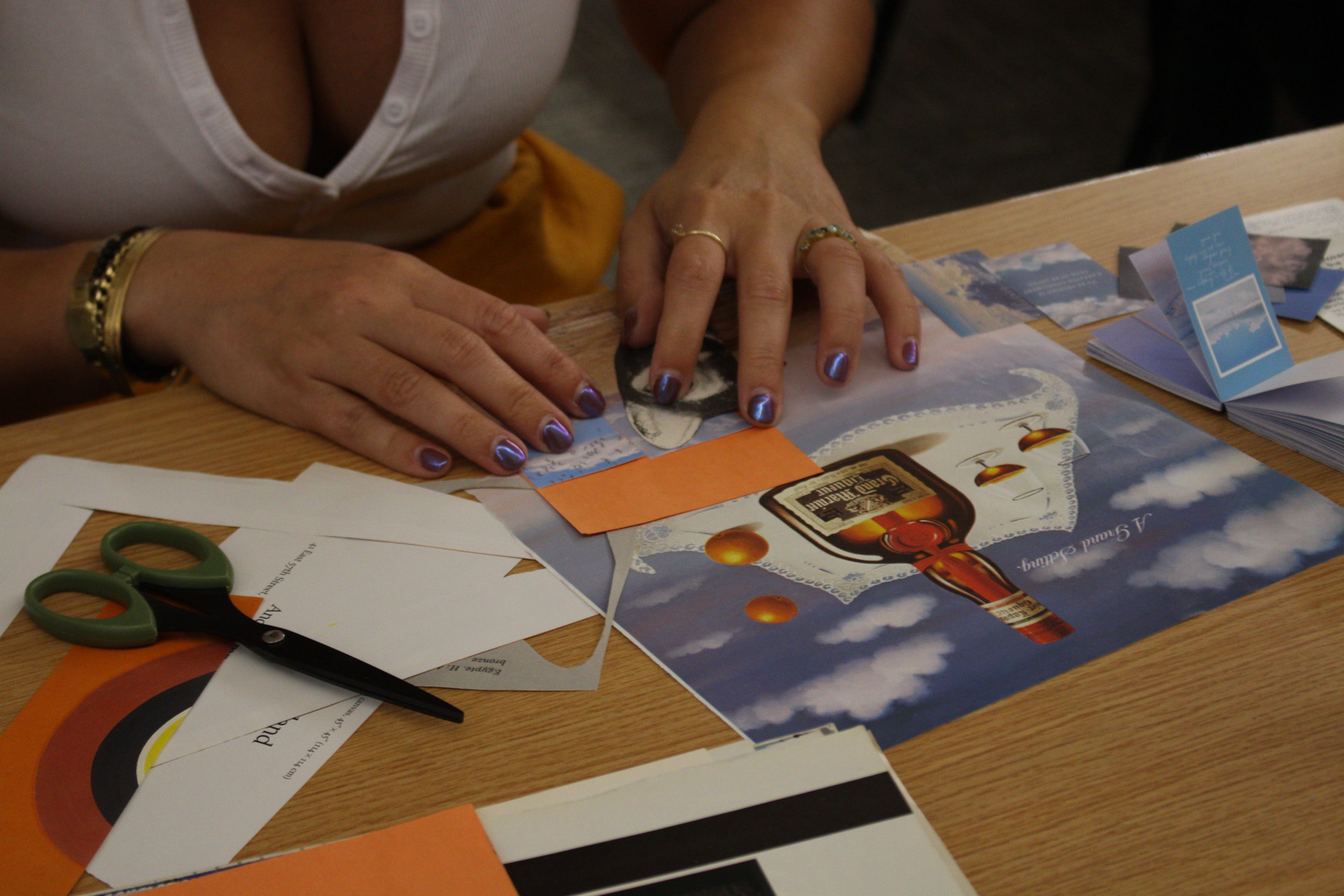
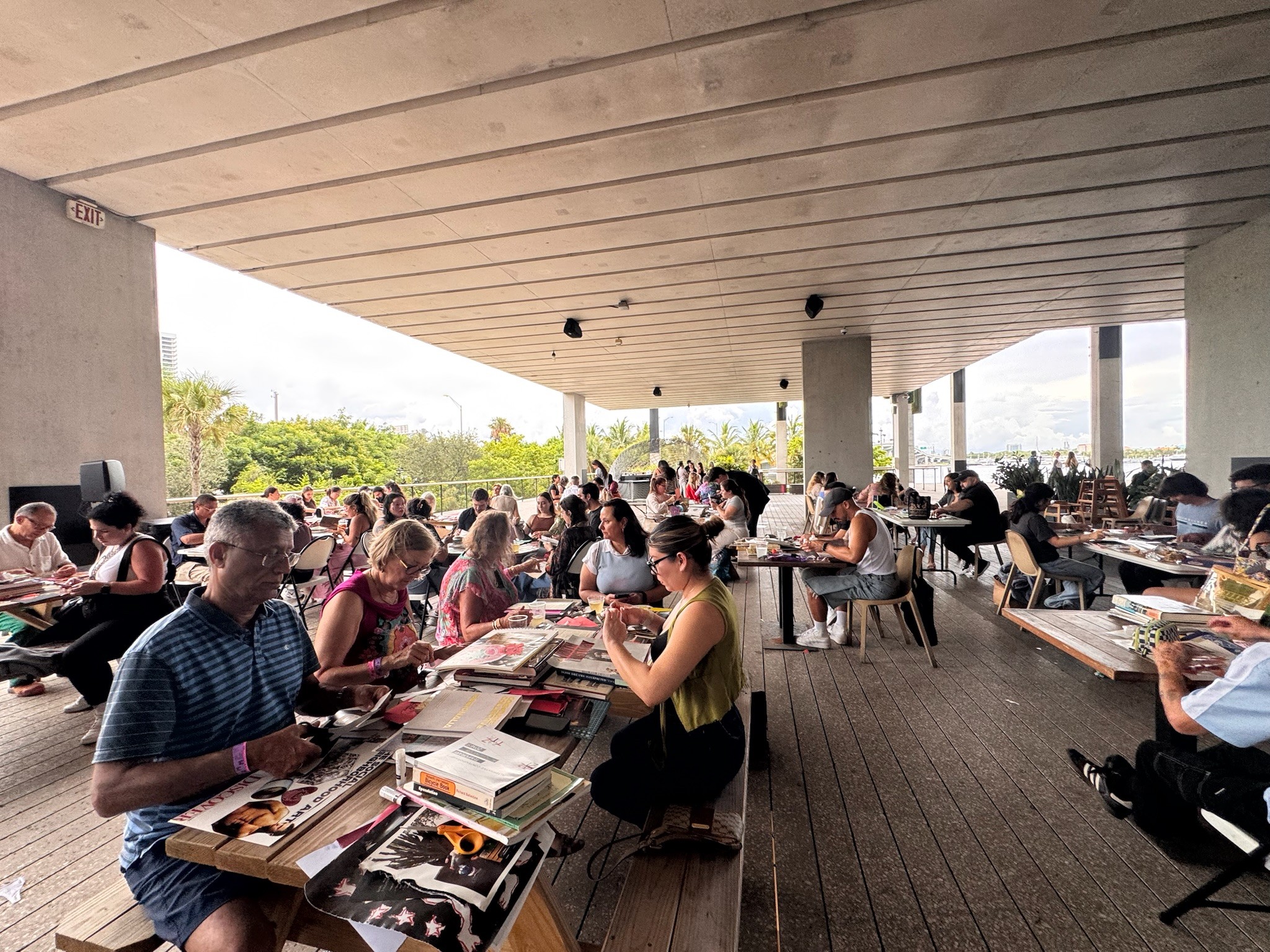
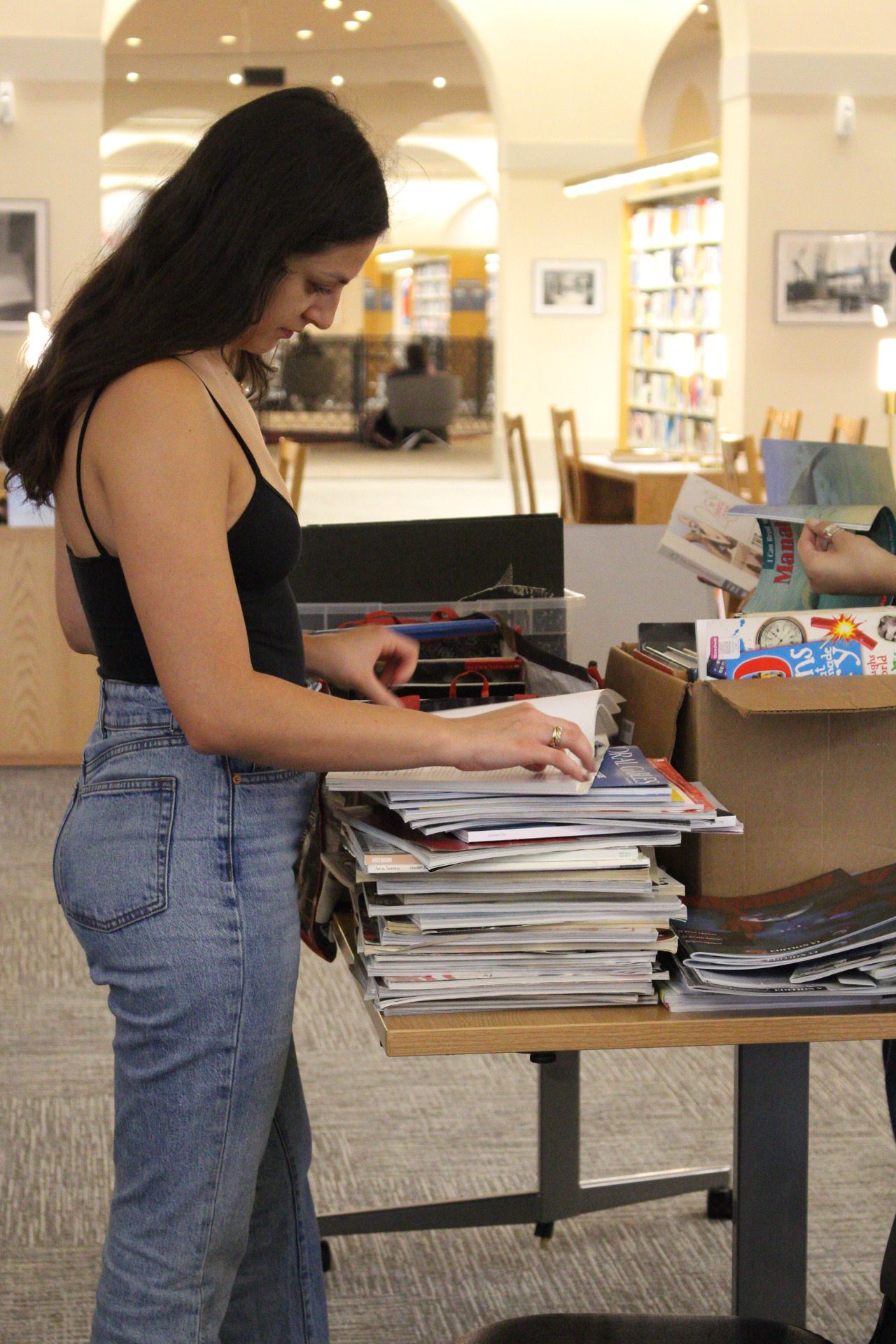
Image Credits
Portrait photograph: Juan Martin Salazar
Artwork: Edda Martinez
Event photos: Edda Martinez, Victoria Cruell