



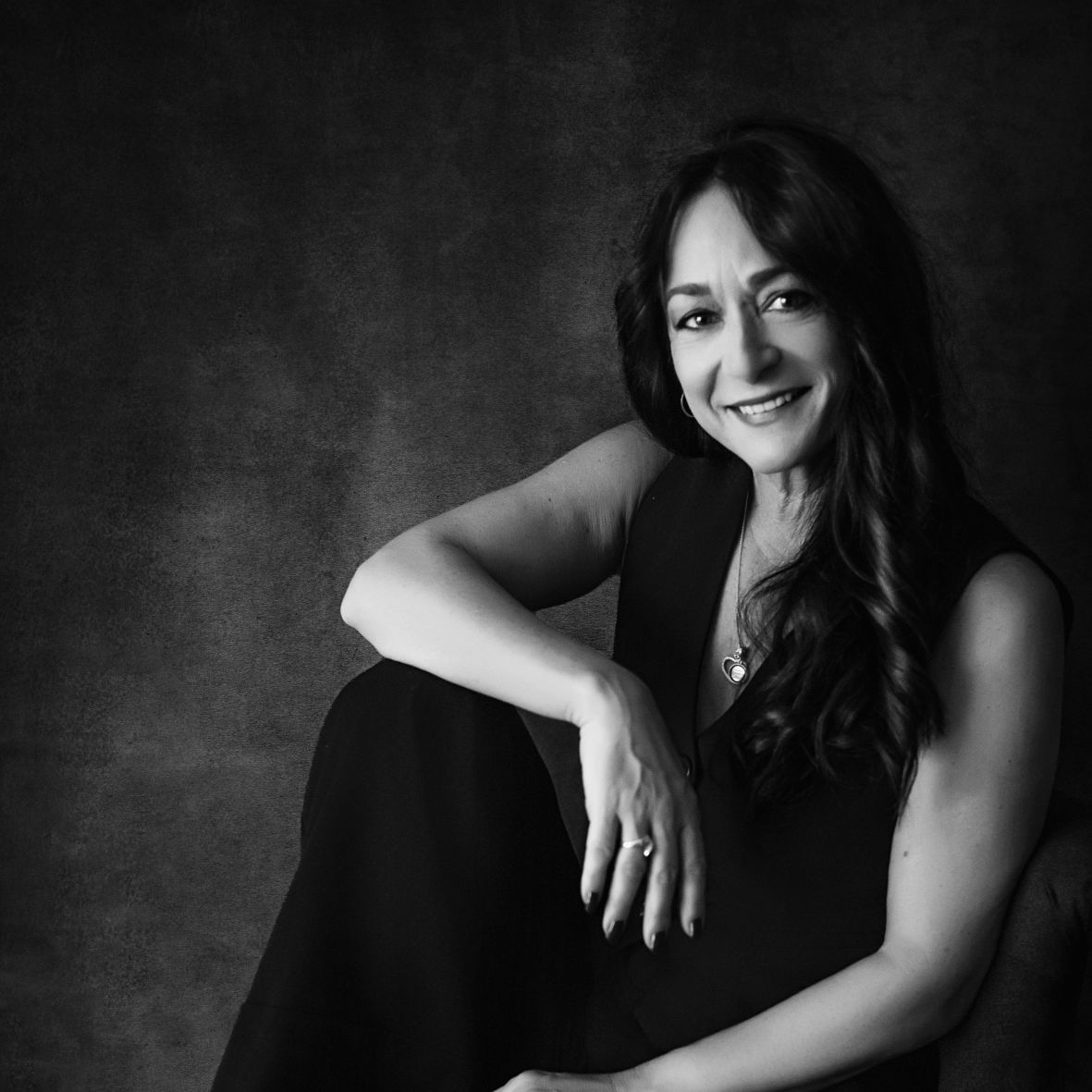
Today we’d like to introduce you to Nathalie Foury.
Hi Nathalie, thanks for joining us today. We’d love for you to start by introducing yourself.
VoyageMIA actually featured my story a few years ago, when photography was at the center of my professional life. A lot has happened since then.
Photography is still very much part of who I am and what I do, but over the past few years, my work has evolved in a direction I probably wouldn’t have predicted at the time.
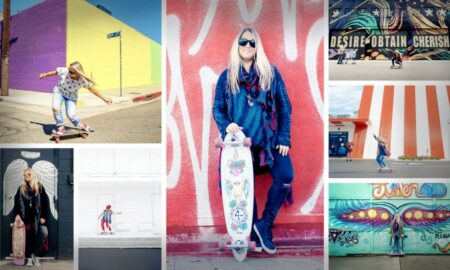
I’ve always been fascinated by people — not only by how they look, but by what makes them who they are. As a photographer, I’ve never been interested in simply creating a beautiful image. I want to capture something real, something that feels like the person in front of me.
That curiosity eventually led me to Human Design. I studied it extensively, trained in personalized analysis, and started working with people in a completely different way. And then something became obvious to me: photography and Human Design weren’t two separate worlds at all.
Both are about identity.
One allows me to reveal something visually. The other gives people a framework to understand how they naturally function, make decisions and interact with others.
Today, these two sides of my work are coming together. I offer personalized Human Design analyses, I’m developing experiences that combine photography and Human Design, and I’m about to publish my first book, Kit pour décoder ton Human Design, created to make the fundamentals accessible and practical for people discovering Human Design. The French edition will be released first, followed by an English edition.
So this interview feels a little like coming full circle. VoyageMIA first met me through photography. Today, photography is still there — but the story has become much bigger.
Alright, so let’s dig a little deeper into the story – has it been an easy path overall and if not, what were the challenges you’ve had to overcome?
No, it definitely hasn’t been a straight or easy path.
I’ve had to start over several times, both personally and professionally. I’ve changed countries, rebuilt my life and my business, and gone through periods where what had worked for me before simply didn’t fit anymore.
One of the biggest challenges has probably been accepting that my path isn’t linear. For a long time, I thought I had to choose one identity and stick to it: photographer, yoga teacher, Human Design practitioner, author. From the outside, these changes can look like completely different directions. For me, they are actually connected by the same curiosity about people, identity and the way we experience life.
Another challenge has been learning to trust my own way of making decisions instead of constantly looking for the most reasonable or expected choice. Interestingly, studying Human Design didn’t magically remove those challenges — but it gave me a very different way of observing them.
And, of course, building something independently means dealing with uncertainty. You create, test, adjust, sometimes start again, and you don’t always know where it will lead.
I’m still in that process today. I don’t think I’ve “arrived.” But I understand much better now that changing direction doesn’t necessarily mean starting from zero. You bring everything you’ve learned with you.
As you know, we’re big fans of you and your work. For our readers who might not be as familiar what can you tell them about what you do?
Today, my work sits at the intersection of photography and Human Design.
As a photographer, I’ve always been interested in what exists beyond the image itself. I don’t want to create a character or make someone fit into a predefined visual identity. I observe the person, the way they move, their presence, their energy — and I translate that into images.
Human Design has added another dimension to that work. I now offer personalized Human Design analyses to help people better understand how they naturally function, make decisions, interact with others and recognize where they may be influenced by conditioning.
What makes my approach different is that I bring these two perspectives together. I call it “Double Regard” — a double perspective: visual and energetic identity. One explores how you function; the other reveals how you show up and how you are seen.
I’m also about to publish my first book, Kit pour décoder ton Human Design, a practical introduction for people who want to discover the fundamentals of Human Design and, most importantly, experiment with them in real life. A French edition will be released first, followed by an English edition.
What I’m most proud of is seeing what happens when people stop using Human Design as another label and start observing it in their actual lives — in their decisions, relationships, work and family dynamics. That’s where the information becomes useful.
Whether I’m behind a camera or analyzing a Human Design chart, my intention is ultimately the same: I’m not here to create an identity for someone. I’m here to reveal what is already there.
We love surprises, fun facts and unexpected stories. Is there something you can share that might surprise us?
Something people are often surprised to learn about me is that before becoming a professional photographer, I spent 11 years working in luxury hospitality.
I worked in places like Saint-Tropez, Courchevel, Corsica and Biarritz, in very different roles — from housekeeping and reception to restaurant service.
At first, it may seem completely unrelated to what I do today, but I actually think those years taught me one of the most important skills I use in my work: observation.
In hospitality, you learn to notice people very quickly — what they need, how they communicate, what makes them comfortable, sometimes before they even say anything.
Years later, whether I’m photographing someone or working with them through Human Design, I realize I’m still doing a version of the same thing: I observe first.
Contact Info:
- Instagram: ttps://www.instagram.com/h.design_by_nathalie/
- Facebook: https://www.facebook.com/profile.php?id=61594012055039&locale=fr_FR