


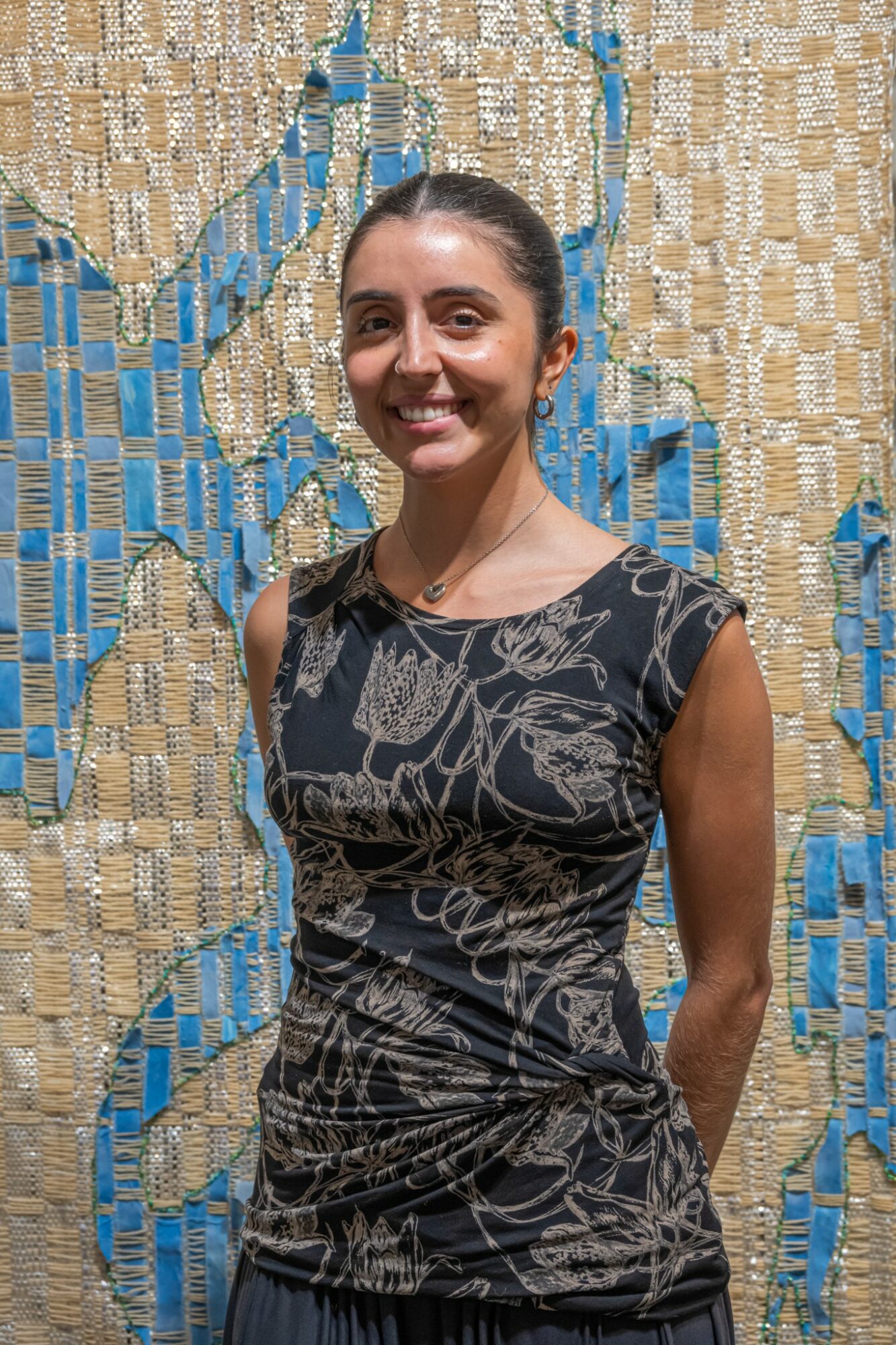
Today we’d like to introduce you to Jessica Barbosa.
Hi Jessica, we’re thrilled to have a chance to learn your story today. So, before we get into specifics, maybe you can briefly walk us through how you got to where you are today?
I was born and raised in Miami, Florida, to Brazilian immigrant parents, and for the first 21 years of my life, South Florida was all I knew. During the pandemic, I moved to Missouri to attend the Kansas City Art Institute, where I eventually earned my BFA in Fiber in 2023.
I didn’t originally plan on going to art school, or pursuing it as a career. Growing up, I was a studious student and was mostly interested in subjects like science, so naturally I approached art from a more academic perspective. It wasn’t until I was finishing my Associate’s degree that I seriously considered pursuing fine arts. At first I considered majoring in film, as video editing had been a hobby of mine ever since I made my first iMovie trailer as a kid. Later I thought graphic design might be the practical choice, but after spending more time working in 3D, I realized sculpture felt like the right fit for me.
I transferred into the sculpture program at KCAI and immersed myself in learning new materials and processes. While I enjoyed working with wood, metal, and other traditional sculptural materials, I found myself consistently drawn toward softer and more tactile ones. In some of my early work, I was using plastic mesh fabrics for texture, upcycled bed sheets for drapery, and even unexpected materials like dryer lint. After taking my first weaving elective, something clicked for me. I was drawn to both the repetition and precision of the process. From moving into the physical flow of weaving to carefully adjusting yarn tension, I was completely invested in all of it, and eventually fully transferred into the Fiber program.
After graduation, I moved back to Miami and wasn’t entirely sure what the next steps would be. I knew I wanted to keep the momentum going, so I participated in a six-week work-study program at Arrowmont school of arts and crafts in Tennessee, where I took classes in garment construction, tapestry weaving, and off loom bead weaving. I really valued this time, meeting other creatives during their artistic journeys, and creating alongside them.
Later, I found myself working in retail and eventually becoming a visual merchandising specialist, a role I currently hold. While this position started as a practical decision, merchandising has become another creative outlet and has influenced my art practice conceptually, as I think about display, consumption, material desires, and engagement.
As I continue navigating the art world, I’ve really enjoyed reconnecting with Miami’s arts community. Becoming involved with organizations like Fiber Artists of Miami, participating in group exhibitions such as “The River Of Grass”, and attending local events has been a rewarding way to stay connected while continuing to grow my practice.
Would you say it’s been a smooth road, and if not what are some of the biggest challenges you’ve faced along the way?
I wouldn’t say it’s been a straightforward journey. Going into college without a clear idea of what degree I wanted to pursue meant a lot of figuring things out through trial and error. While it took me longer to find my way to an art program, I’ve always enjoyed being a student, so those extra semesters were appreciated nonetheless.
Working across different disciplines like video art, graphic design, sculpture, and fiber meant I was constantly learning new ways of thinking and making. Because I didn’t have much experience creating or engaging with art before starting my art education, I often felt like I was behind my peers and had a lot of catching up to do. Looking back, self doubt was probably one of my biggest challenges.
The sculpture and fiber programs at KCAI however, gave me opportunities that helped me build my confidence, from grants and exhibitions to connections with local artists and a resource rich education. Going to school in Kansas City was also instrumental to my development as an artist. The city has a thriving arts community, and being surrounded by galleries, artist-run spaces, and organizations like ScrapsKC, a nonprofit creative reuse center, made it an exciting place to learn and grow.
After graduating, I wasn’t always sure how to balance continuing my practice with the reality of needing to work. That’s part of what got me into retail and merchandising. While there are great studio opportunities in Miami, access to space can be difficult to prioritize with the cost of living in South Florida. Organizations like Fiber Artists Miami Association, The55Project, and Red Thread Art Studios have been especially meaningful during my time here, bringing artists together and helping make Miami’s creative community more connected and supportive.
Over time, I’ve learned not to wait for perfect conditions to make work. Instead, I’ve found ways to build my practice around the structure of a fulltime job. While it isn’t always easy, learning how to keep showing up for my work has been one of the most valuable parts of my development as an artist.
Thanks – so what else should our readers know about your work and what you’re currently focused on?
My work is rooted in fiber processes like weaving, sewing, quilting, and beading, and I often combine several of these techniques within a single piece. While fiber is usually associated with functional or two dimensional objects, I approach it sculpturally as I am mainly interested in how materials can be transformed through labor and process.
One work I am particularly proud of is “TOO MUCH, NOT ENOUGH” , where I wove with curling ribbon for the first time. After weaving hundreds of strands of shiny pink ribbon into a reflective, tarp-like fabric, I tied it into a three foot tall oversized bow. I was interested in how a material associated with celebration, decoration, and disposability could become something sculptural and take on new meaning.
That interest has led me to incorporate nontraditional materials such as curling ribbon, party decorations, and found objects alongside traditional fiber techniques. Through these combinations, I explore tensions I observe in everyday life, such as excess and restraint, permanence and instability, and the natural and the manufactured.
While the work can appear playful at first glance, I often use humor and craft to engage with larger ideas about value, labor, environment, and daily life. My beaded work “CAN’T AFFORD SHIT” addresses economic struggle through humor, while “Glitter and Grass” was inspired by South Florida’s landscape and the ways wilderness and luxury exist side by side.
Although my practice has evolved, it is still informed by my undergraduate work in immersive installation, video, and projection mapping. Those experiences continue to shape my interest in storytelling, play, and creating engaging experiences for viewers.
We all have a different way of looking at and defining success. How do you define success?
For me, success isn’t really measured solely in accomplishments or outcomes, I would say it feels like a mixture of both external and internal rewards. It’s more about being able to keep making work consistently while staying curious about it. I feel most fulfilled when I’m innovating and evolving my craft and when my practice feels open, and there’s room to test materials, try new approaches, and continue surprising myself.
On one hand, the times I’ve been able to exhibit my work and see my pieces on display have been very validating. Sharing art with my community and experiencing it together is unmatched. Recognition for the time and effort behind the work is also incredibly motivating and affirming.
On the other hand, success is also created in the inward practices I maintain by staying consistent, disciplined, and open minded. These habits make me feel grounded and give me a sense of direction in what I’m building for myself and the people around me. Ultimately, being able to sustain a practice that allows me to make a living from my work, without losing its integrity, is the long term goal.
I also value the ways I contribute outside of my own practice. A lot of that shows up in practical, immediate ways like being reliable, showing up when I’m needed, and offering my time and physical labor when it’s useful. Being a part of a community in a way that feels reciprocal, where support goes both ways, feels like an important part of what I consider success.
Contact Info:
- Website: https://www.jessicabbarbosa.com
- Instagram: laineyirl