

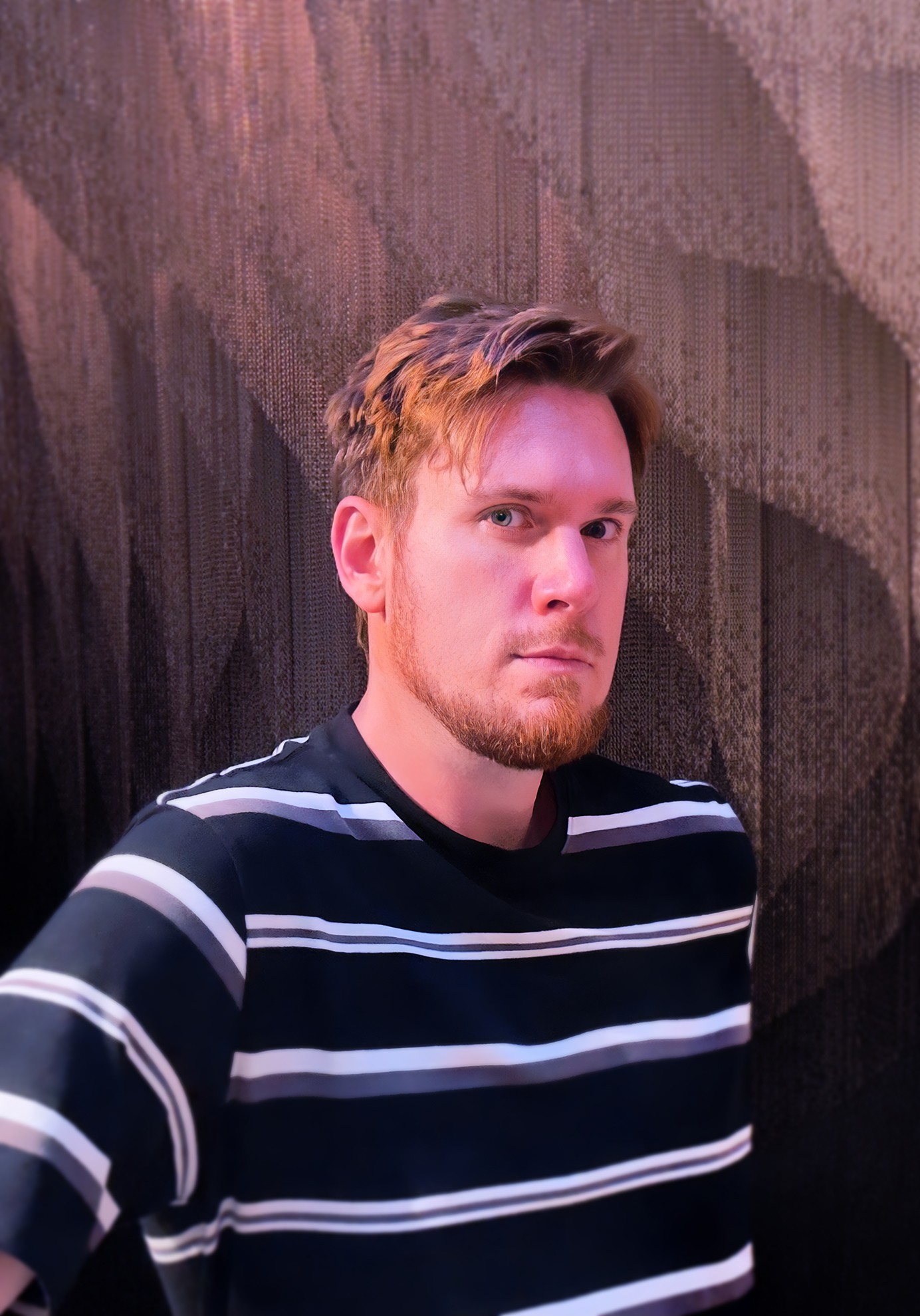
Today we’d like to introduce you to Ben Morey.
Hi Ben, thanks for joining us today. We’d love for you to start by introducing yourself.
To quickly define myself, I’d say that I am a multimedia artist first and a freelance graphic and web designer second, originally from and currently working in South Florida. After spending four formative years in Baltimore, where I received my BFA in Interactive Media from the Maryland Institute College of Art, followed by a brief relocation to Portland, Oregon, I honestly never imagined I would find myself living here again. And yet, over time, the undeniable slow-bloom of the South Florida art world made it increasingly difficult to leave. In the face of censorship and waning government arts funding, the scene continues to evolve into an expansive landscape of new galleries, museums, project spaces, and creative alliances that don’t always naturally galvanize in other parts of the country. While Florida has long been sold as a carefree tropical escape, it can also be an incredibly complicated and often contradictory place to exist as an artist working on the fringe. Luckily, adversity remains a necessary ingredient in the creation of anything meaningful or compelling and there is certainly no shortage of it down here to draw from!
Thinly veiled complaints aside, my first paying job in the arts came early on when I served as one of roughly fifteen student assistants to renowned Haitian artist Edouard Duval-Carrié during the creation of his permanent sculptural installation The Indigo Room for the lobby of the NSU Art Museum Fort Lauderdale. Shortly after, I left for Baltimore, where I eventually distilled and defined who I was and what my art was fundamentally about. I received my degree while exhibiting throughout Maryland before returning to South Florida. That initial high school experience had ultimately drawn me back into a position at the now-defunct NSU Art Museum Studio School, where I assisted with figure drawing and oil painting classes before landing my first full-time role as Studio Manager and Graphic Designer for Broward College’s North Campus Fine Arts Department.
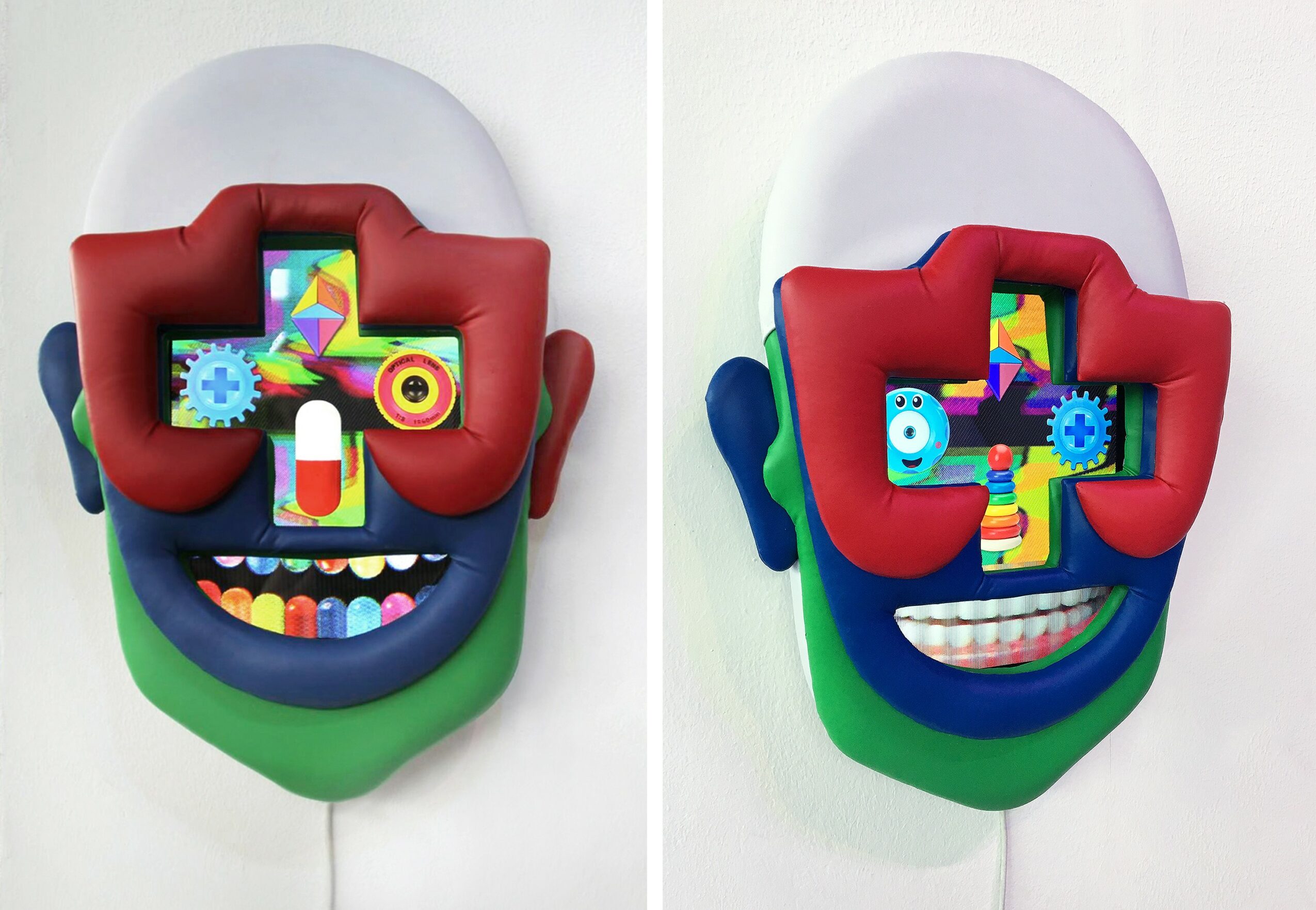
Over the next seven years, much of my personal energy became focused on curatorial projects throughout Fort Lauderdale alongside an acclaimed collective of artists and curators known as Bedlam Lorenz Assembly (or BLA). Together, we co-curated the exhibition Counting Backwards at Young At Art Museum. Around the same time, I was commissioned to create a large-scale, three-part interactive installation for the museum entitled FunVision, which later became integrated into its permanent collection. I continued collaborating closely with the institution across countless exhibitions and events while also designing the visual identities and branding for many of them. Eventually, I transitioned into the role of the museum’s Marketing Director. Spending several years in that position alongside an incredible network of artists, curators, educators, and fabricators permanently altered my understanding of what becomes possible when public and private support truly coalesces behind artistic endeavors larger than any one person.
At the same time, however, my own solo studio practice always remained a parallel obsession. In 2014, I was awarded the South Florida Cultural Consortium Fellowship, which led to the creation of an ongoing series of drawings entitled Anomalies, later exhibited at the Museum of Contemporary Art North Miami. Shortly afterward, I returned to creating sculptural digital interactives for Art Miami, as well as additional works for the final exhibitions held within YAA Museum’s previous building before the pandemic intervened. That period ultimately forced both the institution and myself to search for entirely new homes, though mine briefly became the Pacific Northwest. It was during this time that I felt compelled to reevaluate nearly every aspect of my existence and career in relation to what felt urgent and meaningful in the aftermath of such a profound global shift.
Eventually, I returned once again to Hollywood, Florida, where I established my own freelance design practice as an extension of the many years I had spent creating branding, campaigns, and visual identities for local arts organizations, artists and nonprofits whose work I believe in. That transition has allowed me to focus more intentionally on projects that excite me creatively while simultaneously recalibrating my own studio practice. It’s also given me the space to reconsider what exactly I want my work to say during such a disorienting and rapidly changing period of time.
I am currently acting as Creative Director for a forthcoming digital platform called portrt, which allows users to create interactive portraiture while exploring new forms of connection and digital storytelling. At the same time, I serve on the leadership committee of the recently founded South Broward Artist Collective (SOBRA), assisting in the organization of exhibitions and opportunities for artists throughout South Florida. Beyond these professional endeavors, my own work has begun moving toward new forms and tougher subjects after receiving a 2025 Broward Cultural Division Artist Support Grant and co-curating the exhibition Growing Portraits at Studio 1608 in West Palm Beach. You can see my work in several upcoming exhibitions throughout 2026 and 2027, several of which I will be assisting in organizing and curating.
We all face challenges, but looking back would you describe it as a relatively smooth road?
While there have been many periods where projects, opportunities and artistic revelations have felt strangely easy to come by, or even inevitable, none of these periods were ever without their challenges. My design career has always been a difficult balance of pursuing perpetual reinvention and fresh ideas while attempting to further define and maintain my personal voice and aesthetic language throughout, even when selling someone else’s vision. I’ve found that my design practice keeps me thinking critically and staving off stagnancy in personal work. Though, that pursuit of constant reinvention has sometimes been at odds with the long-game I enter when creating art as it often distracts me from the very time consuming projects I know I should hunker down and complete. Many times my instinct is to keep playing and experimenting with new things instead of taking serious time to sketch, draw and commit to fleshing out pieces that I urgently need to get out into the world. Unfortunately, many of my drawings, paintings and sculptures take so long to create that new, shiny projects pop up and get in the way, so I have a good amount of unfinished mock-ups and concepts waiting in the wings for my attention span to magically become laser-focused on them at some point.
Much of my work also draws from emotionally charged and traumatic experiences that I aim to deflate, sugar-coat and process throughout the act of creating it. Stepping back into some of those memories to make that work is never easy, though it eventually becomes extremely cathartic. I often envy artists who can let go and experiment, or work more on an intuitive level, without necessarily needing to tap into their internal wells of emotional experience to make what they do. But, I always come back to the fact that this obsessive need to use creation as a therapeutic outlet and a means of getting through difficult internal buildup is what gives my work meaning and makes it worth creating in the first place. Mental health and the infinite journey of maintaining it is at the center of my existence and my work. And, while I am in a comparatively amazing place, I have dealt with issues surrounding anxiety and depression since I was a child, all of which have informed and shown up in my work, many times as anthropomorphized characters that make them less intimidating and daunting to deal with on my own.
Aside from that, AI has recently presented many new, mind-bending creative possibilities while also somehow sucking the humanity out of the act of art-making. Its advent has been a confounding, double-edged sword in my artistic arsenal that both excites me and has me fearing some of its more apocalyptic potentials. While it’s made what is real and fake and what is human and “soulless” much harder to discern I’m attempting to stay positive about its applications for good in art and beyond.
Thanks – so what else should our readers know about your work and what you’re currently focused on?
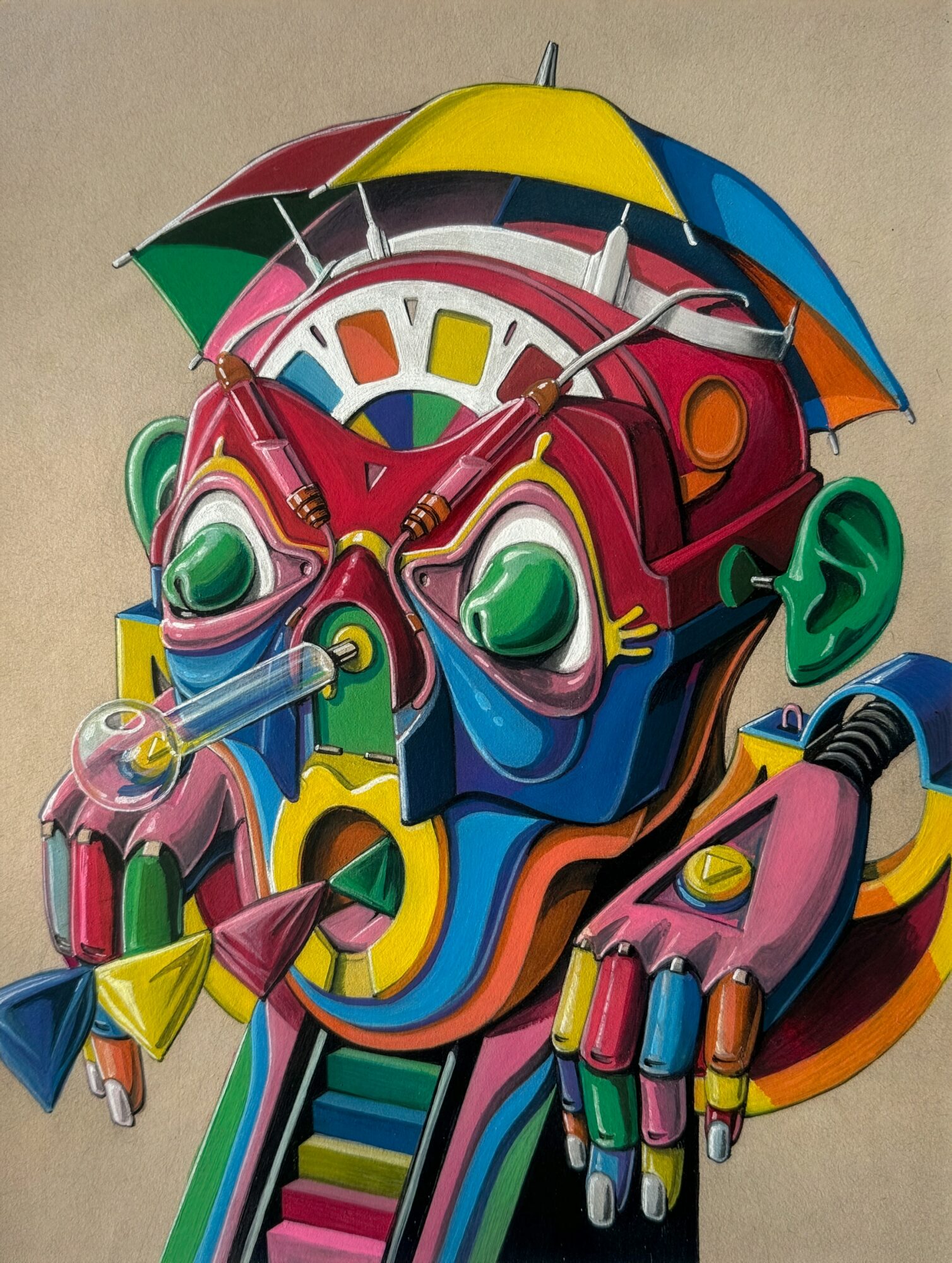
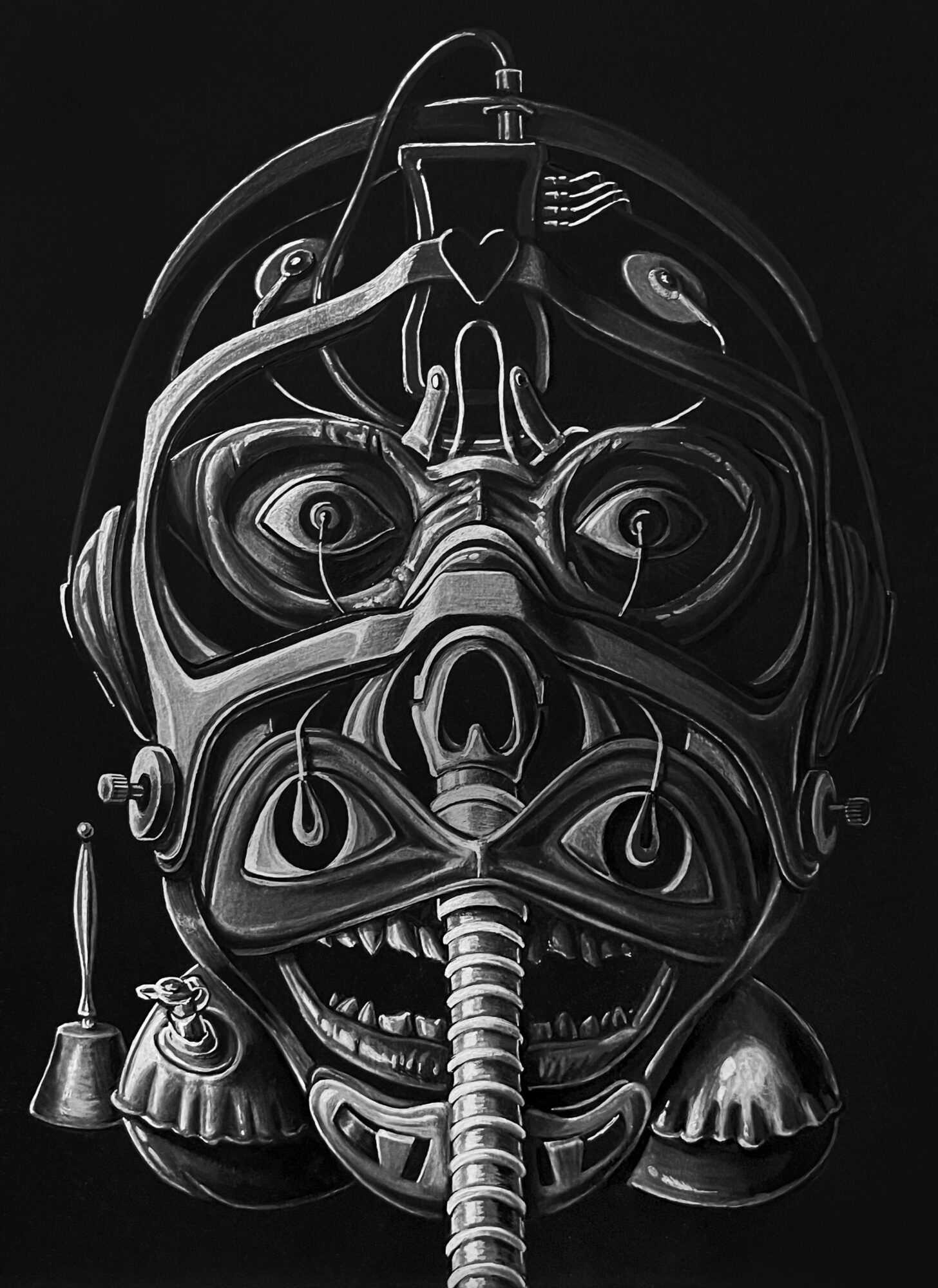
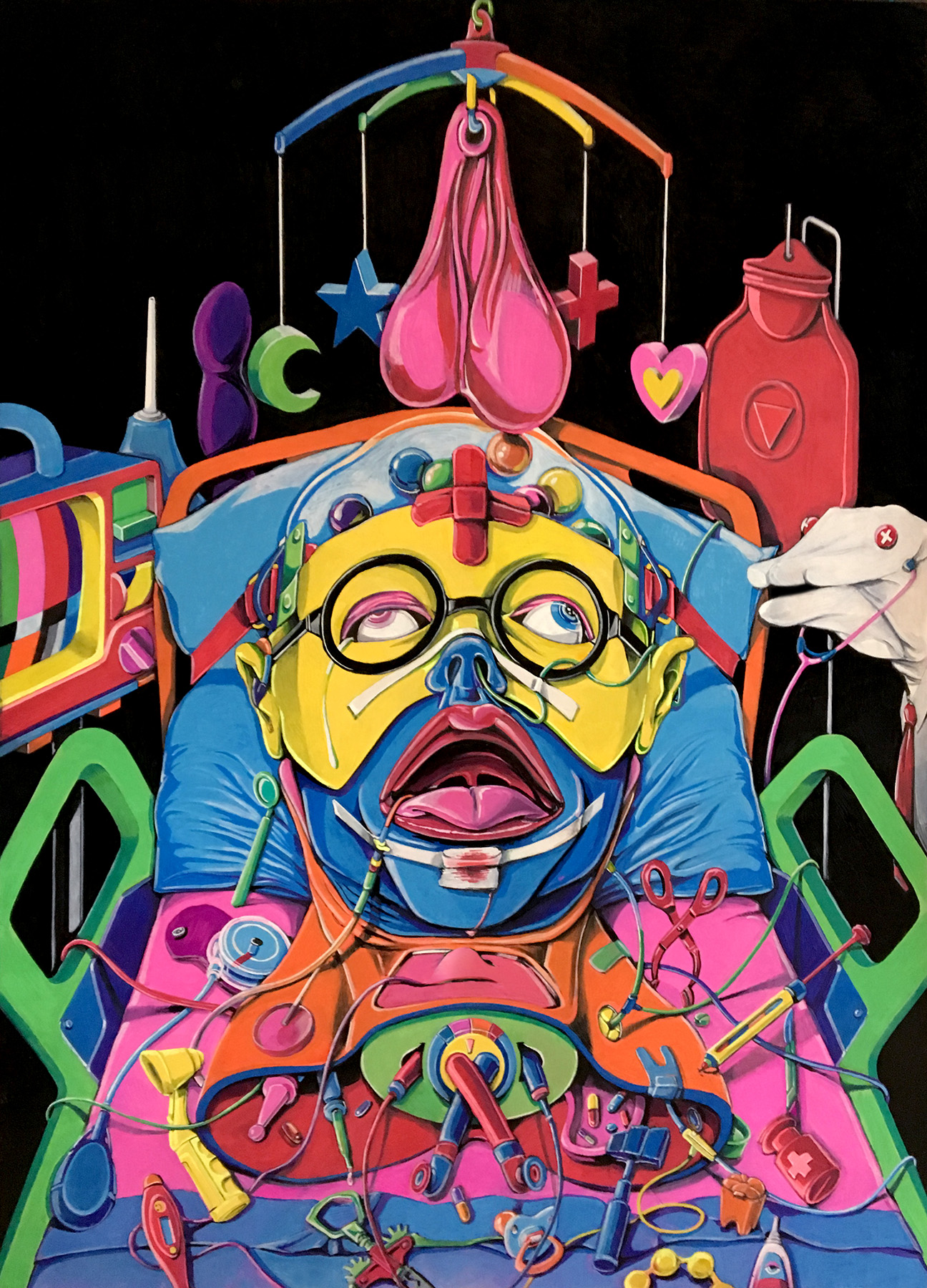
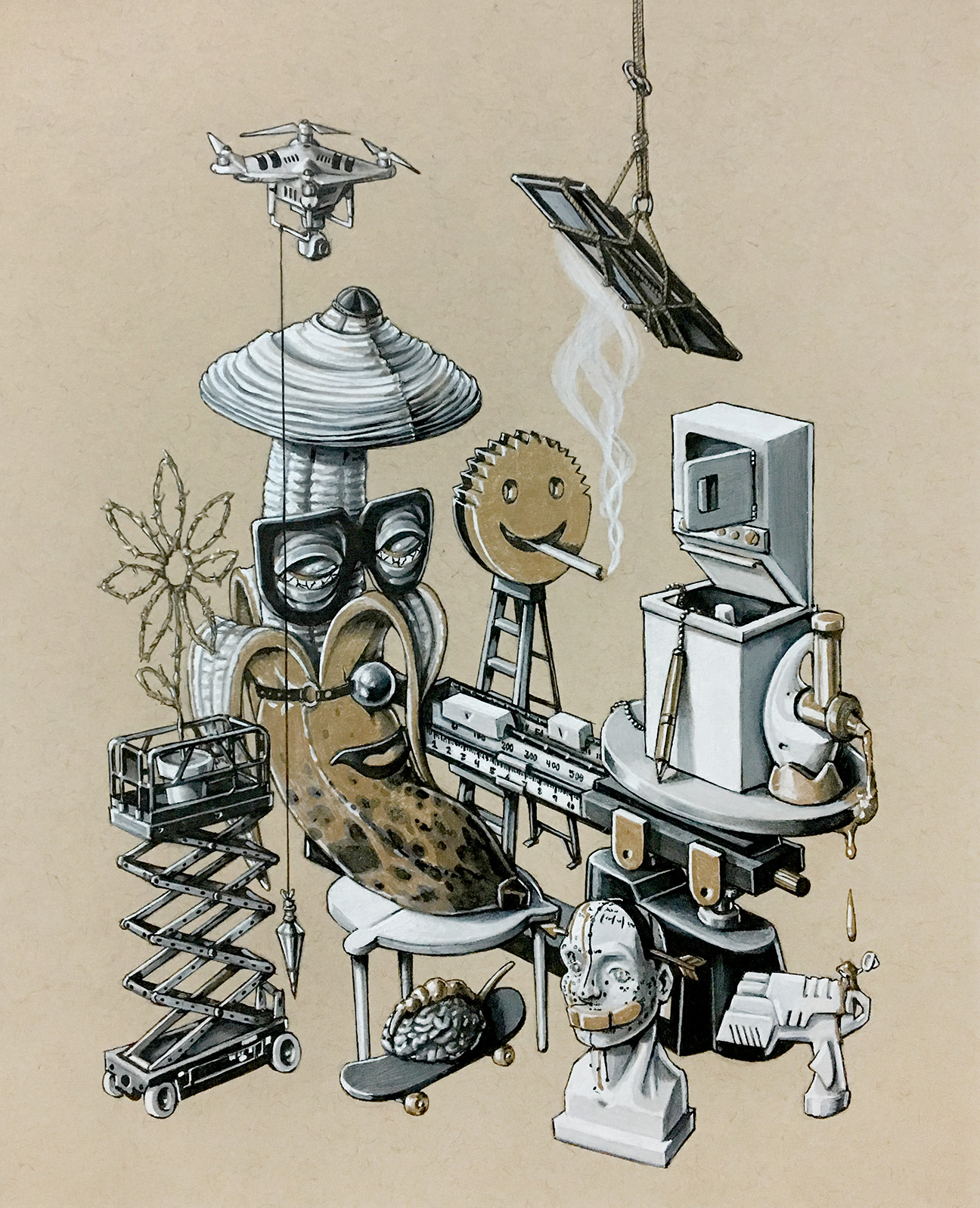
My work explores the ways we cope with difficult experiences and the often-blurry line between confronting trauma and escaping from it. Through drawings, paintings, sculptures, videos, and interactive installations, I try to create spaces that are playful and inviting on the surface but gradually reveal more complicated emotional undercurrents the longer someone spends with them.
The visual language of my work borrows heavily from soft-focus nostalgia, vintage game shows, children’s toys, and the harsh fluorescent glow of hospital rooms. These influences become a backdrop for exploring social anxiety, existential frustration, and the many ways we distract ourselves from discomfort. I often approach deeply personal and difficult subjects in a detached, almost clinical way, turning emotions or experiences into strange characters or objects that can be pulled apart, examined, and, hopefully, stripped of some of their power. I think of the process as playing both doctor and patient at the same time. Beneath the bright colors, playful imagery, and retro aesthetics is an attempt to make unsettling ideas feel approachable enough that people will stay with them.
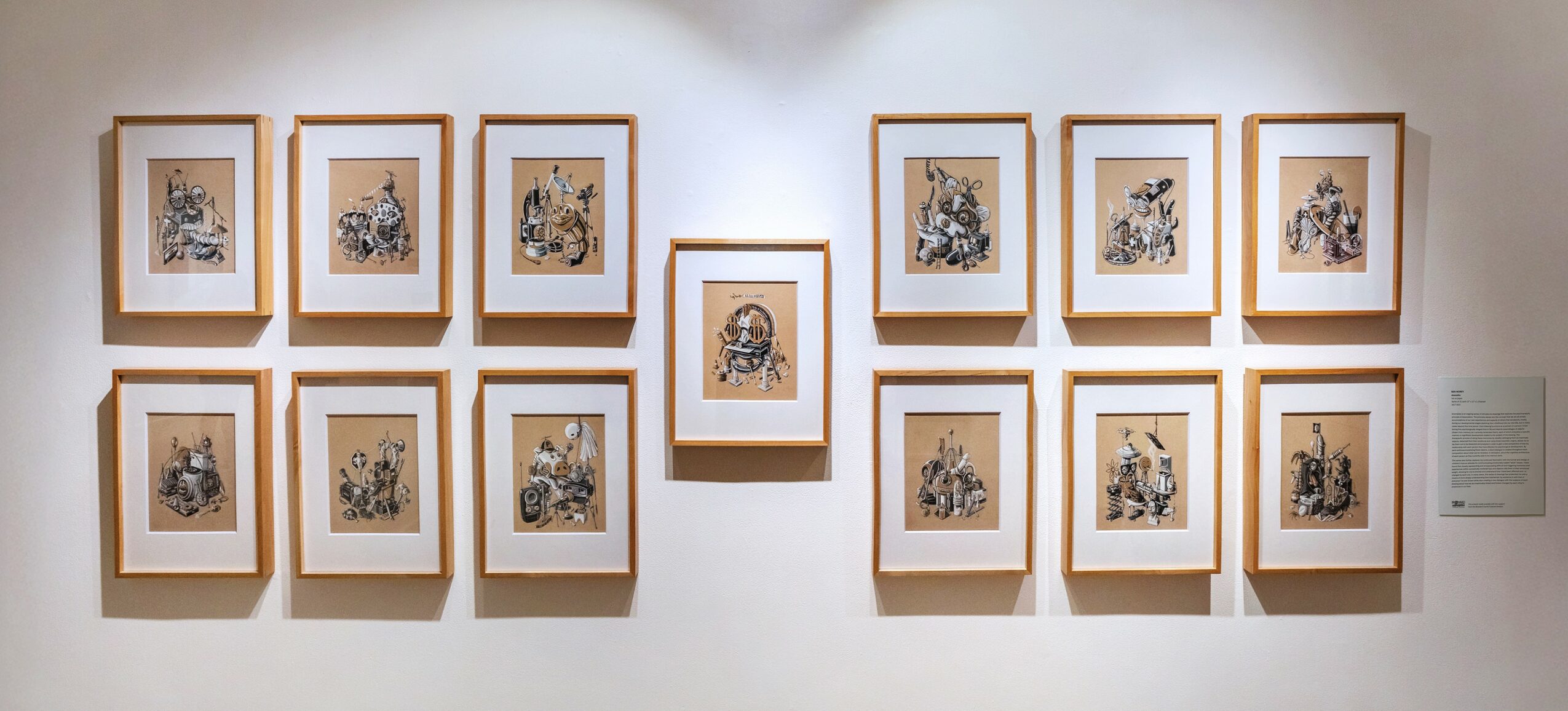
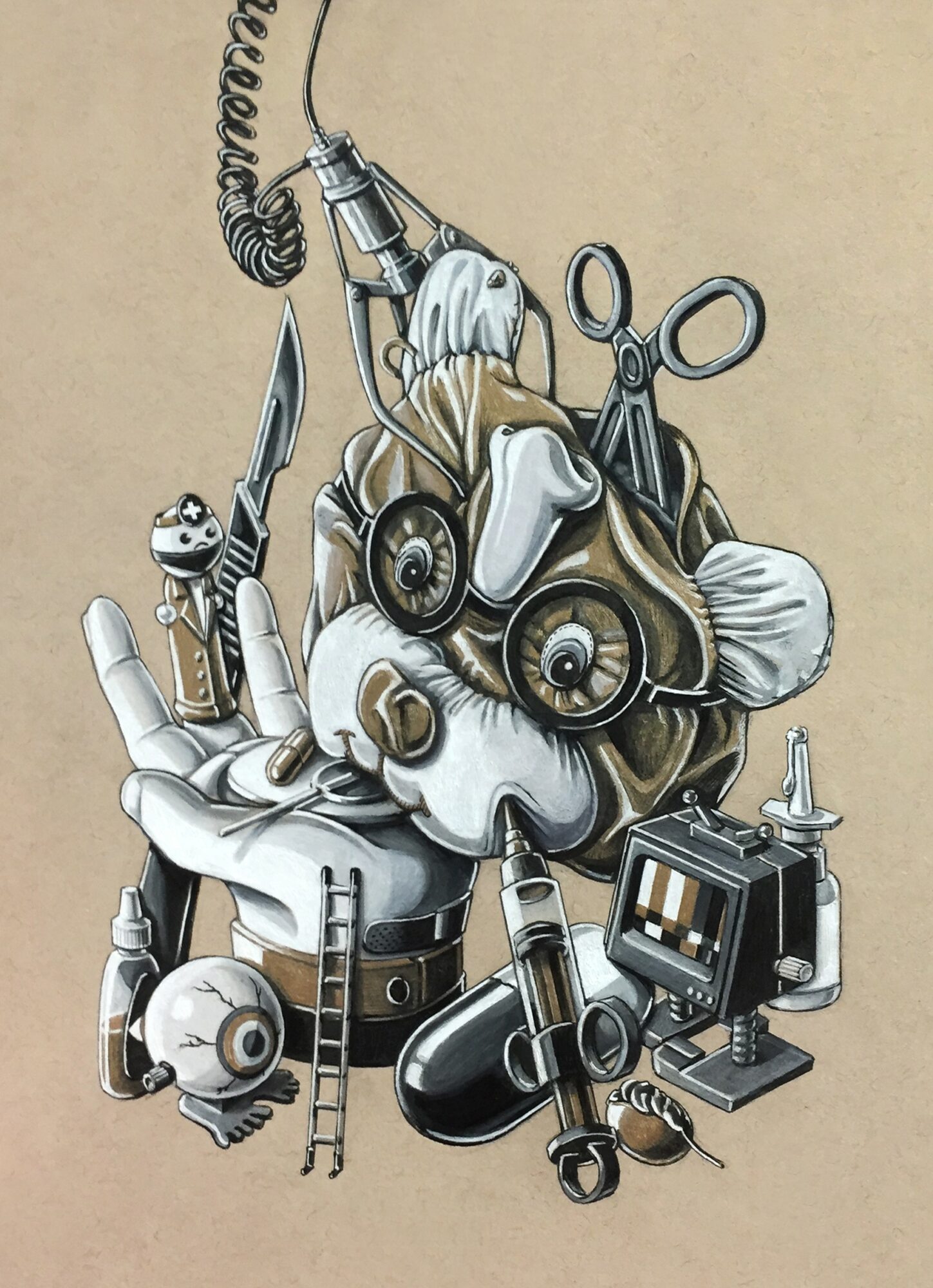
Much of my recent work has taken the form of intricate ink and oil drawings. I recently completed an ongoing series begun in 2016 entitled Anomalies, with support from a Broward Cultural Division grant, which was later exhibited in its entirety at the Coral Springs Museum of Art. The series grew out of the idea that we are, in many ways, accumulations of our past experiences, especially those formed during childhood and early adulthood. Each drawing functions as a portrait of someone who shaped that period of my life, constructed from an assemblage of objects tied to specific memories I associate with them. Creating the work became a way of laying those memories out in front of me, cataloguing and dissecting them to better understand how those relationships contributed to my own psychological development. In many ways, the drawings became less about the people themselves and more about the process of examining how memory shapes identity.
Are there any books, apps, podcasts or blogs that help you do your best?
I generally lean toward non-fiction that asks big questions or attempts to answer them. Sapiens: A Brief History of Humankind by Yuval Noah Harari is one of the books that has impacted me most over the years as it really helped me contextualize myself within the timeline of the human species and consider all the different formats and ways of living that have come before. Oftentimes we believe we are stuck within whatever system and social structure we are currently in, but to know about the infinite others that existed prior to our time lets me imagine and strive for better ways forward. Critical writers like Richard Dawkins and Christopher Hitchens also frequently inspire me with their ability to question everything we generally learn to accept as societally agreed upon “truth”.
When I delve into non-fiction (not often enough), I get lost in things like All Fours by Miranda July, which I’m currently reading. July is a multitalented writer and visual and performance artist who can somehow bring her impressive insight and ability to observe and absorb others into everything from beautifully written novels like No One Belongs Here More Than You to full-length films and collaborative performances with strangers all over the world.
As far as apps that have been working their way into my artistic practice, I often find myself experimenting with the Adobe’s AI image and video generator Firefly, despite a slight, fundamental distrust of AI. It’s proven to be a very powerful tool in helping to explore what abstract concepts might look like. The digital drawing app Procreate has also become a huge part of how I plan out and sketch my work. Many times, committing to colors in certain mediums is difficult for me, being red-green colorblind, and Procreate has also helped me choose color palettes with the ability to sample and define the exact colors I should use before putting them to paper.
Contact Info:
- Website: https://www.benmorey.com
- Instagram: @benmorxey
- Facebook: https://www.facebook.com/benmorey
- Soundcloud: https://www.soundcloud.com/modernmedicine