




Today we’d like to introduce you to PG Cuschieri.
PG, we appreciate you taking the time to share your story with us today. Where does your story begin?
I’m originally from Detroit, and I think that shaped me more than I understood at the time. Detroit gives you a certain education — in toughness, humor, failure, loyalty, work ethic, and grace. It’s a city where beauty and hardship live on the same block. That has probably been the backbone of most of what I write: flawed people trying to survive, trying to make sense of what they’ve lost, and trying to find some form of redemption.
I came to Los Angeles later in life to pursue writing and producing. I wasn’t some overnight discovery. I worked hard, knocked on doors, wrote constantly, and eventually caught a break with an established producer who helped me get my first studio opportunity. In 2002, I sold my first screenplay, 5150, to Columbia Pictures, and that changed the trajectory of my life. From there, I was able to build a career as a working writer across film, television, books, and audio.
Over the years, I’ve been fortunate to work on a wide range of projects. I wrote Cut Throat City, directed by RZA, with a cast that included Terrence Howard, Wesley Snipes, Ethan Hawke, Eiza González, and Shameik Moore. I co-wrote The Last Narc, a memoir about decorated DEA agent Hector Berrellez, which became a digital bestseller and was connected to the hit docuseries of the same name. I’ve also worked on action thrillers, literary adaptations, faith-based projects, historical dramas, and sports stories.
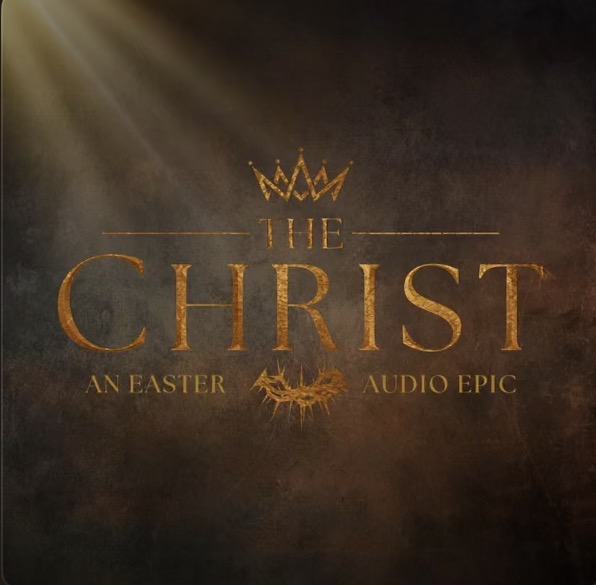
The audio space has become a major part of my creative life as well. I created and wrote series like The Undercovers, Westward, The League, and Shadowball: Rise of the Black Athlete. I also adapted Charles Dickens’ A Christmas Carol for Hope Media, which spent twelve weeks in the top 50 on Apple Podcasts and won several awards, including Christian News Broadcasters’ Podcast of the Year. More recently, I wrote and co-directed “The Christ” an epic audio series based on the gospels, featuring David Oyelowo, Paul Walter Hauser, and Tom Pelphrey.
What connects all of it, at least for me, is a fascination with people under pressure — men and women caught between who they were, what they’ve done, and who they might still become. I’m drawn to stories about justice, faith, survival, and redemption. Not in a preachy way. I’m more interested in grace with dirt under its fingernails.
The newest chapter of my life is Miami. The entertainment business has changed dramatically. Production is no longer centered only in Los Angeles or New York. Places like Georgia, Louisiana, and other regional markets have built real infrastructure, and I believe Miami has the talent, energy, culture, and cinematic identity to do the same. My producing partner Lee Caplin, who has been involved with projects like Pulp Fiction, Ali, and True Detective, relocated here and encouraged me to be part of building something in South Florida.
Since coming here, I’ve also begun teaching screenwriting at FIU, which has been far more rewarding than I expected. There’s real talent here — young writers and filmmakers with something to say. That’s exciting to me. Along with Lee and Miami-based producers Pablo Garcia and Thomas Fawell, we formed Miracle Mile Entertainment with the goal of developing elevated, inspiring film and television projects rooted in strong storytelling.
At this point in my career, I’m still chasing the same thing I was chasing when I left Detroit: a great story, honestly told. The difference is now I’d like to help build a place where the next generation of storytellers doesn’t feel like they have to leave home to tell one.
We all face challenges, but looking back would you describe it as a relatively smooth road?
I don’t know that there is such a thing as a smooth road in any meaningful creative journey. And I think the artist’s road is particularly bumpy.
Writing is solitary at first, but the business of writing is deeply collaborative. That’s both the blessing and the difficulty of it. You begin with a vision — something personal, private, fragile — and then you have to bring it into rooms full of other people: producers, directors, actors, executives, financiers, editors. Sometimes those people make the work better. Sometimes they pull it away from what made it special in the first place. Learning the difference is one of the great challenges of the profession.
There’s also the reality of making a living. Money is always part of the equation, whether artists like to admit that or not. You take jobs to support your family. You rewrite things that aren’t yours. You fight for projects that fall apart. You watch something you love get close, then disappear for reasons that have nothing to do with the quality of the work. That can be humbling.
And then, of course, life gets in the way. Family, loss, disappointment, responsibilities, mistakes — all the ordinary human things that don’t stop just because you’re trying to build a career.
But I’ve come to believe those struggles are not separate from the work. They become part of it. They deepen it. They teach you compassion. They teach you discipline. They teach you that talent matters, but endurance matters more.
So, no, it hasn’t been smooth. But I’m grateful for that. The hard road has made the victories sweeter, and it has made me a better writer. Hopefully, a better man too.
As you know, we’re big fans of Miracle Mile Entertainment. For our readers who might not be as familiar what can you tell them about the brand?
Miracle Mile Entertainment was created with a very clear purpose: to develop and produce elevated, inspiring film and television projects while helping build a real creative infrastructure here in Miami.
The name itself was intentional. Miracle Mile is one of Miami’s signature places — beautiful, historic, full of culture and movement — and it also says something about the kind of stories we want to tell. We’re interested in stories that leave people with something. Hope. Meaning. Courage. A sense that even in the darkest circumstances, redemption is still possible.
At our core, we want to be an artist-friendly company. That matters to us. So much of the entertainment business has become overly corporate, overly cautious, and overly driven by committees. We believe the best work usually comes from empowering writers, directors, actors, and producers to do what they do best. Of course, film and television are businesses. We understand that. But we don’t want the business side to become the soul of the company. Story has to remain the soul.
What sets us apart, I hope, is our taste and our intention. We’re not chasing volume. We’re not interested in making disposable content. We want to make projects with emotional weight, cinematic ambition, and moral imagination. That can mean a thriller, a sports drama, a historical story, a faith-based project, or a character-driven piece — but whatever the genre, the work has to aspire to something.
I’m proud that our brand is being built around a simple idea: great storytelling can still move people. It can entertain, absolutely. It should entertain. But it can also elevate. It can remind people of courage, sacrifice, love, justice, mercy, and grace.
Our north star is simple: we aspire to inspire. Not in a sentimental way. In a human way. We want to tell stories with grit, beauty, and hope — and we want to do it from Miami, with Miami, and for a much larger audience.
How do you think about luck?
That’s a really good question. I’m not sure I would call it luck exactly. In the entertainment business, it often feels more like fate — or grace, depending on the day.
This business can be maddening because there are so many talented people who never get the break they deserve. I’ve known writers, actors, directors, and producers with enormous gifts who simply didn’t catch the right moment, meet the right person, or have the right project land at the right time. That’s a humbling thing to witness.
I’ve certainly had breaks in my own career. I’d be foolish not to acknowledge that. Selling my first screenplay to Columbia Pictures changed my life. Meeting the right producers at the right time mattered. Having people take a chance on me mattered. But I also believe you have to be ready when those moments come. Fate may open a door, but you still have to have the pages in your hand.
At the end of the day, I think this business is like most difficult things. You set goals. You work as hard as you can. You try to get better. You treat people well. You keep showing up. And then you learn to make peace with the things you cannot control, because there are a lot of them.
That may be the hardest lesson. You can control the work. You can control your discipline, your attitude, your preparation, and how you treat collaborators. You cannot control timing, taste, market forces, executives changing jobs, companies changing direction, or whether a project that everyone loves actually gets made.
So has luck played a role? Absolutely. But I think endurance has played a larger one. And love for the work most of all. Because if you truly love the process — the writing, the rewriting, the collaboration, the pursuit of the story — then even the disappointments become part of the journey. Maybe not fun. I’m not that evolved. But meaningful.
In the end, I think what some people call luck, I’ve come to see as a combination of preparation, timing, mercy, and mystery. You do your part. Then you let go of the rest.