




Today we’d like to introduce you to Patrick DeCarlo.
Hi Patrick, can you start by introducing yourself? We’d love to learn more about how you got to where you are today?
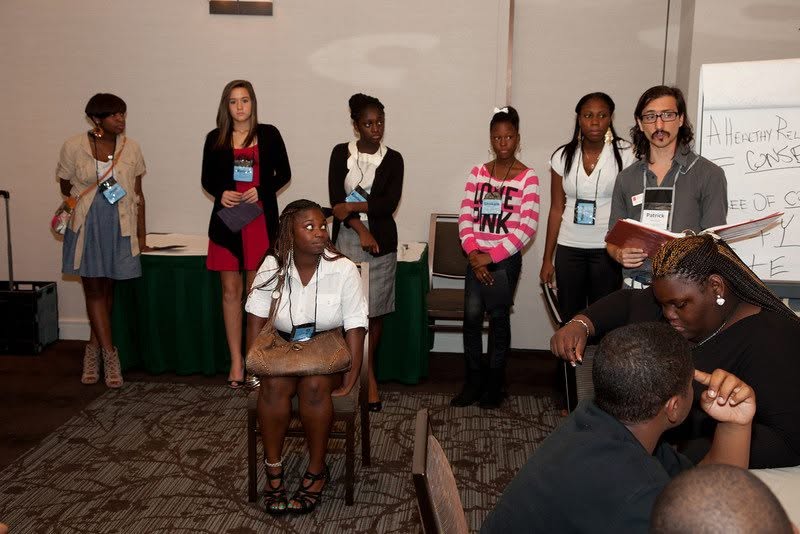
My path to becoming a Licensed Marriage and Family Therapist began with community organizing and advocacy. Before I was a therapist, I was knocking on doors in the cold rain of Seattle, sitting on thousands of couches and asking people a deceptively simple question: What would make your community better?
That experience shaped much of the therapist I eventually became. I learned that people need opportunities to tell their stories, particularly when their voices have historically been marginalized or ignored. I went on to organize economic empowerment campaigns in Detroit, Orlando, and Miami Gardens during the Great Recession. My work was rooted in the idea that our individual struggles cannot always be separated from the families, communities, economic circumstances, and social systems surrounding us.
When I transitioned into mental health, I brought that systemic perspective with me. I worked as a child advocate and head trainer with Women in Distress of Broward County, where I led a team of AmeriCorps members providing education and prevention programming around teen dating violence, domestic violence, and sexual violence.
I later entered the substance abuse treatment field, first serving members of the Seminole Tribe of Florida and eventually spending several years with United Recovery Project in South Florida, where I became Clinical Director. That period of my career gave me extensive experience working with addiction and co-occurring mental health concerns, including trauma and PTSD, Borderline Personality Disorder, Bipolar Disorder, anxiety, depression, emotional dysregulation, and other complex presentations.
I also had the privilege of providing pro bono services to military veterans through Mission United’s Collaborative Divorce Project. That work involved helping divorcing couples navigate coparenting disputes, parenting and time-sharing agreements, and other difficult family transitions.
All of those experiences ultimately led me to private practice as a Licensed Marriage and Family Therapist in South Florida. I earned my Master’s in Family Therapy from Nova Southeastern University and continued postgraduate training in areas including EMDR, hypnosis, mindfulness, and meditation.
Today, a major focus of my practice is couples therapy, particularly working with high-conflict couples who may be approaching separation or divorce because of infidelity, emotional volatility, communication breakdowns, recurring conflict, or complicated family dynamics. I also provide individual and family therapy and have remained committed to working with people whose needs can sometimes be difficult to place in traditional outpatient mental health settings.
That is particularly important to me. Throughout my career, I have been drawn toward people who can feel left behind by systems of care: people with severe or persistent mental health concerns, people diagnosed with Borderline Personality Disorder, people struggling with self-harming behaviors, couples whose relationships have become extremely volatile, and people whose identities, relationships, or lifestyles have sometimes been stigmatized. My practice is LGBTQIA+ affirming, sex-positive, kink-allied, and sex-worker allied. I believe access to respectful mental health care should extend to people whose lives may not fit neatly into conventional boxes.
There is another thread running through my work as well: creativity. Before becoming a therapist, I earned my bachelor’s degree in English and Creative Writing from the University of Central Florida, focusing primarily on poetry, and later briefly pursued an MFA in Chicago. My writing has appeared in poetry anthologies, literary journals, and magazines, and I have worked in music, photography, and performance art.
I think being an artist has made me a better therapist. Therapy requires imagination. People usually arrive knowing very well what is wrong; the harder task is imagining a life, relationship, or identity that does not yet exist. My clients and I try to think in terms of possibilities rather than limitations and then turn those possibilities into concrete changes.
Clinically, I draw from several approaches, including Bowen Family Systems Therapy, Narrative Therapy, Structural Family Therapy, Solution-Focused Brief Therapy, DBT-informed interventions, trauma-informed treatment, mindfulness, and other systemic approaches. Family systems thinking is especially important to me because symptoms rarely exist in isolation. Anxiety, depression, addiction, conflict, and emotional volatility often make more sense when we understand the relationships and systems in which they occur.
Faith and spirituality can also be part of that conversation when they are important to the client. I am Catholic and have written about the intersection of Christian contemplative prayer and mindfulness, but my clinical work is grounded in curiosity and respect for people across religious traditions as well as those without a religious faith.
Looking back, my career may seem to have moved through several different worlds—community organizing, domestic violence prevention, addiction treatment, family therapy, collaborative divorce, art, spirituality, and private practice—but to me they are connected by the same question I was asking people in their living rooms years ago: What would you like your life and your community to look like, and what would have to change to get there?
That is essentially still what I do today as a therapist. The setting has changed, but the work is still about helping people understand the systems and patterns that have shaped their lives, recognize that those patterns are not necessarily permanent, and begin creating a preferred future.
We all face challenges, but looking back would you describe it as a relatively smooth road?
It definitely has not been a smooth road, although many of the challenges in my professional career have come from larger economic and social forces that affected not only me, but also the communities and people I was trying to serve.
I’m a millennial who graduated from college at the precipice of the Great Recession. Unemployment was high, budgets were being slashed, and getting a foot in the door often meant accepting jobs that were vastly understaffed and underpaid. Early in my career as a community organizer and advocate, there were always more problems to solve than there were people, money, or resources available to solve them.
In retrospect, that environment became one of my greatest professional teachers.
My career also began alongside the rise of Web 2.0 and social media. Suddenly, we had communication tools that organizations and community systems were only beginning to understand. Out of necessity, I learned how to leverage those emerging technologies to identify grant funding, organize people around common goals, connect organizations that often did not know what the others were doing, and help communities discover resources that were already available to them.
I would love to say that this came from some innate entrepreneurial genius, but the truth is much less glamorous: budgets were slim and the circumstances forced me to become elastic and creative.
There is truth to the saying that necessity is the mother of invention. Being professionally forged during the Great Recession taught me lessons that I still carry into my work as a Licensed Marriage and Family Therapist and private practice owner in South Florida. I learned to be adaptive. I learned not to assume that the first solution is the only solution. Most importantly, I learned that difficult problems are usually better addressed when you bring more people to the table.
Someone has an idea. Someone has encountered the problem before. Someone has already solved part of it. Or someone knows the person who can help get it done.
That philosophy translates naturally into family systems therapy. Whether I am working with a high-conflict couple, an individual struggling with their mental health, or a family in crisis, I am rarely interested only in what is happening inside one person. I want to understand the larger system: the relationships, family history, work environment, community, culture, resources, strengths, and obstacles surrounding them.
It has also shaped how I approach running a mental health private practice. The world continues to change quickly, particularly as technology transforms how people communicate, form relationships, find information, and access mental health care. The specific challenges are different from the ones I encountered during the Great Recession, but the lesson remains the same: be curious, be creative, collaborate whenever possible, and be willing to adapt.
Some of the most difficult periods of my career ultimately taught me that limitations do not necessarily dictate possibilities. Sometimes they simply force us to become more imaginative about what is possible.
Appreciate you sharing that. What should we know about Patrick M. DeCarlo Psychotherapeutic Services?
I am a Licensed Marriage and Family Therapist in South Florida specializing in couples therapy, family therapy, and individual psychotherapy. I am particularly known for working with high-conflict couples—often couples approaching separation or divorce—who are struggling with infidelity, toxic communication patterns, emotional volatility, recurring arguments, family conflict, substance abuse, or other problems that have brought their relationship to a breaking point.
I am comfortable working with relationships that have become complicated. Sometimes that means helping people who still love one another but have developed extraordinarily destructive ways of communicating. Sometimes it means working through betrayal or infidelity. Other couples bring disagreements about gender roles, parenting, sex, money, extended family, or power within the relationship. In some cases, there may also be histories of aggression or violence that require careful assessment and attention to safety.
One thing that makes my practice somewhat unusual is that I am a man in a profession largely made up of women, and perhaps more unusually, I identify as a feminist family therapist. I am very interested in power: who possesses it, how it operates within relationships and families, and how unequal power can contribute to both problems and potential solutions.
When I work with families, I pay particular attention to the person with the least power and the smallest voice. Very often, that is a child. Children are extraordinarily sensitive to the emotional systems surrounding them but have very little control over those systems. One of my responsibilities as a family therapist is making sure their experience does not disappear beneath the conflict between adults.
Accessibility is another important part of how I have designed my private practice. I offer a sliding scale to every client, and my approach to it is unusual: clients can choose their rate without submitting financial documents or proving their income to me. They can also change that rate if their circumstances change.
People are sometimes surprised when I explain this during a consultation. My philosophy is that clients understand their finances better than I do. I trust them to balance what they believe our work is worth with what is realistically sustainable for their family. We live in a world of economic booms and busts, and individual families experience their own versions of those cycles. I don’t want someone to have to abandon meaningful therapeutic work simply because their financial circumstances temporarily changed.
Another area that distinguishes my practice is my experience with addiction and substance abuse. Before entering private practice, I spent years working in substance abuse treatment and eventually served as a Clinical Director. That experience gave me an understanding of addiction that is difficult to acquire solely through coursework.
Addiction has its own language, patterns, defenses, family dynamics, and rhythms. When you have spent enough time around it, you understand how thoroughly alcohol or drugs can reorganize someone’s priorities and relationships. It can almost appear to possess a person—someone a family recognizes physically while simultaneously wondering what happened to the person they knew. Treating the individual without understanding addiction can therefore mean missing a major part of what is happening, and treating a couple or family without understanding how addiction affects the entire family system can be equally limiting.
More broadly, I have tried to create a psychotherapy practice where complicated people and complicated relationships are welcome. In addition to couples counseling and addiction-related work, I have experience treating trauma and PTSD, Borderline Personality Disorder, anxiety, depression, emotional dysregulation, and other co-occurring mental health concerns. My practice is LGBTQIA+ affirming, sex-positive, kink-allied, and sex-worker allied.
I am probably most proud that my brand has developed around curiosity rather than judgment. You do not have to arrive at therapy with a tidy story, a conventional relationship, or a problem that fits neatly into a diagnostic box. You can arrive with the mess.
My job is to help us understand the system surrounding that mess: the patterns that keep repeating, the relationships and experiences that shaped them, the power dynamics that sustain them, and the strengths that already exist within the person, couple, or family.
From there, we can start figuring out what a different future might actually look like.
So, before we go, how can our readers or others connect or collaborate with you? How can they support you?
The easiest way is to call or text me at (954) 547-8982 or email me at pdecarlo@gmail.com. I have a website where you can learn more about me: www.patrickmdecarlo.com.
Pricing:
- Sliding scale fee between 125-250.
Contact Info:
- Website: https://www.patrickmdecarlo.com