





Today we’d like to introduce you to Isaac Diabagate.
Hi Isaac, we’re thrilled to have a chance to learn your story today. So, before we get into specifics, maybe you can briefly walk us through how you got to where you are today?
I think the honest version of my story is that I’ve spent my career with the thought: “I get paid to learn.”
I didn’t start in tech. I started in laboratories in St. Louis and Maryland — doing transfections, making buffer solutions, running DNA sequencing. Bench work. And pretty quickly I realized it wasn’t for me. So I reskilled. I leaned on a tech foundation I’d accidentally acquired and used that software knowledge as a bridge into a completely different career — and from there, every new opportunity took me to a new state and a new industry. Nebraska for AI work before AI was the standard. Austin, then Houston — banking, then ecommerce. Then biotech, which was the last stop before Miami.
Every one of those moves was the same pattern. Walk into an industry I didn’t fully understand, get thrown into the fire, wear a bunch of hats I had no business wearing, and figure it out. That’s startup life — that’s most of the work I’ve taken on — and over time I stopped seeing it as something to be survived and started seeing it as the actual job. The technical work was always the medium. The real work was learning new domains and taking past experience and figuring out how to apply it, quickly and efficiently. Driving the car as you build it, they say.
What I didn’t realize at the time was that I was building the only skill that actually compounds: the ability to identify patterns and solve problems. Most real-world problems don’t live cleanly inside one domain. The interesting ones sit at the intersection of two or three — but every problem stems from a core pattern. A good healthcare product is a healthcare problem and a behavior problem and a data problem. A good marketplace is a tech problem and an economics problem and a trust problem. If you only know one of those things, you can’t see the whole problem, let alone solve it.
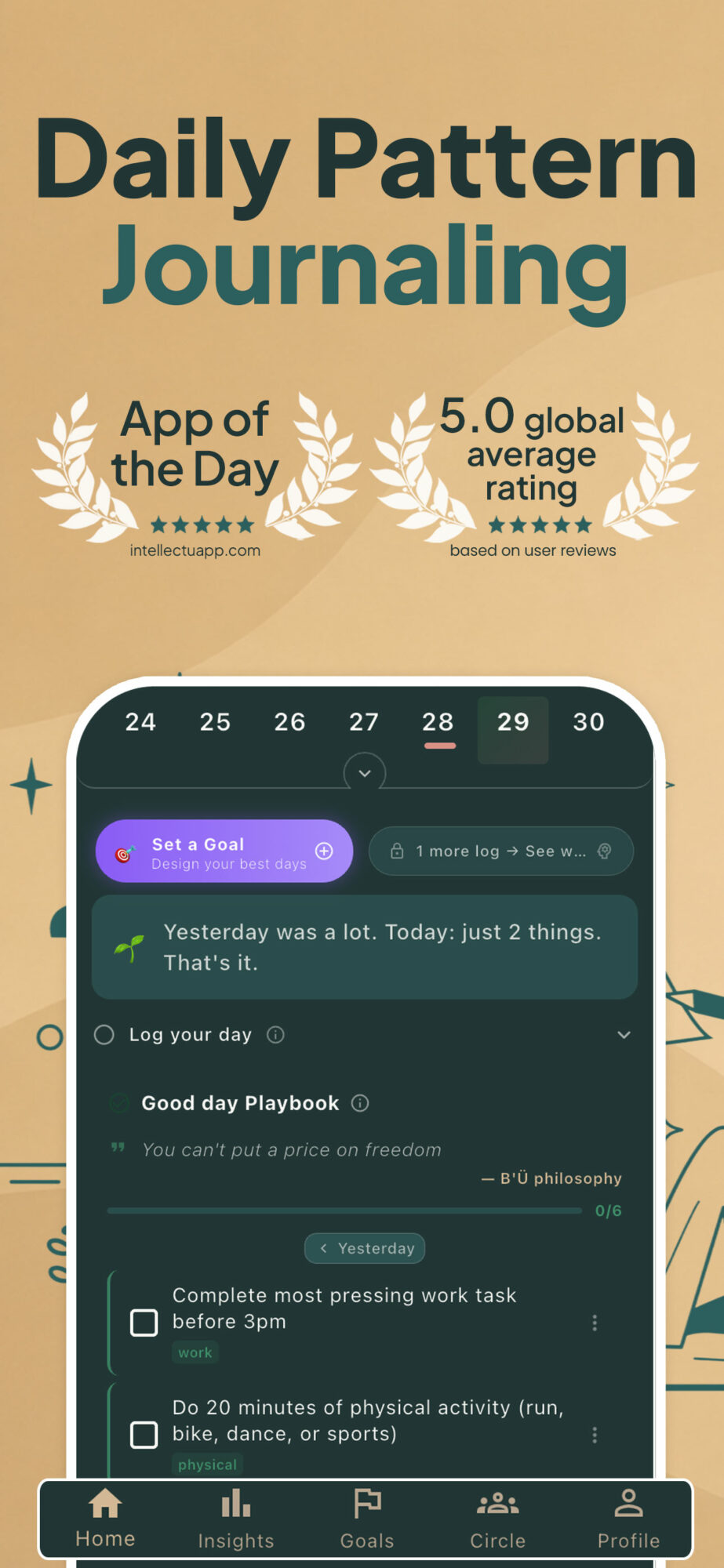
That mindset is what’s given me the opportunity to take on problems across a lot of different projects. I wear many hats depending who you ask — founder, CTO, owner, operator, investor — and every new project has been its own crash course. Flash Tickets, a ticket resale marketplace, was a crash course in marketplace dynamics. B’Ü, a goal-tracking app, was a crash course in consumer subscriptions and behavioral design. PadelMatch, a padel matchmaking app, taught me community-driven growth. Brisa, a nail salon in Wynwood, has been a crash course in operations, labor, and physical-world unit economics — none of which I had any business knowing before I started.
Honestly, that’s all running a business really is — being willing to work across fields you’re not familiar with so the thing you’re building can actually grow. Most founders bottleneck the moment the work crosses a line they’re not comfortable with. The only way around it is to get comfortable being uncomfortable, fast.
That accumulation is what Amplifye exists to leverage. Amplifye is my AI and software consultancy, and the portfolio of work behind it is what makes it possible to walk into almost any problem and bring an idea to life — because between the industries I’ve worked across and the projects I’ve helped build, I’ve usually seen some version of the problem before. The tooling matters, but the pattern recognition is what actually moves the work forward.
None of this was planned cleanly. I’ve started things I later killed, taken on partners I later parted from, and spent real time on ventures that didn’t pan out. But that’s the cost of working this way, and it’s worth it. At the end of all of it, I think of myself pretty simply: I’m a problem solver, and technology is just the hammer and nail I use to do the work.
We all face challenges, but looking back would you describe it as a relatively smooth road?
No. And I’ve stopped expecting it to be.
I had to move to my mom’s basement early on because I couldn’t afford school and rent — and for about a year, it was just work and school, nothing else. After that, the work itself meant moving every six to twelve months. New city, new job, new everything. It’s rattling the first few times. Eventually it taught me that it’s okay to start over — which turned out to be one of the more useful skills I’ve picked up.
I’ve been laid off from what I thought was a great job, right after telling everyone how great the company was. That happened to coincide with owning an investment property mid-renovation, a mortgage, and no income. I’ve had investments go nowhere. I’ve built apps that a much larger competitor copied overnight and made instantly worthless.
None of that resolved into a clean lesson. The honest version is that this kind of work doesn’t get smoother — you just get better at moving through it. The cost of working across this many things, in this many places, is that something is always going sideways. I’ve made peace with that being the job.
Great, so let’s talk business. Can you tell our readers more about what you do and what you think sets you apart from others?
The business is Amplifye — an AI and software consultancy based in Miami. The short version of what we do is: we take an idea and build it. The longer version is what actually sets us apart.
Most dev shops will build whatever you hand them. We won’t. Before we write a line of code, the conversation I want to have with a client is: do you actually have the right idea? Because I’ve spent the last decade and a half working across industries — AI, banking, ecommerce, biotech, marketplaces, consumer apps, local service businesses — and one of the few real edges that comes from that is being able to look at someone’s industry and tell them what’s already happened in three or four adjacent ones. Trends that haven’t reached your space yet, but will. Patterns that worked somewhere else that nobody in your industry has tried. If you’re going to spend six figures building something, the strategic conversation should come before the build, not after.
That’s the part most agencies can’t do. They know their lane. We’ve been forced to learn a lot of lanes — between the products I’ve built, the companies I’ve operated, and the clients we’ve delivered for — and that breadth is what shows up in every engagement. You’re not just hiring a team to write code. You’re hiring someone who’s seen some version of your problem before.
The actual delivery side is built around speed. We use modern AI tooling end-to-end and a tight, senior development team, which means we ship production software in a fraction of the time and cost of a traditional agency. That’s not a marketing claim — it’s the model. It’s how the math works.
What I’m most proud of, honestly, is that the work holds up. Clients come back. Projects ship on time. The thing we deliver is what we said we’d deliver, which sounds basic but is rare in this space. If a reader takes one thing away, it’s that Amplifye is what you hire when you have an idea, a budget, and a real desire to build something that works — and you want someone who’s going to push back on the parts that don’t make sense before they cost you money.
Do you have any advice for those just starting out?
Make as many mistakes as fast as you can. Mistakes are inevitable, but the faster you learn from them, the faster you get to the good part.
Don’t be afraid to put yourself in unfamiliar environments. You’d be surprised where your first client comes from — it’s almost always unexpected. Opportunity dances with those already on the dance floor. You have to be in the game to be playing, so don’t be afraid to be seen trying.
And share your skillset with the world. How else are the people looking for you going to find you?
Contact Info:
- Website: https://amplifye.tech/
- Instagram: https://www.instagram.com/isaac.malaxhi
- Other: https://www.instagram.com/amplifye