





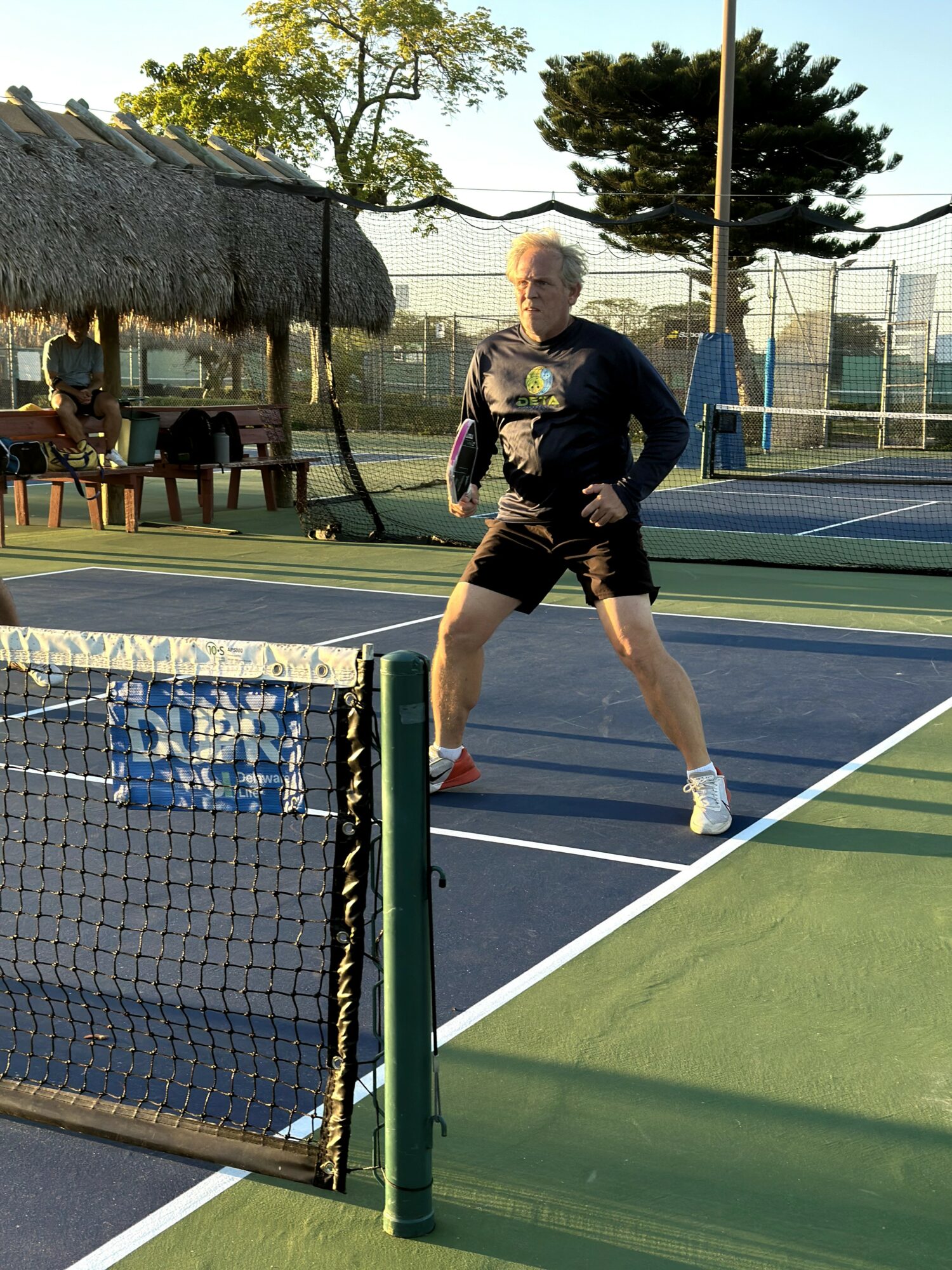
Today we’d like to introduce you to Juan Pardi
Hi Juan, we’re thrilled to have a chance to learn your story today. So, before we get into specifics, maybe you can briefly walk us through how you got to where you are today?
I was born in Venezuela, in a very hot city called Maracaibo. I started playing tennis when I was between four and five years old, at a private club with instructors. I was playing more recreational tennis than anything else.
At the same time, I played soccer with the school team and I was doing quite well. However, I sometimes had scheduling conflicts, so I decided to dedicate myself to tennis.
It was a pretty good career. At the age of 12, I became a regional tennis champion three times in the same year. At the age of 14, I participated in the national championships and became a national champion in the 14-year-old singles category.
Then I played many tournaments, representing the country several times. During that entire tennis journey, I met several fundamental instructors for me, including some others who were not instructors directly at the time, but who later became coaches.
I can name Glenn Carruyo, I can name José Ferreira. And obviously, David Ensignia was also one of the coaches with whom we traveled and who dedicated himself to us. After that, in 1985, I lived at the Nick Bollettieri Tennis Academy for a year and a half.
I was training there, and it was my home base from which I went to play some semi-professional tournaments. I played a couple of Challengers, but we were really trying to build a career there at the academy. Eventually, I returned to Venezuela and went to study at the university.
The university was in Caracas, Venezuela. At the same time, I played first-level tennis there, and basically, that’s what happened. In 2007, I left Venezuela for reasons that many people know: political reasons, and reasons related to the country’s situation, more than just politics.
I got my first job here working with a player called Pablo Arraya from Argentina who ranked 29th in the world in 1984. It was the first time I had a paid position coaching tennis. I went on to coach at John McEnroe Tennis Academy in New York and Jimy Szymanski Tennis Academy on Miami Beach.
After that, I had several other roles related to my university career. Finally, I met David Ensignia at the David Ensignia Tennis Academy, 50 years after we first met, and that’s when he asked me to take care of the largest pickleball complex in Miami, which is DETA Pickleball Club.
Alright, so let’s dig a little deeper into the story – has it been an easy path overall and if not, what were the challenges you’ve had to overcome?
The great reality is that the path for a professional tennis player, or any elite player, is not an easy one. Many of us see what’s on TV, but we don’t see all the work that goes on behind the scenes.
Personally, I’ve slept on buses, I’ve slept in cars, I’ve stayed in very bad hotels, practically just trying to earn enough to keep playing professional tennis. It’s a career that gives a lot of satisfaction, but at the same time, it’s very demanding, let’s put it that way. Even the coaches see the efforts we make to stay in good shape, to eat well, so that we can have a good result.
Those who are hungry, those who have almost no money, are the ones who get quite far. They probably have an additional motivation, which is the motivation to help their families or to have a better life. It’s very difficult to be up high, then look down, and then fall.
It’s very complicated because you get used to a very pleasant life, and then you go on tour and it’s not going well, and you’d rather quit. On the other hand, the one who is down, who has to fight every day, to work very hard, as he starts to see the results of all that work, he begins to realize that life is different and that life can change. The best thing about this, and the great satisfaction, is that sports gives you friends and family in this environment.
We all know each other, we all know where we are, we all know what we’re doing, we all know what we’re fighting for, and we practically always lend each other a hand so that everything goes better for us. Pickleball, for me, has been incredible; it has been a blessing. I’m no longer on a tennis court, at least not like before. I’ll probably play tennis a couple of times a month. It’s more social than anything else.
I have a very good story: when I went to a national tournament for the first time, I was a substitute for the state team where I played. Going as a substitute, I was going as the fourth player, and there were only three, but the fourth player was there as a replacement. I ended up having to play because a player got injured, and I lost in the first round of the national tournament. I made up my mind then that next year, I was going to go not as a substitute but as a starting team player, and that I was at least going to win the tournament.
And it turned out that way. I set a goal, and the following year I was national champion, playing with the enthusiasm and the desire I had. I worked very hard that year, I had the best coaches, I had the best training, there was everything, but really, it’s a path that sometimes you think is hard, but it gives you a lot of satisfaction.
As you know, we’re big fans of you and your work. For our readers who might not be as familiar what can you tell them about what you do?
Regarding my professional life, aside from tennis, I studied engineering at the Andrés Bello Catholic University in Caracas. After that, I studied administration at the Metropolitan University. I was always involved with the tennis teams at both universities.
Before that, I even played tennis for a team from a university I wasn’t actually enrolled in, which was the University of Zulia, and I did that when I was only 16. I was, you could say, a substitute since I trained at the University of Zulia. But basically, that’s what I studied during my university years.
What I’m most proud of is my career in tennis and now my role at DETA Pickleball Club. Racquet sports are my passion.
Before we go, is there anything else you can share with us?
The last thing I want to share is something pretty good. I’m lucky to have friends—real friends—who have come a long way in tennis. I hope to have them in pickleball too.
I think I’m one of the few who has friends, two friends in fact, who have played on the grass at Wimbledon in the juniors’ tournament. One won, and the other lost the final. But the truth is, both were junior world champions.
And that was obviously many years ago, in the 80s and 90s. This shows the satisfaction and everything that tennis brings. Being the head coach of the DETA Pickleball Club, in collaboration with DETA, David Ensignia Tennis Academy, I’m always trying to find ways to help tennis.
We managed to pay tribute to Jimy Szymanski and Nicolas Pereira by DETA this past December before DETA International Tournaments. After many years, they’re finally getting recognized as the great players they were.
So, later in life, and after so many years, we meet again because of DETA. We were able to honor two great players. One now works for the Tennis Channel, and the other teaches tennis on Miami Beach. That’s the life of a tennis player and the sport we’re in. It’s a family life where we’re all connected.
Pickleball is the same. I see so many similarities with pickleball. It’s almost the perfect comparison.
Today I coach pickleball players, relying on my experience as a tennis player. While elements are obviously different – scoring, court size and of course, paddles instead of racquets – both involve a strong net game, an emphasis on your forehand, backhand, and serve. There’s a focus on placement of your shot, anticipating your opponent’s moves and integrating spin to enhance your game.
What I love about pickleball is its broad appeal. People who have never picked up a racquet or paddle of any kind before are completely hooked by the sport. They can’t get enough. It’s exciting to see and be a part of the growth of the sport.
And as a competitive tennis player, I didn’t play in the US Open. But I’m getting a shot at going to the US Open Pickleball Championships with the DETA in April. It’s incredible. It’s something I never expected and would never have happened had it not been for pickleball. Just when you think your career as an athlete is over, it picks up again.
Pricing:
- DETA Pickleball Club Membership – Free
- Court Reservations: $10 to $15 an hour. (Price is for the use of the court. We don’t charge per person)
- Free Open Play, Tuesday and Thursday mornings for adults over 50
- DUPR Match Play (7 Days a Week) $15
- Events range in price. Download CourtReseve for details.
Contact Info:
- Website: https://detapickleballclub.com/
- Instagram: https://www.instagram.com/detapickleballclub/
- Facebook: https://www.facebook.com/people/DETA-Pickleball-Club/61562611730505/
- LinkedIn: https://www.linkedin.com/company/deta-pickleball-club
- Youtube: https://www.youtube.com/@DETAClub
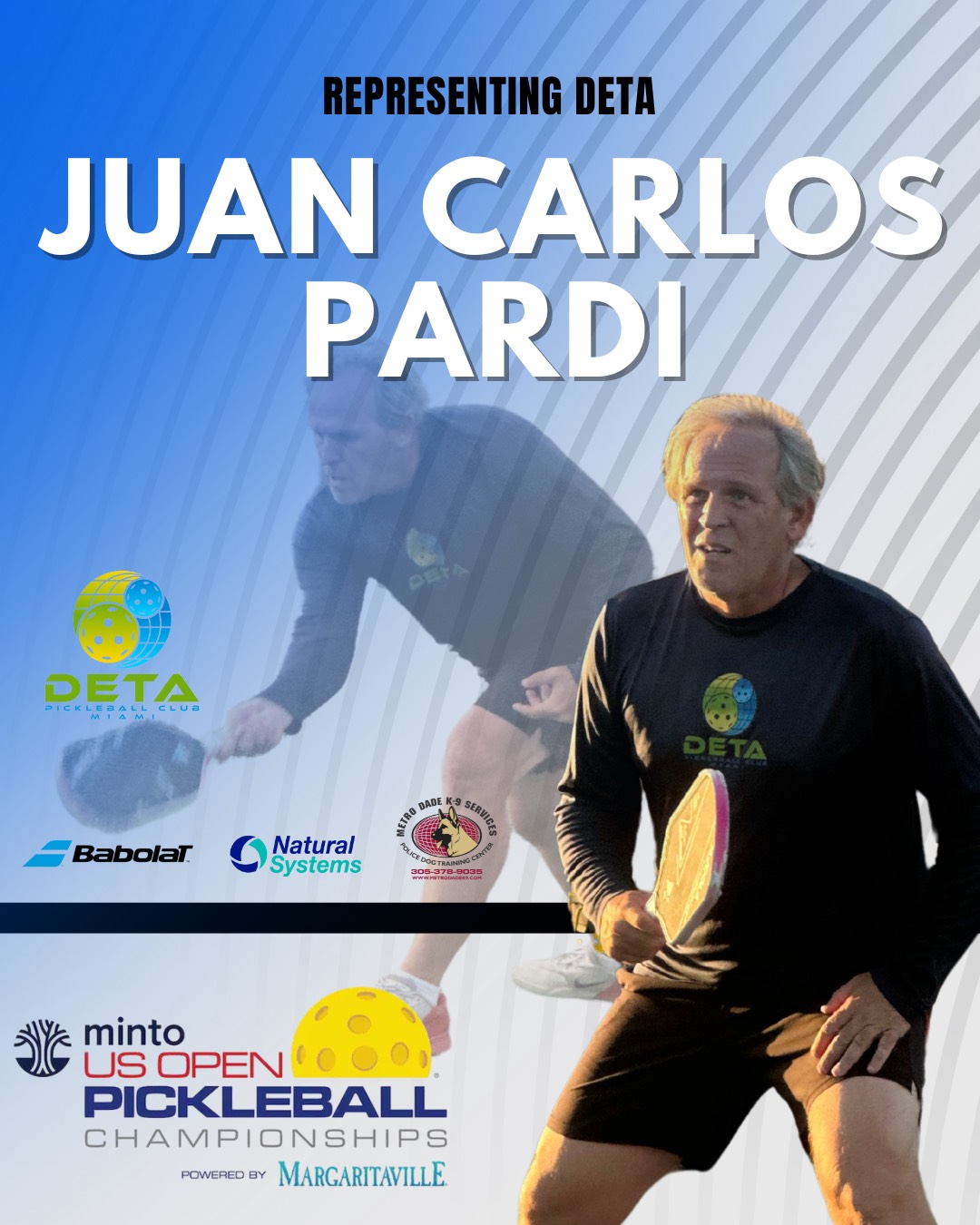
Image Credits
DETA Pickleball Club