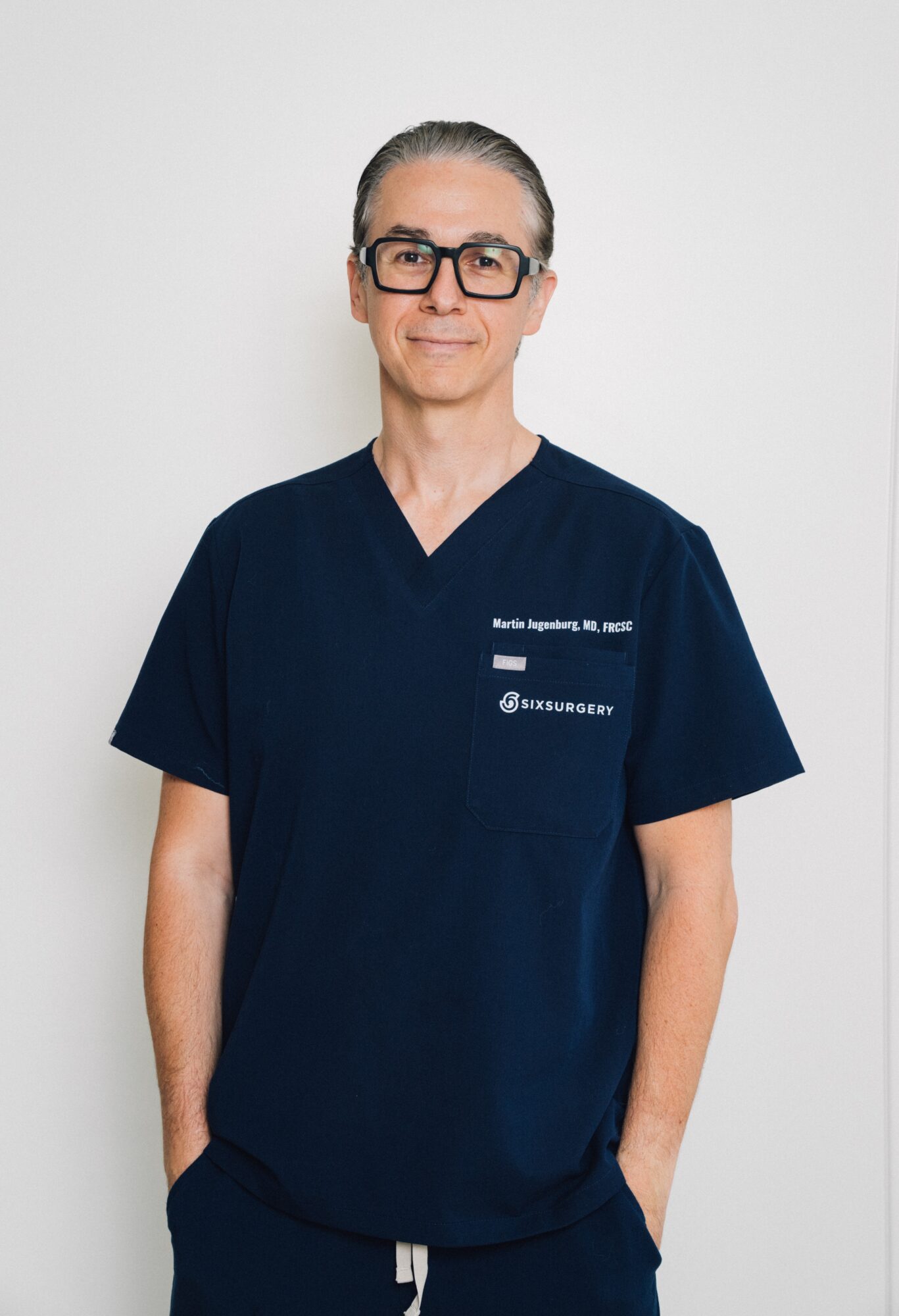





Today we’d like to introduce you to Martin Jugenburg.
Alright, so thank you so much for sharing your story and insight with our readers. To kick things off, can you tell us a bit about how you got started?
I was born in Czechoslovakia, in what is now Slovakia. In 1989, when I was thirteen, my family came to Canada as refugees. We arrived with almost nothing and no guarantee that any of it would work out. Those early years were hard. They taught me that hard work and resilience can take you further than your circumstances suggest, and they taught me what it feels like to start over.
My father was a plastic surgeon. He treated people with deformities from trauma and cancer, often at the worst moments of their lives. I watched him give those patients back not only form and function, but some sense of who they were. That is why I became a plastic surgeon. I wanted to do what he did.
I studied molecular genetics and molecular biology at the University of Toronto, then medicine. I completed a five-year residency in plastic and reconstructive surgery at the University of Manitoba, then went to New York for a fellowship at Memorial Sloan Kettering Cancer Center, training in microsurgery for cancer reconstruction. I was following my father’s path. That same year, I also spent time with highly experienced aesthetic surgeons, including at Manhattan Eye, Ear and Throat Hospital, not realising how much that would matter.
When I came home to Toronto, I joined the staff at University Health Network, Mount Sinai and Humber River, expecting a career in reconstructive microsurgery. Then reality set in. In a publicly funded system, operating time is scarce, and I was given one day a week.
That left me with a choice about the other four. I used them to build a cosmetic surgery practice.
I did not expect how much it would suit me. The surgical skills were the same, but the conversation was different. These patients were not recovering from something that had happened to them; they were choosing something for themselves. Helping someone feel at home in their own body turned out to be enormously satisfying. That practice became the Toronto Cosmetic Surgery Institute, today a team of plastic surgeons, anaesthesiologists and specialized nurses in downtown Toronto.
A few beliefs have guided me.
The first is safety. A patient trusts me with their life, and I do not take that lightly. We are strict about who is a good candidate, and I will tell someone no when surgery is not the right answer for them, even when it is not what they want to hear. Much of my research now focuses on safety, and I teach what we have learned to other surgeons internationally. To me, rigorous safety is what makes it responsible to innovate.
The second is a refusal to do things a certain way just because that is how they have always been done. That curiosity led to approaches such as our PowerBoost breast augmentation, small-incision techniques and awake facelifts.
The third surprised even me: social media. In 2016, I started showing people what plastic surgery really involves, first on Snapchat and then on Instagram and YouTube as “Dr. 6ix,” a nod to Toronto’s nickname. I wanted people to see past the polished before-and-after photos to the real procedure, the real recovery, and the limits and risks. People who understand what they are choosing make better decisions, and in my view informed consent begins long before anyone walks into my office.
Patients began travelling to us from around the world, and we followed them, first to Dubai and then to Kuwait. I am now licensed in Ontario, Dubai, Kuwait and Florida, and Miami feels like the natural next chapter. It also feels like coming full circle: Miami was one of the places I considered at the very start of my career.
After more than twenty years and tens of thousands of procedures, the reason I do this has not changed since I watched my father operate. I still remember being a thirteen-year-old in a new country with very little. I know how much it matters to feel confident in yourself, and how much of that can come from feeling comfortable in your own skin. If I can help someone get there, safely and with honest expectations, that is the work I want to keep doing.
We all face challenges, but looking back would you describe it as a relatively smooth road?
No, and I am not sure any road worth taking is.
The first struggle was arriving in Canada. At thirteen, you are old enough to understand what you have left behind and young enough to feel every bit of it. My parents had to rebuild their lives from the ground up, and I had to find my place in a new school and a new culture. There was no shortcut. You keep showing up, you work harder than the people around you, and slowly the new place becomes home. That experience taught me to live with uncertainty, and I have relied on that ever since.
The second struggle was letting go of the career I had trained for. I had spent years preparing to be a reconstructive microsurgeon, following my father, and I loved that work. When I was given one operating day a week, it felt like a door closing. Cosmetic surgery was not part of the plan, and at first, moving into it felt like giving something up. I had to make peace with that and decide for myself what kind of surgeon I wanted to be. In the end, I found that the skills, the discipline and the standards were exactly the same. Only the patients’ reasons for being there were different.
The third, and probably the steepest learning curve, was building a private clinic. Medical school teaches you anatomy, physiology and surgery. It does not teach you how to sign a lease, hire a team, run payroll, negotiate with suppliers or read a balance sheet. I had no business or finance background at all, so in the early years I was flying by the seat of my pants. I made plenty of mistakes, and I learned from every one of them. I learned to ask questions, to surround myself with people who knew what I did not, and to run the business with the same discipline I bring to the operating room: look at the data, find what is not working, and fix it.
Running our own surgical facility added another layer. An operating room outside a hospital has to meet the same standards of safety, staffing and equipment as one inside it, and as the owner you are responsible for every piece of it. That responsibility can feel heavy, but it is also what allowed us to build the safety culture I care about most.
Looking back, each of these struggles taught me something I still use. Starting over in a new country taught me resilience. Leaving reconstructive surgery taught me to adapt. Building a business from scratch taught me humility, and taught me that nothing is impossible if you are willing to keep learning.
Alright, so let’s switch gears a bit and talk business. What should we know?
SixSurgery is a plastic surgery practice serving patients in Fort Lauderdale and Miami. We perform cosmetic surgery of the breast, body and face, including procedures specifically tailored to men, as well as a range of non-surgical treatments. We operate out of a freestanding surgical facility, allowing patients to receive their care from one team, in one place, from their initial consultation through surgery and recovery.
Patients most commonly come to us for body contouring procedures such as Brazilian butt lifts, tummy tucks and mommy makeovers, as well as breast surgery, including augmentation, lifts and reductions. Over the years, our approach to body contouring has evolved towards shape rather than size: creating and defining natural curves rather than simply adding volume. I think that reflects what patients are looking for today, and I am glad to see that shift.
What sets us apart is less about any single procedure and more about our philosophy and the way we work.
Safety comes first, and it starts long before anyone meets me. Every patient goes through a pre-screening process, and we have firm criteria, including BMI limits, to determine who is an appropriate surgical candidate. If surgery is not the right answer, we say so and help the patient find a better path. Behind this approach is an experienced team of plastic surgeons, anaesthesiologists, operating room nurses and recovery nurses. Much of my research focuses on cosmetic surgery safety, and I now share what we have learned by teaching our protocols to other surgeons.
Innovation is the second part of our philosophy. I have never accepted that something should be done a certain way simply because that is how it has always been done. That mindset has led to innovations such as our PowerBoost breast augmentation, small-incision surgical techniques and awake facelifts. Increasingly, I perform procedures with patients awake, using local anaesthesia and carefully managed sedation where appropriate, rather than routinely relying on general anaesthesia. Throughout, patient comfort and safety remain central to the approach.
The third is transparency. The Dr. 6ix brand began as a way to show people what plastic surgery actually looks like: the operating room, the recovery, the swelling and even the days that are harder than expected. That is the part of the brand I am proudest of. Over the years, a large community has followed our work, and many patients arrive having already watched the procedure they are considering. They ask better questions and come in with more realistic expectations. To me, that is what informed consent should look like.
That openness is also what took us international. Patients began travelling to us from around the world, and eventually we followed them: first to Dubai, then to Kuwait, and now to Miami, where I am licensed to practise in Florida.
What I want your readers to understand is simple: plastic surgery is real surgery. It deserves a surgeon who will be honest with you, a team that puts your safety first, and the information you need to make a decision that is right for you. That is the philosophy we have built our practice around in Toronto, and it is the same philosophy we bring to Miami.
Are there any books, apps, podcasts or blogs that help you do your best?
One book that has influenced me a great deal is Walter Isaacson’s biography of Steve Jobs. I read it as a surgeon running a business I had never been trained to run, and much of it applied directly to my world.
Two ideas stayed with me. The first is that you start with the person you are serving and work backwards from there. For Jobs, that was the customer. For me, it is the patient. Whenever I make a decision at the clinic, whether it is a new technique, a new piece of equipment or a change to how we follow up after surgery, the question is the same: is this right for the patient? If the answer is yes, we find a way to make it work.
The second is a lesson Jobs learned from his father: a good craftsman finishes the back of a cabinet as carefully as the front, even though no one will ever see it. Surgery is full of cabinet backs. Much of what shapes a patient’s outcome happens where nobody is looking: the deeper layers of closure beneath the skin, the sterilization records, the pre-screening call, the plan for the patient who phones at two in the morning. Patients will never see most of that work, but they will feel the result of it.
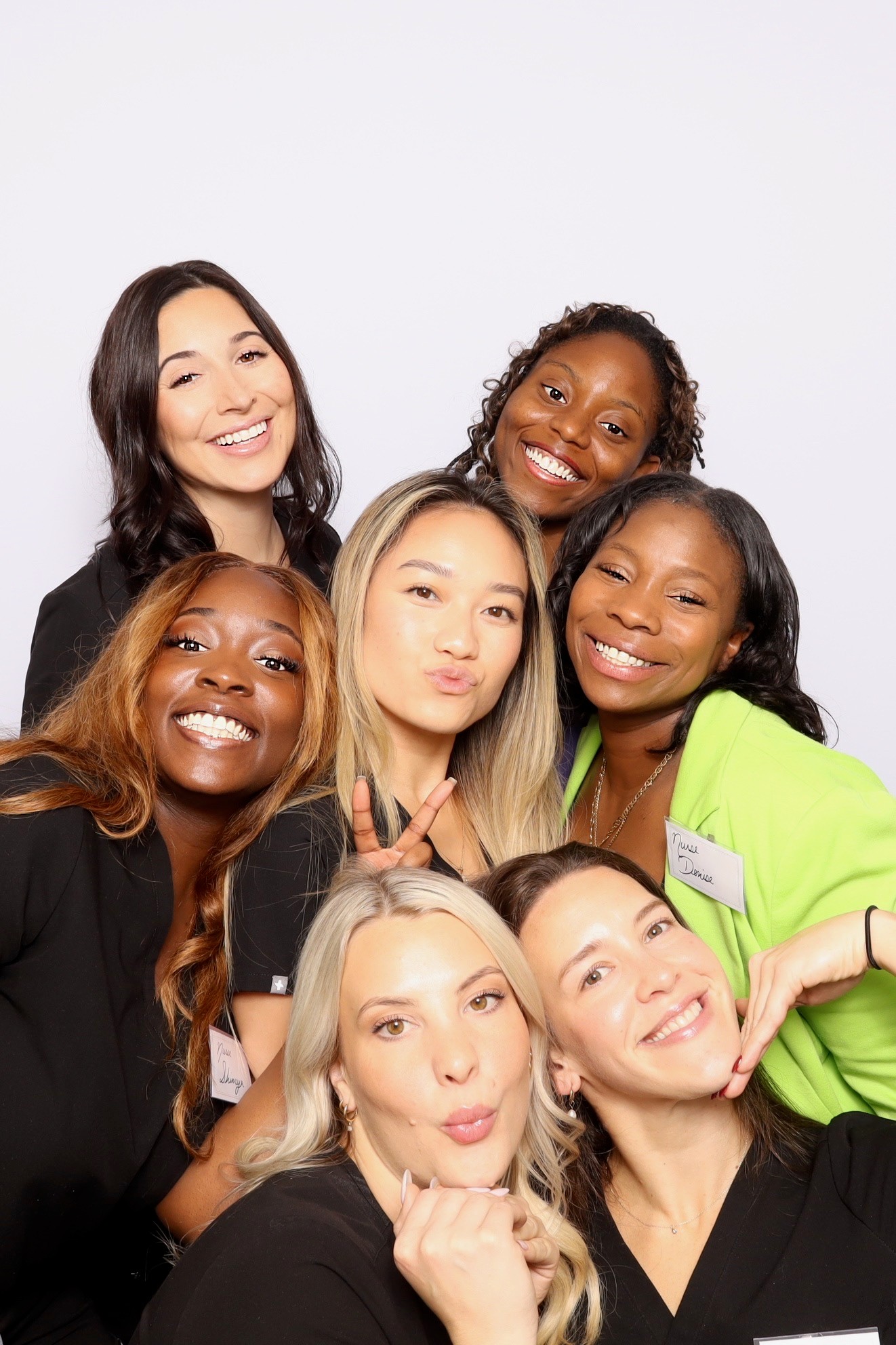
The other person whose philosophy has shaped the way I run the practice is Sir Richard Branson, the founder of Virgin. His view is that if you take care of your staff, they will take care of your customers. In a surgical practice, I think that may be even more true. A patient’s experience depends on the person who answers the phone, the nurse who sits with them in recovery and the coordinator who checks in the next day. When those people feel valued, supported and trusted, patients notice immediately. So I have tried to build a workplace where people want to stay, because I believe the best care comes from a team that knows each other well and believes in what it is doing.
Between the two of them, the lesson is simple: look after your patients, look after your people, and do the work properly even when no one is watching.
Contact Info:
- Website: https://dr6ix.com
- Instagram: https://www.instagram.com/realdrsix/
- LinkedIn: https://www.linkedin.com/in/drmartinjugenburg/
- Youtube: https://www.youtube.com/@sixsurgery
- Other: https://www.sixsurgery.com