



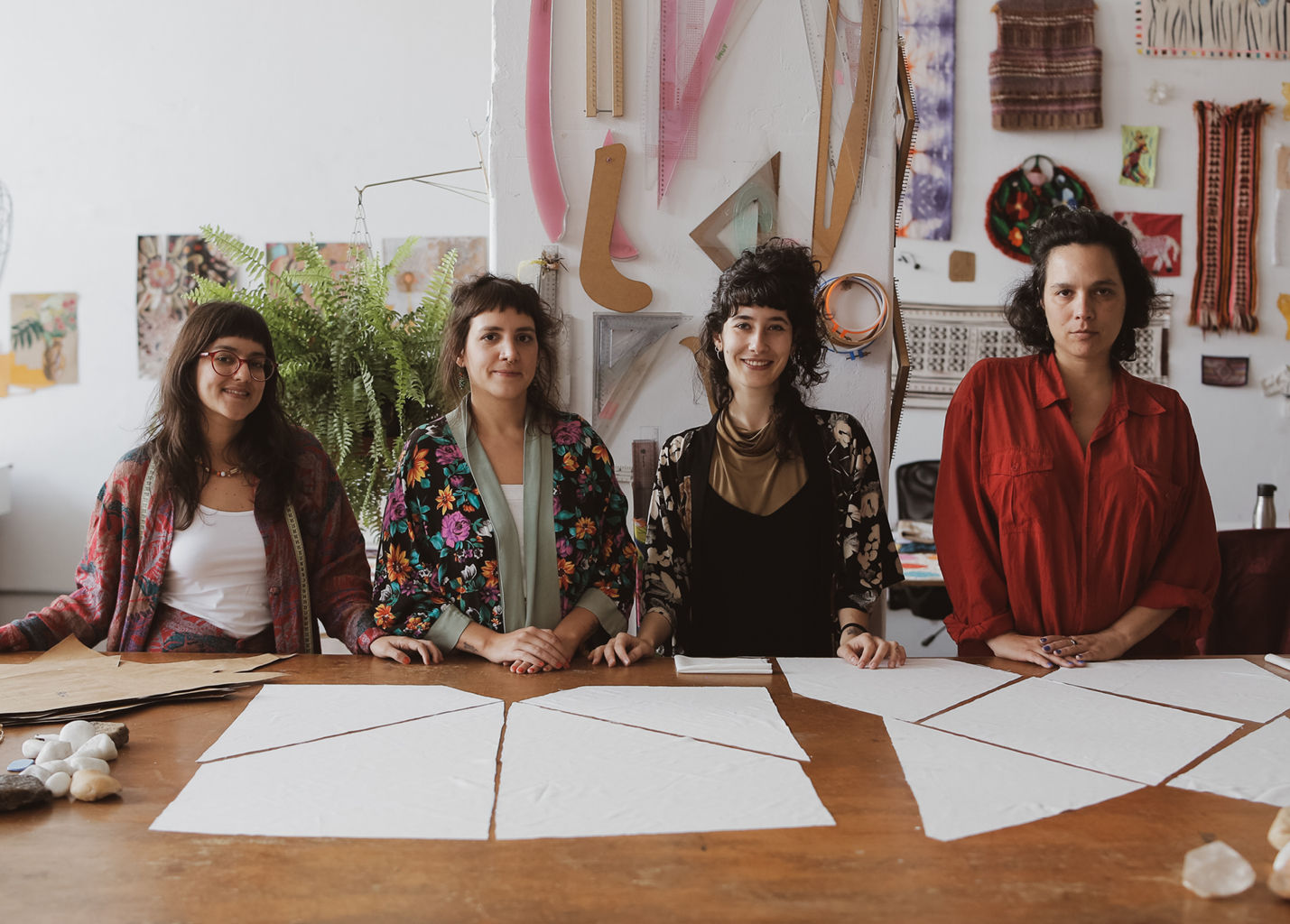
Today we’d like to introduce you to Ateliê Vivo.
Hi Ateliê, can you start by introducing yourself? We’d love to learn more about how you got to where you are today?
Ateliê Vivo is a Brazilian artistic collective of art, fashion and education that has been working since 2015 and is based in the center of São Paulo, Brazil.
Conceived and coordinated by four women artists, Andrea Guerra, Carolina Cherubini, Flávia Lobo and Gabriela Cherubini, it operates on three main fronts: the Pattern Library, the Ateliê Vivo School and the Textile Laboratory.
The actions of the Ateliê Vivo collective propose collective educational practices aimed at developing critical thinking, autonomy and strengthening social, cultural and political territories. In the activities proposed by the group, exchange relationships are established between participants, restoring democratic and cooperative experiences, reducing learning barriers and socio-economic, ethnic, gender, age and geographical inequalities.
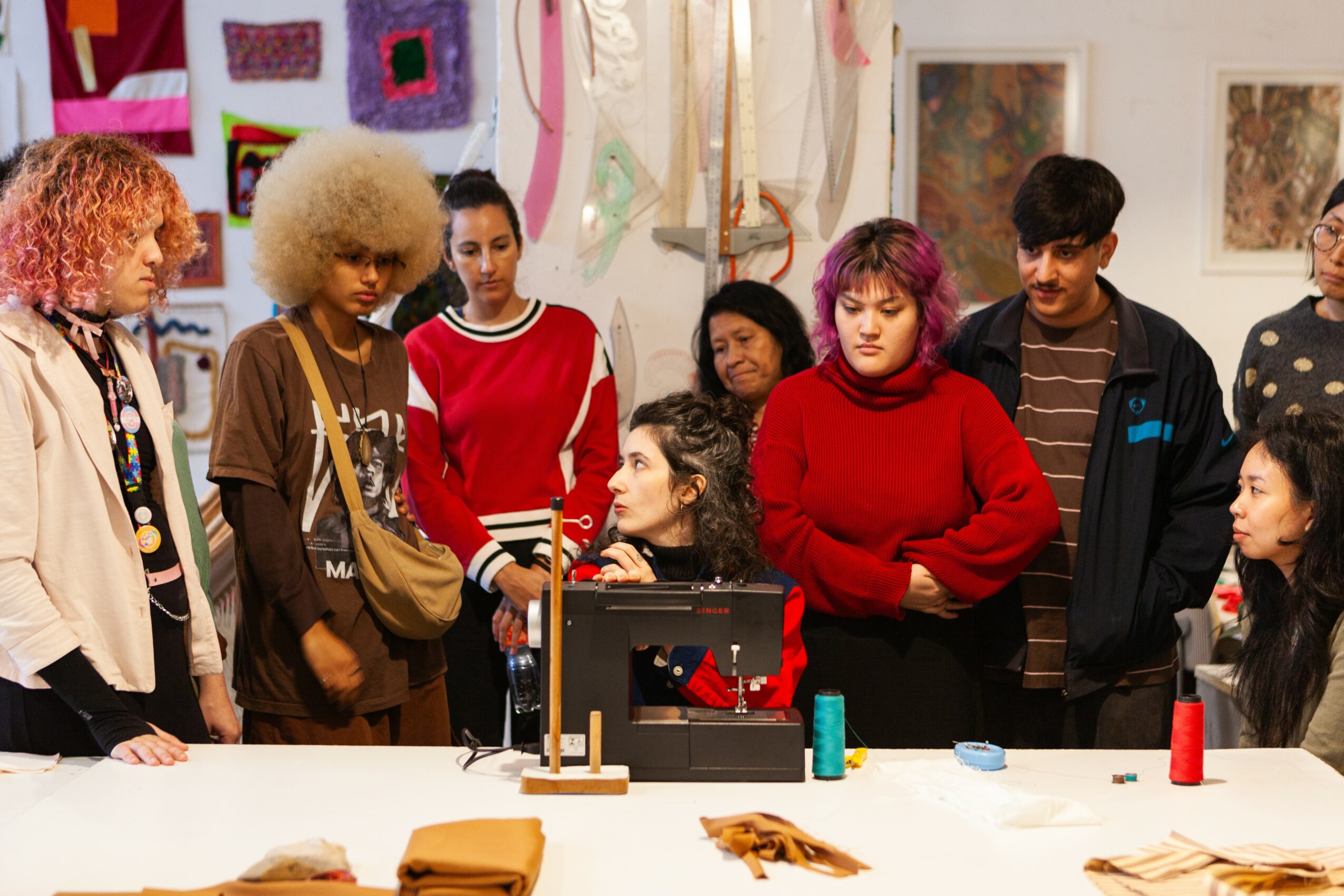
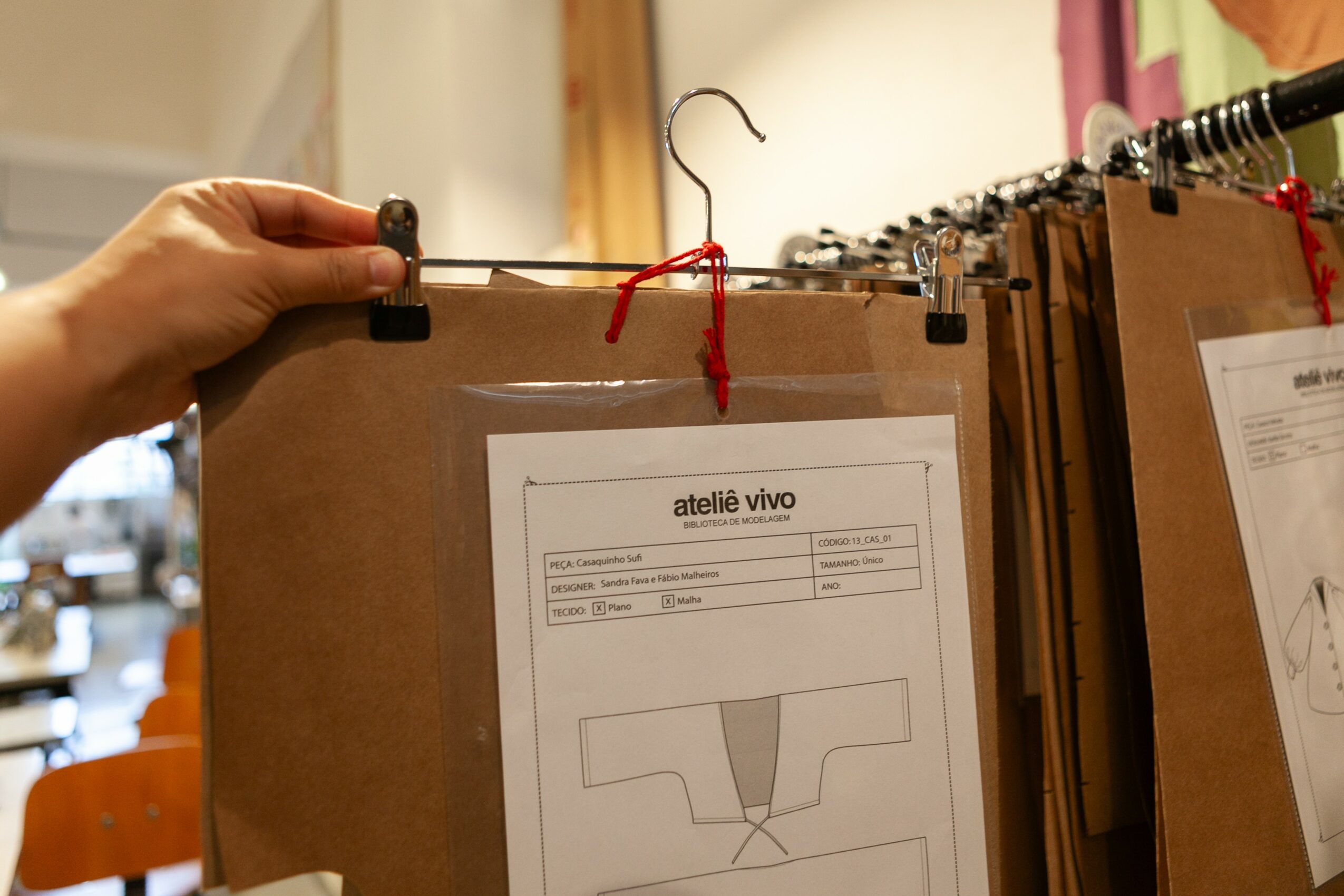
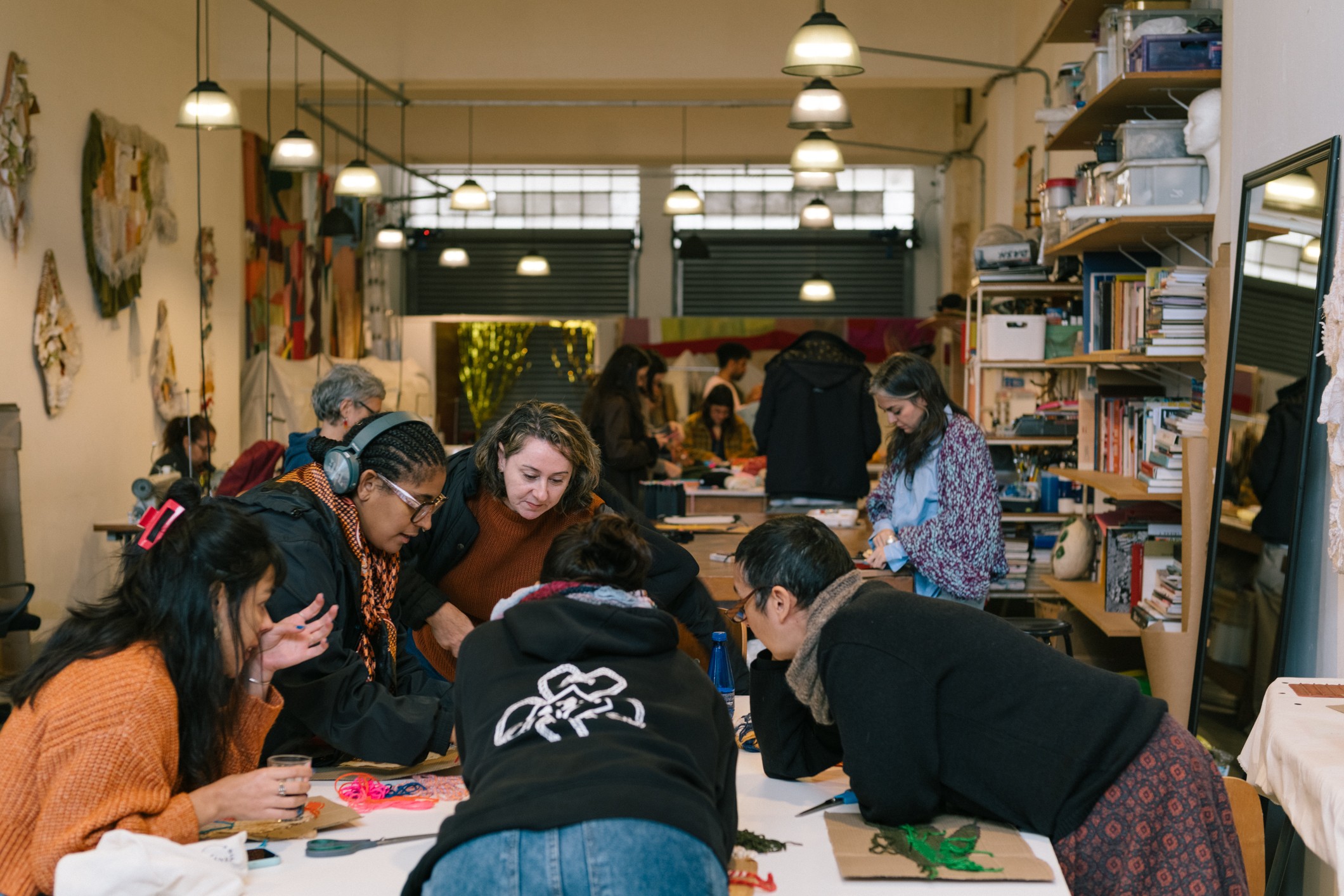
In its studio space it has a structure that includes sewing machines, tools, mannequins, looms, and the Pattern Library, the only independent pattern library in the world, which is an environment for study, practice and textile literacy with free access. It has more than 1000 patterns that have been donated by various stylists, pattern makers and visitors to the space.
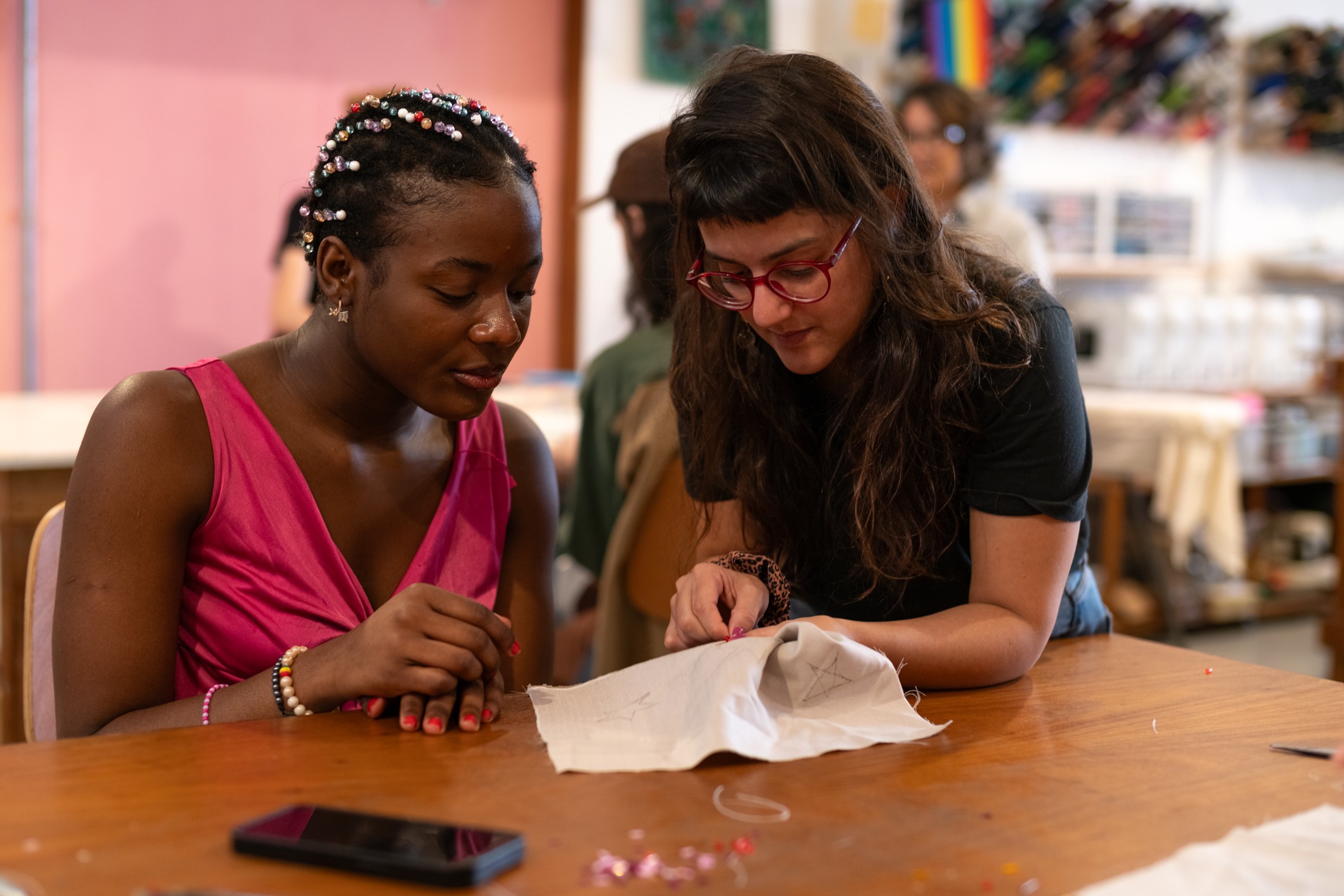
In practice, each person chooses a pattern to cut and sew, and is encouraged to review their understanding of the countless operations that make up the assembly of a garment, to value each stage of the process and to reflect on issues of identity, gender, diversity, autonomy, the environment, sustainability, work and so many other pressing issues. Participants are given guidance on using the equipment, interpreting patterns and sewing.
The Ateliê Vivo School has study and research studios where educational, cultural and experimental proposals related to textile arts, fashion, aesthetics and identity are developed, seeking to guarantee and expand democratic access to these areas, strengthening education through theories and practices of modeling, sewing, moulage, dyeing, printing, embroidery, lace, weaving and drawing.
The Textile Laboratory is a space for artistic and textile research and creative processes by the Ateliê Vivo team to create costumes, set designs, installations, actions, artistic proposals and performances.
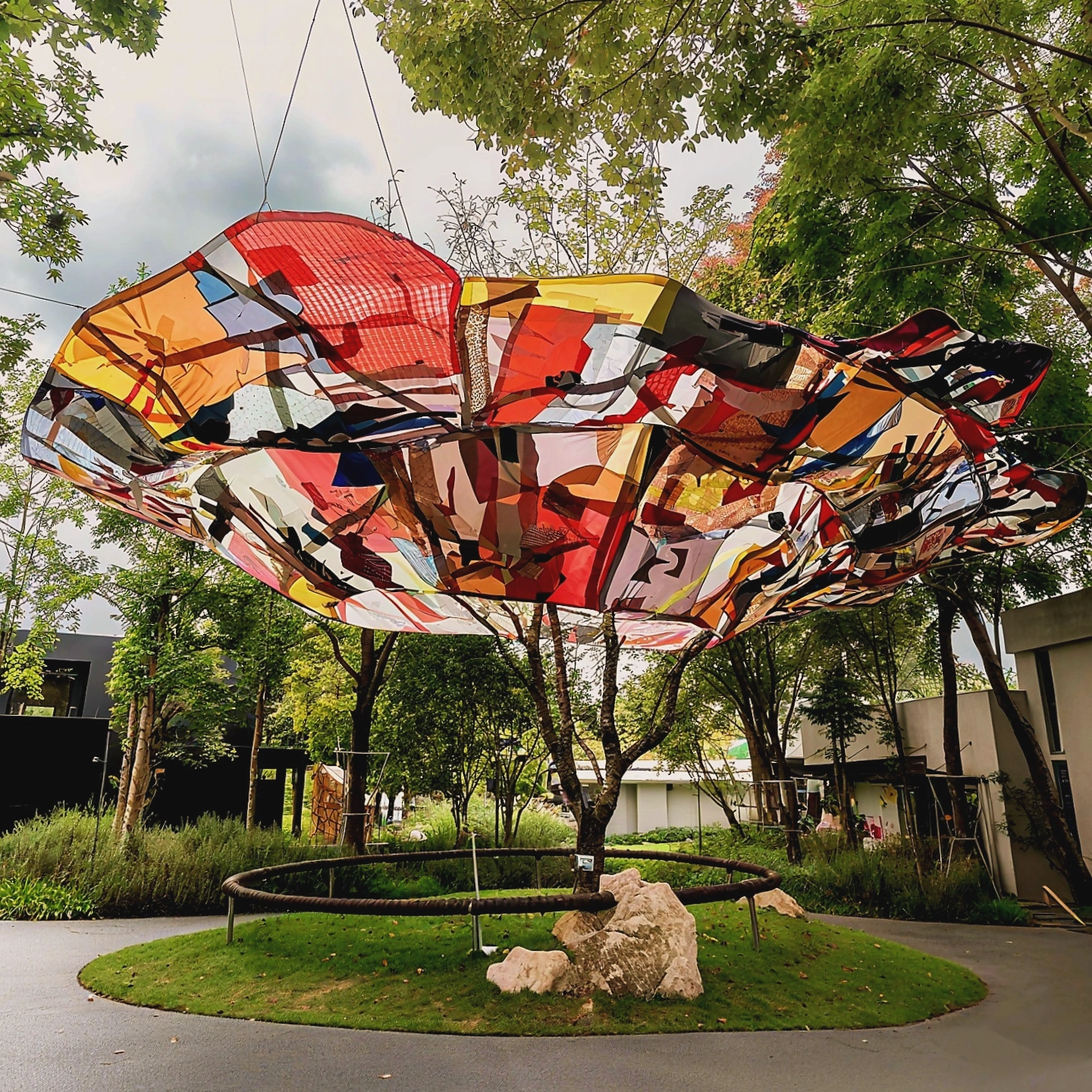
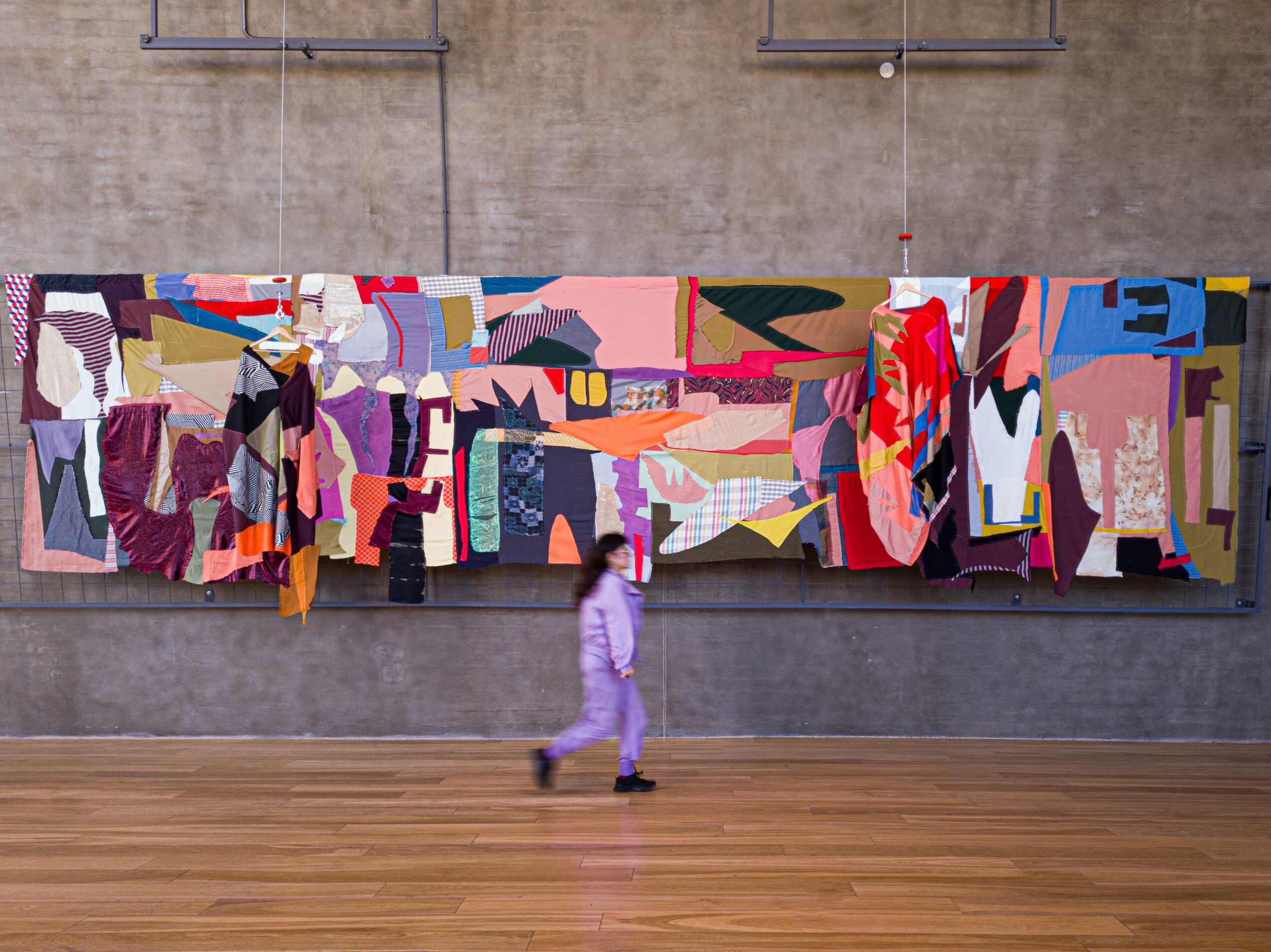
Over the years, with the actions of the Pattern Library, the creation of costumes and the classes we offer, we have noticed that there is a large amount of fabric that becomes waste at the cutting stage of the piece, as well as yarn and thread that are discarded by the industries in the neighborhood we are in, which is a textile hub in the city of São Paulo. It is materials like these that we are interested in using to create our work (we call it “Antimolde“ / “Antipattern“). In other words, what is textile, which would normally be discarded, is the main material for the composition of the works that Ateliê Vivo has been developing, in order to think about issues of consumption, production in the textile industry, sustainability and human behavior.
Ateliê Vivo has already participated in exhibitions in Argentina, China, Colombia, Germany, Netherlan and in several important institutions in Brazil.
I’m sure it wasn’t obstacle-free, but would you say the journey has been fairly smooth so far?
It hasn’t always been a smooth road. Like any creative and purpose-driven initiative, Ateliê Vivo has faced challenges along the way, especially when it comes to balancing creativity, sustainability, and financial viability.
One of the biggest struggles has been building something that has both social and environmental impact while also remaining sustainable as a business. Finding the right partners, resources, and opportunities to grow has taken time. There have also been moments of uncertainty, where we’ve had to adapt our plans, learn from mistakes, and find new ways of working.
Another challenge has been communicating the value behind the work. It can take time for people to understand that what Ateliê Vivo does is not simply about creating products or projects, but about rethinking how we use materials, value craftsmanship, and create a more conscious relationship with consumption.
These difficulties have ultimately been an important part of the journey. They’ve pushed Ateliê Vivo to become more resilient, flexible, and intentional about its purpose. The road hasn’t been completely smooth, but each challenge has helped shape what Ateliê Vivo is today.
Thanks – so what else should our readers know about your work and what you’re currently focused on?
The actions of the Ateliê Vivo collective propose collective educational practices aimed at developing critical thinking, autonomy and strengthening social, cultural and political territories.
In the activities proposed by the group, exchange relationships are established between participants, restoring democratic and cooperative experiences, reducing learning barriers and socio-economic, ethnic, gender, age and geographical inequalities.
In our Pattern Library, the only independent modeling library in the world, which is an environment for study, practice and textile literacy with free access, has a structure that includes sewing machines, tools, mannequins, looms, and the It has more than 700 patterns that have been donated by differents brazilians designers.
In practice, each person chooses a pattern to cut and sew, and is encouraged to review their understanding of the countless operations that make up the assembly of a garment, to value each stage of the process and to reflect on issues of identity, gender, diversity, autonomy, the environment, sustainability, work and so many other pressing issues. Participants are given guidance on using the equipment, interpreting patterns and sewing. Knowledge is shared
between participants and monitors in a transversal dynamic, where knowledge can be exchanged between everyone involved.
As a multidisciplinary project, we seek to create exchange relationships with other populations, geographies and cultures in order to develop new perspectives and experiences based on textile practice.
Ateliê Vivo’s proposals encourage the practice of manual textile art through participatory actions that aim to develop participant´s critical sense, autonomy and reflection on aesthetic, artistic, value and behavioral multiplicities.
We encourage the production of thought concomitantly with manual production and the term “thinking-doing” describes the objective of fundamentally rethinking “theory” and “practice” in order to overcome the common antagonism between the two. All manual work carries within it the dimension of human power, of what is possible to produce from one’s own body and what is learned from generation to generation, consolidating knowledge, creating spaces for collective
encounters and exchanges and dissolving one-sided relationships between artists and the general public.
Are there any important lessons you’ve learned that you can share with us?
The most important lesson we’ve learned is that the journey is just as important as the destination. Building something meaningful takes time, patience, and a willingness to adapt.
We’ve learned that not everything will go according to plan, and that setbacks can often reveal new possibilities. Staying open to learning, listening to people, and being willing to change course has been essential.
Most importantly, we’ve learned the importance of staying connected to our purpose. When challenges arise, having a clear sense of why we are doing what we do helps us make better decisions and keep moving forward. For Ateliê Vivo, that purpose continues to guide us in creating work that is conscious, meaningful, and connected to people and the world around us.
Contact Info:
- Website: www.atelievivo.com.br
- Instagram: @atelievivo
- Facebook: https://www.facebook.com/atelievivo/?locale=pt_BR
- LinkedIn: https://www.linkedin.com/in/ateli%C3%AAvivo/
- Youtube: https://www.youtube.com/@atelievivo4828