



Today we’d like to introduce you to Stefania Zavala.
Hi Stefania, it’s an honor to have you on the platform. Thanks for taking the time to share your story with us – to start maybe you can share some of your backstory with our readers?
My path to textile art has not been linear, and I believe that is one of the things that has shaped my work most deeply. I am Stefania Zavala, an Ecuadorian contemporary textile artist and the founder and creative director of LUAH, a textile art practice based in Guayaquil, Ecuador.
Art has been part of my life for many years. I attended an intensive fine arts program when I was younger, but I later studied International Business Management and also pursued studies in psychology. My professional experiences across business, education, fashion, and creative projects gave me different ways of understanding people, identity, communication, and the process of turning an idea into something tangible. Eventually, textiles became the place where all those parts of my life could meet.
I founded LUAH in June 2022 as a space for artistic exploration and personal discovery. What began through knotting and macramé gradually expanded into a broader contemporary practice involving loom weaving, repetition, accumulation, tension, gravity, dyeing, color, acrylic interventions, recovered textiles, and natural elements. I became increasingly interested in taking textile techniques beyond the decorative object and using them to construct volume, atmosphere, and space.
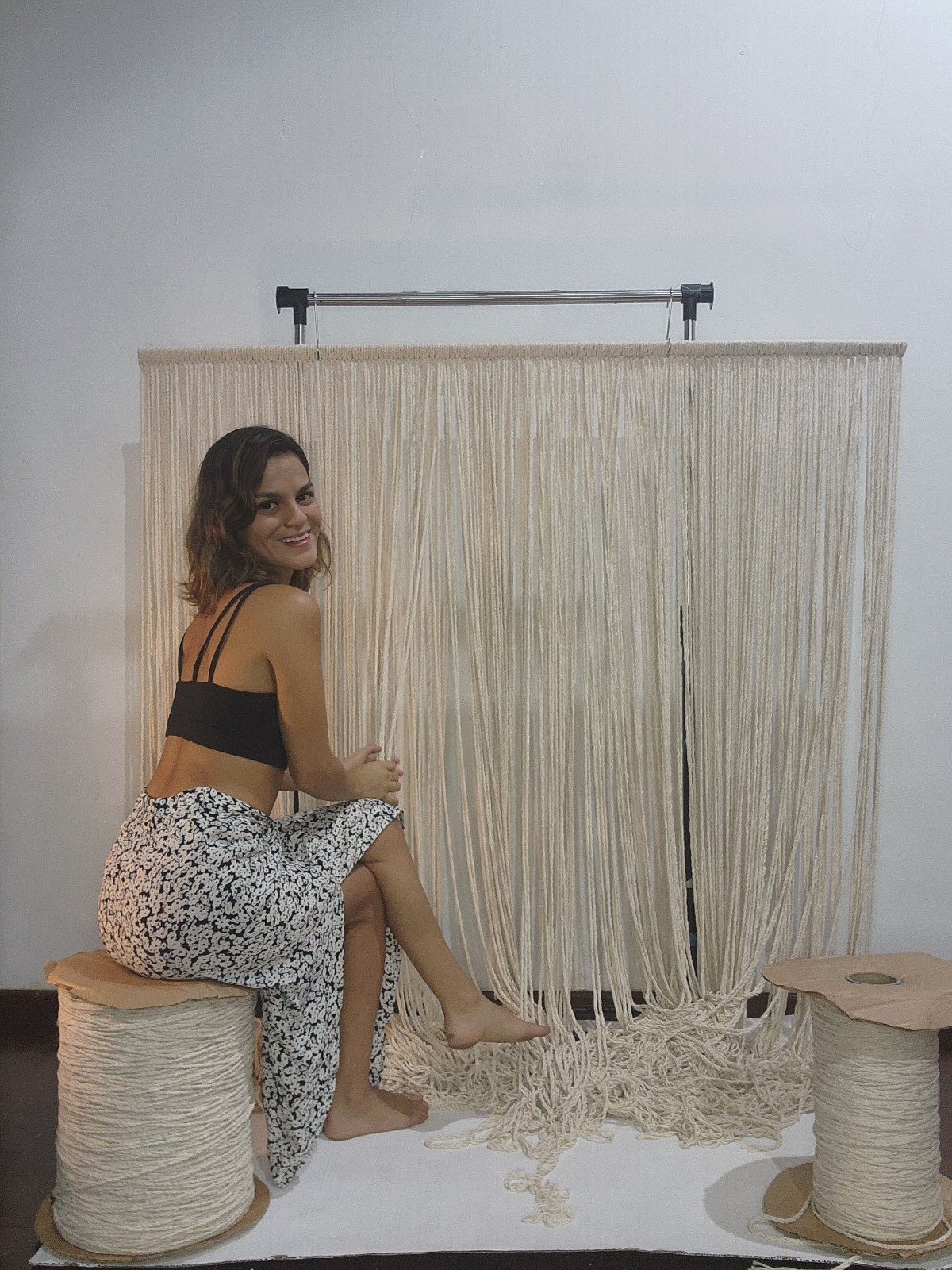
Traveling through Ecuador’s four regions and encountering the country’s extraordinary landscapes, cultures, artisan knowledge, and natural fibers also transformed the way I understood my own identity. Ecuador is not simply a visual reference in my work; it is present in the materials, processes, memories, colors, and forms I use. I work primarily with cotton cord that I have specially produced in Guano, in one of the few remaining spinning mills in Ecuador. Maintaining that connection with local production is important to me because every piece begins long before the first knot: it begins with the material, the people who make it possible, and the knowledge carried within it.
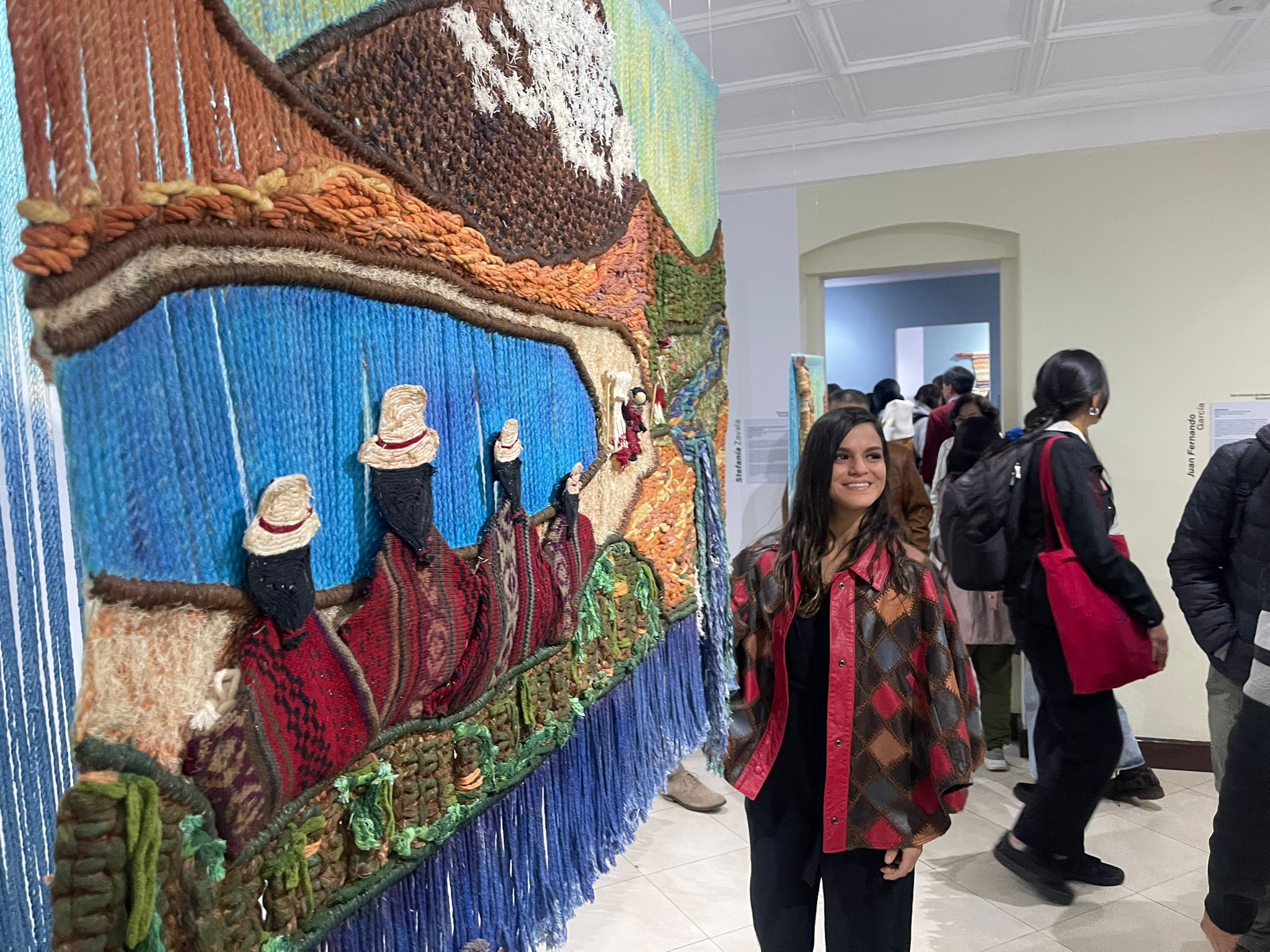
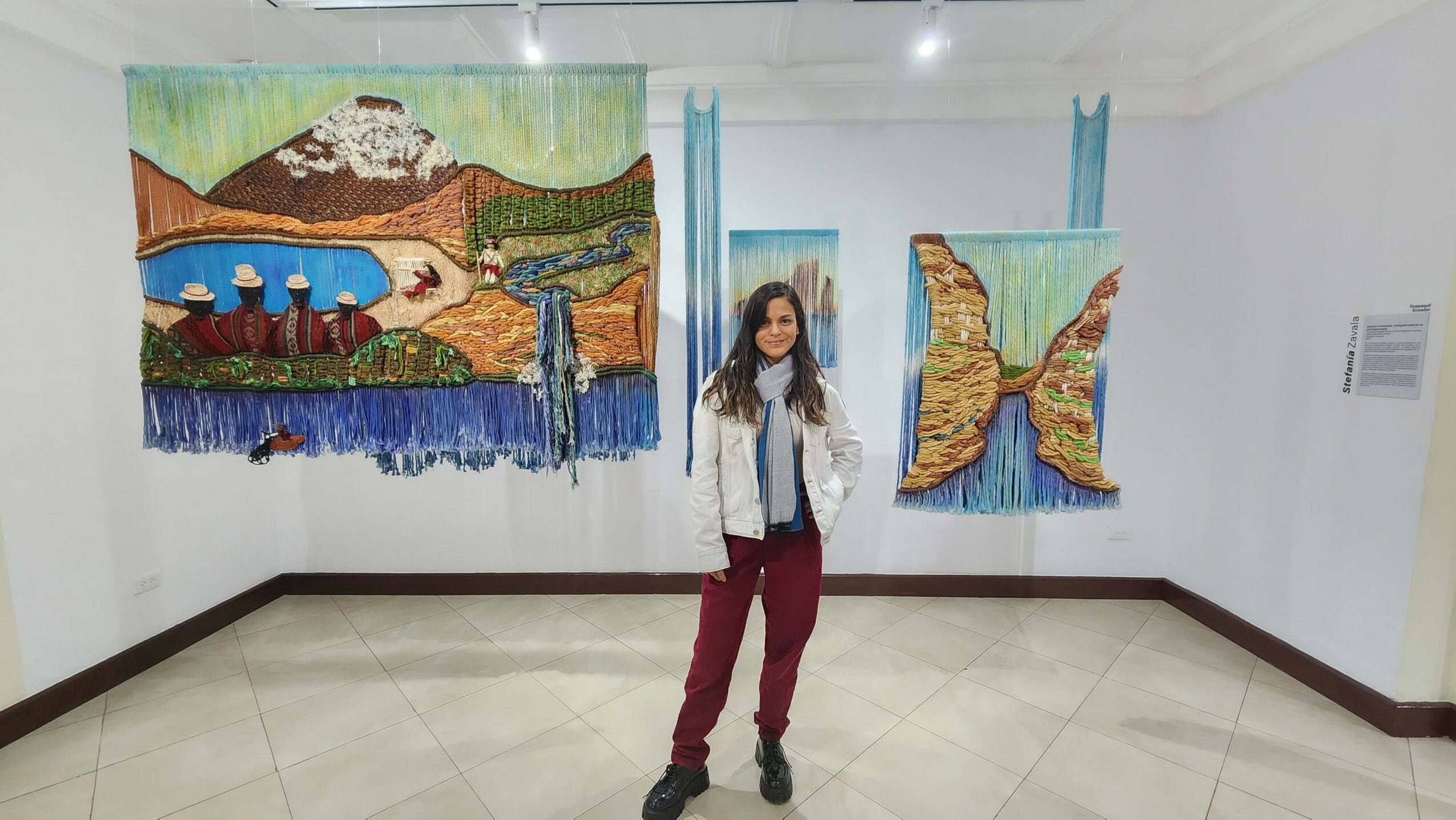
My first major collection, “Pulso Natural,” was presented in 2023 at Museo Presley Norton. It consisted of eight textile works inspired by Ecuador’s four regions and explored the relationship between nature, emotion, territory, and human experience. Since then, my work has continued to grow in scale and spatial complexity, moving from individual textile pieces toward immersive and architectural installations.
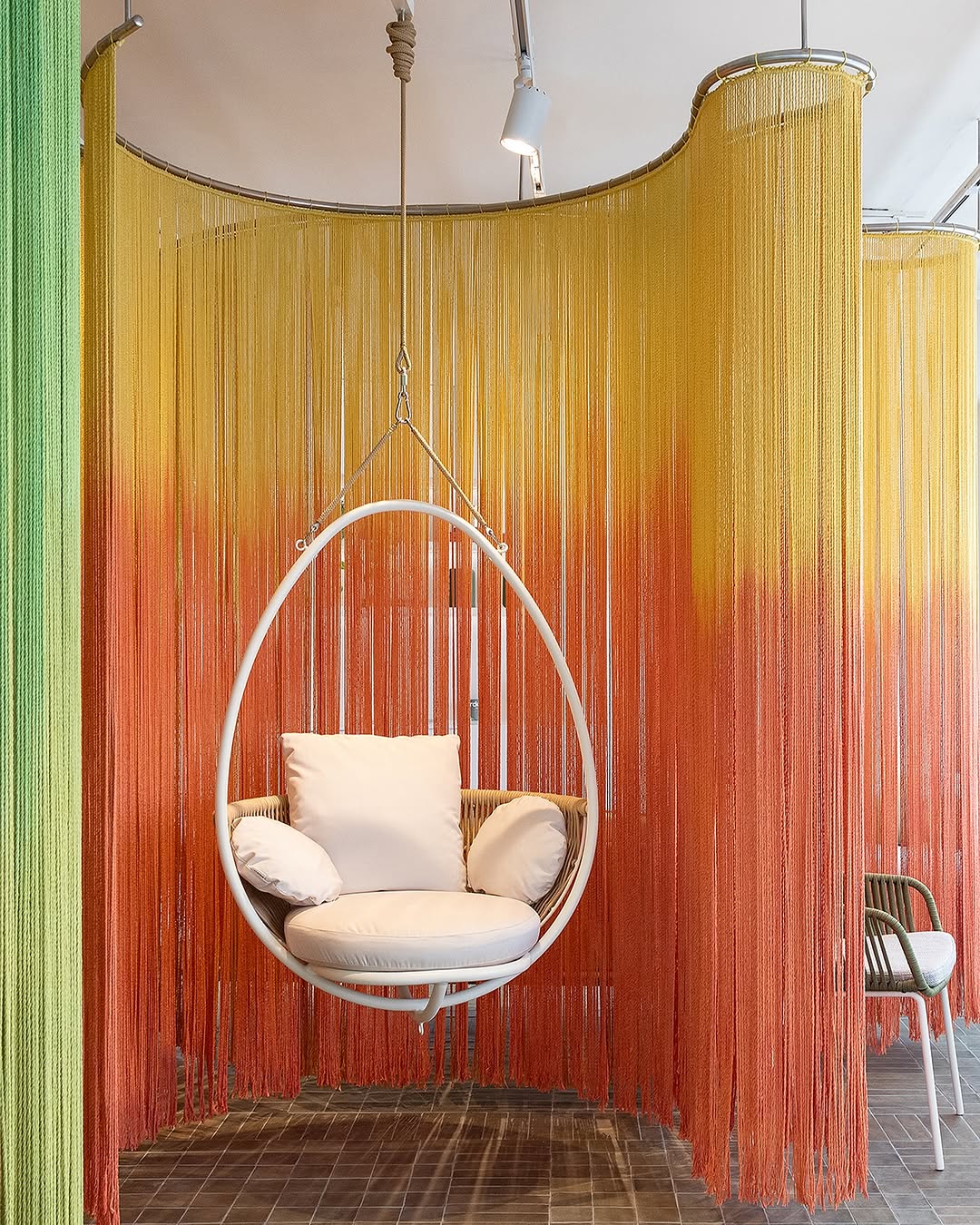
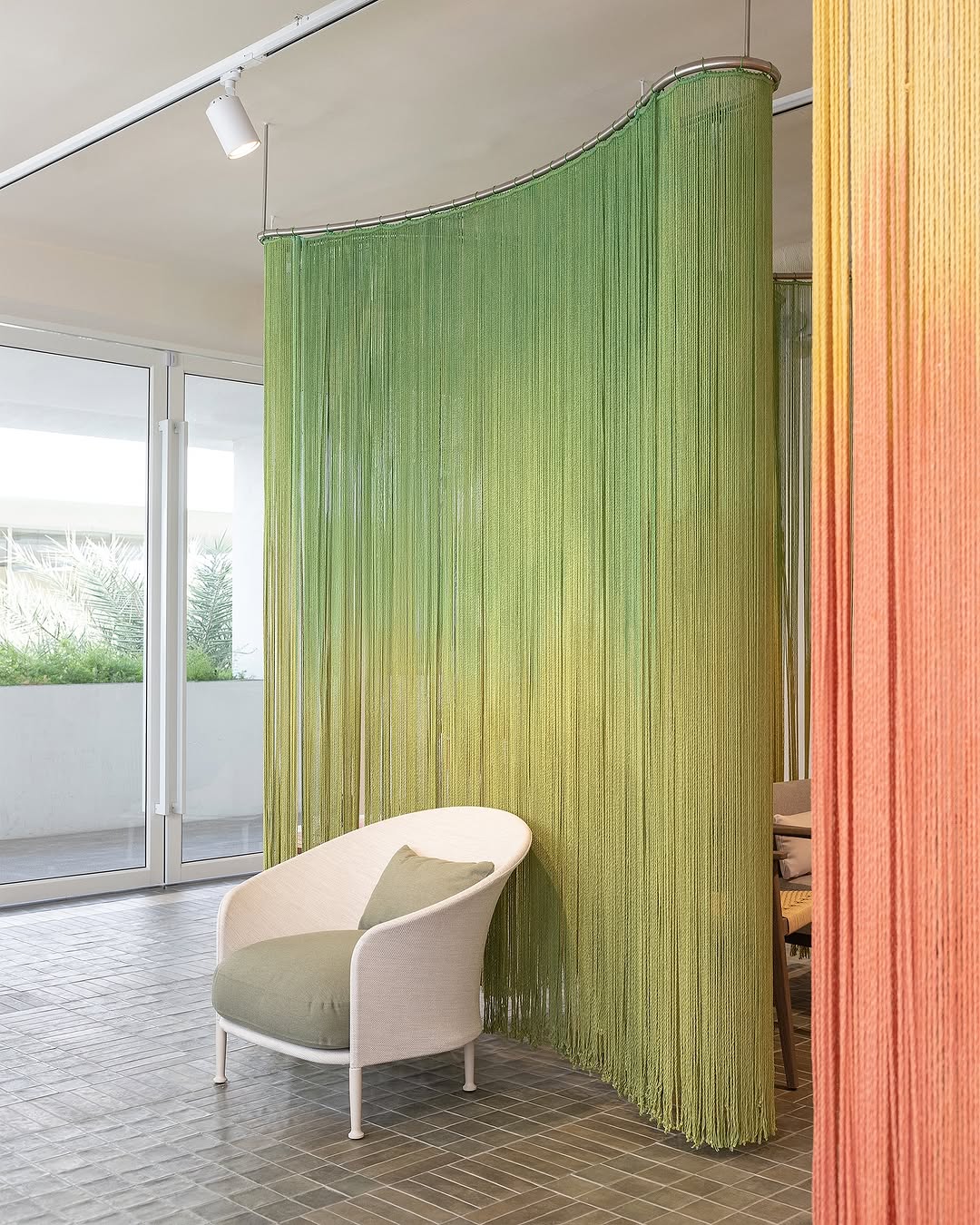
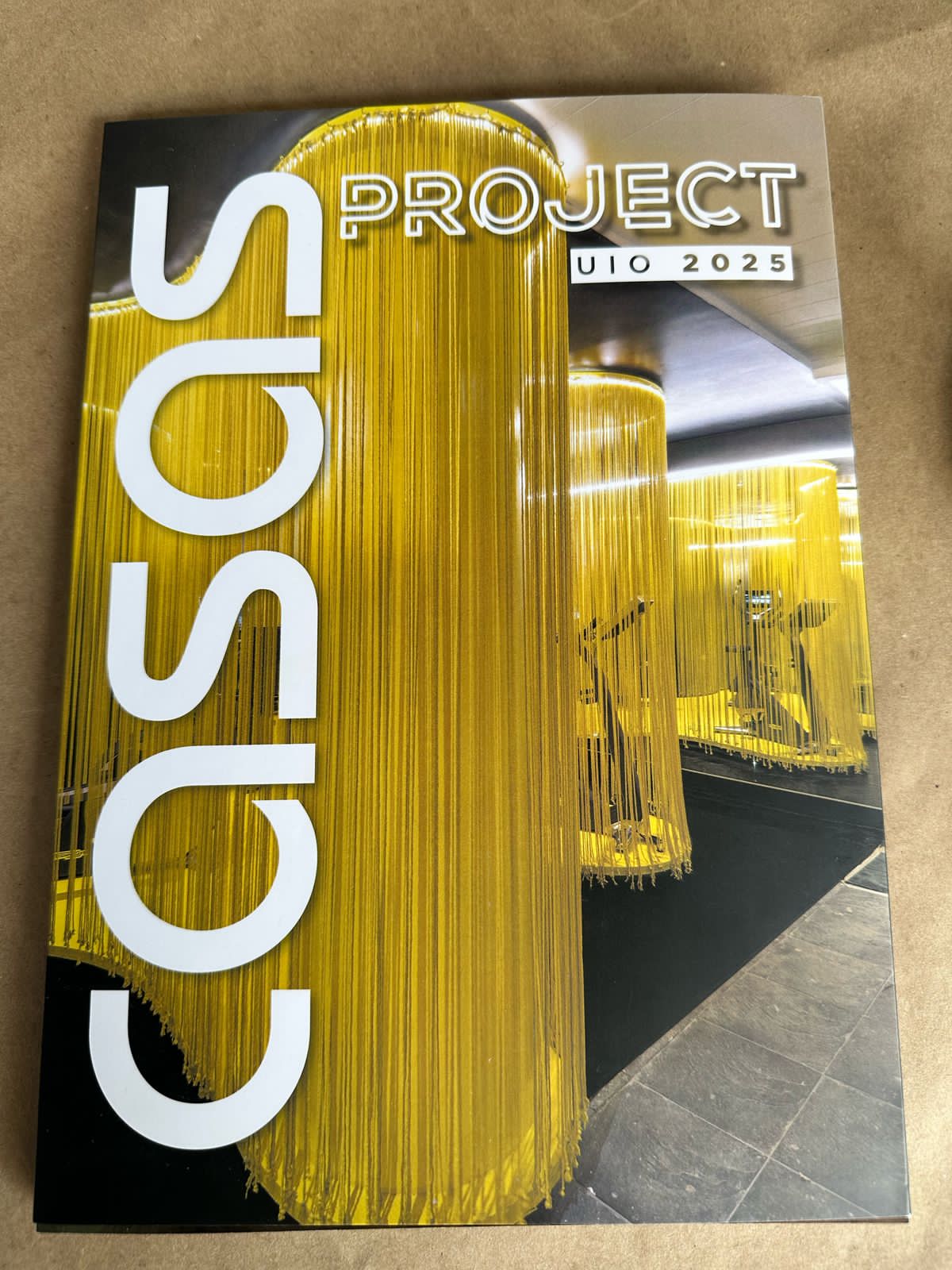
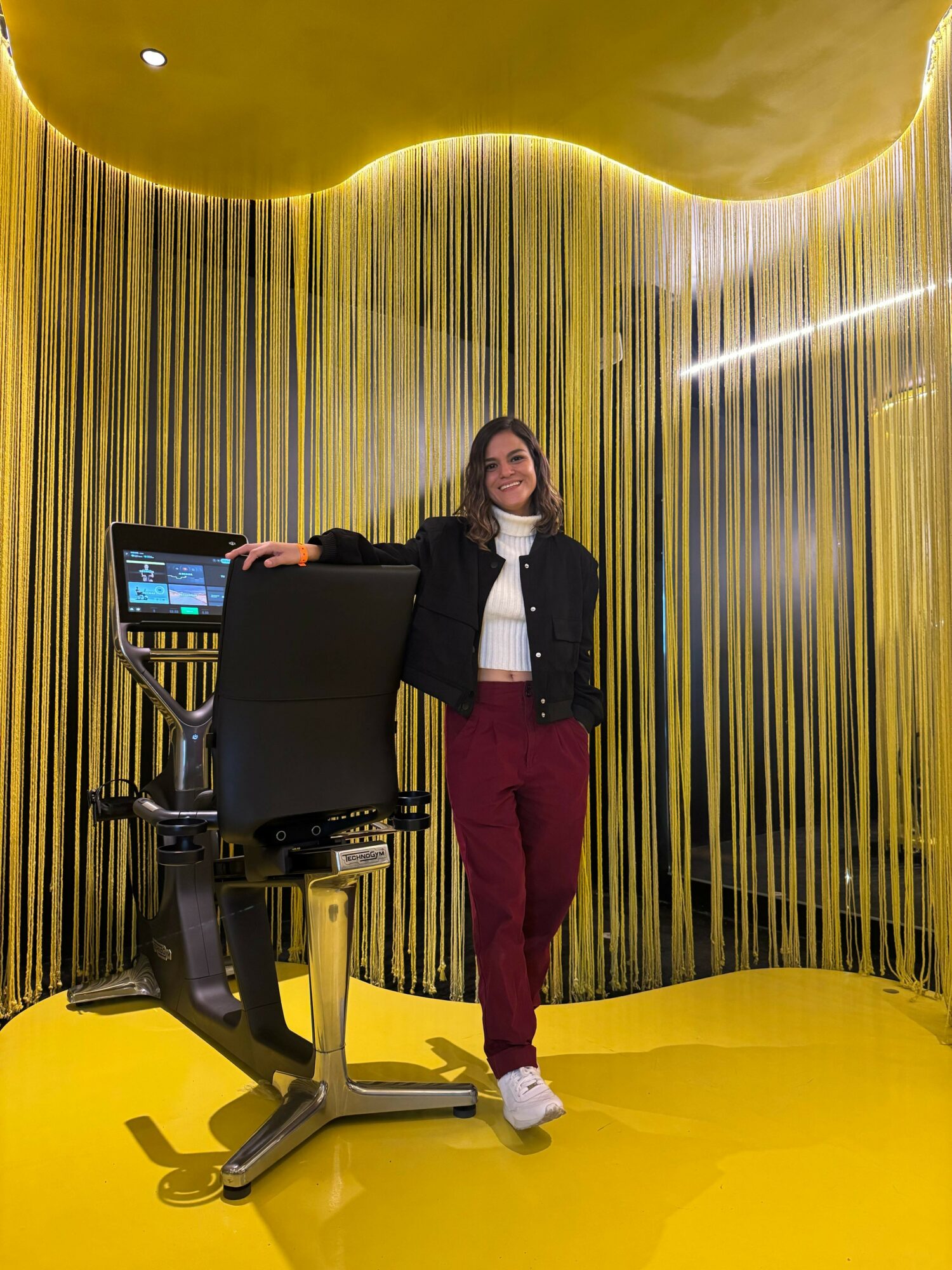
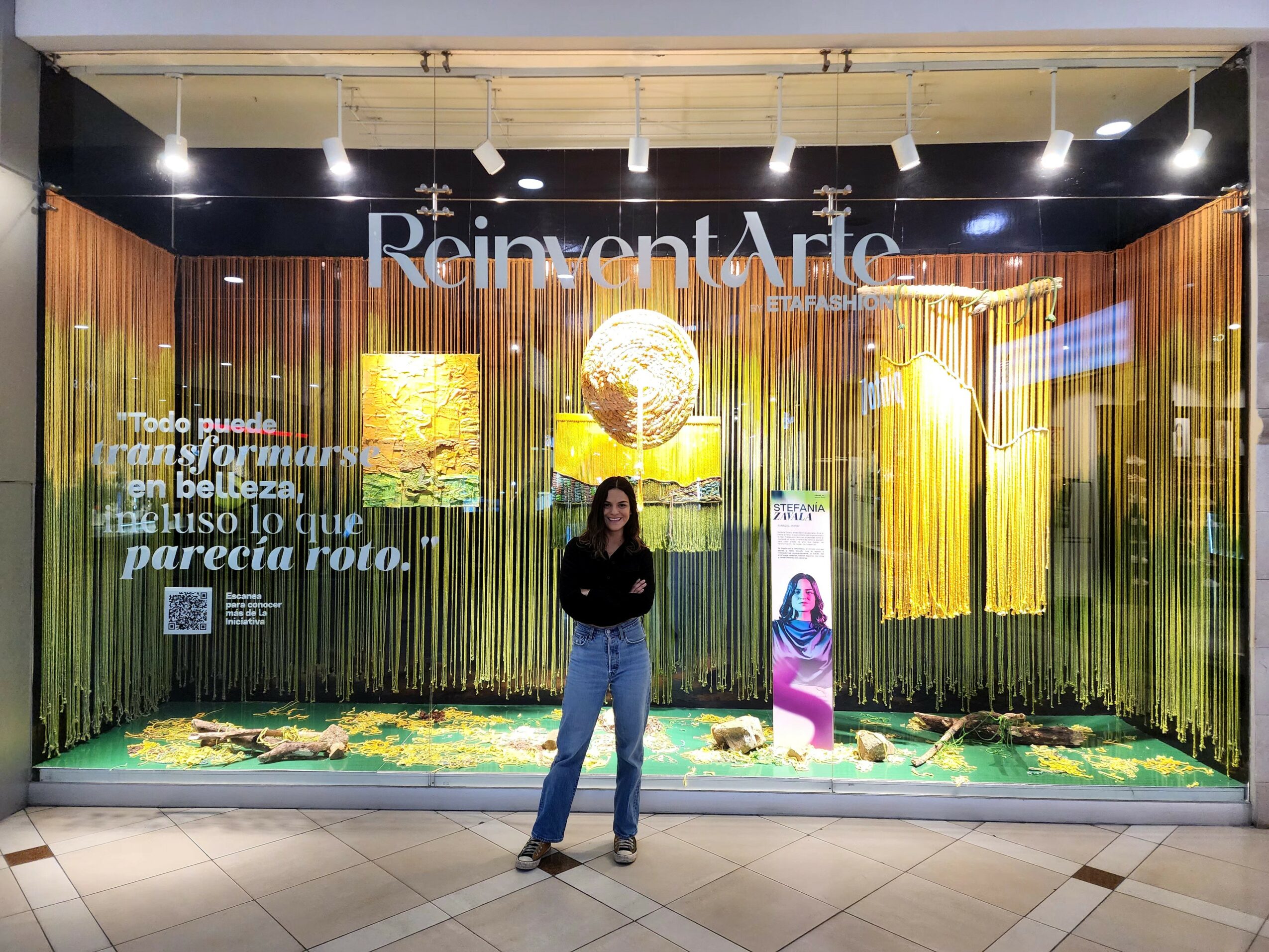
My projects have been exhibited in Ecuadorian cultural institutions and spaces including MAAC, Museo Presley Norton, Museo Guayasamín, and CIDAP. In 2025, I created “Mi Refugio Tiene Cuerdas,” an installation that was first presented through ReinventArte and later exhibited at Museo Guayasamín. I have also developed works for architectural and interior spaces, including a permanent installation for NardoHome and pieces presented through Casas Project. These experiences strengthened my interest in creating site-responsive work and collaborating with architects, interior designers, cultural institutions, and brands.
In 2026, I presented “Sostener el Horizonte” at Bienal ARDIS in Cuenca. This large-scale suspended textile installation marked an important step in my practice because it brought together material, repetition, tension, transparency, movement, and architecture. It reaffirmed my desire to create textile works that are not merely observed but physically experienced—works that alter how a person perceives and moves through a space.
Today, my research explores the relationships between technique, matter, territory, memory, and knowledge, including an ongoing interest in pre-Hispanic American textile structures and in how inherited processes can be reinterpreted through a contemporary language. I am especially drawn to the emotional and architectural possibilities of fiber: its softness and strength, its capacity to fall or resist, and the way thousands of individual gestures can become one powerful body.
Through LUAH, I create contemporary textile artworks and installations for exhibitions, architectural environments, interior spaces, and interdisciplinary collaborations. While my studio is based in Ecuador, LUAH is open to commissions and collaborations internationally, and individual works can be safely shipped worldwide. My goal is to expand the presence and possibilities of contemporary Ecuadorian textile art, honoring the intelligence of manual processes while developing a language that feels personal, relevant, and capable of connecting with people and spaces across cultures.
We all face challenges, but looking back would you describe it as a relatively smooth road?
No, it has not been a completely smooth road. My journey has involved several moments of uncertainty, reinvention, and learning how to begin again.
Before founding LUAH, I developed another entrepreneurial project that ultimately did not work. I also made the difficult decision to leave a stable professional position after going through an environment that was no longer healthy for me. At the time, those experiences felt like setbacks, but they forced me to reconsider what success meant to me and what kind of life and work I truly wanted to build.
When I first began working with macramé, I also went through an important creative struggle. I could make technically correct pieces, but many of them felt generic and did not fully express who I was. Recognizing that was uncomfortable, but it became a turning point. Instead of repeating what was already familiar or commercially expected, I began experimenting with color, scale, irregularity, tension, painting, weaving, and installation. I gradually stopped asking what macramé was supposed to look like and started asking what I could communicate through fiber.
One of my continuing challenges has been helping people understand textile art beyond the categories of craft, decoration, or a bohemian aesthetic. I deeply respect the history and knowledge contained in traditional textile practices, but I also believe fiber can be as conceptually and spatially powerful as any other visual-art medium. Part of my work is advocating for textile art to receive the recognition it deserves and demonstrating that a knot can carry history, emotion, memory, and meaning.
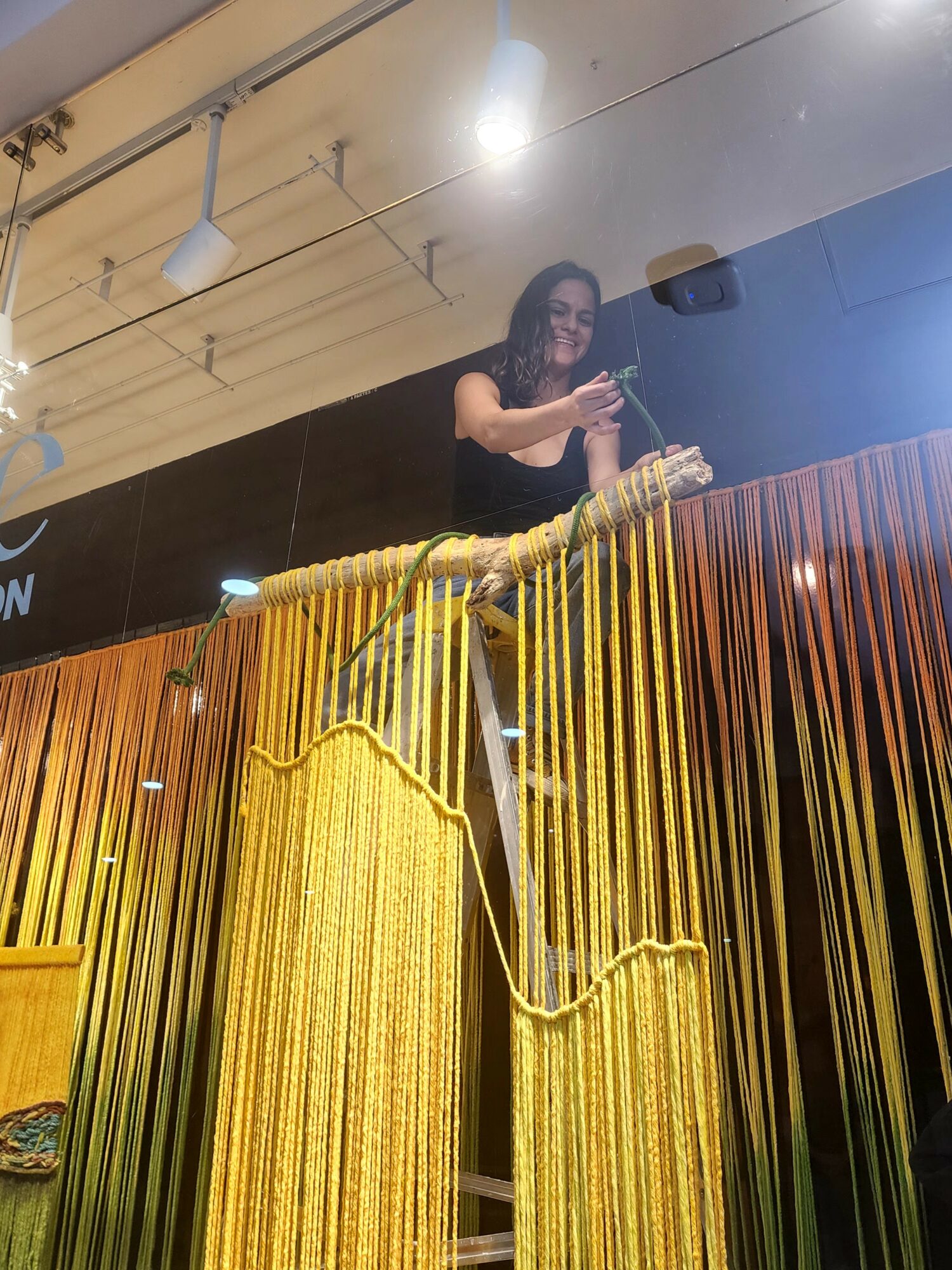
Developing large-scale textile installations has brought another level of challenge. Fiber may appear soft and light, but when it is accumulated in large quantities, weight, tension, suspension, balance, transportation, and architecture become essential considerations. Every installation requires both artistic intuition and technical problem-solving. I often move between conceptual research, material development, manual production, logistics, communication, and collaboration, learning something new with every project.
Access to specialized materials and learning opportunities has also required persistence. In Ecuador, opportunities for advanced training in contemporary textile art can be limited, so much of my development has come through independent research, experimentation, observation, and constant practice. I also chose not to rely on generic industrial materials. Instead, I developed a relationship with one of the few remaining spinning mills in Ecuador to have my cotton cord produced in Guano. This process takes more coordination, but it allows the material itself to remain connected to the territory and identity behind the work.
The road has taught me that finding an authentic artistic voice takes time. It requires allowing early ideas to evolve, accepting that not every attempt will succeed, and continuing even when the path is not clearly established. Each obstacle has helped me become more intentional, resilient, and willing to trust my own vision. LUAH exists because I chose to transform uncertainty into experimentation and to keep building a place for the kind of textile art I wanted to see in the world.
As you know, we’re big fans of you and your work. For our readers who might not be as familiar what can you tell them about what you do?
I am a contemporary textile artist and the founder and creative director of LUAH. I specialize in fiber-based artworks and installations that range from individual wall pieces to large-scale suspended and site-responsive works created in dialogue with architecture.
My primary material is cotton cord, which I transform through knotting, macramé, loom weaving, repetition, accumulation, tension, dyeing, and pictorial interventions. I am interested in fiber not only as a material but also as structure and language: something capable of holding memory, expressing emotion, occupying space, and changing the way we experience our surroundings.
One of the things that sets my work apart is that I do not use macramé as a predetermined aesthetic. The knot is a starting point, not a limit. I combine traditional textile knowledge with contemporary artistic research to create forms that can feel organic, architectural, delicate, or monumental. Through changes in tension, density, transparency, movement, scale, and color, thousands of individual manual gestures gradually become a single textile body.
Material origin is also fundamental to my practice. Much of my work is created with cotton cord specially produced for LUAH in Guano, Ecuador, at one of the few remaining spinning mills in the country. This gives the material a direct connection to Ecuadorian territory, labor, and textile knowledge. My current research also explores the relationships between matter, memory, body, space, and pre-Hispanic American textile structures, considering how inherited knowledge can be reinterpreted through a contemporary visual language.
I am particularly known for works that move beyond the wall and enter into a relationship with the surrounding environment. My installations respond to gravity, architecture, light, air, and the movement of the viewer. They are not meant to function simply as decoration; they are spatial experiences that invite people to move around them, look through them, and perceive softness, strength, transparency, and tension in unexpected ways.
Among the projects I am most proud of is “Pulso Natural,” a collection of eight textile artworks inspired by Ecuador’s four geographic regions, presented at Museo Presley Norton in 2023. I am also proud of “Mi Refugio Tiene Cuerdas,” presented through ReinventArte in 2025 and later exhibited at Museo Guayasamín, and “Sostener el Horizonte,” a large-scale suspended installation presented at Bienal ARDIS in Cuenca in 2026. That work represented an important evolution in my practice because it allowed fiber, repetition, movement, tension, and architecture to coexist on a much larger scale.
My work has circulated through important Ecuadorian cultural spaces, including MAAC, Museo Presley Norton, Museo Guayasamín, and CIDAP. I have also brought textile art into architectural and interior environments through projects such as a permanent installation for NardoHome and works presented through Casas Project. These collaborations have shown me how textile art can transform not only galleries and museums but also residential, hospitality, corporate, and public spaces.
What makes me most proud is having developed a recognizable artistic language from Ecuador in a relatively short period of time while remaining closely involved in every stage of the process—from research and material development to manual production, installation, communication, and collaboration. Through LUAH, I create original artworks, spatial installations, commissioned pieces, collaborative projects, and creative educational experiences.
Although my studio is based in Ecuador, LUAH is open to collaborations and commissions internationally, and individual works can be safely shipped worldwide. I am especially interested in working with collectors, architects, interior designers, galleries, cultural institutions, and brands that value material research, craftsmanship, and contemporary artistic expression.
If you had to, what characteristic of yours would you give the most credit to?
The quality that has been most important to my success is persistence—not as the act of repeating the same thing indefinitely, but as the willingness to remain committed to an idea while allowing it to transform.
Textile work has taught me this very clearly. A large installation is created through thousands of individual gestures that may seem insignificant on their own. One knot does not reveal the final work, but each knot is necessary. The process requires patience, concentration, physical endurance, and trust in something that may exist clearly in my imagination long before I can see it completely in front of me.
Persistence has also allowed me to move through uncertainty. When my earliest pieces did not feel authentic to me, I did not abandon textiles; I continued experimenting until I began to find my own visual language. When an installation presents problems involving weight, tension, structure, transportation, or space, I keep observing and adjusting until the artistic intention and the physical reality can coexist.
I believe persistence also requires flexibility and humility. Sometimes a material does not behave as expected, an opportunity does not arrive, or an idea needs more time to mature. In those moments, continuing does not always mean forcing the original plan. It can mean undoing, learning, changing direction, and beginning again with greater clarity.
Building LUAH has reinforced this lesson. Developing an artistic practice in Ecuador, creating specialized materials, producing work manually, and finding opportunities for contemporary textile art have all required consistency and belief in a long-term vision. Many of the achievements people now see began as quiet experiments repeated over months or years.
For me, persistence is what turns intuition into practice, practice into language, and individual threads into a body of work.
Contact Info:
- Instagram: https://www.instagram.com/luah_ec?stkn=b2htY253NzB3emVy
- Other: https://wa.me/message/RY3RJPHGXNV5C1