





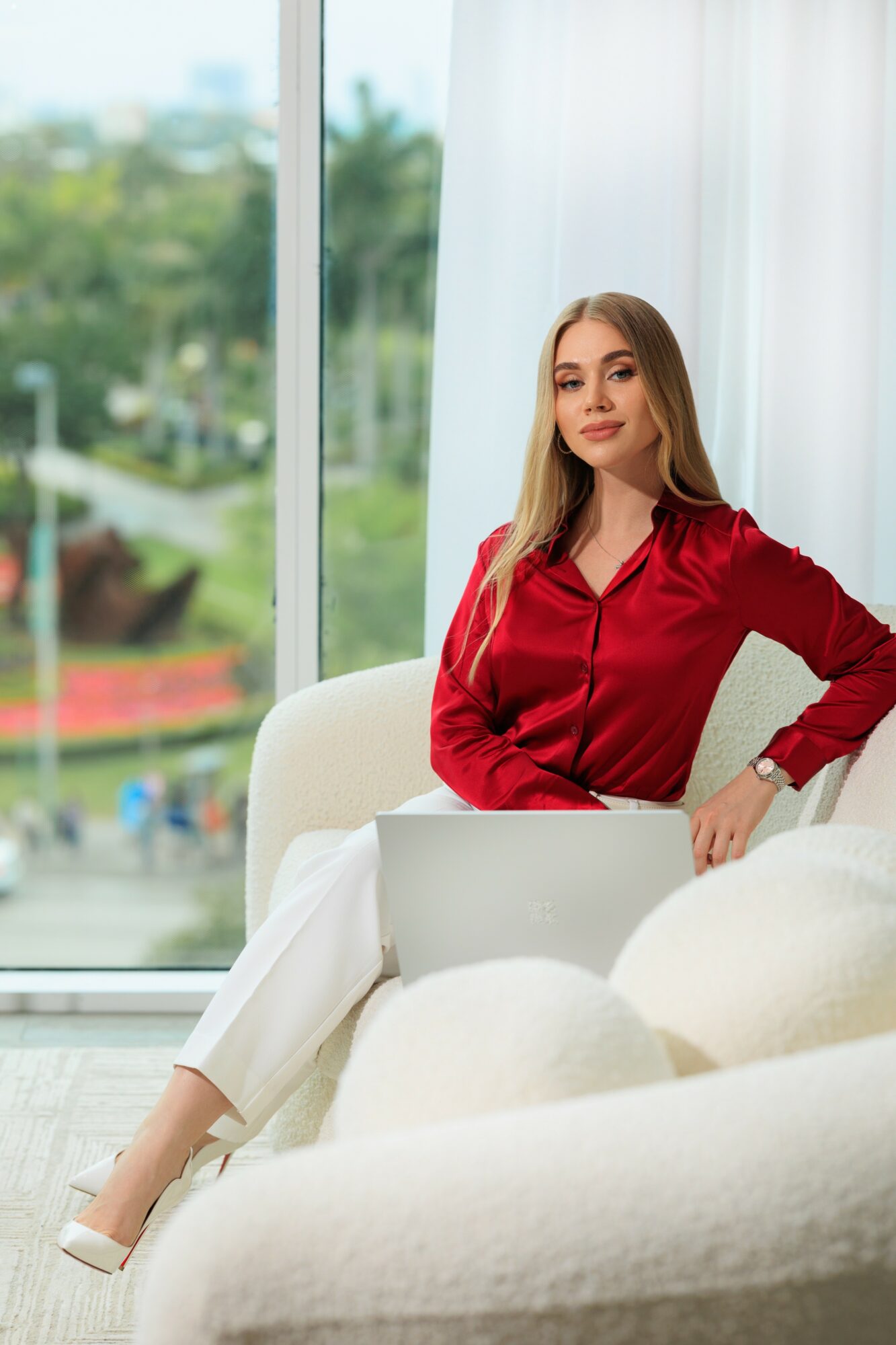
Today we’d like to introduce you to Mariya Vlasova.
Alright, so thank you so much for sharing your story and insight with our readers. To kick things off, can you tell us a bit about how you got started?
I was born in Ukraine and began my professional path in the United States, where I earned my degree from the Rosen College of Hospitality Management at the University of Central Florida. My background is somewhat unconventional for real estate — I started in event management and digital marketing.
During my final year at university, I coordinated a large-scale career fair for more than 600 participants, leading a marketing team and developing the promotional strategy. That experience shaped the way I think: structurally, strategically, and with attention to systems rather than isolated tasks.
After graduating, I transitioned into marketing and later into real estate. What drew me to real estate wasn’t just transactions — it was the intersection of economics, human behavior, space, and long-term impact. I began working with international investors in South Florida, guiding them through full-cycle transactions and helping them navigate the legal, financial, and cultural nuances of the U.S. market.
Over time, I realized that many investors approach real estate as a standalone asset rather than as part of a broader ecosystem. That insight led me to develop my own framework — the Investment-Spatial Renewal Method. This methodology integrates investment strategy with spatial analysis, local economic dynamics, infrastructure realities, and long-term sustainability.
In parallel with my professional practice, I began publishing academic research focused on rural and urban revitalization, the role of private capital in territorial development, and the impact of financial literacy on real estate markets. My work bridges theory and practice — translating research into structured, real-world investment strategies.
Today, I work as a Real Estate Professional in South Florida, specializing in guiding international clients through strategic property investments. I am also a Certified Negotiation Expert and a Certified Multicultural Agent, which allows me to structure deals effectively across different cultural and financial contexts.
At this stage of my career, my focus goes beyond individual transactions. I am building a professional ecosystem where strategy, ethics, analytics, and human-centered development intersect — because real estate, at its core, is not just about square footage. It’s about trust, responsibility, and long-term value.
We all face challenges, but looking back would you describe it as a relatively smooth road?
It definitely has not been a completely smooth road — and I believe that’s what makes the journey meaningful.
One of the biggest challenges in real estate, especially when working with international investors, is trust. Clients are often investing across borders, navigating unfamiliar legal systems, tax structures, and market dynamics. Earning that level of trust requires more than knowledge — it requires transparency, consistency, and strong negotiation skills.
Another challenge has been positioning myself not just as a transactional agent, but as a strategic advisor. The market often rewards speed and volume, but my approach has always been deeper and more analytical. Building a methodology-based practice in an industry that can be very fast-paced required patience and discipline.
There were also moments of uncertainty — economic shifts, changes in interest rates, market corrections — especially in Florida. But those periods reinforced the importance of structured analysis and long-term thinking. They validated the need for a systematic approach like the Investment-Spatial Renewal Method.
Every obstacle pushed me to think more strategically, refine my processes, and strengthen my expertise. Looking back, the challenges were not setbacks — they were catalysts for growth.
Alright, so let’s switch gears a bit and talk business. What should we know about your work?
I work at the intersection of real estate investment, strategic analysis, and human-centered development. I specialize in guiding international investors through the South Florida market, helping them move beyond transactional decisions and toward structured, long-term strategies.
What differentiates my work is that I don’t approach real estate as isolated properties — I analyze ecosystems. Through my Investment-Spatial Renewal Method, I evaluate infrastructure plans, micro-business activity, insurance risks, regulatory frameworks, and long-term territorial dynamics before advising on an investment decision. My background in marketing, negotiations, and cross-cultural communication allows me to translate complex market realities into clear, actionable strategies for clients.
I’m also a Certified Negotiation Expert and a Certified Multicultural Agent, which strengthens my ability to structure deals across cultural and legal contexts — something that is essential when working with cross-border capital.
In addition to practical work, I’ve authored academic publications focused on sustainable territorial development, the role of private capital in regional growth, and financial literacy in real estate markets. I take pride in bridging theory and practice — using research-based frameworks in real investment environments.
What I’m most proud of is not the number of transactions, but the level of trust my clients place in me. A significant portion of my work comes from referrals, which reflects long-term relationships built on transparency and results.
What truly sets me apart is the combination of systematic thinking and empathy. In today’s market, data and analytics are necessary — but understanding people, communities, and context is what creates sustainable value.
Where do you see things going in the next 5-10 years?
Over the next 5–10 years, real estate will become significantly more analytical, regulated, and responsibility-driven.
First, we will continue to see price segmentation instead of uniform market growth. Not all assets will perform equally. Properties integrated into strong infrastructure ecosystems and economically active neighborhoods will retain value. “Context-free” developments will struggle, especially in oversupplied markets.
Second, insurance and regulatory compliance will become decisive factors — particularly in Florida. Investors will no longer evaluate properties based only on location and aesthetics. Structural integrity reports, reserve studies, special assessments, and long-term capital improvement planning will increasingly shape investment decisions.
Third, cross-border capital will remain active, but international investors will demand greater transparency and structured guidance. The era of speculative buying is fading. Strategic, data-backed, stress-tested investments will dominate.
Technology and AI will improve analytics and forecasting tools, but the competitive advantage will belong to professionals who can combine data with human judgment, negotiation strategy, and cultural intelligence.
In short, the industry is shifting from opportunistic investing to disciplined territorial strategy. The winners will be those who understand not only the asset, but the ecosystem around it.
Contact Info:
- Website: https://www.vlasovarealestate.com/
- Instagram: https://www.instagram.com/ms.mvlasova/
- Facebook: https://www.facebook.com/mariya.vlasova.5477
- LinkedIn: https://www.linkedin.com/in/mariya-vlasova-435901178/
- Youtube: https://www.youtube.com/@VlasovaRealEstate

Popular
-

Miami’s Most Inspiring Stories
-

Hidden Gems: Local Businesses & Creatives You Should Know
-

Rooted in Tradition, Powered by Results: How Stephanye Lafortune Is Redefining Hair Growth Through Cultural Wisdom
-

From Presence to Power: How Liandra Salles Is Turning Integrated Marketing Into Scalable Brand Momentum