





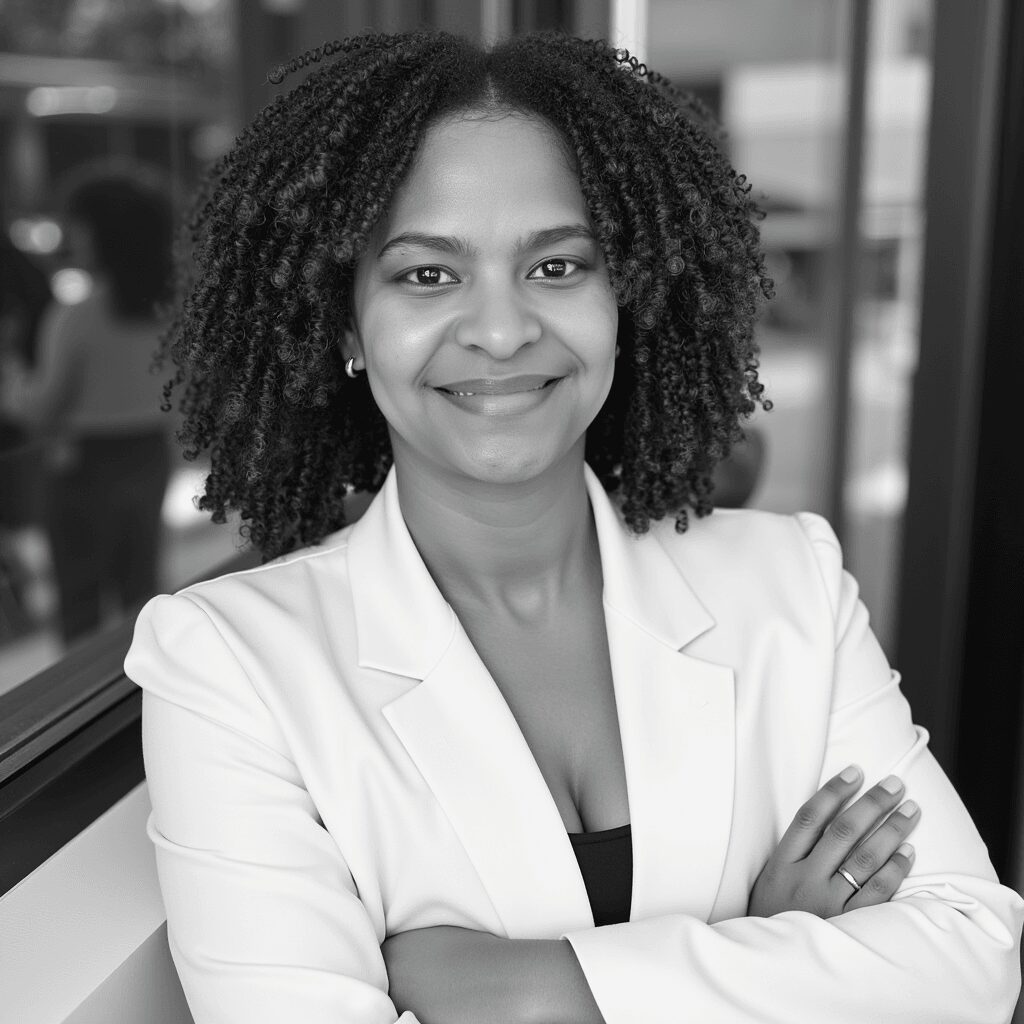
Today we’d like to introduce you to Christine Rincon.
Hi Christine, so excited to have you on the platform. So before we get into questions about your work-life, maybe you can bring our readers up to speed on your story and how you got to where you are today?
My story really begins at the bedside. I started my career as a Critical Care Nurse, where I spent years mastering the complexities of human physiology in high-stress, high-stakes environments. I loved the clinical work, but I always had this pull toward something bigger—specifically, the stars.
For a long time, the space industry felt reserved for pilots, engineers, and physicians. But as I watched the industry evolve and shift toward commercial space travel, I realized there was a massive gap in the equation: Nursing.
I realized that if we want to send regular people to space and keep them healthy on long-duration missions, we need the holistic, practical care that only nurses provide. When my mother, who was my biggest motivator, passed away from ALS, i realized that we have a finite amount of time on this earth and i needed to just go for my dreams.
So, I decided to build the bridge myself. I went back to school to specialize in bioastronautics and founded The Space Nurse, LLC. It hasn’t always been an easy path; I’ve had to carve out a niche in an industry that didn’t know it needed me yet.
Today, I’m proud to say that persistence is paying off. I’m actively researching how to integrate nursing care into long duration spaceflight teams, and I recently had the honor of presenting to the Women in Aerospace Medicine group on the importance of collaborative healthcare teams. I am contributing a chapter on critical care and trauma nursing for an upcoming aerospace nurse textbook and I connect with nurses through 1:1 career counseling with more opportunities in the works for collaborations with big players in the industry.
I’ve gone from looking up at the stars to actively working on the medical protocols that will help get us there safely
We all face challenges, but looking back would you describe it as a relatively smooth road?
It definitely hasn’t been a smooth road. In fact, some of the biggest challenges have been both deeply personal and professional.
On a personal level, losing my mother was a turning point. She was my biggest supporter, and navigating that grief while trying to launch a business and pivot my career was incredibly difficult. But her passing also gave me a sense of urgency—it reminded me that we don’t have time to wait for the ‘perfect moment’ to chase a dream.
Professionally, the biggest struggle is that I am literally bringing light to a specialty that doesn’t officially exist yet. There is no designated career path for ‘Space Nurse’ on a job board. I am building the roadmap as I walk it.
That often means I am walking into rooms dominated by brilliant physicians and engineers and having to prove that I belong there. The space industry has historically relied on the medical model—doctors and flight surgeons—or the engineering model. I constantly have to advocate for the fact that nurses are essential. We bring a different lens to patient care and human systems integration that doctors and engineers aren’t trained for.
Convincing the industry that they need the nursing perspective for safe, long-duration space travel is a daily effort, but it’s a fight worth fighting
Great, so let’s talk business. Can you tell our readers more about what you do and what you think sets you apart from others?
About The Space Nurse, LLC
At its core, The Space Nurse, LLC is a consultancy and educational platform dedicated to integrating nursing expertise into the aerospace industry. We specialize in Bioastronautics and Human Systems Integration, looking at how spaceflight affects the human body and—crucially—how we care for that body in a resource-limited environment.
What We Do & Specialize In
I specialize in “operationalizing” space health. While engineers design the vehicle and flight surgeons manage the medical protocols, my focus is on the day-to-day reality of crew health. This includes everything from helping design EVA (spacewalk) suits that accommodate human physiology to auditing medical kits for practicality.
Currently, I offer 1:1 career counseling for nurses who want to break into the aerospace sector, and I consult with private industry partners on how to build truly collaborative medical teams.
What Sets Us Apart
What sets The Space Nurse apart is the lens through which we view space travel. The industry is full of brilliant engineers and physicians, but the nursing perspective is the missing link. Nurses are trained to look at the patient holistically—not just “fixing the problem,” but managing the environment, the psychology, and the daily maintenance of health. We are the ones at the bedside 24/7, and that same level of vigilant care is exactly what is needed for long-duration missions to Mars and beyond.
What We Are Most Proud Of
Brand-wise, I am most proud of being a pioneer. I am building a roadmap where one didn’t exist. Seeing my work recognized recently by Women in Aerospace Medicine and being featured as an Influential Woman in business confirms that the industry is waking up to the value of nursing.
What Readers Should Know
I want your readers to know that space isn’t just for astronauts and billionaires anymore. As we move toward commercial space travel, we need a diverse workforce to keep it safe. The Space Nurse, LLC is here to ensure that when we go to the stars, we bring the best of healthcare with us. Whether through speaking engagements, educational workshops, or consulting, we are preparing the next generation of spaceflight professionals.
Risk taking is a topic that people have widely differing views on – we’d love to hear your thoughts.
My Perspective on Risk
As a Critical Care Nurse, I have a complicated relationship with risk. In the ICU, our job is to mitigate risk—to stabilize the patient and prevent the worst-case scenario. So, by training, I am cautious. I look at the data, and I prepare for every outcome.
However, I’ve learned that in business and in life, growth requires a leap of faith. You cannot discover new oceans if you are afraid to lose sight of the shore.
The Major Risk I Took
The biggest risk I’ve taken is, without a doubt, founding The Space Nurse, LLC and pivoting my career toward aerospace.
On paper, it looked crazy. I have a stable, successful career as an ICU nurse. Why would I spend time and money getting specialized education in bioastronautics? Why would I go back to school for another degree? Why would I start a business in a niche that is so new, most people don’t even know it exists?
There was no job posting for “Space Nurse” waiting for me. I had to bet on myself. I had to believe that the industry would eventually need what I have to offer. Investing in my education at the International Institute of Astronautical Sciences (IIAS) and funding my own research was a financial and emotional risk. I was investing in a future that wasn’t guaranteed.
Why I Did It
I view risk through the lens of regret. After losing my mother, my perspective shifted. I realized that the “safe” path is actually the riskiest one, because it carries the risk of looking back and wondering “What if?”
I decided that the pain of failure would be manageable, but the pain of never trying would be unbearable. So, I took the jump. And now that I’m working with major aerospace organizations, I know it was the right bet to make.
Contact Info:
- Website: https://www.thespacenurse.com
- Instagram: https://www.instagram.com/the_spacenurse
- LinkedIn: https://www.linkedin.com/in/christine-rincon-445b248b/

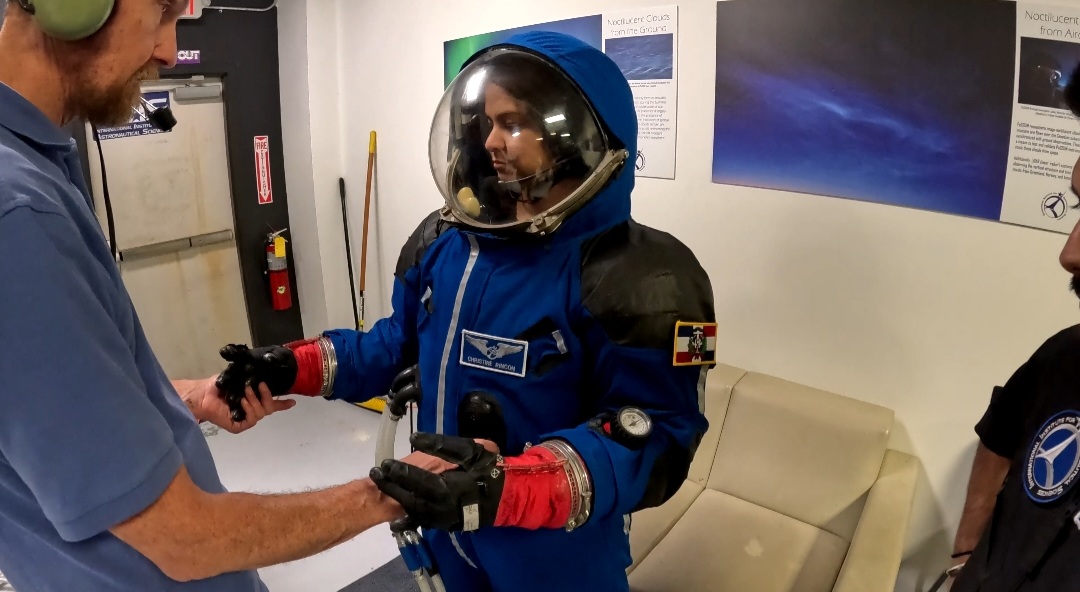
Image Credits
Picture 2: Chris Lundeen, picture 3: Makiah Eustice, picture 4 Makiah eustice and Miguel soto