




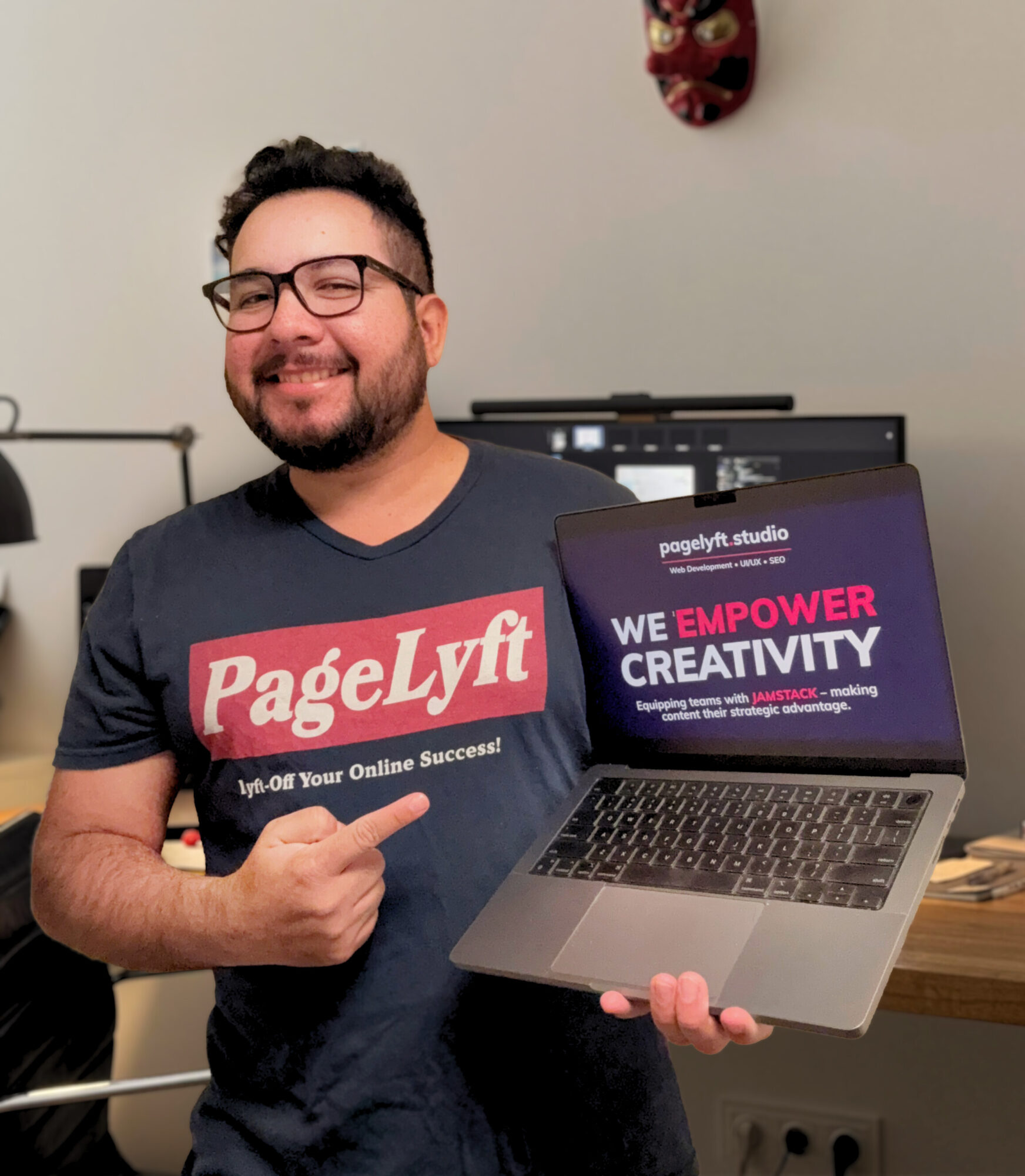
Today we’d like to introduce you to Aaron Molina.
Alright, so thank you so much for sharing your story and insight with our readers. To kick things off, can you tell us a bit about how you got started?
My story really starts with curiosity. I’ve always been a problem-solver at heart. When I got my first computer at about 11 years old, the very first thing I did was take it apart and put it back together — with no instructions — just because I needed to understand how it worked. That curiosity never left. I kept building my own custom computers growing up, constantly experimenting and learning.
I began my career on the creative side as a web and graphic designer, taking on various design projects and learning how visual communication influences people’s experiences with brands. But as I worked, I found myself increasingly drawn to the development side. I wanted to understand not just how things looked, but how they functioned. When I eventually explored front-end development, I instantly fell in love. It felt like the perfect intersection of creativity and problem-solving.
That mix of design fundamentals and code became my foundation. In 2011, I earned my Web Design certification from the University of Miami, and in 2017, I continued my education by completing Ironhack’s Full-Stack Web Development program. After that, I had the opportunity to work with some incredible teams and brands — Corsair, the Miami Heat, and Azamara, among others — mostly within their marketing departments.
Working inside larger organizations taught me a lot, and it also exposed a universal frustration:
Marketing teams were moving fast, but their websites couldn’t keep up.
Simple updates required developer support. Landing pages took weeks. Everything required multiple rounds of approvals. Even the best teams were slowed down by bottlenecks in their own systems.
That pain point stuck with me.
I started researching ways to bridge the gap between marketers and developers, and that’s when I discovered the world of headless CMS platforms, static site generation, reusable content blocks, and webhooks — essentially, the early JAMstack movement. This modern approach allowed developers to build high-performance, scalable systems while giving marketing teams full control over their content with no code required.
I was blown away. Here was a way to empower teams, remove bottlenecks, and completely transform how businesses ship digital experiences.
A lot of companies in Europe were already embracing this approach, but in the U.S., it was still new — even today, many people haven’t fully discovered its potential. I knew I wanted to build something around it.
That’s how PageLyft was born.
I started the agency with one mission:
to help businesses move at the speed of their ideas by giving marketers real autonomy over their websites.
Today, we combine my background in design, UX, and development with modern tools like Astro, Next.js, and Sanity.io to build systems where marketing teams no longer need to wait on developers for every small change. They can launch pages, run experiments, and manage their content confidently — without compromising on performance, brand consistency, or scalability.
My journey has always been about curiosity, creativity, and solving real problems. PageLyft is simply an extension of that — creating better, faster, more empowering digital experiences for the businesses we work with.
Can you talk to us a bit about the challenges and lessons you’ve learned along the way. Looking back would you say it’s been easy or smooth in retrospect?
Like most entrepreneurial journeys, it definitely hasn’t been perfectly smooth. I was lucky early on because previous employers trusted my work — Corsair brought me on as a contractor, and shortly after that, I was hired to help build and manage the development team for the LA Clippers. Working with another major NBA organization was an incredible experience. I introduced modern web development practices, built scalable systems, and helped their marketing team move faster. But implementing new ideas inside established organizations always comes with challenges — there’s education, proof of concept, and a lot of back-and-forth before change happens.
But one of the biggest challenges I faced wasn’t with enterprise brands — it was with small businesses.
Many small business owners still believe WordPress is the only way to build a website. For years, that was true — but the web has evolved, and WordPress comes with its own set of issues:
security vulnerabilities, slow performance, the need for constant updates, plugin conflicts, and the reality that most changes still require someone who understands both front-end and back-end development.
Explaining to small businesses that they no longer needed to put up with that wasn’t easy. It required education, patience, and showing real examples of how things could be better.
I had to show them that with modern tools — like Astro, Sanity.io, and a headless architecture — they could have a website that was faster, more secure, easier to manage, and more scalable. And the best part? It’s not more expensive. In fact, it can be cheaper.
Small businesses were often worried about cost, so I walked them through the numbers. Thanks to Sanity.io’s extremely generous free plan, paired with Netlify’s free tier for CI/CD, deployments, and webhooks, most small businesses could run their entire website with:
– no hosting fees
– no plugin costs
– no “premium theme” upsells
– no ongoing developer bills for basic content edits
Just a modern, high-performance website that they could manage themselves with pre-built content blocks.
Once they realized they could eliminate hosting headaches, remove security risks, and save money — while gaining full control over their content — their mindset can shift.
That education process is a challenge, but it has become one of the most rewarding parts of building PageLyft. Helping small businesses access the same level of tech used by the big companies — without the complexity or the price tag — is what motivates me.
Thanks – so what else should our readers know about your work and what you’re currently focused on?
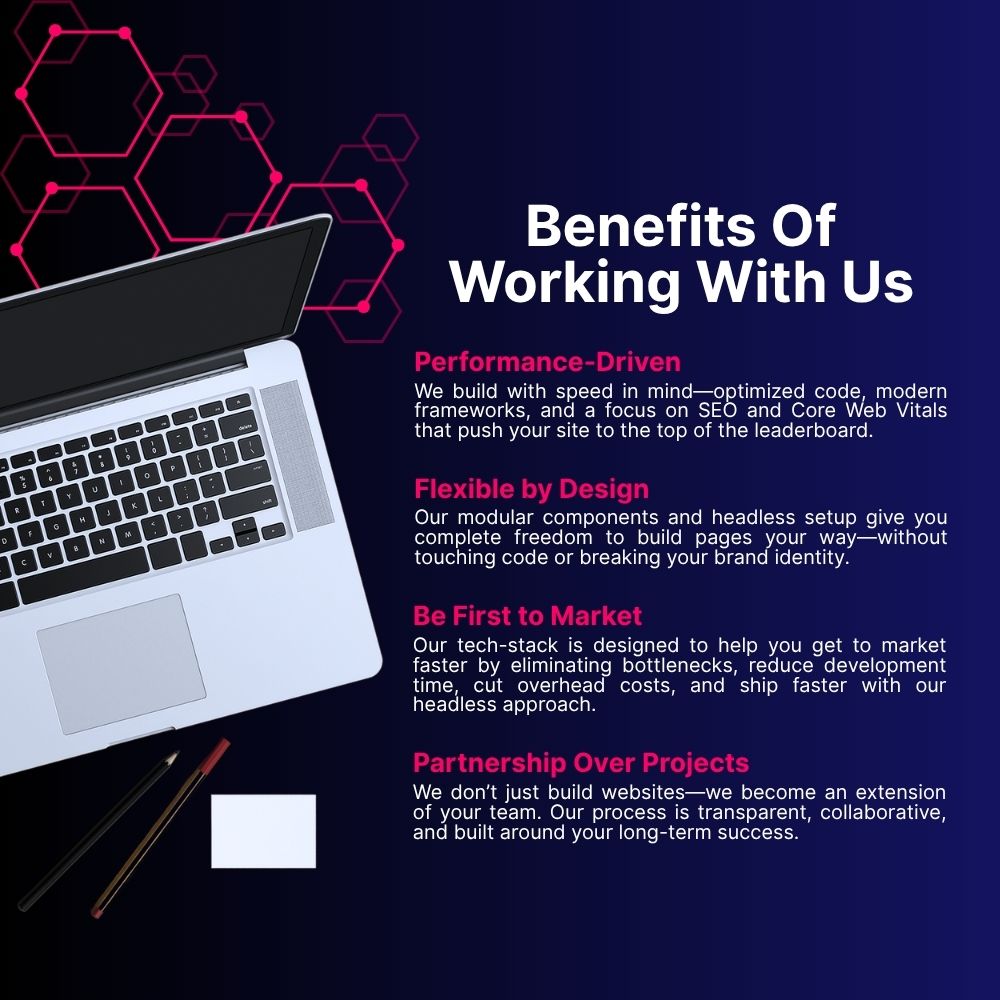
At PageLyft, I specialize in building high-performance, modern websites that empower businesses to control their content without relying on developers for every update. My background in graphic design, UI/UX, and full-stack development allows me to blend creativity with engineering, which has become the foundation of everything I do.
Over the years, I’ve had the privilege of working with some incredible organizations.
I helped build the Miami Heat’s website and was later brought on to manage and build the LA Clippers’ website and development team. Those experiences not only sharpened my skills but also showed me how critical speed, performance, and flexibility are for high-demand, fast-moving brands.
One moment that really stands out is when the Clippers needed a new website — LAFireAid.org — built within 24 hours to support victims of the Palisades fire. My team and I delivered the entire site under that tight deadline, and since its launch, it’s helped generate over $100 million in donations for the community. Knowing that our work directly contributed to something that meaningful is something I’ll always be proud of.
Today, I bring that same level of performance, urgency, and care to every business I work with — no matter the size.
PageLyft was built on the belief that modern websites shouldn’t only be accessible to enterprise companies. With the technology we use — Astro, Sanity.io, modern frameworks, and reusable UI blocks — small and mid-sized businesses can now have the same level of performance and control as major organizations.
What truly sets me apart is the mindset:
I don’t build websites to create dependency. I build systems that give clients freedom.
Freedom to move fast.
Freedom to launch ideas quickly.
Freedom to grow without technical bottlenecks.
At the end of the day, I love what I do because it combines everything I’m passionate about — design, problem-solving, technology, and empowering people. PageLyft is just the vehicle that lets me bring all of that together to help businesses of all sizes succeed online.
What are your plans for the future?
Looking ahead, my biggest goal is to expand PageLyft’s impact throughout Florida — especially Miami. Our state is becoming one of the fastest-growing business markets, and Miami in particular is evolving into a major tech and innovation hub. The energy here is incredible, and I want to be part of elevating the local businesses that make this city so special.
But I’m not trying to become just another web design agency.
There are plenty of those — and most of them follow the same outdated model.
My mission with PageLyft is different. I want to bring enterprise-level web performance and modern, composable architecture to the everyday businesses in my own community. I want to empower marketers, small teams, and business owners with systems that let them move fast, launch ideas quickly, and control their content without waiting on a developer.
This year, I’m focused on helping even more Miami businesses break free from the bottlenecks of platforms like WordPress — the security issues, slow performance, plugin conflicts, and developer dependency. With PageLyft, they can finally have a scalable, future-proof website that works for them, not against them.
I also want to grow PageLyft in a way that creates opportunities for other experts in my community — designers, developers, strategists, and creatives who share the same passion for modern web technology and empowering clients. Building a team of people who believe in this vision is a big part of my plans. I want PageLyft to be not only a service provider but a place where talented people can collaborate, grow, and contribute to something meaningful.
Ultimately, my plan is simple:
empower marketers, uplift local businesses, and build a company that creates real impact for everyone.
Miami is growing fast — and I want PageLyft to grow with it, helping businesses of all sizes thrive with the modern web as their foundation.
Contact Info:
- Website: https://pagelyft.studio/
- Instagram: https://instagram.com/pagelyft
- Facebook: https://facebook.com/pagelyft
- LinkedIn: https://www.linkedin.com/company/pagelyft
- Twitter: https://x.com/pagelyftstudio
- Youtube: https://www.youtube.com/@PageLyft