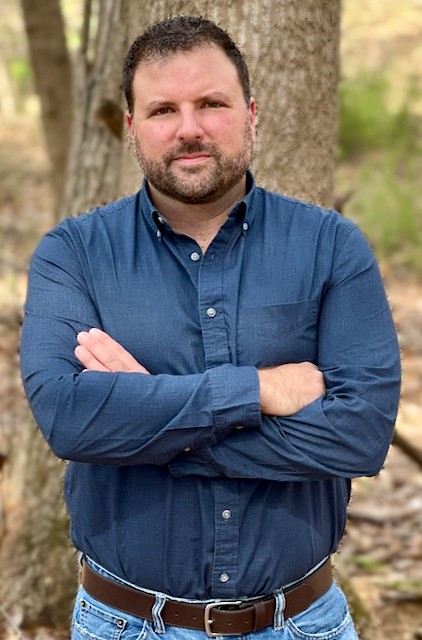




Today we’d like to introduce you to Shawn Crouch
Hi Shawn, so excited to have you on the platform. So before we get into questions about your work-life, maybe you can bring our readers up to speed on your story and how you got to where you are today?
I come from a musical family. My earliest musical memories are of the Towson University big band under the direction of Hank Levy, who wrote charts for the Stan Kenton band in crazy time signatures. My older brother Jeff Chiaverini is a jazz trombone player and played in the band while he was in college. I remember going to his concerts when I was seven or eight years old and being blown away by the sheer sound of the ensemble. Later my middle band director (who also played in the Towson band) encouraged me to go to the Peabody Preparatory in Baltimore which was a life changing experience. There I connected with faculty members from the Walden School for Young Musicians, a summer music program in New Hampshire whose curriculum integrates musicianship with improvisation and composition. I spent nearly 15 summers at the Walden School; first as a student and later as a faculty member. It was through the Walden School that I began to compose at a relatively young age and write for professional ensembles such as the Prism Quartet, the Peabody Trio, the Del Sol String Quartet, and the International Contemporary Ensemble. The Walden School gave me a strong foundation in musicianship, composition, and most importantly in musicianship pedagogy which remains at the core of my teaching philosophy to this day.
When I left high school I intended to pursue a degree in jazz performance and composition at the Berklee College of Music in Boston, MA. After spending two years studying at Berklee I made the decision to transfer to the New England Conservatory of Music (NEC) as a classical composition major, which offered a more rigorous conservatory curriculum. NEC was a phenomenal training ground for a young musician, and I worked closely, and made strong connections with young Boston-based new music specialists, many of which later became leaders in their field. I conducted numerous programs of new music and sought out multimedia collaborations with local dancers and artists. While studying at NEC I was deeply involved with cutting-edge music education projects through the Center for Music-In-Education, which is located at NEC. There I assisted in the music portfolio research and assessment program which studied music integrated curriculum in elementary schools. All of these early experiences, both as a composer, conductor and educator have shaped every part of my career.
After NEC I spent two years as a composition fellow at the Yale School of Music studying with Martin Bresnick and Ezra Laderman. I attended the Norfolk Contemporary Music Festival and the Tanglewood Music Center, both as a composition fellow, and in 2002 moved to New York City where I taught full time at the Hunter College Campus School. At Hunter I was director of the choral program teaching students in grades 7-12. While in New York I also immersed myself in the contemporary music scene performing with new music ensembles such as Cantori New York, and having my music performed and commissioned by New York City based groups such as the American Modern Ensemble, the Prism Quartet, and the Lost Dog New Music Ensemble among many others.
In 2009 I made an unconventional career move when I was invited to become the Founding Director of the Miami Choral Academy, a tuition-free afterschool music program comprised of 250 students from underserved communities of Miami-Dade County performing in six after-school choirs. The Miami Choral Academy showed sustained growth during my leadership and is now used as a model for similar El Sistema programs throughout the United States including the Cincinnati Choral Academy and the Pacific Choral Academy. When I returned to school to complete my doctorate in composition it was so that I could fully invest my time to contemporary music as a composer and conductor.
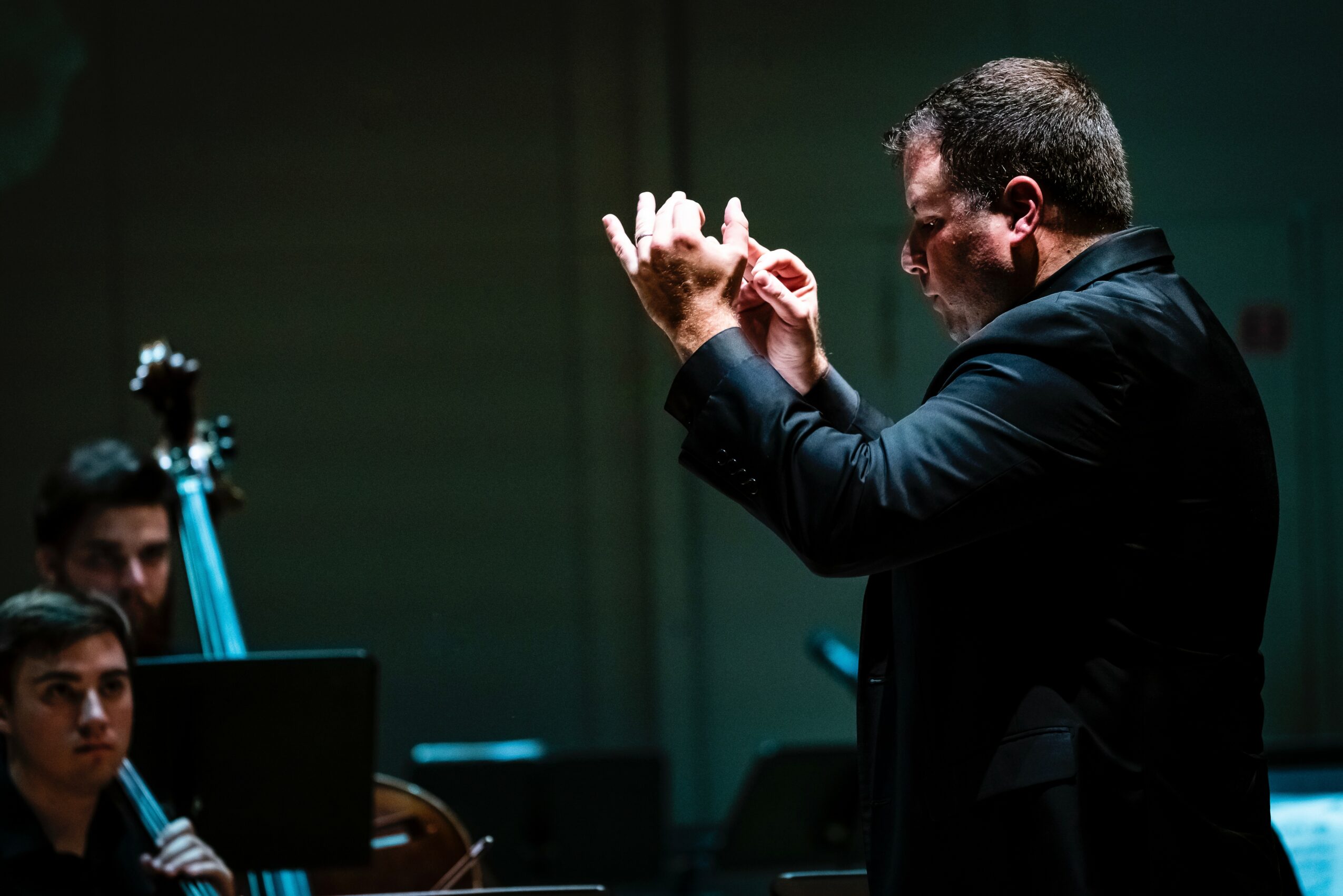
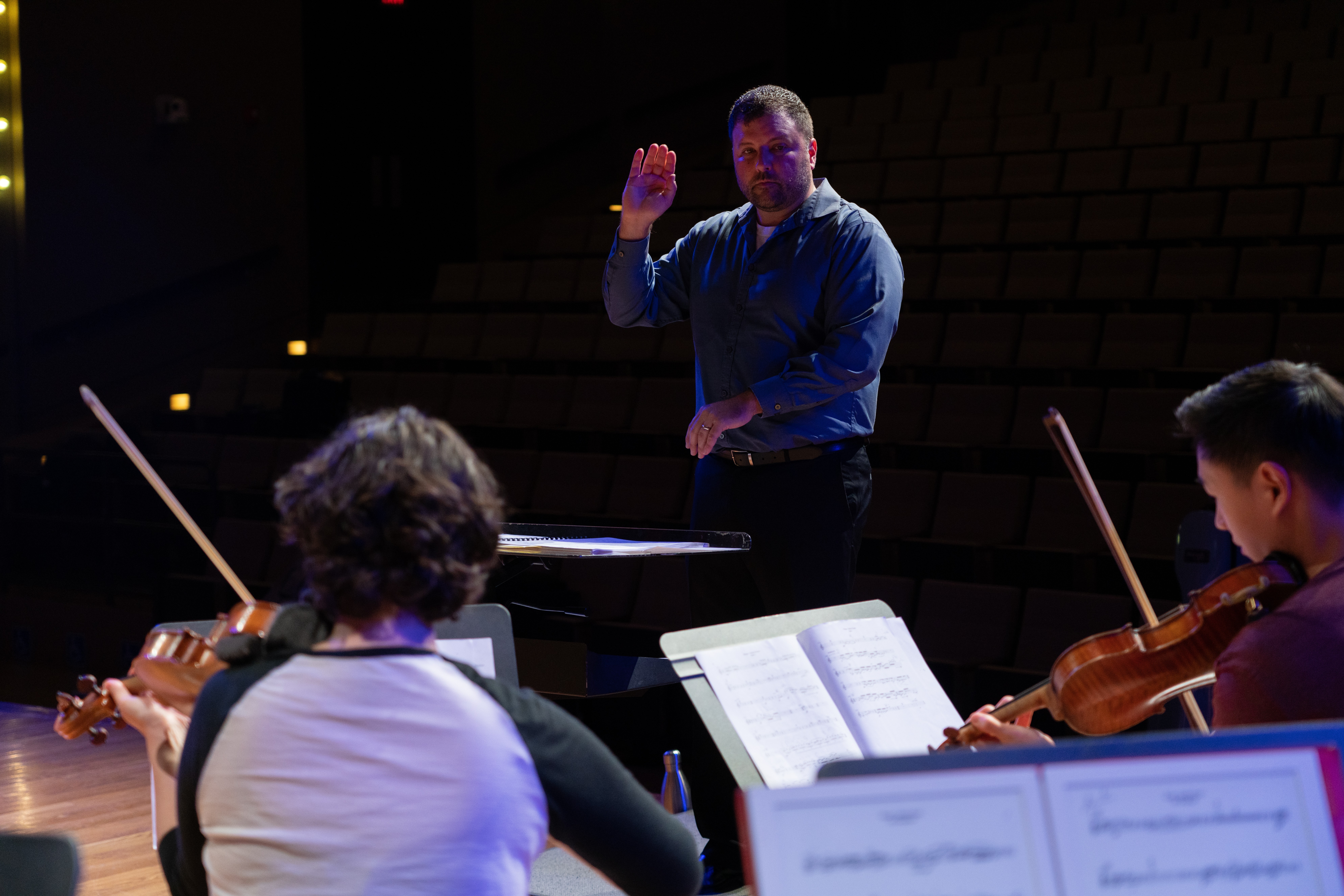
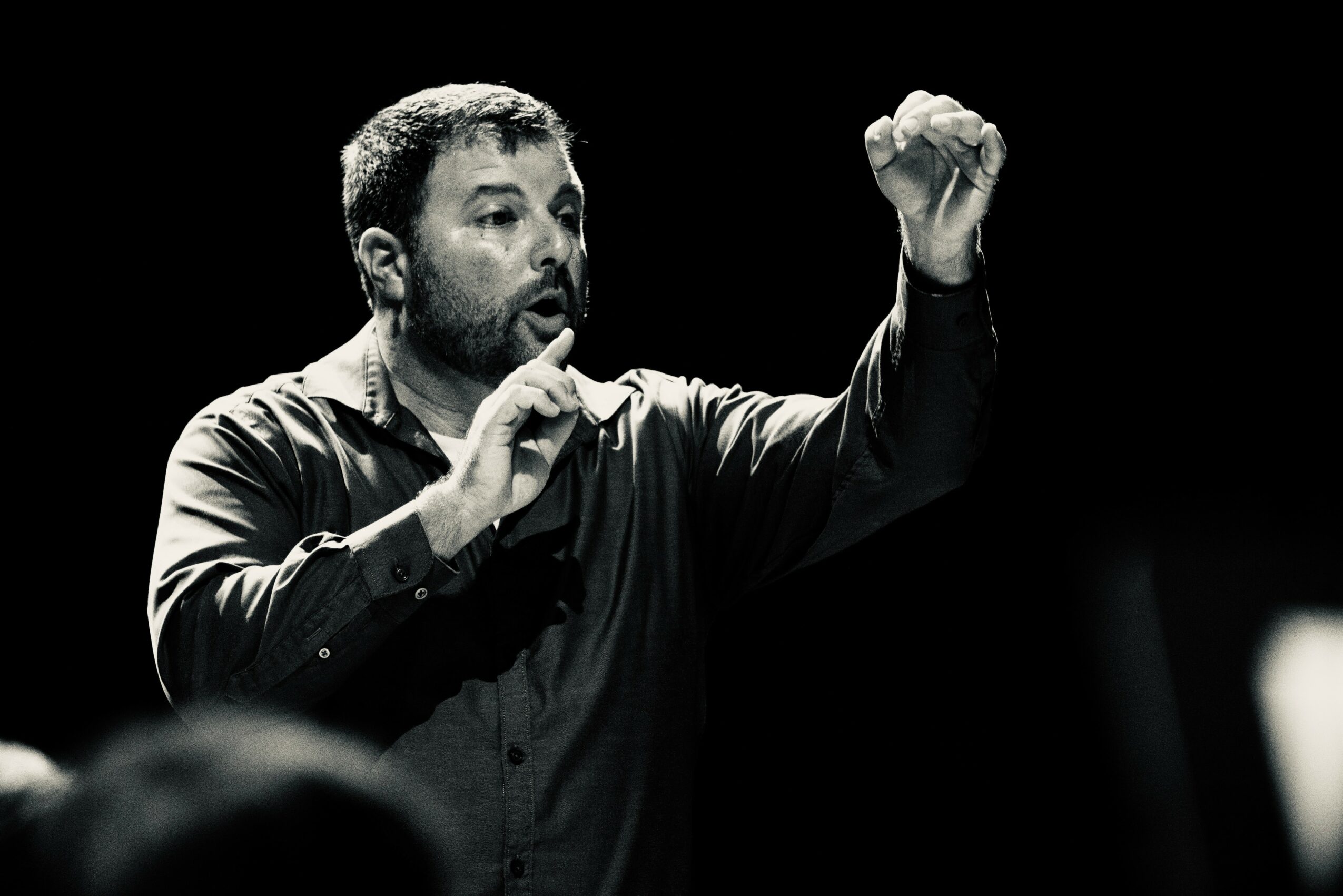
My formal studies culminated with a D.M.A. from the Frost School of Music at the University of Miami, where upon graduating I joined the Theory and Composition Department. I am currently Associate Professor of Practice at Frost where I teach composition, musicianship and conduct the contemporary music ensemble, Ensemble Ibis.
I’m sure it wasn’t obstacle-free, but would you say the journey has been fairly smooth so far?
Ha! No, it hasn’t been easy, but I wouldn’t have wanted it any other way. Everything I’ve accomplished in my musical career, I’ve learned by jumping in and doing it. Sure, I’ve had excellent formal training at some of the best music schools in the world—something you absolutely need to build a foundation as a successful musician. But my career has been about so much more than composing, even though that’s what my degrees are in. I’ve worked as a music educator, a conductor for instrumental and choral ensembles, an arts advocate, and even an entrepreneur. For example, when I started a nonprofit after-school choral program for underserved communities in Miami, I had no idea what I was doing. I learned through trial and error. You just commit to not giving up and dive in. You learn by doing.
As a composer, every new piece is an opportunity to grow. I might never have written for, say, the harp—a tricky instrument if you’re not familiar with it—but in those situations, you collaborate. You talk to a harpist, ask questions, and learn. That same approach applies to any project: adapting and figuring it out while keeping your eye on the goal. I’m a Gen X adult, which means I grew up drinking water from the hose, playing on asphalt playgrounds, and taking my brother to and from school when I was 10 because my parents were at work. We’re the “grit and resilience” generation—we get things done when it counts. That mindset has shaped me and helped me get to where I am today.
Can you tell our readers more about what you do and what you think sets you apart from others?
I like to think of myself as a storyteller. I’m passionate about working with communities and helping share their stories through music. For example, my latest piece, “Letters Home,” is a 30-minute composition for choir, orchestra, and soprano solo. It brings to life personal wartime correspondence and writings—things like letters, emails, and diary entries—from U.S. military personnel. This includes not only soldiers but also nurses, doctors, and support teams, as well as their loved ones back home. The stories span from World War I all the way to the Iraq War.
This oratorio isn’t meant to be a political statement. It’s about honoring the sacrifices made by soldiers, medical teams, and their families while reflecting on the deeper human cost of war. The first performance is set to take place at Carnegie Hall on Memorial Day in 2026.
Other recent works of mine that reflect this include “Stained Glass,” “The Road from Hiroshima,” and “Paradise” which all focus on narrative-driven music.
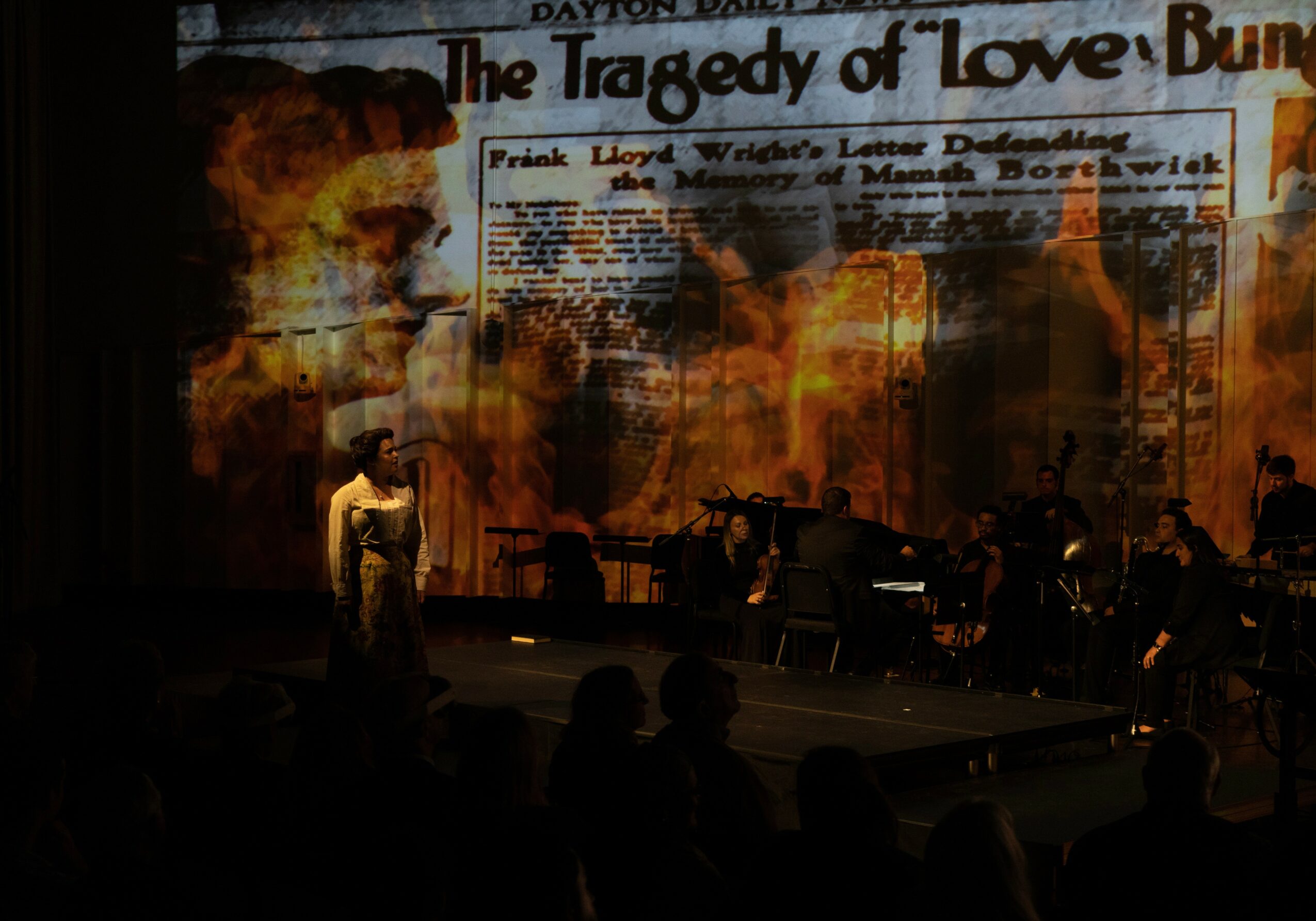
“Stained Glass,” a one-act opera I wrote in 2024, explores the story of Mamah Borthwick, who was the romantic and intellectual partner of Frank Lloyd Wright. Directed by the innovative Jeffrey Buchman, this production broke new ground by using cutting-edge technology like immersive projections and augmented reality. Audience members wore Meta Quest goggles to step into Wright and Borthwick’s world, surrounded by geometric models, architectural designs, and diffused light. It premiered at the Knight Center for Music Innovation at the Frost School of Music in March 2024 and really redefined how technology can transform opera.
Before “Stained Glass,” I explored storytelling through “The Road from Hiroshima, A Requiem,” which I originally composed in 2005 and revised in 2022. This work, commissioned by Seraphic Fire, weaves Marc Kaminsky’s poetry with the Latin requiem mass text. The 60-minute piece for choir, orchestra, and soloists tells the story of Hiroshima survivors, starting months after the bombing and moving back in time to before the war. One of the most powerful performances of this piece was at the decommissioned Hanford Reactor B in Washington on Veterans Day 2023—the same reactor that produced plutonium for the Nagasaki bomb. Revisiting this work for that performance was deeply personal for me, especially since my grandfather flew missions over the South Pacific during WWII. Writing this piece and revisiting it felt like a way to reflect on the human toll of war and my family’s connection to it.
Similarly, “Paradise” was born out of my personal reflections on war, particularly my younger brother’s two tours in Iraq and Afghanistan with the Marines. Written in 2006 and commissioned by Chanticleer, the piece blends American poet Brian Turner’s powerful accounts of the Iraq War with the 12th-century Persian poet Hāfez. It’s a 20-minute a cappella composition that moves from descriptions of the desert landscape to Turner’s reflections on the act of taking a life, eventually reaching a sense of acceptance. Between the movements, I set Hāfez’s poetry to music, creating a haunting dialogue between ancient wisdom and modern war.
For me, these works are about more than music—they’re ways to connect with history, humanity, and my own family’s experiences.
Are there any important lessons you’ve learned that you can share with us?
Listen, learn, adapt, but most of all keep moving forward. Don’t worry about what others think of your work, just keep making art in any form.
Contact Info:
- Website: http://shawncrouchmusic.com/
- Instagram: @crouchcomposer
- Facebook: https://www.facebook.com/Crouchcomposer/
- Youtube: @shawncrouch155
- Soundcloud: https://soundcloud.com/shawncrouch
- Other: https://www.youtube.com/@ensembleibis-frostschoolof3202